At Home with Tech

Unlock the power of all your technology and learn how to master your photography, computers and smartphone.

Category: AI

How to Magically Turn your Photo into a Video Using Generative AI

The creative realm is no longer inhabited exclusively by human minds. Generative AI tools have revolutionized how you and I can develop our own creativity. Yes, AI may still require our inspiration, but then it magically does most of the work.

One way to quickly immerse yourself in this new creative workflow is through a simple shortcut. Just start with a real photograph/image that you’ve already created as a reference point. Then, it’s much easier for an AI app to develop it further as opposed to having to start the process from scratch through extensive prompts.

For me, that’s been the key to easily unlock AI’s visual powers.

AI Follows the Creative Direction from your Photography
After uploading your own photo, you can create an AI-generated clone in one click that looks remarkably similar. The AI takes certain creative liberties, but it nails the framing and essential visual elements.

And then, with just a few more prompts and a click, you can generate short video clips that bring your photos to life.

So yes, we can now create videos out of thin air based on our photography. 

Here are a few examples I generated after feeding my photos through Google’s Whisk and Veo generative AI models. (Other companies offer similar fast-developing technologies.)

Maine Sunrise
I snapped this sunrise photo during our Maine vacation:

Here’s the Google Whisk version:

And here’s the Google Veo video:


Alaska Sunrise
Here’s my sunrise shot from Homer, Alaska during our 2023 trip.

Whisk photo:

Veo video:


Baltimore Sunrise
Here’s my photo of people walking by the water in Baltimore, Maryland.

Whisk photo:

Veo video:


Two Paddleboarders on the Ocean
I photographed these two paddleboarders in Maine last year.

Whisk photo:

Veo video:


A Man and his Dog
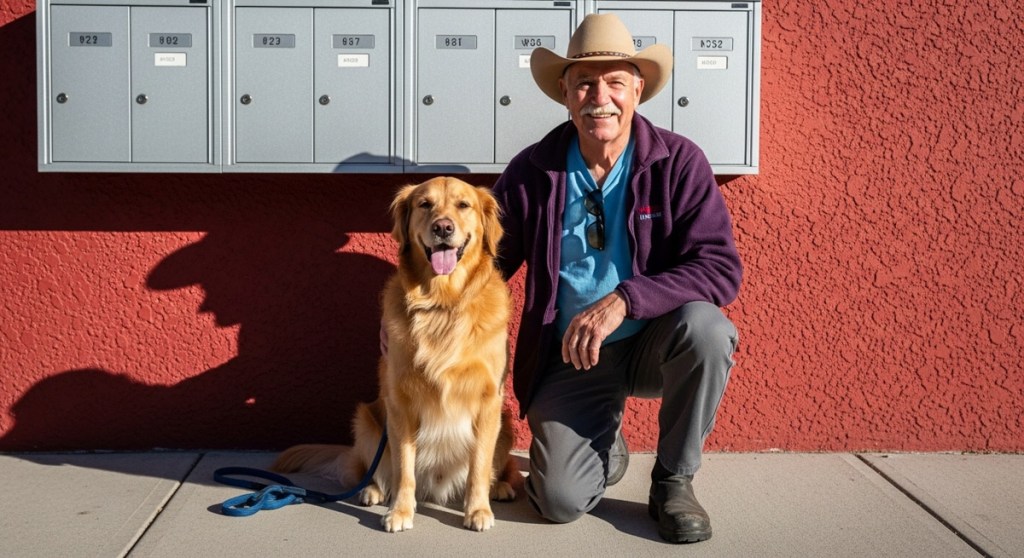
During our vacation in Alaska, I took a photo of a man with his beautiful golden retriever. I processed it through Google Whisk and Veo and generated this:

Whisk photo:

Veo video:


Generative AI Provides the Paint and Canvas
I find these examples remarkable and clearly disruptive. I’m still adjusting to the massive implications to all this. 

Generative AI tools have quickly become our new paint and canvas to bring our creative ideas to life. And the results will only get better.

So, it’s time for all of us to relearn how to paint, even as photographers.

Here’s What Happened When I Tried to Create an AI-Generated Podcast about my Blog

I invited Google’s NotebookLM to create “deep dive” podcasts based on a few of my blog posts, and here are the stunningly good results.

The written word, though certainly enduring, has plenty of competition out there. We all consume information in different ways. But quite frankly, photos, videos and podcasts are often more compelling and clickable.

Barrett’s Podcast?
I’ve occasionally thought about creating a companion At Home with Tech podcast, but that takes a fair amount of work to maintain. (It’s enough of a challenge for a busy dad to pump out the written version every week.)

That said, I did create this pilot podcast episode some years back.

How to Create Your Photo Archive in the Cloud: The Podcast

It was great fun to do… but too big of an ongoing lift.

ElevenLabs
Last year, I revisited the idea and considered applying a different solution using A.I. to more quickly generate my podcast. How? 

I first cloned my voice by digitizing it through ElevenLabs’ website. Then, I simply copied and pasted my blog’s text into ElevenLab’s interface to magically create a spoken version with my cloned voice! It was certainly much quicker than doing the voice work myself… not that I can’t do that.

Yes. Text to voice… BAM!

Here’s that pilot:

Should You Clone your Voice to Help Preserve your Legacy?

While certainly simpler and faster, I still didn’t greenlight my own podcast series. (I decided to stick with my core product.)

But I haven’t stopped pondering the challenge… and opportunity.

NotebookLM
A few months back, a friend of mine showed me a nifty Google trick using A.I. to magically create an audio podcast. Google’s tool is NotebookLM. He put it to work and generated an authentic sounding A.I. conversation about my career by simply loading my LinkedIn profile. 

Within minutes, a breezy 10-minute audio podcast appeared on his iPhone with two relaxed A.I. personalities chatting about my awesome life to date.

It was flattering, but also a bit weird to hear ‘people’ talking about me in this way. And beyond marveling at this parlor trick, I felt it wasn’t usable in a broader sense. (I wasn’t going to post this over-the-top publicity anywhere.)

I can Now Create my Podcast in One Click!
But I thought about NotebookLM again recently and navigated over to the URL: notebooklm.google to see how it’s been evolving.  

I realized this virtual research assistant actually has plenty of uses (like summarizing marketing plans, course reading, research notes, meeting transcripts and sales documents). 

And then, I spotted the ‘Audio Overview’ section in the top right of the page.  That’s the place where you generate the A.I. conversation about your topic. And there are any number of ways to feed in what you want the A.I. to absorb and then talk about (websites, PDFs, Google Docs and even simple text).

So, I uploaded a link to my recent blog post, and within a few minutes, my podcast was ready. Click. I listened to the likable pair of podcast hosts effortlessly discussing the detail from my blog. 

My jaw dropped. It all felt like magic. I immediately downloaded the file.
Here it is:

Safe Garden Hose Watering Solutions

Yes, I’ve done a bit of light editing to it using GarageBand. I’ve also trimmed out a few sentences where the A.I. rambled on in a few places. (I reserve that luxury for myself, thank you very much.) Then, I added in some music at the top and back. But that was it. Easy.

Here are a couple more…

My Kitchen’s Unexplained Ping: A Tech Mystery


UPS Battery Replacement: Protecting Your Computer from a Blackout


The Voices Sound So Real
NotebookLM’s A.I. voices are remarkably life-like. The casual banter spoken between this virtual woman-and-man team seems especially friendly and so authentic. 

The result speaks for itself. That said, as incredible as this may appear, some of the ‘summarizing’ occasionally offered additional ‘thinking’ that fell slightly outside of my core perspective. (I suppose a real person could also do that.) 

Still, I think this auto-generated podcast could be a nice companion piece that offers an alternate way to consume the essence of my blog’s content. 

Will You Enjoy Listening to This?
We’ll see if I add in this A.I. podcast as an ongoing feature to my blogging. It’s hard to know if everyone (anyone) wants to regularly listen to two virtual coffee-talk personalities doing a deep-dive exploration of my blog.

But for now, I’ve got to admit… NotebookLM is much more than an amazing parlor trick.

Is ChatGPT’s Emotional Voice Assistant Getting too Personal?

The lines that define humanity have gotten a bit blurrier, now that it’s harder to differentiative between an interactive life-like AI voice and flesh and blood.

When watching science fiction, we accept it when a talking computer sounds like a real person. From Iron Man’s J.A.R.V.I.S. to the Starship Discovery’s Zora, it’s a common sci-fi character device. And, of course, there’s the mother of all talking computers… HAL. Some fictional computer voices are friendly. Others are not. But they all sound like us.

Well, it isn’t science fiction anymore. With ChatGPT 4.o, now we’ve got a young, perky, friendly woman’s voice waiting to talk with you. And it seems entirely life-like with a total range of interactive emotions.

I don’t think OpenAI has given this new AI voice assistant a name yet, like Alexa or Siri. So, I’ll just call it Jane, the name I gave to my talking Garmin car GPS unit a few centuries back.

Well, you’ve done it, OpenAI. Yes, Jane seems alive.

Jane’s got Personality
I’m simultaneously enthralled and appalled. Sure, OpenAI presented the world just a demo of this female AI voice interface, and it wasn’t perfect, but it was close enough. It was hard to tell if her Scarlett Johansson-like vibe was real or not. She certainly sounded like she had feelings.

The three on-camera people all laughed and talked with Jane about mostly frivolous topics. It all seemed so wonderful and natural. They were perfect humans having a virtual coffee with a digital proto-human at the edge of the ‘singularity.’ Just another day at the office.

What could possibly be concerning?

There’s another Barrett
I was distracted about a separate detail that hit a little closer to home. One of the human presenters was named Barrett. Yes. There aren’t too many first-name Barretts out there. So, that coincidence struck me. My inner-Spock eyebrow raised a tad. “Fascinating.”

Perhaps I should pay closer attention.

The demo proceeded to show off Jane’s skills. She wasn’t just a voice. She had eyes too. She can see and process information through your phone’s camera. Yes.

Then, Jane complimented Barrett on what he was wearing. It felt strangely personal.

Okay. Now, I think we’ve crossed beyond the typical definition of a phone app.

And then I fell down the rabbit hole…

Is Humanity Replaceable?
I can’t stop thinking about the season 3 finale to “Westworld” (2020) when the evil Man in Black, played by Ed Harris, comes face to face with his robot host duplicate and realizes there’s no difference between them. He is entirely replaceable.

And I happened to recently stream “Mission: Impossible – Dead Reckoning Part One” (2023) during family movie night. The AI ‘Entity’ is of course the scary omniscient villain in the background. We never really get to meet it, but the self-aware AI seems impossible to beat. (We’ll have to wait until next summer to find out how Tom Cruise figures out the key solution.)

Fiction writers have forever been telling scary stories about computers gone amok. The Terminator. Ultron. Better-Stronger-Faster. (Wait, that’s just Steve Austin. Never mind.)

We’re in Control?
We’ve been trained for years to fear a superior AI-driven entity that will simply take over one day.

Now, I’m not sure anyone knows what’s going to happen when a computer actually becomes self-aware. But I don’t think we’re there yet.

Friendly Jane is just a new ‘emotion-simulation’ interface from ChatGPT. It’s a tool for us to use.

ChatGPT and other generative AI chatbots are supposed to help us do certain things faster. And they certainly do.

So, why the fuss?

Identity Crisis
I think our deeply embedded human fear of a Skynet overlord is partially a biproduct of years of exposure to scary storytelling.

Is this a branding problem to solve? Clearly, Barrett and his OpenAI colleagues are trying to address that with their very helpful Jane.

But I believe we’re also struggling with this redefining moment of what it really means to be human.

Artificial Human?
Did people feel threatened when the pocket calculator was introduced? Or the PC? Or the act of Googling? I don’t think so.

Sure, ChatGPT can process and present information faster than any human mind. But computers already passed that threshold years ago. We know that.

What’s so different now that there’s simply a young, engaged female ‘human’ voice attached to that interface?

Have we crossed over some invisible line of authenticity that defines our very identity as a species?

Maybe.

Activate your Inner John Connor
What’s clear is we are in the middle of an insanely rapid technological evolution. And if you want to know what it is to be human in the 21st century, you may be forced to redefine it a bit.

And so, you’d better figure out how to control the tools that are already doing what yesterday only we could do.

This is not a choice.

For starters, it’s time to learn how to be a good ‘prompt engineer.’ I guarantee tomorrow’s children will grow up being experts at this the same way yesterday’s toddlers intuitively knew how to navigate the first iPads.

Pay Attention
Don’t we already know that a pretty voice and manufactured beauty shouldn’t be a defining characteristic of any real person?

Will we need to pay more attention in the future when presented with reasonable facsimiles of the human form and function? Absolutely.

If you spot your doppelganger tomorrow on the street staring at you, you probably have something to worry about.

But I think eventually having a helpful J.A.R.V.I.S. in your life can be productive, empowering and even nurturing.

…As long as you don’t forget ‘what’ you’re dealing with. It’s the ‘what.’ Not the ‘who.’

Jane is not alive.

That’s the line we don’t want to cross.