At Home with Tech

Unlock the power of all your technology and learn how to master your photography, computers and smartphone.

Category: apple

Our Computers aren’t Built to Handle so Many Videos and Photos

It’s really simple to create media with our smartphones, and we’ve all become home filmmakers. But it’s becoming increasingly hard to store all the media files. If you’re not worried that you’ll eventually run out of SSD storage space in your Mac, think again. Here’s what you can do about it. (And it won’t take up a lot of desk space.)

A year back, I upgraded from my older 4TB iMac to my new 2TB Mac Studio. My decision to go with only 50% of the internal storage was based on Apple’s more expensive internal SSD drive pricing. (My old iMac had a larger, but slower, spinning hard drive, which is no longer part of the line up.)

I always thought that Apple would forever offer increased internal storage without charging more. (Aren’t we all needing more storage as we document our lives with photos and videos?)

But once Apple moved from HDD spinning drives to next-generation SSD drives, that equation imploded.

  • An Apple Studio with a 4TB SSD costs $1,200 more!
  • You can’t even buy an iMac today with more than 2TB of storage. And that will set you back $600-$800.

Something’s very wrong. We’ve got less to work with and paying more for it.

Still, pricing aside, I successfully deluded myself that didn’t actually need 4TB. (Ha!)

Better Digital Housekeeping?
Sure, I had filled up my old iMac’s 4TB drive, but I told myself that maintaining and transferring all that content from computer to computer was unreasonable. I didn’t need all of it within my internal drive. instead, I would offload much of it to external drives and my G-Technology RAID for long-term storage.

I brainwashed myself that the new 2TB SSD in my Mac Studio should be more than enough once I performed some long-overdue digital housekeeping.

That was just wishful thinking.

Face the Inevitable
Sure, I’ve done some media management, but my goal of a 50% reduction was unobtainable. Within a year, my 2TB internal drive was bursting at the seams. (And we all know that Macs aren’t built to allow you to later upgrade internal storage.)

And Apple hasn’t helped any by continuing to improve its iPhone’s capabilities to generate RAW photos and advanced video codecs (including ProRes files). All this means larger media files.

We’re all filmmakers now with the critical need to house our content libraries somewhere. What did they think was going to happen when we moved these huge files over to our Macs?

iCloud Storage?
Sure, I could export terabytes of my media into Apple’s iCloud ecosystem. But come on… that’s not really a good value proposition.

  • 2TB costs $9.99/month
  • 6TB is $29.99/month

Let’s do the math:
I would have to go with the 6TB plan, which comes out to $360/year. While that is surprisingly competitive with external hard drive pricing, across multiple years… it gets too expensive.

Certainly, $360 x multiple years is more than the one-time cost of buying a companion external drive. I know physical drives won’t last forever, and you’re supposed to upgrade them every few years. So perhaps a future iCloud storage plan could be a reasonable solution… if the pricing comes down.

SSD Drives
But what is today’s answer when your internal drive gets filled up?

Well, that’s simple: You’ve got to buy an external drive and plug it in. (I know I didn’t have to tell you that.)

The real question is what kind of drive?

To match the speed of your internal drive, you’ll want to buy a similar technology. If you’ve got an internal SSD, you should look at getting an external SSD.

So, that’s what I did.

Video Editing
Another question is what you want to do with the drive.

My most demanding task is editing my family videos and personal creative projects, which are all shot in 4K. Many of my video files are generated by my iPhone 15 Pro Max.

Plus, I’ve got:

So, perhaps my video editing needs are more advanced than the average user.

4TB OWC Express 1M2 SSD
All this said, I decided to go with a fast NVMe M.2 SSD. And I wanted to take advantage of the Thunderbolt 4 interface my Mac Studio offers. While there are many Thunderbolt 3 drives on the market, only OWC appears to offer a USB4 drive (same as Thunderbolt 4).

Now, some of you will immediately question my need for such a fast drive, and others will point out that thunderbolt 3 drives are fast enough for my media workflow. I know.

But this is a dizzying choice. So, I figured it’s best to go with a little more oomph than not enough.

So, I landed on the bus-powered 4TB OWC Express 1M2 SSD. (It’s an enclosure with the 4TB NVMe prepopulated.)
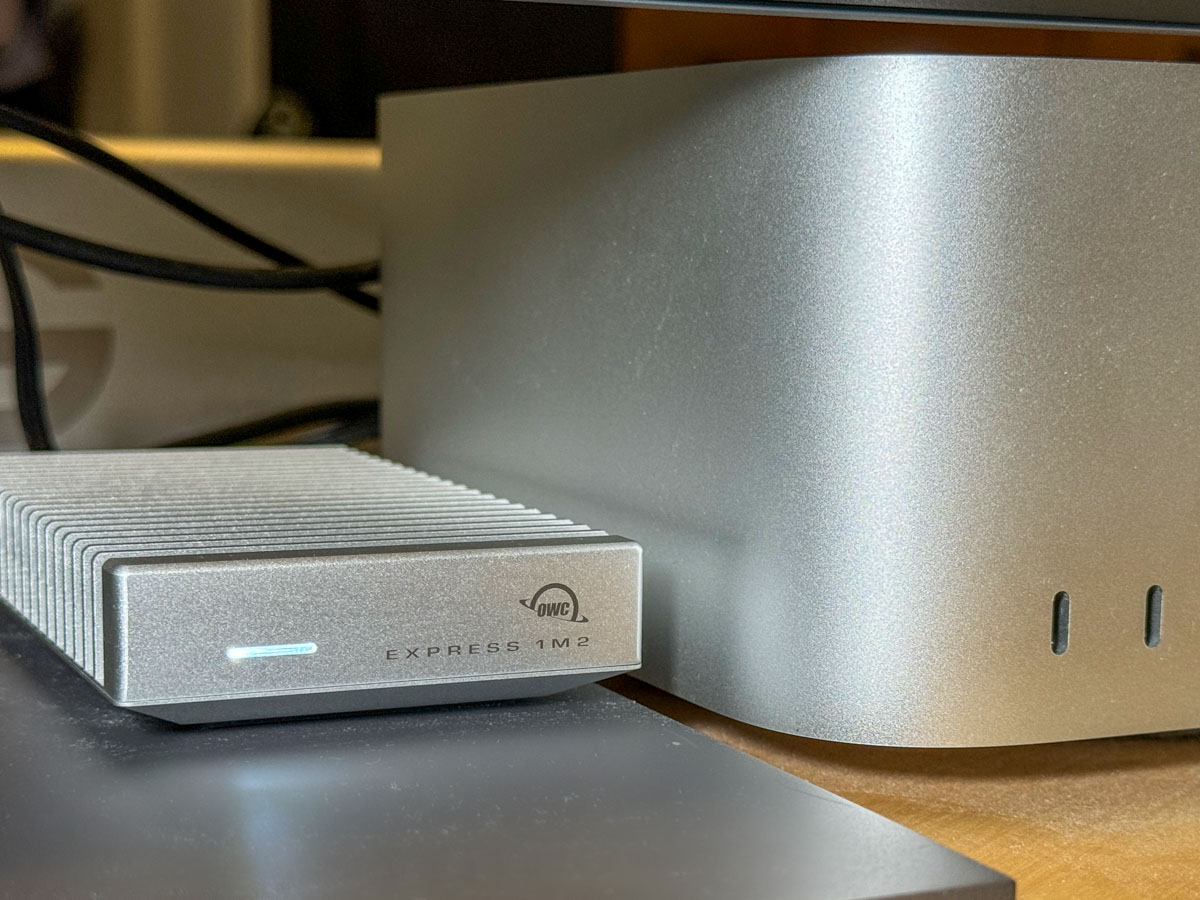
This Express 1M2 is blazing-fast, boasting 3200MB/s. It gets positive reviews, it’s compact and so far… it’s working great for me.

The Price for Performance and Peace of Mind
No, it’s not exactly cheap. (Remember, SSD technology is pricy.)

Yes, I could have saved more and bought a less expensive NVMe separately and popped it in an empty OWC 1M2 enclosure. But… I’m a baby.

Really, I just want this thing to work out of the box. Sure, plenty of you may chide me for being so ‘tech-timid.’ But hey… I’m not ‘Mr. At Home with IT.’ I know my limits. I’m not building my drives. I’ll buy them pre-built, thank you very much.

I just want some peace of mind. (Sure, I back up my files, but that’s also a complex equation.)

So, yes, I’m willing to pay a little more.

Build a Big Enough Home for your Files
Let’s review:

  • I bought a new Mac that had 50% of the internal storage of my old Mac
  • I inevitably ran out of space
  • A year later, I spent more money to buy a companion OWC drive for my Mac
  • I plugged it into my Mac Studio via a Thunderbolt 4 port, and I’m back in business

Yes, my story has a happy ending, but I’m not that happy.

Sure, maybe I have more media storage needs than the average bear, but not by that much.

I think today’s new computers simply need more internal storage. The fact that Apple sells its base-level computers with only a 256GB SSD is absolutely silly. (I could choose a stronger word.)

The lesson here is over the years, you’re going to need a bigger hard drive for your computer. And you’re going to pay for it one way or another.

So, plan for the future.
Has AI Revolutionized or Shattered the Art of Photography?

I believe the answer to this question is both. And that’s not necessarily a bad thing. Here’s why.

In the not-too-distant past, being a great photographer meant you needed foundational technical skills, a great eye and a little luck. And it didn’t hurt if you had a higher-end camera with a fast lens that could properly freeze the moment and soften the background with some nice bokeh.

It was all about getting ‘the shot.’ And you knew it when you snapped it.

Today, software, AI and some nifty tech tricks have changed the entire equation. Now everyone can be a ‘great’ photographer.

The iPhone’s Powerful Camera Skills
If you’ve got a recent smartphone in your pocket, you’re off to a solid start. Today’s iPhones are amazing cameras.

  • The camera lenses on the back give you enough zoom flexibility for most framing needs.
  • The ‘live photo’ setting gives you a full 3-second moment instead of a fraction of a second. Then you can later choose the best frame from those 3 seconds.
  • The software in ‘portrait mode’ automatically blurs the background for you, and you can adjust the level of blur after the fact.

If you’re just pointing your iPhone in the right direction, you’re probably going to capture a pretty good photo. It brings a new clarity to ‘point and shoot’ photography.

Fix It in Post
Then there’s the art of editing your photos. People have been polishing and adjusting digital photos for years with tools like Adobe Photoshop. But that takes a fair amount of training and practice.

Of course, today there are a host of one-click photo-enhancement solutions and filters that you can use with your computer or smartphone.

Easy.

So, what you originally shoot is only the beginning of your photos’ journey.

AI to the Rescue
Now, AI can help us do even more by removing objects from a photo in one click.

I’ve begun to do that using Adobe Lightroom. It’s amazing with its ability to instantly backfill the environment behind a removed item.

It’s not perfect for every scenario (at least not yet), but I would have thought of it as science fiction not so long ago.

Prompt Generation
And then there’s AI’s new “text to photo” superpower. You don’t even need to pick up a camera anymore. Just type in the photo detail you want to generate.

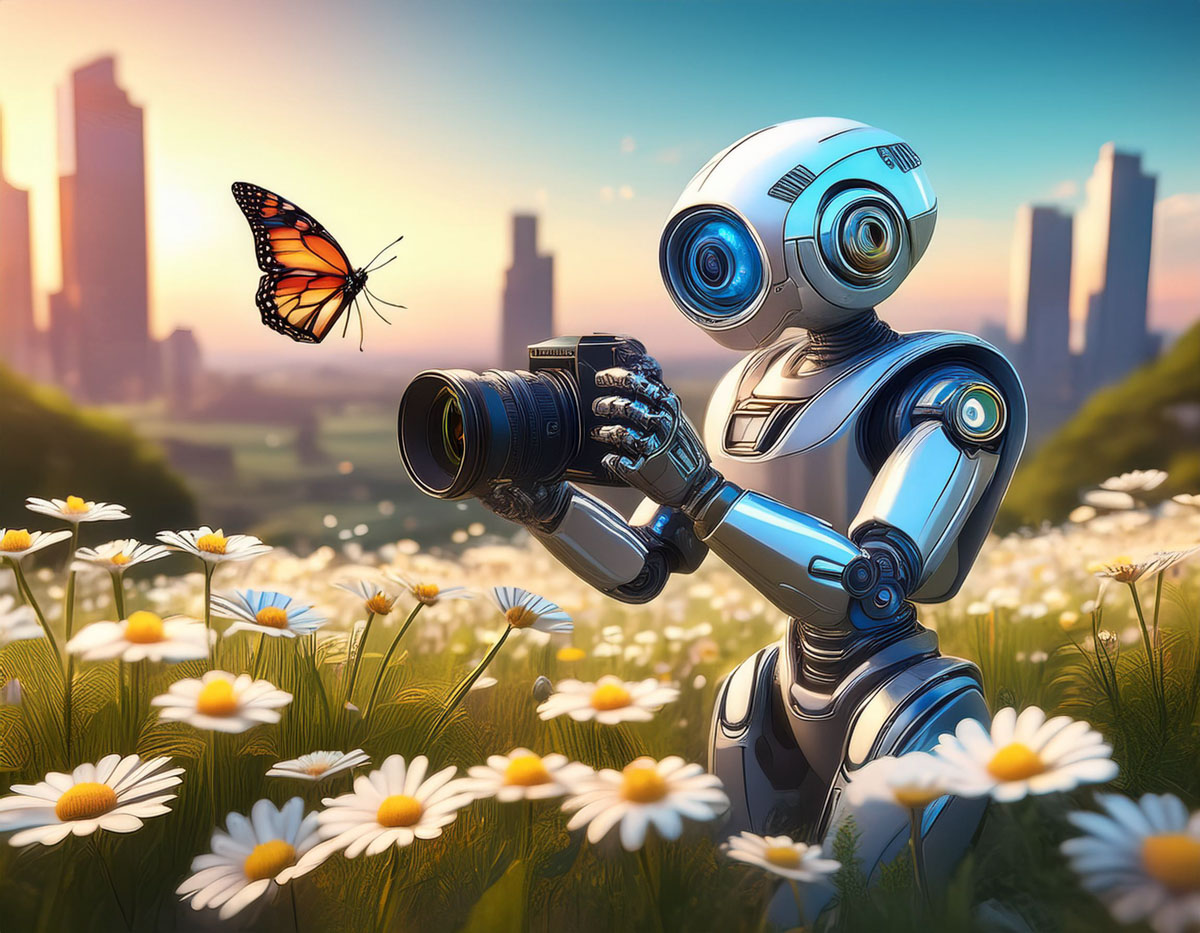
I’ve been practicing this with Adobe Firefly, and you may have noticed that some of my recent blog headline photos are Firefly-generated (as is the photo for this blog post).

Again, it’s not a perfect technology… not yet. But you can already generate amazing imagery using a variety of software and web tools by just… typing it in.

This is indeed progress. In fact, it’s startling. It’s amazing. It’s already revolutionized the entire art of photography. I am a better photographer thanks to all this innovation.

Or am I?

New Rules
I’m certainly creating better photos (some of which never even came out of a camera).

I don’t think my on-the-ground photography skills have specifically improved (well, perhaps a little).

I’ve simply learned how to use the new tools that make my photos look better after I snap a shot. I’m building a new photography skillset that focuses more on photo enhancement and manipulation.

I’m sure a purist would call that breaking all the rules of what photography is supposed to be.

Yes, the rules are clearly being rewritten by AI. And I suppose the question is whether the dramatic disruption of this art form is such a bad thing.

It’s a Revolution
I think the answer is mostly… “No.”

Bokeh is bokeh. It doesn’t matter how you get it. If you think someone’s cheating by creating bokeh in one click instead of relying on years of practice with the right camera lenses… get over it.

Sure, maybe your skillset has just been replaced by a piece of software. That’s life. That’s evolution. You need to stay ahead of the curve. This is not a new way to live.

Fact vs. Fiction
But as we all become experts in photo manipulation, of course, we need to be careful not to cross the line of misrepresenting reality.

Maybe it’s not such a big deal whether you choose to erase someone in one of your photos. But I would say we all have a responsibility not to flagrantly warp reality. We all increasingly have access to the tools that can do exactly that.

So, I would say we should keep it real. Fact. Not fiction.

And of course, we all know that famous quote from “Spider-Man.”

“With great power comes great responsibility.”

Yes.

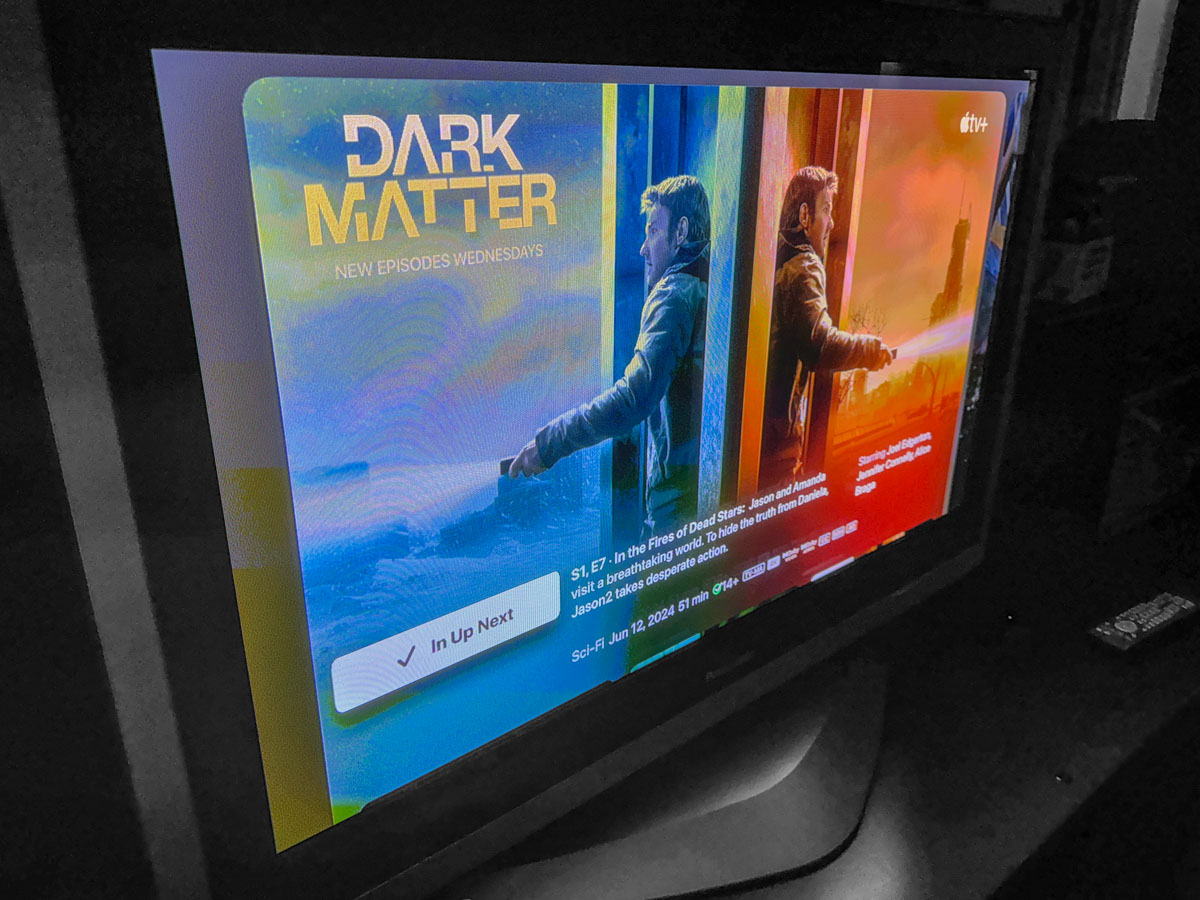
Why Dark Matter is the Best Multiverse Series on Apple TV+

You don’t have to go back in time to alter your life decisions. You can simply relocate to a better Earth. That’s the premise of “Dark Matter.”

The creatives behind the streaming shows from Apple TV+ are apparently obsessed with alternate universes, or as we like to say… the multiverse. No, multiversal travel isn’t exactly a new storytelling device. (The MCU has already brought it into our mainstream consciousness.) But Apple TV+ has really been leaning into it.

In series after series, Apple TV+ has been taking us down the multiverse rabbit hole.

“For All Mankind” lays out an alternate-reality timeline of the space program. When this series premiered in 2019 with its ‘shocking’ Moon-landing twist with no explanation, I was annoyed. There was absolutely no hint regarding the ‘why’ or ‘how’ of this alternate Earth. Today, I think we’re all finally trained to immediately accept that alternate universes need no explanation.

“Constellation” (2024) spends much of its time ‘suggesting’ that astronauts can slip between alternate realities, but the writers are intent on adding as much confusion to the equation as possible. Pro tip: You really need a note pad to help keep important details straight. The frustration helps to fuel the ongoing ‘mystery’ in the story.

And now, we’ve got “Dark Matter.”

In Search of a Better Reality
“Dark Matter” is designed to explore the road not taken in one’s life. I’m mid-season (6th of 9 episodes) as I write this, and the story surrounding a main character’s mid-life crisis demonstrates that the grass is not always greener. The dark reveal carries much of the storytelling focus. While the human factor is not science-fiction centered, the sci-fi enables everything.

Without giving too much of the plot away, the series stars Joel Edgerton who is a Chicago physics professor forcibly removed from his universe. He then tries to find his way home to his Earth and his wife played by Jennifer Connelly. And yes, you can easily guess who’s tried to replace him to fix a past mistake in his life choices.

But I’m more interested in how the writers are handling the superimposition ‘box’ that powers the travel between similar ‘adjacent’ universes. Once you’re in it, you experience an endless corridor of doors that you can open.

The mystery of where you go and why is more interesting that the pedestrian ‘thriller’ plot devices surrounding whether you can really “know” the person you’re married to.

Still, I like it all. It’s working nicely together.

Similarity to “Sliders?”
The sci-fi of traveling between universes in episodic television isn’t new.

The series “Sliders” (1995-2000) immediately comes to mind. Starring Jerry O’Connell, that show brought its main characters to a different, parallel Earth each week.

The premise was great, and the show had a lot of promise, but it devolved quickly after the writers seemed to stop trying, and the main actors began leaving the series.

How Many Earths Can You Handle?
I can’t imagine that the writers of “Dark Matter” aren’t aware of “Sliders.” But where “Sliders” got hokey, “Dark Matter” couldn’t be more serious. And this is a good thing.

That said, both series rely on coming up with new twists for each new world. “Sliders” ran out of good ideas. And I think “Dark Matter” could also begin to face alternate reality fatigue. Happily, the show seems to be narrowing its focus.

“Dark Matter” is Solid
Which is all to say that I’m pleased so far with “Dark Matter.” While it is character driven, the sci-fi implementation is also interesting.

That said, the series is not without certain gaps. (Why are there boxes in every Earth, even when it’s clear that no one built it?) Plus, we all know where the plot is inevitably leading.

Still, it’s fresh and well done. The first episode takes a little too much time to get its basics in place, but after that, “Dark Matter” easily passes the bingeable-watching litmus test.

“For All Mankind” has always dragged with too much family drama. “Constellation” relishes its own confusion a bit more than I’d prefer. “Dark Matter” strikes the right balance to create a compelling storyline.

I’m happy to report that “Dark Matter” is the best multiverse show streaming on Apple TV+.