At Home with Tech

Unlock the power of all your technology and learn how to master your photography, computers and smartphone.

Category: Homemade Videos

Three Ways to Massively Improve the Quality of Your Family Video Shots
I’ve got three big tips that will help jump-start your action videos of your family members...

Let’s face it. Few of us would mind if Steven Spielberg showed up with his camera crew to immortalize our next family event. All of that talent poured into the visual capture would undoubtedly generate amazing imagery. (I don’t care how disruptive a large film crew would be!)

Unfortunately, I know that scenario is also a fantasy. But instead of dreaming about how you might improve your home videos, I’ve got three ways to upgrade your video talents to the next level…

#1
Steady Does It

Shaky jumps and bumps created by an unsteady hand are sure signs of amateur video. The good news is technology is making it easier for you these days to create steadier shots, especially when covering action.

Digital stabilization is now common in consumer camera tech, but a real game changer is consumer-grade ‘gimbals.’ These are 3-axis stabilized handheld devices.

You can mount your smartphones to these stabilizers to create silky-smooth cinematic videos.

DJI makes the Osmo Mobile 3.
$119.00 on Amazon Prime

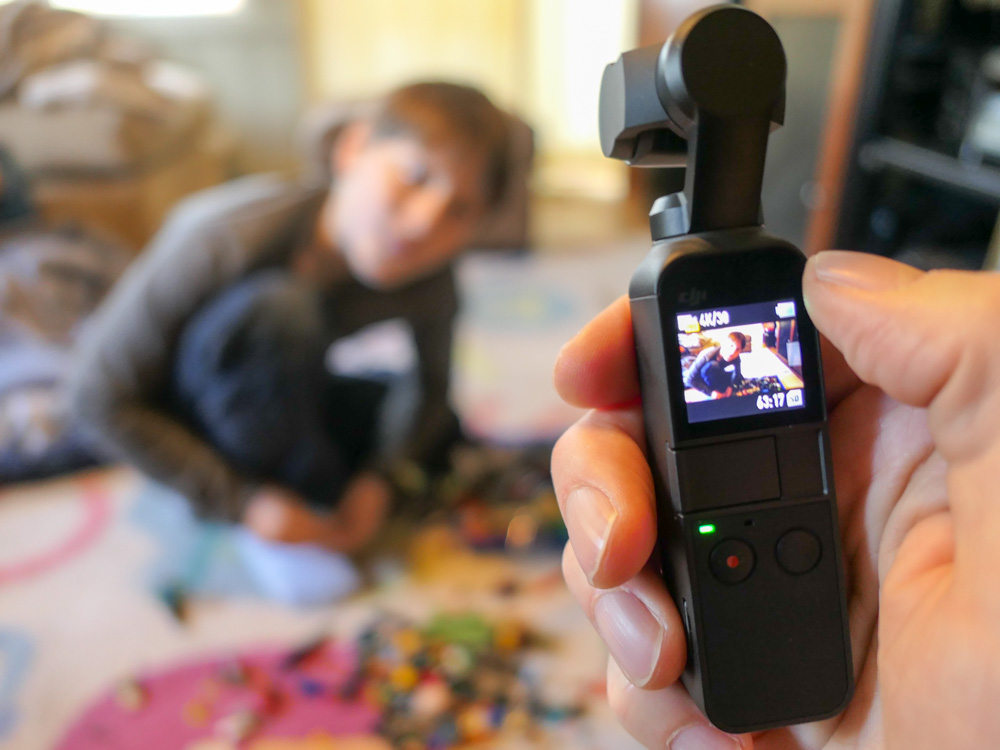
Or you can go with the DJI Osmo Pocket, which is a tiny, all-in-one camera/gimbal that can create amazingly smooth action from the palm of your hand.
$349 on Amazon Prime

I use the Osmo Pocket, and it maximizes many video opportunities to keep up with my active nine-year-old son.

#2
Slow It Down

I know I’ve recently taken a deep dive into the value of shooting in slow motion, but I think the point bears repeating.

When not overused, slow motion video can really add emotional impact to your video storytelling. It can also help you extend a significant visual moment which goes by too quickly. 

All you need to do is shoot at a higher frame-rate. Today’s smartphones are entirely capable to handle this trick with a tap of a setting. 

If you’re not already a slow-motion believer, just give it a try. You’ll see what I mean.

#3
Let There Be Light!

Sure, you can buy expensive gear to help shoot in low light, and the results can be strikingly beautiful. But why confront this difficult challenge if you don’t have to? 

Instead, simply look for every opportunity to record in good light. Either take advantage of the outdoors or a well-lit room. Simply avoid those infamous backlight problems that come from bright windows or the sun in the background. 

And always remember to keep the brightest light in front of your subject!

Show and Tell

Here’s an example of these three tips in action… I used my DJI Osmo Pocket to ‘smoothly’ document my son’s participation in a community fun run on a bright, cold weekend morning.

I recorded these clips at 60 frames per second and then slowed the motion down a bit while editing them in Final Cut Pro X on my iMac. I added in a little rhythm from Apple’s GarageBand and threw in some white flashes to finish off the sequence.

Put It All Together

Steady, slow and the use of lots of light will help you take a significant step forward as the family videographer. 

(I believe my post’s title says, “massive.” I’ll stand by that.)

If you incorporate these strategies when capturing action, you can create clips that will turn lots of heads.

All right, maybe just a few… but I expect the ones that matter to you!

Why Do We Love Slow Motion Video?

Wanting to capture a moment in slow motion is often born from our cultural fascination with the cinematic experience. Better understanding the ‘why’ will help direct your quest for more successful slow-mo shots.

Just about anyone can create slow-motion video clips these days. With a smartphone and a little help from a consumer-grade handheld gimbal or even a little digital image stabilization, it’s not that hard to generate a buttery-smooth cinematic shot… in slow motion.

And if you’re working with more advanced production gear from my world that many in corporate video production are using today, the results can be even more impressive. With a digital cinema camera, fast lens, and the right lighting, you can create amazing slow-motion shots at reasonable price points that were unimaginable five years ago.

But why am I and so many others obsessed in the quest to generate slow motion shots (for both personal and professional use)?

Learning about Slow Motion at the Movies
It’s not like viewing our reality in slow motion is natural. Sure, certain people talk about their surroundings slowing down right before an emergency. But that’s more about cognitively processing versus actually watching something move slowly.

Slow motion is essentially a special effect born out of the technology of movie making.

We only understand slow motion as part of our learned understanding of the cinematic viewing experience. We all grew up watching slow motion at the movies, on TV and now… online.

Slowing Down Sports Action
At a basic level, slow motion is a magical way to visually dissect an important moment that simply happens too quickly. It generates more time for us to actually process what’s happening.

Its use during sports TV coverage is an obvious example. That home run or touchdown is always better shot in slow motion. And the value of slow-mo in televised sports also applies when you shoot your family backyard touch-football highlight.

The Emotional Rush
But I’m often more interested in the use of slow motion as a visual tool that offers an emotional point of view. When a particular moment in a movie suddenly slows down, it often represents an emotional turn in visual storytelling.

And when that slow-motion shot is paired with a low audio rumble or ominous violin strings, experiencing that moment flicks a switch in our brains. We’ve been trained like Pavlov’s dogs to have a conditioned response… in this case, an emotional surge.

You know that feeling, right? The one that sends a tingle down your spine or involuntarily squeezes those muscles behind your ears.

In short, we feel something of a rush.

A great movie moment can easily do that to you. And slow motion is one of the ways to complete that circuit.

As a visual storyteller in my career and also at home as the self-appointed family documentarian, I’m always looking for opportunities to create this kind of moment… that same rush for my viewers.

Slow motion isn’t the only way to get it done. But when strong artistic execution is married with good slow motion and the right narrative moment, it’s undeniably a holy-grail moment for any creative.

Warning!
But if you’re also a digital content creator, I’ve got a warning…

Don’t go crazy with slow-mo. Just like any creative tool, we should have a clear reason to use it and not simply treat it like some kind of cheap trick. Because that’s exactly what it would become.

Plus, pointless slow motion is just… slow.

Also, when considering using a b-roll clip as part of your editing process, don’t slow the clip down simply to extend it to ‘fit’ in your editing timeline gap. (This is possible only if your footage was originally shot at a high frame rate.)

I believe that ‘filling in the gap’ is a misuse of slow motion. It’s never the best way to intentionally use slow-mo… mostly because it’s not intentional… it’s just convenient.

Find the Meaning in your Slow Motion
Barrett Juggles in Slow Motion
Sure, having a little fun with slow motion is fine.

Barrett Walks in Slow Motion
And who isn’t flattered having a ‘hero shot’ of them captured every now and again?

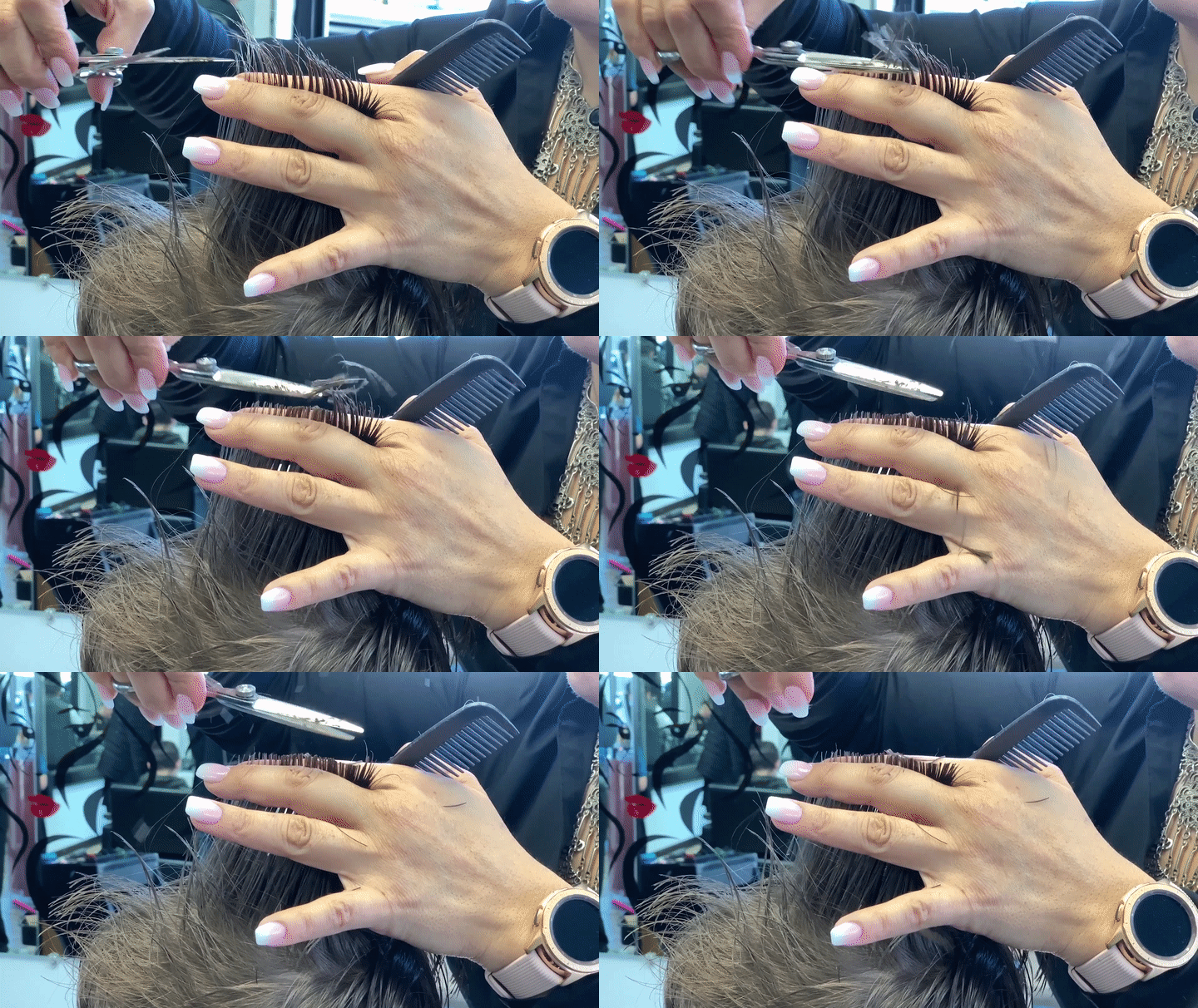
Haircut in Slow Motion
But when we’re offered the opportunity to look for deeper meaning behind slow motion, that’s when it gets interesting.

Where used properly, slow motion will reveal fundamental truths that we may miss at normal speed.

Yes, it’s an entirely unnatural way to experience the world, but one that technology has successfully created for us. The great filmmakers have shown us the visual guidelines for slow motion. Now, with the democratization of slow-mo video creation, it’s up to you and me to respect and apply them.

Why You Shouldn’t Throw Away Your Old College Video Projects

I’ve been trying to answer this question for decades. I think I may have finally figured out the answer…

Colgate University just held its bicentennial reunion on campus. My wife and I are both proud graduates (yes, we’re a Colgate couple), and we happily attended the celebration.

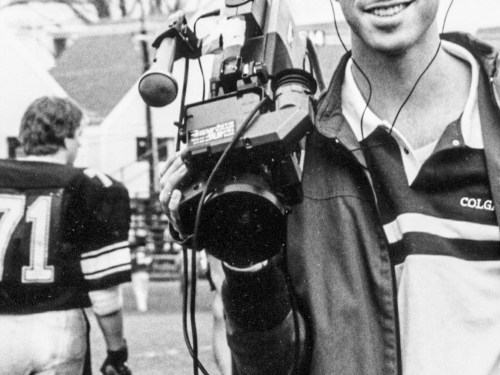
Looking back, I think the most influential piece of my college experience was my involvement in the student-run TV station, CUTV. My life-long passion for video storytelling as a profession fully developed during my college years as CUTV’s first station manager.

As you can imagine, after I graduated from Colgate, I took with me more than just a diploma… I schlepped home videotapes containing a library of content documenting years of student life, events and issues at Colgate.

Future Proofing
This was still a pre-digital time, and when tapes were finally superseded by DVD technology, I digitized much of my content. I repeated the same exercise years later and moved my media to .MOV files on hard drives.

The big question is why…

What ongoing value was there to carry these old clips forward and protect them against the ravages of time for more than three decades?

The Need to Document a Story
I’ve tried to seriously answer that question only three times. And I must admit, I’ve only spent about a week or two during each of these explorations…

And during each exercise, I cleared my head from the competing noise (and music) from my life and tried to take a serious look at this content with the goal of editing together a worthwhile visual story from those years… and then presenting it to a population of Colgate alumni at an upcoming reunion.
(Yes, it always took a nearing reunion to finally jolt this project into high gear.)

1995
My first attempt was back in 1995, when I edited together video highlights for my class’s 10th reunion dinner. As everyone in the room recognized all of the faces in my video, it was easy to see that the footage still had some worth, much like an old family photo.

But was that it? Is the archival value of this footage limited to the Colgate alumni of my generation?

I didn’t try to answer that question again until fifteen years later…

2010
I presented a new video at Colgate’s 2010 Reunion during a CUTV panel presentation representing the previous 25 years. Several generations showed off their own content, and my video documented the the origins of CUTV. This was essentially my story…

And to be honest, I wasn’t really sure how interesting that would be for a general population of alumni not connected to my generation.

Ultimately, it felt like my CUTV origins video served its purpose for the audience in that moment. But the larger questions still remained…

Fast forward nine more years…

2019
It’s now Colgate’s Bicentennial, and as my wife and I were going to be in attendance, I decided to take another look at my old footage. Now that the decades were piling up, I would try to view the content through a different lens. Could I actually find and extract content that would have some true historical value to a general alumni population?

I found my answer, and it was hard to face…

Because as much as I wanted the answer to be yes… the truth was most of my old footage displayed students doing and talking about things that any generation of students might address. You could just change the faces, and bingo… you’d be watching almost the exact same thing.

But I did come across a consolation prize of sorts… I decided this old footage actually serves more as a cultural look back in time as opposed to carrying the weight of historic significance…

Plus, there were indeed a few moments worthy of archival preservation. Most notably the 1985 student protests and sit-in against Apartheid. And a 1982 lecture by political and social activist Abbie Hoffman.

The rest was simply background… a digital memory of sorts.

So, fully acknowledging the limitations of the content, I edited together attempt #3, and I presented my little opus to a small but interested group of alums.

And the impact…?

Capturing the Voice of a Generation
It seemed that everyone had some level of interest in watching these Colgate moments from another century… much like I might enjoy watching old Colgate films from the 40’s and 50’s.
(maybe)

But people laughed when they were supposed to, and audibly responded to other moments as well.
(There was no booing.)

Beyond that, my series of old video clips prompted a unexpected conversation about the challenge of maintaining a student-run media production operation across the years as a socially and culturally-accepted content generator.

We talked about the reality of a community accommodating and absorbing the ‘voice’ of a student run TV station. It was not unlike experiencing social media for the first time in a pre-digital era….before social media ever existed.
(I think this is a conversation that warrants more analysis at another time…)

The Value of a Common Experience
So after three attempts over the past 24 years, I feel I’ve collected enough qualitative data (not really) to suggest this old student-produced content from the ‘80s can successfully tap into the common experience of anyone who’s been a part of the Colgate community.

There is a collective understanding… and inherent familiarity with it.

So perhaps there is some enduring value for this video footage after all.

I see you’ve read this far… so I’m guessing you must be connected to Colgate. Interested in seeing the first segment from this new edit? Here you go…

Thoughts?

The Beginning of a Digital Memory?
Perhaps, all of this can contribute to some yet-to-be created larger digital memory representing Colgate’s history (and culture) throughout the 21st century.

For now, I’ll simply say that beyond simply showing up to Colgate’s big reunion event, this is my contribution to the bicentennial celebration.

That’s where I’m at with the past and the present.

We’ll see what the future brings…