At Home with Tech

Unlock the power of all your technology and learn how to master your photography, computers and smartphone.

Category: Tech Diary

My Favorite Photos from our Maine Vacation

I used a couple of guidelines to help me spot my favorite images during our road trip to Acadia National Park. And here’s the result…

What did my family and I do this year for a pandemic-influenced summer vacation? We drove to Maine, camped in Deer Isle and hiked in Acadia National Park. It was a spectacular experience.

Bringing the right tech to complement our camping gear was an important step to keep us on the grid. Here’s my checklist to make sure you bring enough portable power.

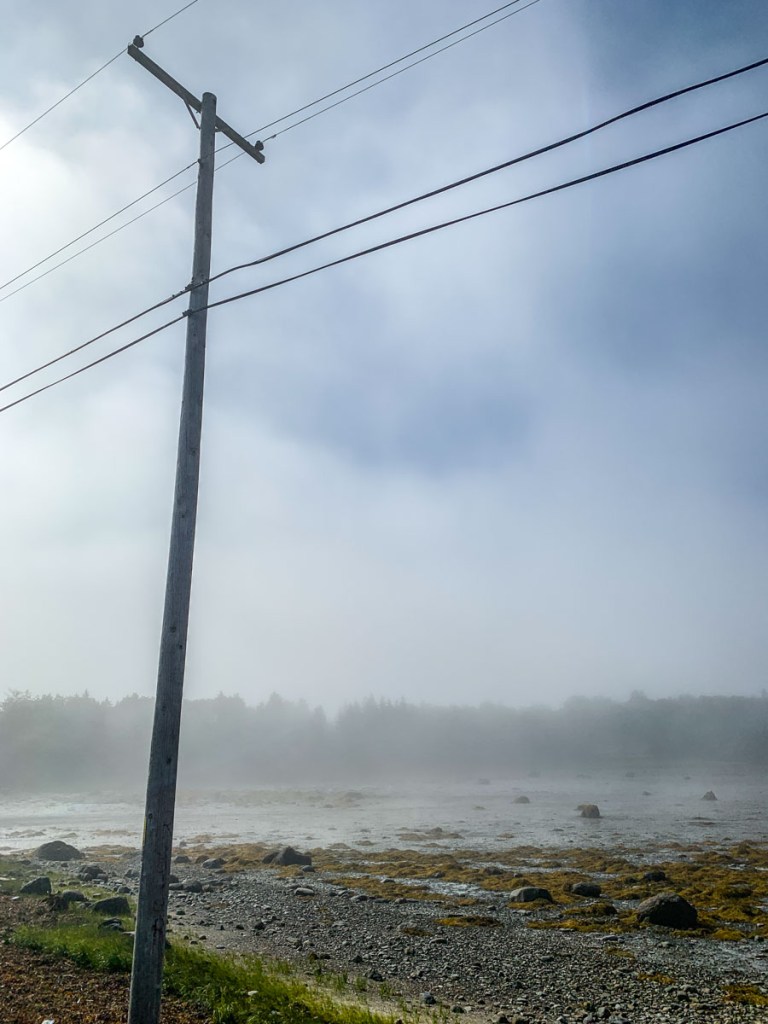
Of course I snapped a number of photos along the way. I was really struck by Maine’s rocky topography. (That created some really cool contrast in my shots.) And depending on the weather, Maine’s shoreline imagery vacillated between bright beauty and eerie fog.

We happened to spend a fair amount of time driving during low tide. And those moments revealed a damp, almost alien-like, brown and green rocky landscape… begging to be photographed.

Keep your Shots Wide

I quickly found that using a camera or a smartphone with a wide-angle lens is critical, especially if you like to take family selfies at the summit of a hike. That’s because you’ll want to capture enough of the environment around you in the shot to show where you are. (I used my GoPro for that.)

Tight shots can be great, but I feel this type of vacation photography is all about the wide. If you hope to capture a fraction of that feeling you get when you look around after you’ve climbed a thousand feet up, you’ll want to focus your camera wide. (And the same goes even if you’re walking on a beach.)

Let the Natural Beauty Tell the Story

So, here are some of my favorite shots from our trip to Acadia National Park and Deer Isle. I hope you like them!

Three Preparation Tips for the Next Blackout

Having enough rechargeable portable power is a key component to effective blackout planning. Here’s what I recommend…

COVID-19 isn’t the only challenge that Mother Nature has been throwing at us. The pandemic may be dominating most of our attention, but it’s important to remember there are other disruptions we need to prepare for. I’m talking about powerful storms that can knock power out for days. Yes, it’s that time of year when your daily life can quickly grind to a halt, and you find yourself becoming a nomad, in search of electricity to power your essential tech.

Recently, Tropical Storm Isaias blew through my neck of the woods, taking out power for over 675,000 people in Connecticut. It took almost a week for some folks to get their electricity back. My neighborhood was dark for days, but in a lucky twist of fate, our street didn’t go down.

So, we hosted a power-up barbeque for some friends whose house didn’t fare as well. They brought over their entire arsenal of mobile tech, and I set up a power station for them to use on our deck to maintain social distancing. As they were leaving, I also lent them one of my beefy RAVPower portable chargers to help maintain their tech glow for as long as possible.

Battery Back-Up Planning
When the power goes out, having a gas or propane power generator is obviously a great way to maintain your home’s critical equipment, like heat and air conditioning. (Plus, it will keep your smartphone charged!)

But short of taking this expensive step, having enough portable battery power on hand may be sufficient to at least maintain your electronic communication needs for a few days.

This may seem obvious, but it’s always a good idea to review the state of your battery back-up arsenal before you need it.

My parents taught me to always have a good flashlight on hand along with candles and matches. Here are three next-generation tips:

1.
Prioritize your Smartphones
Make sure you have enough rechargeable portable power banks to keep all of your family’s smartphones going for a week. Say what you will about our reliance on the smartphone, but communication with the outside world is really important, especially during an emergency.

I’m partial to Anker and RAVPower products. Recently, I picked up a RAVPower battery with a twist… it also has a solar charger on its side to help keep it going.

It’s the RAVPower Solar Power Bank (25,000mAh)
$45.99 on Amazon
RAVPower says it will charge an iPhone 8 nine times and a iPad mini 4 three times.

Speaking of solar…

2.
Go Solar
Goal Zero makes a variety of solar panels that will charge your portable tech (as long as the sun shines).

Their products are designed for camping, but they’ll work just fine when you’re camping out at home without electricity.

It’s expensive tech, but the sun is free to use.

3.
Use your Car as a Digital Life Boat
If you’ve got a car, you probably already have a smartphone charger set up in it. Don’t forget about that charger, even if you’re not driving anywhere.

Your vehicle can easily become your digital oasis.

Time to Set Up Camp at Home
No, none of this is revolutionary. The idea is to simply make sure you’ve got enough battery power to recharge your tech when the unexpected happens.

In a pinch, my parents relied on candles. They always work.

So does a little portable power and the right charging cables.

When the power goes out, and your home looks like it’s devolving into a wilderness, you’ll feel a lot better if you can easily set up your digital tent and go camping!


Why You’ve Got to Show Up for your Close Up

Our COVID-19 reality has created this unprecedented chapter of social experience driven by webcams. Here is why it’s more important than ever to fight your Zoom fatigue…

I have this crazy idea for a science fiction movie… One day, in the not-so-distant future, society’s social norms evolve in response to some deadly threat that forces everyone to stay at home for the next fifty years. Nobody is allowed to be in the same room with someone else other than existing family, and so all human interaction is restricted to video and voice communication.

The story focuses on how humanity adapts and how two young people find each other, fall in love and start a life together… physically separated.

All right, maybe I’m taking things a little too far. (It’s just a first draft.) But you get where I’m going.

Zooming is Here to Stay
As we all know, our interactions have suddenly required the increased dependence on Zoom and other video conferencing apps due to COVID-19. And as this situation continues, social connections, both at work and elsewhere will begin and develop… only virtually.

Sure, previously there have been many opportunities to work and interact with people in other locations via webcam or phone. But in-person moments have usually been more typical.

Now, regardless of geographic proximity, we have all been instantly separated…. and tethered together by the thin digital strands of webcam communication.

And when we eventually return to some new normal, I expect that much of the Zoom revolution will remain intact and continue on. That means our future calendars will always include some number of webcam meetings, both for work and family life.

If that prospect feels exhausting, you might want to carefully consider your next steps.

Fight your Zoom Fatigue
I think it’s fair to say that few of us enjoy sitting in front of our computer’s webcam all day. It takes a clear effort to be present for all of those virtual meetings. But I would say it’s no harder than being fully engaged with a room of people. That takes focus too.

During an in-person meeting, people will read any number of non-verbal cues that you’re projecting. They will likely glean more from those elements than from your words.

The same is true for Zoom meetings. People typically want to feel some connection to you, and to do that, they really need to see you.

That’s why you can’t let Zoom fatigue prompt you to turn off your webcam or worse still… leave your camera on but pay no attention to how you’re coming across in your shot.

Don’t be a Distant Voice
Now, consider this same equation when interacting with people you’ve just met for the first time via Zoom. A disembodied voice can feel surreal and so far away. Staring at someone’s headshot is better, but video will always come closest to an in-person interaction.

I think a hidden voice isn’t so disconcerting if you’ve already met someone and have a baseline connection. But moving forward, we’re all going to have to deal with a variety of virtual introductions.

Our webcams are going to be representing us… pretty much forever.

Welcome to the Future
The pandemic will eventually end, but many of the disruptive ways we’re using to stay connected will remain as new norms.

This all points to my favorite phrase of late… “You’ve got to show up for your close up!”

So, remember my video production tips for your next Zoom meeting:

And most importantly, don’t forget to smile every so often. Your virtual audience will always appreciate your positive energy, especially in times like these.