At Home with Tech

Unlock the power of all your technology and learn how to master your photography, computers and smartphone.

Category: Tech How To

Avoid this Surprise When Installing Your Google Nest Learning Thermostat Gen 4
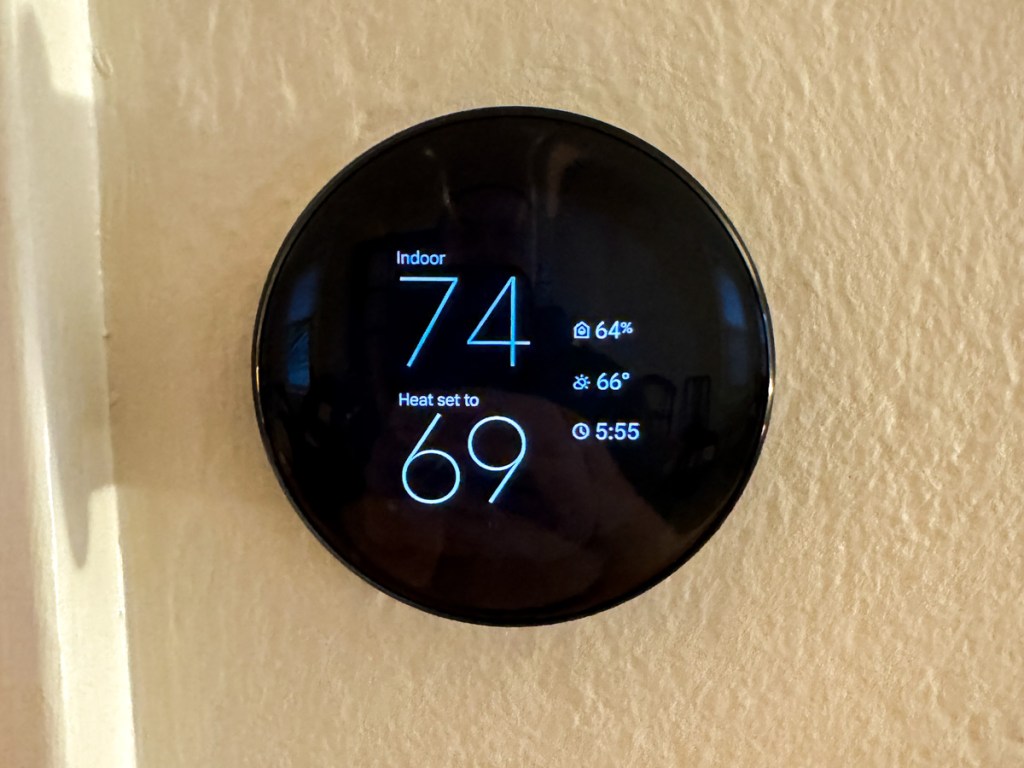
Getting 12 years out of any piece of tech is more than anyone should expect. That said, if it’s still working and doing the job, why would you want to replace it? (Unless you simply need the latest and greatest.) 

Well, you’d pull the plug when the manufacturer forces you to. If the old unit’s tech is so obsolete, it can’t be maintained by the manufacturer’s current standards. And that’s what’s happened to my trusty Nest Learning Thermostat (2nd gen) from 2013.

Goodbye Nest Learning Thermostat Gen 2
In tech years, it’s like a century old. A lot’s happened, including Google buying Nest to enter the smart home market. 

So yes, Google has walked away from its older Nest Learning Thermostat population. The official Google language is “end of support.” What that means is 1st and 2nd-generation models can no longer be reached remotely via the app on your phone as of October 25, 2025. (They’ve been “unpaired and removed” from the Nest app or Home app.) 

Poof.

It’s Time to Buy Gen 4
Yes, you can still operate these ‘relics’ manually, but I’ve always spent more time interfacing with my Nest Learning Thermostat through the app on my iPhone.

Most significantly, these units are no longer supported, which according to Google “may lead to decreased performance with continued use.” So that’s code for… it’s just a matter of time till they stop working altogether.

Look, I get it. No web-connected piece of tech is going to last forever.

So, if you want your Google Nest Learning Thermostat ecosystem to remain reliable and fully operational, you have no choice but to upgrade to the current 4th generation model, which costs $279.99.

Ouch!

Fortunately, Google has softened the blow by offering a $130 discount for current 1st and 2nd gen owners. So that effectively drops the price point to $149.99 plus tax. (Shipping is free.)

Registered owners should have received an emailed discount code towards the purchase of the current 4th gen model.

Three Color Choices
So Barrett went ahead and bought himself an early holiday present with his discount code. (Thank you, Google.) 

My hardest decision was deciding which color to get. I decided on Obsidian with a black base. (I felt it would present a cleaner, unified aesthetic in our living room. (The other choices are silver and gold with a white base.)

My Installation Surprise
Happily, installing my new 4th gen unit was the essentially the same as my old 2nd gen model. 

The only relevant difference was the size of the circular base plate, which you screw onto the wall. (The thermostat clicks onto the base plate.)

Here’s the problem: 

The new base plate is slightly smaller than the old one. And that tiny footprint difference can be a really big deal.
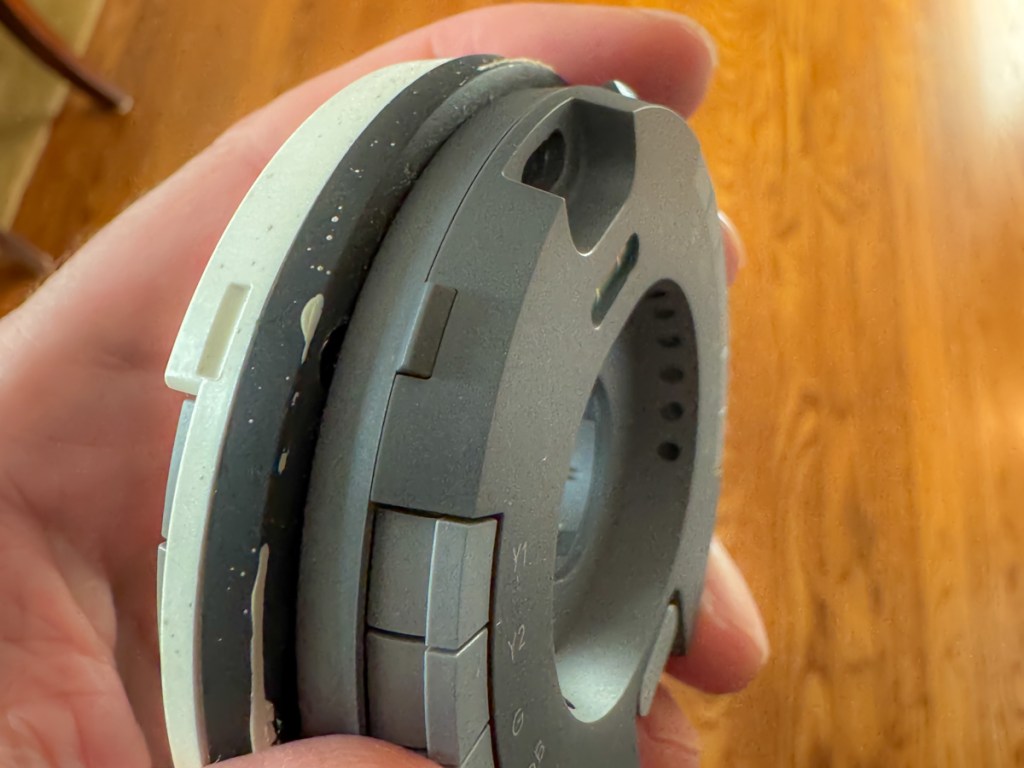
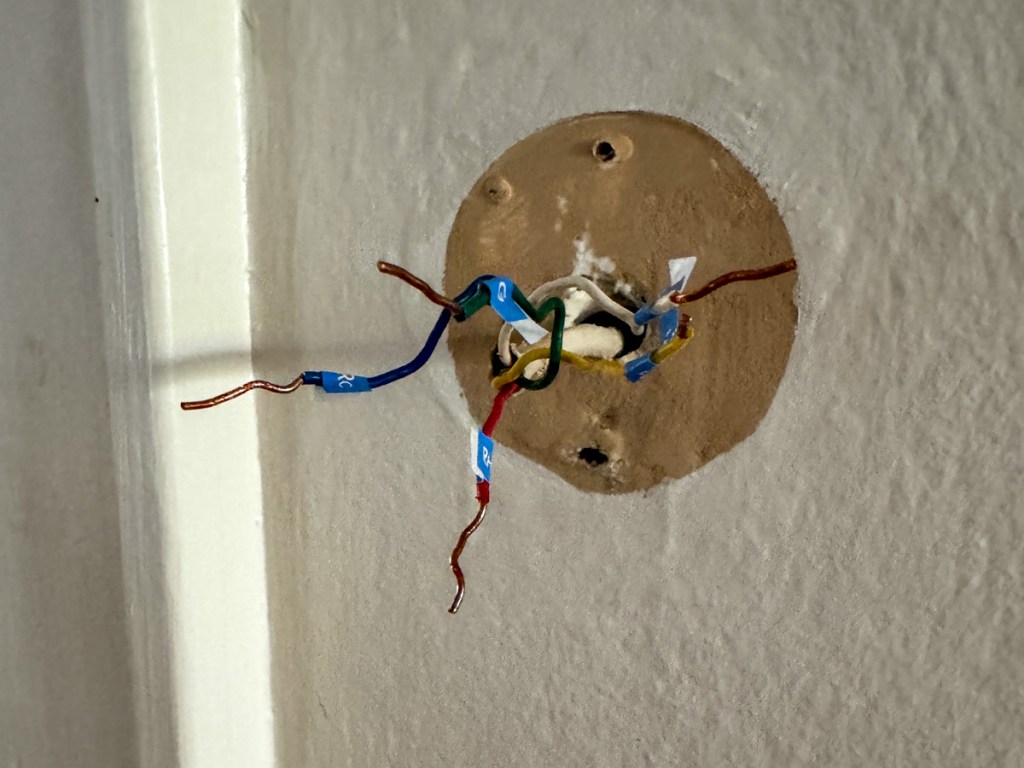
Why? Well, the new base plate will reveal a little more of your wall… 
that might be unpainted!
Surprise!

Yes, that’s exactly what happened to me. I realized there would be dark, thin paint ring behind my new, gleaming Google Nest Learning Thermostat that revealed our living room’s paint color from years ago.

Granted, the 4th gen thermostat’s beautiful face is bigger than my gen 2’s screen. It’s plenty big to effectively block the view where the thermostat’s smaller circular ‘neck’ touches the wall.

But I would know, and if you looked from an angle, you’d definitely see the old paint. Ugh! 

Sure, Google has thought of this and provided a white trim plate to use that would cover up this kind of problem.

But I didn’t want to use the trim plate. I liked the clean look of the black, circular orb perfectly protruding from my wall like a futuristic Cylon interface.

I just need to get rid of that thin ring of old paint.

I Had to Put on My Painter’s Hat
So, I hurried downstairs and rummaged through my basement to see if I still had a little bit of our living room’s current paint in a can somewhere. I eventually found it, picked up a brush and performed the paint fix.

This of course delayed my installation process, as I had to wait for the paint to dry before continuing. But it was clearly a step worth taking.

So just remember that you might need to bake that extra time into your own installation plan. 

Cool New Sensor Pucks
If you’ve been living with a 1st or 2nd generation model, you may not know about Google’s little wireless ‘satellite’ temperature-sensing pucks to pair with your main thermostat. (I didn’t.)

These “Nest Temperature Sensors” (now 2nd generation) can be placed throughout your home to help create a more even temperature throughout your rooms (effectively simulating some of the benefits of a multi-zone HVAC system).

When you buy a 4th gen Google Nest Learning Thermostat, it also comes with one Nest Temperature Sensor. (You can purchase more separately.)

With multiple sensors, you can schedule which sensor controls your thermostat at different times of the day. You can always default to the sensor in your base unit. And you can also average between your sensors.

I placed my temperature sensor in our sunroom, which tends to be cooler during the winter months than the rest of our house. Hopefully, the sensor will convince my base unit (in our living room) to keep providing a little more warmth in the early evening when my family tends to hang out in our sunroom. (That’s how I programmed it.)

Upgrade Complete!
I’ve always enjoyed my old Nest Learning Thermostat as the center of my smart home experience. And now that I’ve upgraded, I’m pleased that I’ve refreshed my relationship with Google’s gen 4 model.

I hope it takes me all the way to 2037. But with the pace of change these days, something tells me we may be discussing this again a tad sooner…

Using AI to Bend Reality in My Vacation Photography

I enjoy taking lots of photos of my life. Why exactly? Well, why does anybody?

  • To remember. To reflect. To share. To prove that it happened.
  • Family. Vacation. Adventure. Misadventure. Home. Passion. Life.

But now with a little help from generative AI, you can whip up your own life’s photos without having to actually experience… your life. Now, you can document your imagined life and share this alternate version if you want.

Sure, I know this all sounds rather absurd. But the fact that it’s possible now… easy in fact, should give us all pause. What is real anymore? 

This is, of course, a big topic of discussion on any number of fronts. For the moment, I’m simply directing the focus inward from societal to individual impact.

Google Whisk’s ‘Precise Reference’ Mode
Okay. So, with that set up, here’s how to have some ‘fun’ reinventing your life in pictures.

I’ve been experimenting with Google Whisk (one of several players in this disruptive and quickly evolving digital sandbox). Here’s the game-changing trick I’ve recently learned that turned this AI image generator into a reality-blending tool.

  • Activate ‘Precise Reference’ mode in Settings.

From there you simply need to upload at least one pictures of yourself for Whisk to see. That’s the critical reference point that puts ‘you’ in the new scene.

You can also upload photo backgrounds to help art-direct your shot or create them via text prompts.

Then, everything is ready for you to prompt your new photo into existence…starring you.

And then just click to generate.

Photos from My Vacations Not Taken
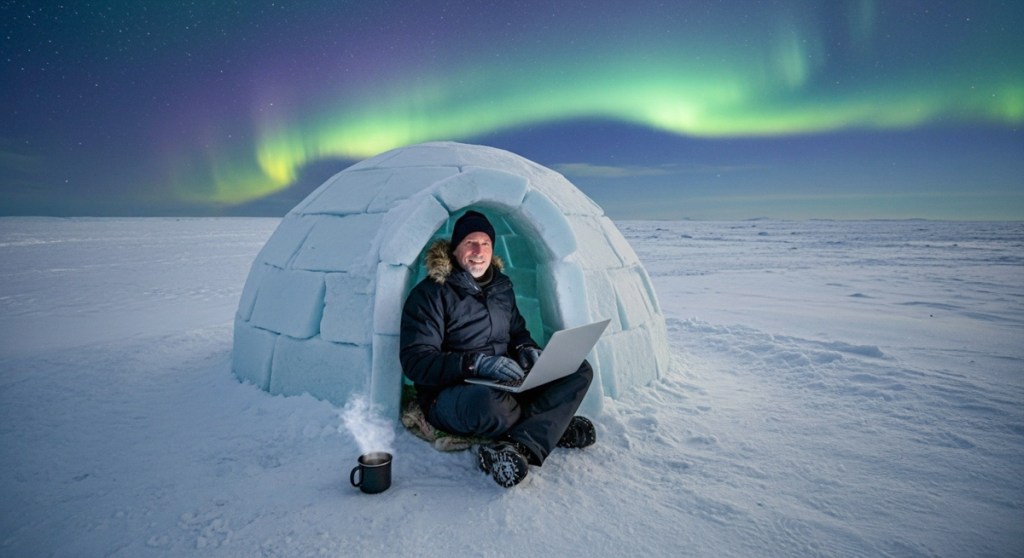
I followed the above steps, and within seconds, I received back each of these vacation photos from my alternate universe.

Sailboat Racing Fun

Seeing is Believing?
Whoa. This other guy sure is having fun. Maybe he should dial it back a bit. No, these AI-generated shots aren’t perfect. But they’re close enough to prove my point.

Creating a fake photo isn’t exactly new. Other tools have been available to do that for years. But it used to take a certain amount of skill and effort. Now, with a couple reference photos, a few clicks and a basic understanding of the process, everyone can access this great power. 

And we all know the line from “Spider-Man.”

Time to Meet Your Doppelgänger
I am fascinated. I am concerned. I am confused. My creative center feels in flux. My very existence can be morphed (as can yours).

But I’m determined to figure out how to properly integrate this AI-led creative revolution into my own reality (as we all should).

To truly understand it, you have to know how to operate within it. This is no time to ignore what’s already happened.

That’s why I’m spending time creating a vacation album from my alternate universe. Yes, it’s been a fun exercise. 

But I couldn’t be more serious.

Consider these Factors When Asking Friends to Take Photos at Your Big Party

Over the years, I’ve occasionally been asked by family and friends to take photos during their celebration event. I’m not a professional photographer, but yes, I’ve got a decent camera that can shoot RAW, and I’ve been known to snap a good picture or two.

I’ve also leaned on friends to take photos during similar moments. Who hasn’t done this? (Today’s phones take great photos.)

Besides, it’s expensive to hire a professional photographer. When literally everyone at your party has a camera, why would you need to bring in a pro?

Well, sometimes you don’t. But it’s also important to recognize the flip side of the equation.

If you’re going to stick with a volunteer camera crew solution, here are the critical variables you should not leave to chance.

There Can Be Only One Official Camera
You may not have a hired photographer. But for a variety of reasons, which I’ll get into, someone in your crowd must serve the same ‘alpha’ camera role.

That doesn’t mean your other friends still can’t snap photos for you. In fact, that’s likely going to happen regardless.

Spray and Pray
Here’s the problem. When everyone has a shared responsibility. Nobody has individual responsibility. And that can create major gaps in your photographic coverage. 

As a result, even with hundreds or thousands of photos taken, you may still not get the ones you really want.

Group Portraits and Your Paparazzi
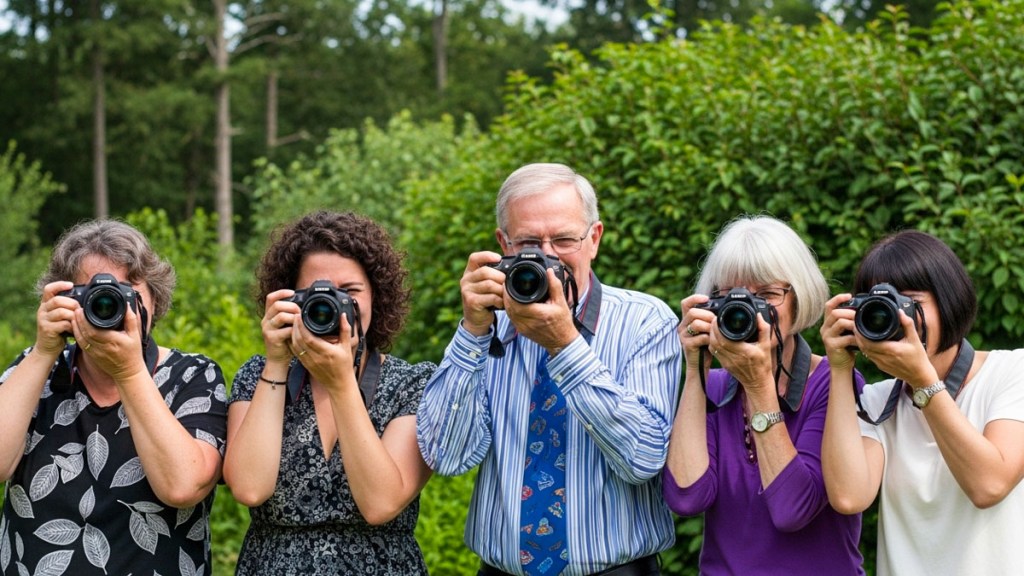
When more than one photographer is there to capture your group portrait shots, nobody in that group will know exactly which camera to look at and when. 

Even if you have an ‘organizer’ trying to direct everyone’s attention, it’s never going to be perfect. There are already too many distractions. 

And that will almost certainly guarantee many of those portraits (or worse) will be useless, because someone is looking off camera.

Remember, one ‘alpha’ camera. That’s all you really need in that moment.

Go let your paparazzi eat more hor d’oeuvres.

Dimly Lit Rooms and Blur
Yes, today’s cameras are amazing. Even the ones crammed into our phones. But they can’t handle every situation, especially in low light when there’s a lot of motion. 

People like to dance and move around at parties. And when the lights are turned down to enhance the party mood, the people in those photos are likely to look blurry. You need some serious ‘glass’ to freeze the action in low light. (I sadly need to remind myself of that limitation every so often.)

So sometimes, you require a flash in the room as the solve. But to avoid annoying everyone, only the ‘alpha’ camera should have the flash.

Conversely, if you want better photos from your volunteer team, turn up the room’s lighting a bit more. (Everyone will thank you.)

Where Does the Buck Stop?
As I’ve mentioned, with multiple volunteer photographers, you still may not catch all the highlights. Moments happen quickly. If you miss them, there’s no second chance. 

You don’t need every moment. Just the few that matter most. And again, one volunteer with the ‘alpha’ camera must own the responsibility to get you those for you. 

Yes, that may inevitably take a little time away from that guest’s ‘partying’ enjoyment. Both of you should have this understanding, and it doesn’t have to be a problem. (I’ve greatly enjoyed owning this responsibility.)

But when absolutely everyone is enjoying cake, nobody is snapping photos.

How to Have Your Cake and Eat It Too
Sure, lots of volunteer photographers will get a variety of interesting shots your ‘alpha’ photographer will inevitably miss. And that’s why there’s nothing wrong with all your other friends taking photos too.

It doesn’t have to be an either/or situation.

But it does need to be both.

Don’t Play the Odds
I learned this lesson the hard way at my own wedding. We didn’t hire a professional photographer and instead asked a few friends to help out. (And I really appreciated their support.)

We received many hundreds of photos. But honestly, a lot of them were unusable for the all the reasons I’ve discussed.  And those few key moments that mattered most?

Well, happily, yes… someone captured them successfully. But if you were to review the totality of all our pictures, you would also conclude the odds only narrowly favored us that day. It could have gone much differently. 

Lessons from Experience
The presence of many cameras in a room will democratize the responsibility of photographing your event. That’s the problem.

Ultimate responsibility needs to fall to one single source of photograph truth. And that person needs to know it.

This doesn’t mean you always have to pay for a professional photographer. (Though it’s a good way to get the job done right.) But yes, there has to be someone in your crowd who effectively is playing the same role. 

And of course, it’s lovely to receive everyone’s else’s photos as well. (There will be some great ones.)

This two-step strategy will go a long way to ensure success.

You’ll maximize the opportunity that comes with having dozens of cameras snapping away, while also preventing the disorganization that can develop without having an appointed ‘alpha’ camera in place.

A little planning can make all the difference.