At Home with Tech

Unlock the power of all your technology and learn how to master your photography, computers and smartphone.

Category: Tech in the News

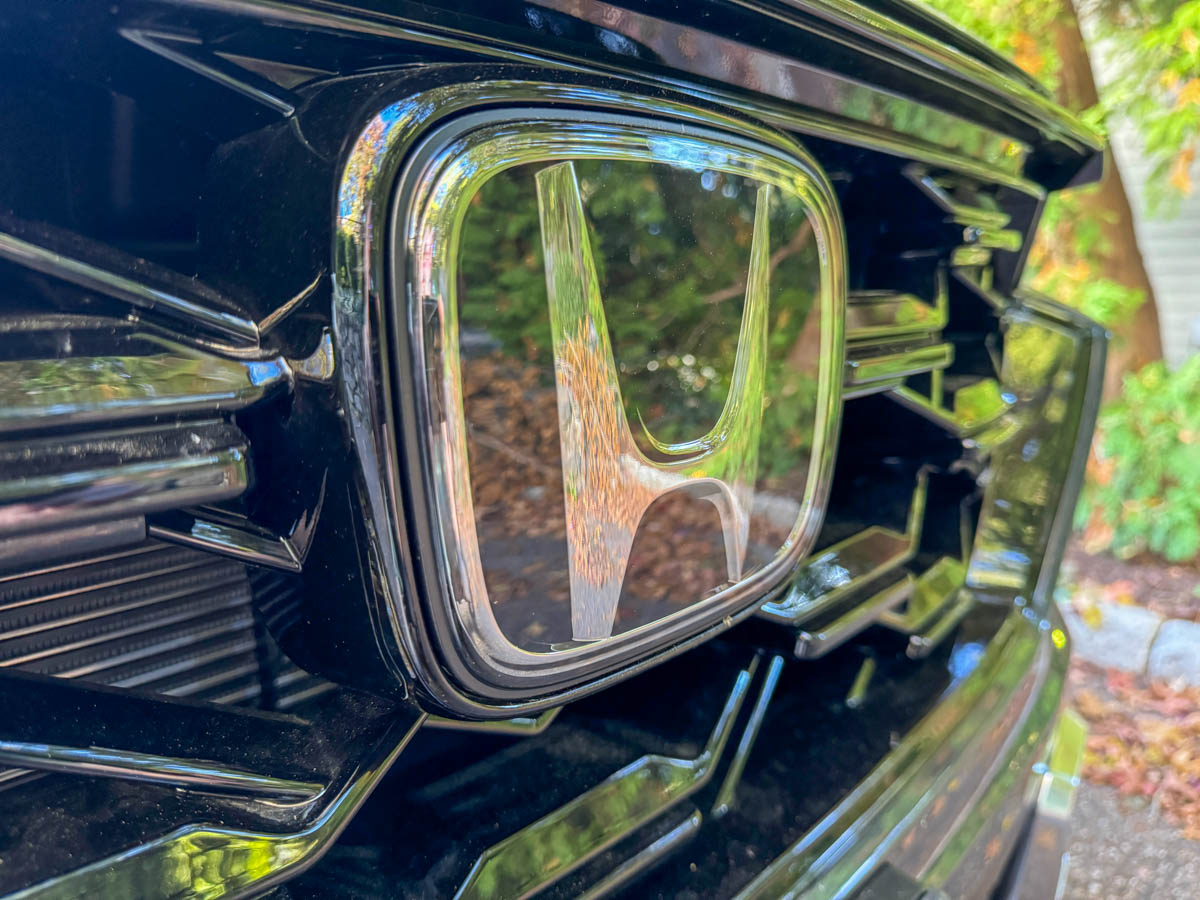
Why I Said No to an EV and Chose the Honda CR-V Hybrid Instead

My Honda CR-V Hybrid purchase tells me that I just wasn’t ready for the EV revolution. Here’s what else I learned.

I’m pleased to report that I’ve bought a new Honda CR-V Hybrid for me and my family. I chose it over four other strong hybrid options:

  • Hyundai Tuscan
  • Kia Sportage
  • Mazda CX-50
  • Toyota RAV4

I test drove the runner ups, and they’ve all got great selling points. But I liked my CR-V Hybrid best. Last week, I got into the details as I compared the vehicles.

When I was done, I realized I had experienced a surprisingly complex shopping journey to find the right eco-friendly vehicle for Barrett. Here’s why.

SUV Hybrids aren’t as Common as You’d Think
I only considered five small SUV models that offer greener tech. That’s not a lot of choices for an industry that’s supposed to be actively on the path towards retiring gas engines.

Yes, there are other eco-friendly SUV choices on the market, but according to reviews, those SUVs aren’t quite as good. Right or wrong, I crossed them off my list. Plus, you can only test drive so many cars… meaning you can only endure so many dealership experiences. (I’m sorry to say that, but it’s still true.)

Ultimately, here in the U.S. there just aren’t a lot of hybrid or PHEV SUVs to choose from.

Of course, there are more options in the luxury car segment. But folks, if we’re really moving to greener cars to save the planet, we’ve got to market more to the masses.

I didn’t Buy a Starship Console Interface
The advanced touch panel designs in both the Kia Sportage and Hyundai Tuscan satisfied my search for cutting-edge tech. But the reality is all those slick screens would sometimes be harder to navigate. (My CR-V also has a touchscreen, but the tactile interface design elsewhere with knobs is surprisingly more user friendly.)

Plus, my fingerprints would show up everywhere on the touch consoles and reflective blacks of the Sportage and Tuscan. I know I would always feel the overwhelming need to wipe down the surface with a micro-fiber cloth. (Not sure if that’s more of a problem with the car or with me.)

And no, my CR-V also doesn’t sport a head-up display on the windshield (like the Mazda CX-50 Hybrid). Though I began my car search eager to find ‘HUD’ tech and realize my inner Tom Cruise, I discovered HUD isn’t mainstream, and the data displayed isn’t a game changer. Head-up displays are still more trendy than useful.

No PHEV for Me
I ended up walking away from three good PHEV options (Sportage, Tuscan and RAV4). That surprised me, but clearly that feature wasn’t as important as I originally thought. That said, had the CR-V also come as a PHEV, I would have likely bought that one.

But not having that option didn’t sway me away from my CR-V Hybrid. I’m sure Honda has done plenty of research to know that. (They’ve clearly skipped over PHEV tech.)

I am Hybrid Barrett
I was committed to fully jumping onto the greener-car bandwagon with our purchase, but a simple hybrid was as far as we got.

I wasn’t ready for an EV, and I couldn’t find a PHEV that met my other priorities.

My new Honda CR-V isn’t exactly a cutting-edge green technology choice (though it’s got all the new safety-tech you’d expect). But it’s a solid step in a greener direction.

  • Our CR-V gives us great gas mileage.
  • It’s better for the planet.
  • And my wife and I love the car.

Well done, Barrett. (I think.)

No EV for Barrett
I long ago resigned myself that I’m never going to own a flying car. That ‘hybrid’ vehicle is stranded in science-fiction land.

But EVs have certainly crossed over into today’s mulitversal-616-reality. When I had the chance to own one, I ultimately flaked out, because I felt it was too disruptive a decision. I didn’t see it as ‘easy.’

  • Range anxiety
  • More expensive
  • Higher depreciation rates.
  • Some middling reviews

Bringing my Honda Hybrid home was entirely easy.

Going hybrid felt like such a natural evolution. I just couldn’t sign up for the EV revolution. Not yet…

The Winding Road to a Greener Future
Do I have buyer’s remorse? Absolutely not. I am who I am.

But when I take a step back and look at my story and my own limitations, I can also see how much more work I and many of us need to do to better support our planet’s health.

I know I could do better, but I think I still did okay. (I know others may disagree.)

Good luck to you in your own evolving journey towards a greener and healthier future for all of us.

I Drove 5 Different Hybrid SUVs and Bought this One

Here are the pros and cons for each of the Lester hybrid SUV finalists and how I made my decision on which one to purchase.

I’m not a professional car reviewer. This is not “At Home with Cars.” But I’ve been driving them my entire adult life, and I know what I need. When it was time to buy a new SUV for my family, and I was faced with one of the biggest purchases I can make, I certainly did my research!

So, if you might find another point of view useful, strap in…

Of course, I’ve closely followed the news regarding EVs. Who isn’t aware of this revolution that’s designed to move all of us away from gas-powered vehicles. Yes, I’ve felt compelled to be part of it all as I traveled down the road to a new car.

But as I shopped, I quickly discovered my own truths and limits.

EV?
As much as I loved the idea of going with a pure electric car, I just wasn’t ready to take the leap with an EV. I was held back by the usual reasons:

  • Range anxiety
  • Additional cost
  • EV depreciation

So, I never left the starting line and didn’t test drive any EVs.

PHEV?
I was initially enthusiastic with the idea of a plug-in hybrid. (Being able to drive around town without touching a drop of gas and then charging back up at night sounded amazing.) That’s the best of all worlds, right?

Well, it depends on who you ask, and there are car reviewers out there who suggest a PHEV creates the worst of all worlds… just an average-performing vehicle that’s weighed down by having to serve too many different technologies.

Still, I didn’t dismiss the option. Nor did I flinch at the upcharge for a PHEV. (Passion can take you a long way towards a decision, despite the logical drawbacks.)

But first, I had to find it in the car I wanted.

Hybrid?
The Toyota Prius made ‘hybrid’ a household term a thousand years ago. It’s hardly a new concept. And in many ways, a hybrid engine is the easiest way to move away from all gas. But it certainly doesn’t feel as exciting as a car that you can plug in.

Still, going hybrid is a step towards helping the planet (and saving some bucks on fuel costs).

Drivers, Start your Engines!
So, it was time to go shopping. My goal… buy a new small SUV. I’d been driving my 2009 Toyota RAV4 forever, and after 186K miles, it was time for a new starship. I wanted to replicate the same form and function… hopefully with newer and greener tech under the hood.

After hours of online research and reading car reviews by the ‘experts,’ I landed on these five choices to test drive.

Toyota RAV4 Hybrid and Plug-In Hybrid
A new RAV4 was obviously a leading candidate. But when we visited our local Toyota dealer, we had the strangest of experiences…

Get this: They didn’t have any new RAV4’s on the lot. Not one.

Everyone knows a new RAV4 is a solid choice. But apparently, you can’t buy one. Not easily. Not without waiting a long time. The salesman explained that Toyota simply isn’t building enough of them.

Sure, he would do everything he could for us, but finding a new RAV4 could take months and getting the exact options I wanted was uncertain.

Plus, after test driving the one 2023 model they had (off a lease), my wife and I felt it wasn’t that amazing. (And it was selling at the new car price. Oof.)

Yes, the RAV4 hybrid gets great gas mileage, and the model also has the PHEV option. But the purchasing path was just too daunting.

I loved my old RAV4, but a new one for the Lester family was clearly not in the cards. We drove away from the carless Toyota dealership and never turned back.

Mazda CX-50 Hybrid
The hybrid version is new for 2025. And the hybrid wasn’t available during my research phase, but we test drove the standard one to see how it felt.

Whoa! This Mazda was zippy with enthusiastic handling, and it really moved! But the car was a bit small and tight. Plus, I didn’t really need the sports-car feel.
(I’m a family guy with a teenager.)

Not to dismiss a great car, but it just wasn’t the right time for me and a Mazda. Plus, the hybrid wasn’t even available yet, and the sales manager told me he had no idea when they were coming in. He said that one day, they’ll simply show up. (true story). So, that made it an easy pass.

Still, my Mazda experience ultimately helped me realize that even though so many car reviewers focus on how quickly a car can accelerate, that wasn’t as critical a metric for me.

Sure, I want my new car to have enough power to move when I need it to, but an extra .8 seconds from zero to 60 mph isn’t as relevant to my real-life needs. Does that me boring? Perhaps. But I’ve got other priorities.
(Don’t count me out.)

The good news is most hybrid/PHEV engines usually have more punch by design.

Kia Sportage and Hyundai Tuscan (Hybrid and PHEV)
All the reviewers say the Sportage and Tuscan are similar. And they are. So, I’ll also consider them together:

Both flaunt the technology-focused design options I was looking for. I absolutely loved the high tech-feel in both vehicles. The extended dash and integrated screens with all the bells and whistles really felt like I had finally stepped into the car from the future. Some examples:

  • Blind-Spot View Monitor
  • 360º Surround View Monitor

I secretly wanted to be on the bridge of the Starship Enterprise. And both these cars gave me that experience.

And all the cool screen displays came at the same price points of the competition. Plus, both SUVs offer the PHEV option.

But there were two big drawbacks…

  • Fingerprint Magnet
    The SUVs’ touch screens aren’t always as easy to operate when you’re driving. And the reflective surface areas from all the black plastic molding will quickly get mucked up with fingerprints. Not to mention their potential to reflect the sun into your eyes (according to some reviewers).
  • Circular Gear Dial
    And then, there’s the Kia’s gear-dial redesign. Kia has replaced the traditional gear shifter stick with a circular dial. You dial it right for ‘drive.’ And you dial it left for ‘reverse’ (neutral in the middle).

That’s innovative, right? Well…

In practice, that disruptive design change was a step too far for me and my wife.

The Tuscan took a different road and redesigned its gear-shift selector into a small column-mounted shaft behind the right side of the steering wheel. Not as bad a choice, but still unfamiliar.

After both test drives, my wife and I realized that we wanted more physical dials and a stick.

So even though both these cars had everything I was looking for, the user interface still pointed us in a different direction.

Honda CR-V Hybrid
The CR-V was the first car we test drove. And it felt absolutely great. The roomy cabin was awesome, and the driving experience was superior.

Yes, it comes as a hybrid… but unfortunately there’s no plug-in model. And it was missing some of cool features of the Sportage and Tuscan… such as a 360º surround view monitor.

Plus, I was shocked when I realized it just had a tire repair kit instead of a spare tire. (The same problem with the Sportage and Tuscan. That said, the RAV4 and CX-50 both come with spare tires.)

But the CR-V hybrid had everything else from a safety standpoint that you’d want.

  • Collision Mitigation Braking System
  • Road Departure Mitigation System
  • Blind Spot Information with Cross Traffic Monitor
  • Multi-Angle Rearview Camera
  • Adaptive Cruise Control
  • Lane Keeping Assist System

Since the CR-V was our first test drive. I needed to shop around some more due to the usual FOMO. So, we drove on to the other brands.

When we were finally done, it was suddenly clear the Honda CR-V Hybrid was the car for us.

  • Plenty of safety tech
  • Old-school twisty knobs where they really belonged
  • Wireless Apple Car Play
  • All wheel drive
  • Regular gear-shifter stick/knob that goes forward and back
  • Decent 9” color touch screen
  • Solid fuel economy: 40 mpg city/34 mpg highway/37 mpg combined

And may I say how much I appreciate Honda for not flooding the model line with 108 variations to choose from (like some of the competition). Buying a car is complicated enough. Model simplicity really helps to focus my decision.

Honda Wins the Race
We started with the CR-V, and after stacking it up against the competition, we realized that even though it didn’t have everything on my shopping list, it offered everything that mattered most.

  • The car was solid.
  • The choice felt right.
  • We were ready to buy!

And we purchased our Honda CR-V Hybrid!

As I mentioned last time, we then paid for some expert help to make our price negotiating experience as effective and painless as possible.

Brand Loyalty Matters
Once upon a time, my first cars were Honda Accords. Then, I spent many happy years with Subaru and Toyota.

Now, I can’t deny that it feels amazing to come back to Honda.

I’ve come home.
(That’s brand loyalty for you!)

Did that play a role in our decision?
Well, it didn’t hurt!

Is ChatGPT’s Emotional Voice Assistant Getting too Personal?

The lines that define humanity have gotten a bit blurrier, now that it’s harder to differentiative between an interactive life-like AI voice and flesh and blood.

When watching science fiction, we accept it when a talking computer sounds like a real person. From Iron Man’s J.A.R.V.I.S. to the Starship Discovery’s Zora, it’s a common sci-fi character device. And, of course, there’s the mother of all talking computers… HAL. Some fictional computer voices are friendly. Others are not. But they all sound like us.

Well, it isn’t science fiction anymore. With ChatGPT 4.o, now we’ve got a young, perky, friendly woman’s voice waiting to talk with you. And it seems entirely life-like with a total range of interactive emotions.

I don’t think OpenAI has given this new AI voice assistant a name yet, like Alexa or Siri. So, I’ll just call it Jane, the name I gave to my talking Garmin car GPS unit a few centuries back.

Well, you’ve done it, OpenAI. Yes, Jane seems alive.

Jane’s got Personality
I’m simultaneously enthralled and appalled. Sure, OpenAI presented the world just a demo of this female AI voice interface, and it wasn’t perfect, but it was close enough. It was hard to tell if her Scarlett Johansson-like vibe was real or not. She certainly sounded like she had feelings.

The three on-camera people all laughed and talked with Jane about mostly frivolous topics. It all seemed so wonderful and natural. They were perfect humans having a virtual coffee with a digital proto-human at the edge of the ‘singularity.’ Just another day at the office.

What could possibly be concerning?

There’s another Barrett
I was distracted about a separate detail that hit a little closer to home. One of the human presenters was named Barrett. Yes. There aren’t too many first-name Barretts out there. So, that coincidence struck me. My inner-Spock eyebrow raised a tad. “Fascinating.”

Perhaps I should pay closer attention.

The demo proceeded to show off Jane’s skills. She wasn’t just a voice. She had eyes too. She can see and process information through your phone’s camera. Yes.

Then, Jane complimented Barrett on what he was wearing. It felt strangely personal.

Okay. Now, I think we’ve crossed beyond the typical definition of a phone app.

And then I fell down the rabbit hole…

Is Humanity Replaceable?
I can’t stop thinking about the season 3 finale to “Westworld” (2020) when the evil Man in Black, played by Ed Harris, comes face to face with his robot host duplicate and realizes there’s no difference between them. He is entirely replaceable.

And I happened to recently stream “Mission: Impossible – Dead Reckoning Part One” (2023) during family movie night. The AI ‘Entity’ is of course the scary omniscient villain in the background. We never really get to meet it, but the self-aware AI seems impossible to beat. (We’ll have to wait until next summer to find out how Tom Cruise figures out the key solution.)

Fiction writers have forever been telling scary stories about computers gone amok. The Terminator. Ultron. Better-Stronger-Faster. (Wait, that’s just Steve Austin. Never mind.)

We’re in Control?
We’ve been trained for years to fear a superior AI-driven entity that will simply take over one day.

Now, I’m not sure anyone knows what’s going to happen when a computer actually becomes self-aware. But I don’t think we’re there yet.

Friendly Jane is just a new ‘emotion-simulation’ interface from ChatGPT. It’s a tool for us to use.

ChatGPT and other generative AI chatbots are supposed to help us do certain things faster. And they certainly do.

So, why the fuss?

Identity Crisis
I think our deeply embedded human fear of a Skynet overlord is partially a biproduct of years of exposure to scary storytelling.

Is this a branding problem to solve? Clearly, Barrett and his OpenAI colleagues are trying to address that with their very helpful Jane.

But I believe we’re also struggling with this redefining moment of what it really means to be human.

Artificial Human?
Did people feel threatened when the pocket calculator was introduced? Or the PC? Or the act of Googling? I don’t think so.

Sure, ChatGPT can process and present information faster than any human mind. But computers already passed that threshold years ago. We know that.

What’s so different now that there’s simply a young, engaged female ‘human’ voice attached to that interface?

Have we crossed over some invisible line of authenticity that defines our very identity as a species?

Maybe.

Activate your Inner John Connor
What’s clear is we are in the middle of an insanely rapid technological evolution. And if you want to know what it is to be human in the 21st century, you may be forced to redefine it a bit.

And so, you’d better figure out how to control the tools that are already doing what yesterday only we could do.

This is not a choice.

For starters, it’s time to learn how to be a good ‘prompt engineer.’ I guarantee tomorrow’s children will grow up being experts at this the same way yesterday’s toddlers intuitively knew how to navigate the first iPads.

Pay Attention
Don’t we already know that a pretty voice and manufactured beauty shouldn’t be a defining characteristic of any real person?

Will we need to pay more attention in the future when presented with reasonable facsimiles of the human form and function? Absolutely.

If you spot your doppelganger tomorrow on the street staring at you, you probably have something to worry about.

But I think eventually having a helpful J.A.R.V.I.S. in your life can be productive, empowering and even nurturing.

…As long as you don’t forget ‘what’ you’re dealing with. It’s the ‘what.’ Not the ‘who.’

Jane is not alive.

That’s the line we don’t want to cross.