At Home with Tech

Unlock the power of all your technology and learn how to master your photography, computers and smartphone.

Category: Tech Trends

In Search of Remote Learning Headphones that Won’t Hurt my Son’s Hearing

Headphones that are volume limiting can be helpful to protect students who are spending more time online doing virtual learning. The trick is to find a pair that’s big enough for older kids.

I never imagined that my young Padawan would be spending so many hours with headphones wrapped around his little head, but remote learning during the pandemic suddenly warped the need for this tech forward.

And there’s a little question I haven’t fully addressed. Is the volume of the daily audio streams that flow into my son’s ears really safe for his hearing?

Here’s our backstory.

Beyond POWMEE
Our fifth grader has been using a pair of POWMEE P10 Kids Headphones with a built-in microphone on the cord, but they’re a little tight for him. He’s loved his headphones, but he complains every so often that his ears hurt after he’s worn them for a while.

I’ve also liked these POWMEE headphones, because they’re designed with a volume-limiting feature to protect his hearing. (So, I’ve been thinking that he’s covered in this regard.)

Now, it’s simply time to find a larger pair of wired headphones and microphone with the same sound protection. (I’ve been resistant to upgrading to Bluetooth headsets. An old-school corded pair that doesn’t need to be recharged should be just fine for him.)

Mpow CH6 Pro
I feel that any headphones designed for kids will be too small for my son. So, the product category I began Googling is ‘volume-limiting headphones for teenagers’ (even though my son is barely a tween).

Unfortunately, I don’t think that category exists. It would appear that headphone manufacturers only market audio-level protection to the toddler/small kid population. If you’re any older, I suppose you’re supposed to know enough not to pipe dangerously loud sounds into your ears?

There’s really not much out there for an older student with a growing skull.

On Amazon, I did find one pair of volume-limiting headphones that are being marketed to teenagers:

The cable has a 3.5mm audio jack, and the earpads are larger than those on other headphones for kids. Unfortunately, the volume limit is only 94dB, which is beyond what is generally considered ‘volume-limited.’

PuroGamer
After another trip down my research rabbit hole, one company kept popping up. It’s Puro Sound Labs.

Puro Sound Labs offers a couple good choices for younger kids, but there’s also the PuroGamer Volume Limited Gaming Headset, which is targeted for teens and gamers of all ages.

Even though the PuroGamer gets mixed reviews for reliability on Amazon, these headphones still inched ahead of the Mpow for what I needed. They’re big enough, will work well for online learning, and the Amazon price is right.

Now, I don’t expect too much at this price point. I just want these headphones to function properly and help protect my son’s hearing.

The Price for Better Audio Protection
With such a limited selection, I eventually did extend my search to include more expensive Bluetooth headphones. But I came up short in that category too.

The one seemingly solid Bluetooth option is made by Puro Sound Labs.
(Sense a trend?)

But they appear to be too small for my son’s head. So, I sadly needed to pass on this choice.

Pinna Labs offers the LOMA Bluetooth Headphones for adults. But in my online research, I found nobody talking about this company. Plus, the headphones are not ‘currently available’ on Amazon.

While the LOMA headphones seem built for exactly my son’s needs, something was telling me they aren’t ready yet for prime time. Again… pass.

The PuroGamer Wins in a Shallow Field of Competition
I’m left with the realization that this market segment is
woefully underrepresented.

I ended up ordering the PuroGamer for my boy, and I’m hoping for the best. But I know that thirty bucks really can’t buy that. For now it will have to do.

So many of our kids are using headphones for so many more hours these days. I would assume that there’s a growing army of parents out there who have come to the same realization and also want to protect their older children’s ears?

If anyone else has other ideas, please let me know!

6 Ways to Protect your Data and Tech at Home

If you’re looking to beef up the reliability of your digital resources, here’s a list of the gear behind my tech.

With so many daily norms shattered as a result of COVID-19, I’ve discovered the act of online holiday shopping to be a comforting activity. Of course, it’s no less frustrating trying to find the actual deals. But that’s always been a part of the challenge, right?

Right now though, what’s most important to me isn’t what shiny new tech to buy. It’s how to make sure the gear I own continues to work properly. And that’s often about the tech behind the tech.

I thought it could be helpful to share some detail on the support gear that helps to keep my tech going every day. This list isn’t about the coolest hardware. It’s simply about what helps maintain order with my tech at home as well as a sense of stability for my (digital) existence. 

It all about protection and reliability.

1. Backup Drive for your Computer

Cloud storage should now be a major player in your backup plan, but having dependable external drives is still a good strategy. I’m a big fan of G-Technology Drives (owned by Western Digital).

The G-Technology 4TB G-Drive USB 3.0 goes for $129.95 on Amazon.

It’s what I use for my iMac’s Time Machine backups.

2. Portable Backup Drive

Yes, I’m sticking with G-Technology for the portable choice. My go-to drive is the G-Drive Mobile USB-C.

The 4 TB version costs $139 on Amazon.

3. Wireless Mesh Router

If you’re like me, your home WiFi is now tasked with supporting multiple family members throughout the day…and in every corner of your home. To help make sure that your WiFi reaches your entire family perimeter, you need a mesh WiFi system in place.

When I replaced my old Apple AirPort Extreme WiFi router, I went with the two-unit RBK50 mesh WiFi system made by Netgear Orbi. Next to my Sonos speaker in the photo above, it costs $295.19 on Amazon.

4. Smartphone Case

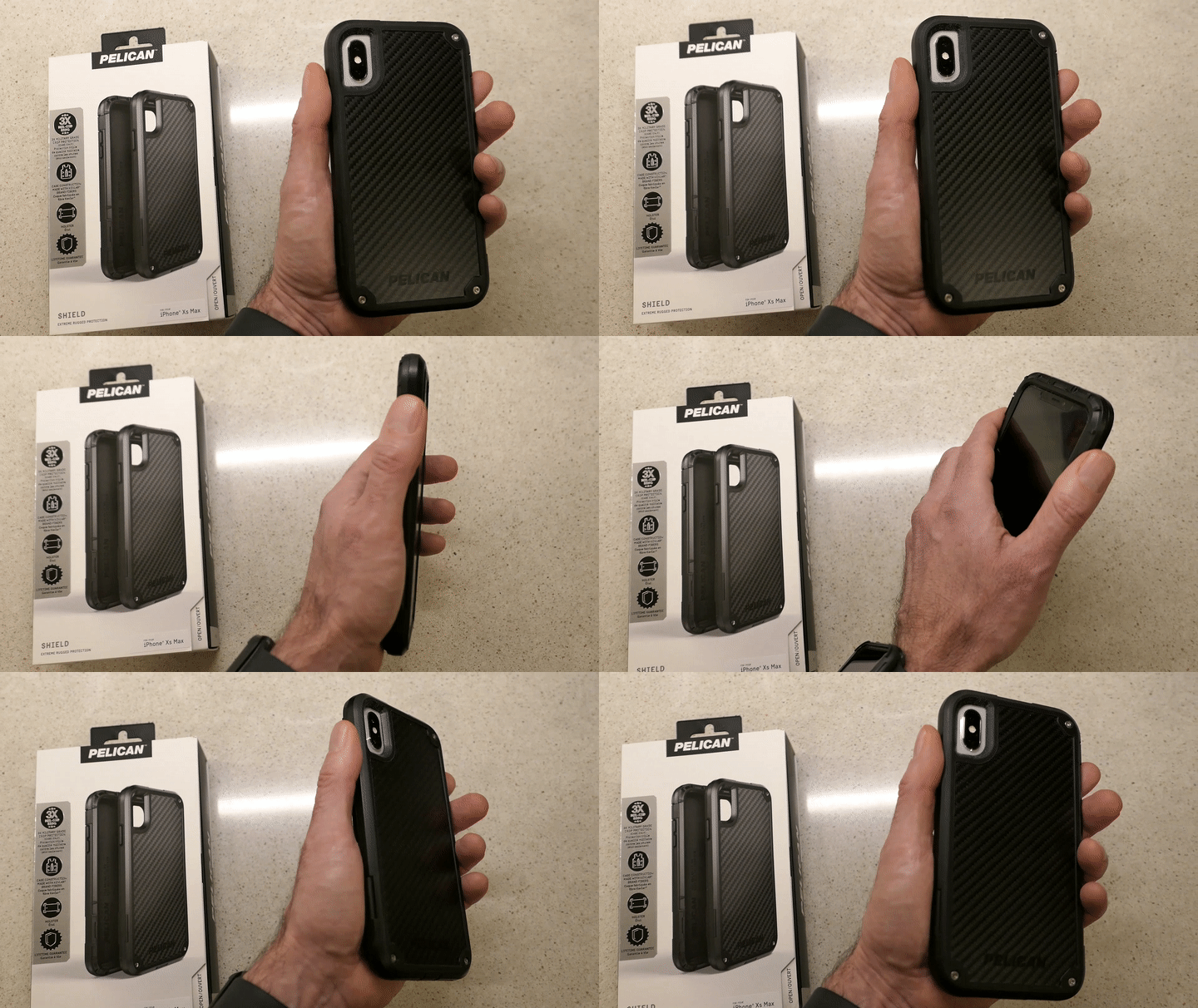
Holding Pelican Shield Case for iPhone XS Max

You really don’t want to deal with a cracked smartphone screen if you can avoid it. I’ve always felt that a solid case is critical to maintaining your smartphone’s structural integrity. 

I’m partial to Pelican cases. The company is best known for its equipment cases that protect gear worth many thousands of dollars. Its smartphone cases are also tough, and the “Shield” model looks like it comes from the alternate universe in the TV series, “Fringe.” 

5. Portable Power Bank for your Smartphone or iPad

You know what happens when one of your portable screens runs out of juice, and a power outlet is nowhere to be found. A little portable power can really save your day.

RAVPower 16,750mAh Power Bank USB External Battery Pack is
$27.99 on Amazon
(This model also comes with a built-in flashlight.)

6. Cloud Backup

I’ve been using Backblaze after CrashPlan broke up with me. So far, so good.

As I mentioned, cloud backup should always be a part of your data protection strategy.

Maintaining Comfort
As we enter this season that promotes comfort and joy, it’s always a useful reminder to have some boring supports in place for your important tech. I’m not sure that will specifically generate joy, but it certainly will maintain comfort.

That’s always on the top of my list.

Why Your Zoom Viewers Can’t Hear You

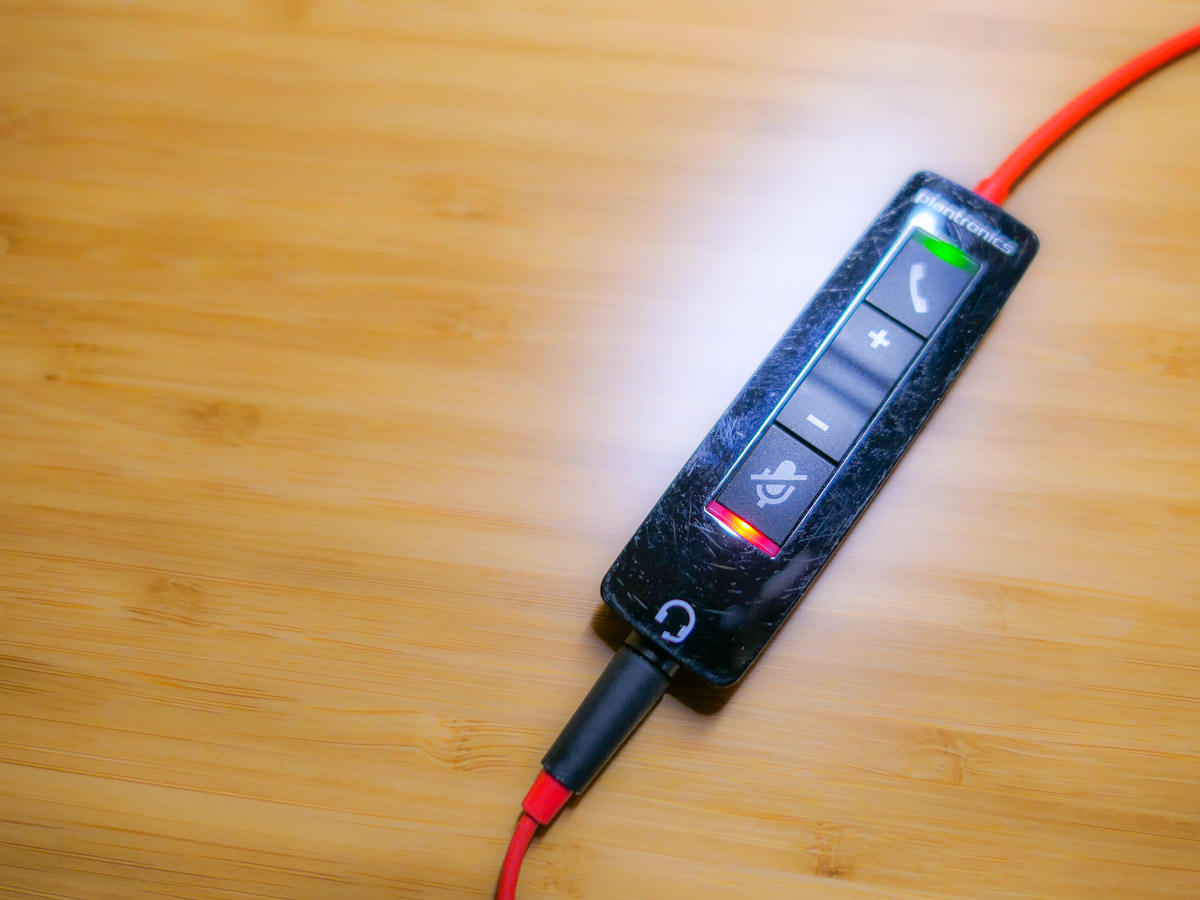
Mismanaging the mute button may seem like a rookie mistake during Zoom calls, but it’s a more frequent problem than you’d expect. Here’s why…

This ‘golden’ age of Zoom has redefined what to expect from daily video communications. Sure, throughout these ongoing months of isolation, there have been any number of ways to improve the quality of our Zoom calls.

And in the Zoom meetings I’ve attended, I’ve observed a growing awareness of video production best practices. That said, there’s one skill that many people still seem to struggle with… handling the mute button.

We Can’t Hear You!
How many times have you heard someone say to a Zoom speaker, “Are you on mute? We can’t hear you! (pause) We still can’t hear you. You’re on mute!”

This epidemic of awkward Zoom silence is partially the result of education campaigns during the early months of the pandemic to mute yourself if you’re not talking in a Zoom meeting.

Remember all of those Zooms that imploded because there were a couple of people who couldn’t mute themselves if their lives depended on it? And then they would jabber away as they talked to their household members, unaware that their microphones were unmuted.

Besides being an embarrassing oops to unknowingly allow everyone to eavesdrop on your life at home, this mistake will also effectively derail any Zoom meeting.

So by now, we’ve learned to mute ourselves to avoid becoming
Zoom Enemy #1.

Expect the Unexpected
It’s certainly better to try to talk on a Zoom while still muted rather than saying something that your Zoom world shouldn’t hear. But it’s still a mistake that anyone should strive to avoid.

At the end of the day, I think the solution comes back to maintaining enough focus on the live elements. For those of us who have tried to ‘master’ Zoom, we’ve instead put a lot of work into our preproduction.

  • The lighting
  • Your background
  • The right microphone

But when our imaginary on-air light pops on, I feel we’ve tended to let down our guard and assume the technology will handle itself.

Keep your Hands on the Virtual Steering Wheel
Live television used to take a whole control room of production experts to ensure success. It’s amazing that Zoom has boiled it down to just a few clicks of your mouse.

That said, someone really needs to pay attention to your Zoom stream while you’re talking. And that person is you.

Any number of problems can crop up.

  • Someone can unknowingly walk into your background, but this now happens so frequently that nobody cares anymore.
  • Your attention might get temporarily diverted, which could require you to first mute your video.
  • You may subsequently forget to unmute your video. That’s not usually a dealbreaker.

But if you lose track of your audio, you’re either the 800-pound gorilla in the virtual room or a Luddite who doesn’t know how to work your microphone.

Don’t Forget to Unmute Yourself
Zoom isn’t really a set-it-and-forget-it technology (well, not yet).

You simply need to train yourself to pay attention your video and especially your audio feeds throughout your personal and professional Zoom calls. And that requires a diligence to be constantly muting and unmuting yourself exactly when you need to focus on the content of what you’re saying.

If you feel like that’s an annoying juggling act, it is. But it’s a small price to pay to step up your Zoom game.

Can you hear me?

Practice your Magic
During this difficult time for so many of us, it’s certainly understandable that there may be tons of distracting elements in your environment that are urgently competing for your attention. Sometimes it can feel like you need a magic wand.

Zooming at home throughout the day brings new meaning to art of multitasking. There’s no perfect solution. But beefing up your Zoom muscle will certainly help you keep all of your balls in the air.

Happy juggling!