At Home with Tech

Unlock the power of all your technology and learn how to master your photography, computers and smartphone.

Category: technology

Why I Couldn’t Stop Watching the Final Hours of NASA’s Artemis II Mission
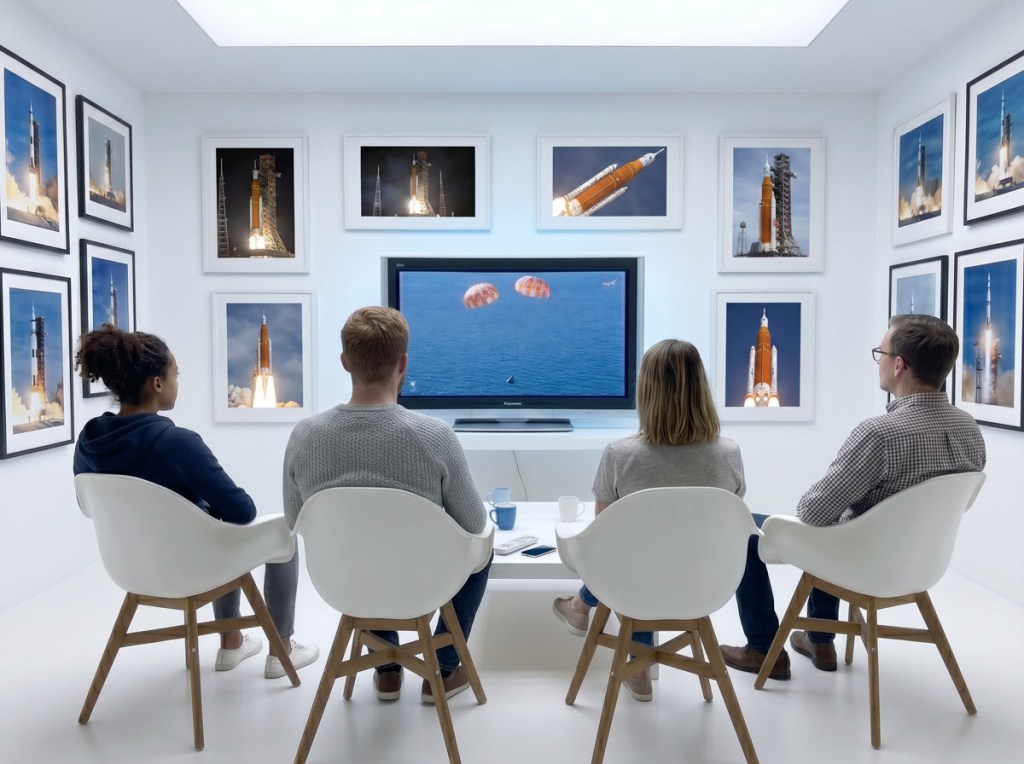
I spent Friday night glued to my TV watching NASA’s feed of Artemis II’s Orion capsule reentry and splashdown. I tuned in a half hour before Integrity reached the edge of Earth’s atmosphere and those six terrifying blackout minutes. Then, the multiple parachute deployments and splashdown! I stuck with the feed all the way till the two helicopters dropped off the four astronauts onto the flight deck of the retrieval ship.

My several-hour experience felt something like streaming a movie. As I got up from my couch and turned off my TV, I reflected on my Friday night flick.

One the one hand, it might be one of the more boring movies I’ve ever seen. There were long stretches where nothing really happened, and then the audio feed went entirely silent. 

On the other, it was perhaps the most stunning and gripping event I’ve ever watched.

Because this was no movie. This was reality.

Houston, Will We Have a Problem?

This was real drama. A space capsule hurtling into the atmosphere at almost 25,000 mph. Will the heat shield hold? Will all the parachutes unfold? Sure, we heard optimistic audio commentary from mission control. But anyone could read the room and understand the clear risks.

Forget special effects… Did you see that real-time video shot from Integrity’s window as the scorching plasma ring began to envelop the ship. Whoa!

And that spotter plane’s unbelievable broadcast feed that followed Integrity plummeting downward from 100,000 feet with no net before the parachute phase began. Such a crazy, cool shot.

If I had walked into our family room at that moment, I would have certainly asked what sci-fi movie was playing and commented on how realistic the special effects looked.

Better than Any Movie

That’s so ironic, because our visual understanding of space travel for the past half century has been primarily informed by Hollywood. So, when I’m exposed to the real thing, it’s entirely jarring.

And let me tell you, reality can still run rings around Hollywood.

Sure, every shot may not be as ‘cinematic.’ Some of the imagery was shaky and blurry. It’s raw. It’s real. And then other shots locked in perfectly to blow you away.

That chopper shot that showed the first helicopter returning the astronauts… It was a silky-smooth tracking shot over the water at golden hour… better than any movie. 

Then, there was the Navy ship’s robotic camera coverage that documented the helicopters touching down onto the ship’s deck… Yes, it was a little jerky, but also stunning.

Is This a Rerun?

You may feel like you’ve seen this all before, but you haven’t… not in real time. It’s one thing to watch a History Channel documentary on the space race. It’s entirely another experience not to know how the Artemis 2 mission ends.

And if you’ve only been peripherally paying attention to an admittedly not so compelling NASA program since the Space Shuttles, you might be blurring facts with fiction.

Don’t we already have a moonbase? No, that’s from “2001: A Space Odyssey.”

How about Mars? No. Except for some robot rovers and an unlikely little helicopter, all the imagery you might recall is from Hollywood.

Even if you’ve got your facts straight, you may not feel the realty. So, spending a little time watching reality offers an important reminder that space travel is difficult and dangerous… and the real deal is always remarkable.

Powerful Storytelling

Nobody has experienced a manned Moon mission since 1972 and Apollo 17.  And the last act is always a doozy.

This little capsule-turned-into-a-fireball thing as it races through the atmosphere felt very “Project Hail Mary” to me.

I know NASA knows what it’s doing, and we’ve returned from the Moon before, but NASA has clearly evolved its storytelling game by simply sharing more of the visceral experience with viewers.

I think that has a lot to do with better camera tech. (More powerful lenses and advanced transmission technologies.) But it also demonstrates NASA’s commitment to better share its own story.

Class Dismissed… For Now

So, I watched each key moment as our Artemis II astronauts traveled from outer space to their big splashdown in the Pacific. And then I watched the Navy go to work. So impressive.

I cannot think of a better way to spend a Friday night. Sure, anyone can watch the 30-second recap the next morning. But it’s not the same. I got the full experience… the complete lesson on how it’s done.
(And I highly recommend it.)

I am inspired. I feel like a kid again.

Thank you, NASA. And congratulations.
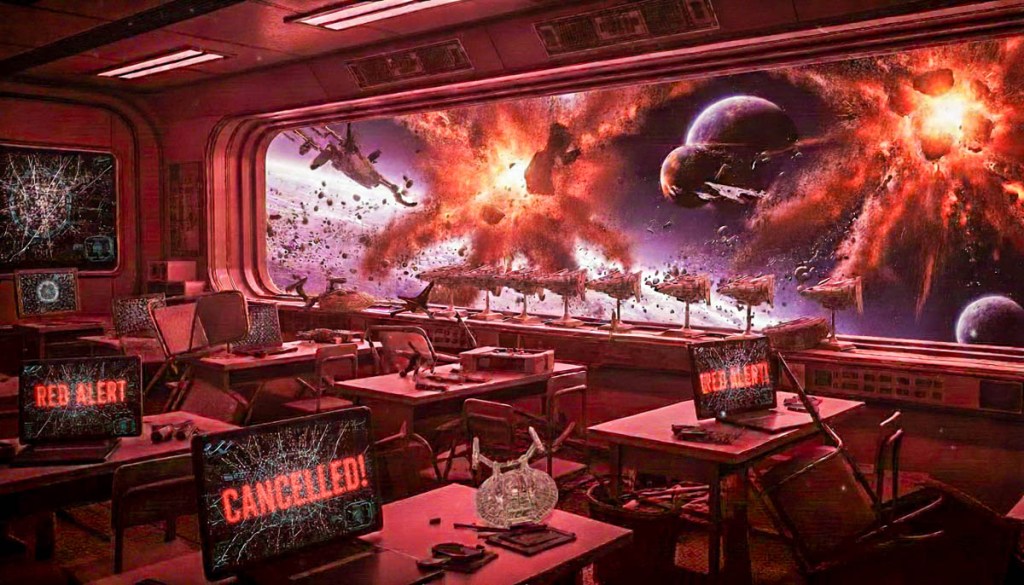
Why I’m Sad “Star Trek: Starfleet Academy” Got Cancelled So Quickly

Sure, it might have been fun to trash “Star Trek: Starfleet Academy” over the past months as many reviewers did. If their goal was to help get the series cancelled, then I suppose they’re happy now. But no true Trekkie can be pleased with the resulting void.

As a core fan throughout my life, I must admit there were a few ‘details’ to complain about with this show. The freshman season of “Starfleet Academy” was certainly a mixed bag.

A Bumpy Freshman Year

The series began slowly and introduced us to a batch of unknown Starfleet Academy cadets. We also had fragments from the Discovery crew and an unusual captain Aki (played by Holly Hunter) who liked to walk around in her bare feet. Then, there was the return of the famous Doctor from “Star Trek: Voyager” (played by Robert Picardo).

So, there were some interesting ingredients here, even without a break-out star character. 

But the storytelling is what’s always most important…. Was it any good?

Well, the first half of the season focused primarily on cadet backstories, and we really didn’t get into compelling “Star Trek” plots until the last few episodes.

By then, it was too late.

It’s Dead, Jim 

The viewers apparently never showed up. Season 1 finished its run. And Paramount promptly announced the series had been cancelled.

Season 2 had already been shot. (Principal photography was mostly wrapped before season 1’s first episode even premiered.) But it didn’t matter.

Yes, we’ll eventually get to see season 2, but our cadets from “Starfleet Academy” won’t get past their sophomore year on Paramount+.

There’s really no way to spin this other than “Starfleet Academy” failed.

How could the warp core implode like this?

Navigating in the Dark

You can take issue with the characters and the storytelling. You might debate that the style was a parsec too far from traditional “Star Trek” we know and love. And you can say the producers abandoned the Trekkie base in search of a younger demographic that never showed up.

Fine. There’s plenty to quibble about.

But how strong was the first season of “Star Trek: The Next Generation?” 

“Star Trek: Discovery” needed a total retrofit after its first season.

Said another way, the producers fixed those problems. They were offered some time to do that. 

But “Starfleet Academy” was set up to navigate its fate without the benefit of any viewer feedback. No ratings. No chance to course correct. 

Absence of Strong Scripts

In time, one could see this show find its footing. But time was the one variable “Starfleet Academy” didn’t have.

You can blame this on Alex Kurtzman, who’s been behind all new “Trek” over the past nine years. You can blame Paramount. You can blame the high cost per episode.

Ultimately, I blame the writers. Strong storytelling and good science fiction plots are critical for any successful “Star Trek” series. And I would say there wasn’t enough of either in season 1.

There are likely any number of reasons that I’m not privy to which contributed to “Starfleet Academy’s” early demise. But I believe my core logic as a simple ‘consumer’ still holds.

It’s All Cancelled

So where does this leave us? “Star Trek” as we currently know it has ended.

  • “Starfleet Academy” is now a dead series walking with one more season.
  • “Strange New Worlds” has wrapped shooting its fifth and final season containing only 6 episodes. (I think ‘cancellation’ also applies here.)
  • There’s no “Star Trek” on the horizon other than a ‘promised’ movie reboot in theaters with few details to date.

“Star Trek” in series form has seemingly ended.

As a Trekkie, I find that entirely discouraging.

Nothing Left to Celebrate?


Sure, there are rumors regarding what might come next. Perhaps we’d get “Star Trek: Legacy” which would be a spinoff from “Star Trek: Picard” or maybe “Star Trek: Year One,” which would be the spinoff from “Strange New Worlds” (Kirk’s first year in the Enterprise’s captain’s chair).

But we’re pretty much eating static right now.

I suppose there’s always time for Paramount to keep the series format alive. We’ve still got season 2 of “Starfleet Academy” and seasons 4/5 of “Strange New Worlds” to watch.

Though those episodes will come and go quickly…

In this moment, the “Star Trek” universe at its 60th anniversary looks rather bleak. Not much to celebrate.

But as Kirk once said, (at the end of “Star Trek 2: The Wrath of Khan”) “There are always possibilities.”

Hailing frequencies remain open.

Capturing Spring’s Early Flow with My Microscope Lens

That anything living can break through the barren, winter-scarred ground always seems like a miracle. Yet, of course as the fading winter releases its brutal grip and the temperatures begin to rise, early spring begins this annual rebirth.

I’m always delighted during these first days before spring really kicks in. That’s when you need to make an effort to spot the signs. Though tiny, they’re everywhere. The trees are still barren, but the first flower buds are already starting to make their move.

Look Closer

I think we’re likely a week or two away from ‘opening day’ here in southern Connecticut. (That’s when you look out the window and almost fall over from the impact of spring’s stunning return.) 

I took my Panasonic Lumix mirrorless camera outside this week to take a few early-spring test shots but found my results underwhelming. Maybe it was too soon. 

Then, I thought for a moment and realized I just needed to get a little closer to nature’s magic. So, I pulled out my SANDMARC microscope lens for my iPhone and screwed it onto my iPhone case (also made by SANDMARC).

When I bought this lens system last summer, I wasn’t sure how often I would use it. Well, this was clearly one of those moments.

So, I set out to try again.

Early Days

The images I captured were not your typical bright and colorful spring collection. The shots were necessarily darker with my microscope lens pressed close to the flower buds. 

But this framing style also created a more intimate result, revealing a view of a young spring not yet fully formed.

Time to Expand the View

My microscope lens provides an especially narrow depth of field. Much of each image blurs away from the tight focal point. As a result, I think I’ve captured more of nature’s organic flow in action. 

And this flow will soon burst onto the landscape. Then, it will be easy to expand the view.

I couldn’t be happier being able to see this preview.

Hello, spring!