At Home with Tech

Unlock the power of all your technology and learn how to master your photography, computers and smartphone.

Category: Technology

How iCloud Photos Saved my Family’s iPhones

If your iPhone is running out of storage, it may be because it’s housing too many photos and videos. Here’s why iCloud Photos can help.

My wife and I have been happily shooting and collecting thousands of photos and videos on our iPhones over the years. But there’s a problem. We’re running out of storage on our devices.
(As we upgraded from one iPhone to the next, the digital files simply ported over, and our huge visual libraries kept on growing.)

On one level, it’s nice to have access to every photo and video you’ve ever taken on a smartphone. But it’s entirely impractical. It’s way too many files, and more importantly, any iPhone probably can’t handle that much content without being overwhelmed with the storage need.

Sooner or later, your iPhone will become hobbled. And when you find yourself deleting apps to try to free up precious memory, you really know you’ve got a problem.

Yes, I’ve been there. You need a better solution.

Fortunately, Apple’s got one.

iCloud Photos
To access more storage, you have to look to the cloud. You simply activate Apple’s iCloud Photos, and all of your photos and videos will sync to your iCloud account and across all of your other Apple devices.

How does this help your iPhone? Well, just be sure that “Optimize iPhone Storage” is checked in the settings for your iCloud Photos. That’s the magic step.

When you activate this setting, your iPhone will generate and hold onto smaller versions of your photos and videos while the full-resolution versions live in iCloud.

With just the compressed versions of your photos and videos on your iPhone, you’ll suddenly have a whole lot more available local storage.

Plus, you’ll have all of your media backed up in iCloud.

There is a Cost
Of course, there’s a price for this iCloud ‘upgrade.’ (The measly 5GB you get for free will barely cover a week’s worth of content.)

50GB costs 99 cents/month, and 200GB is $2.99/month.
(2TB goes for $9.99/month, but that’s much more data than your iPhone can generate.)

Before your turn on iCloud Photos, you’ve got to upgrade to an iCloud plan that will cover your needs.

I decided to go with the 200GB plan and share it with my wife’s iPhone through Apple’s Family Sharing feature.

No Finish Line
iCloud Photos is a simple solution to solve for the problem of your ever expanding library of photos. Paying a few bucks a month to activate this capability is definitely worth it.

But simply maintaining a disorganized library of imagery over the years isn’t going to do you any favors. You’ve got to eventually go through your photos… choose the best ones, organize them and then delete the rest.

You need to do the work and curate your best images. Otherwise, they’ll get lost in your sea of countless photos.

Sure, they’ll be safely stored in iCloud. And your iPhone will have more storage.

But that shouldn’t be the end of the story.

Good luck as you continue this life-long photo and video project!
How to Power your Smoke Alarm for a Decade on One Battery

If you’re tired of having to feed new batteries into your smoke detectors, you may want to consider this solution…

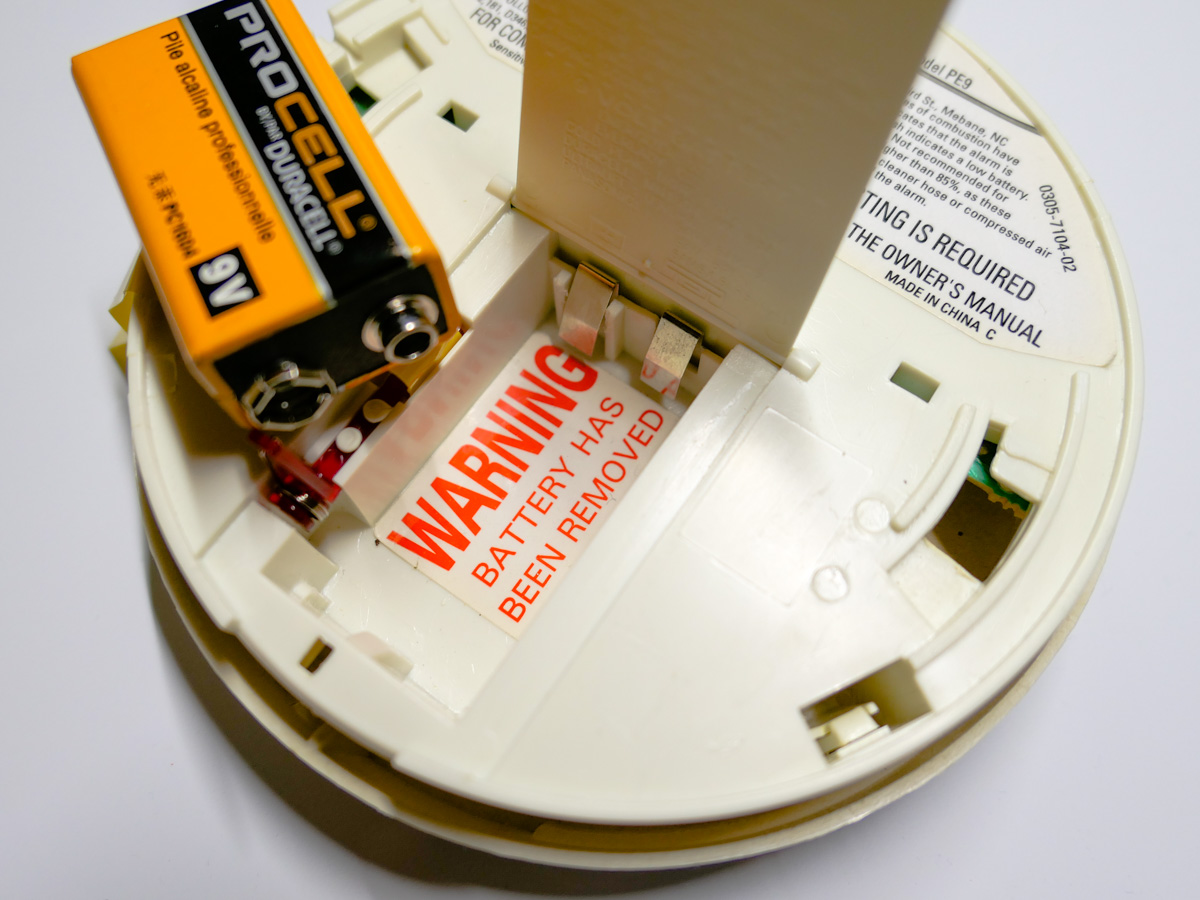
It was 2:15am last Wednesday. An annoying electronic chirp tore me out of sleep. Of course, one of my smoke detectors was proclaiming that it needed a new battery. I stumbled downstairs and waited impatiently for the next chirp to identify the cranky smoke detector.

“Chirp!”

Wait a minute… Didn’t I just replace the battery on that one less than a month ago?

Still half asleep, I ripped the battery out of the unit’s innards, threw the mess on my desk and went back to bed.

The next morning, I sat down with my cup of joe with the intention to order more 9-volt batteries. But something didn’t feel right. I picked up the plump disc and looked at the fine print. It was manufactured back in 2010. Oh… That’s not good.

It was past its 10-year life span, and still going?

Time for a new unit.

10-Year Battery that’s Baked into your Smoke Detector
As I performed my research, I quickly realized that there’s a whole smoke detector product line that features a 10-year lithium battery sealed into the construction. No need to ever replace the battery. One and done!

Some states require this type of smoke detector, but this upgrade seems like a no-brainer for anybody to buy.

I found some chatter online that these 10-year batteries may not actually last you the full decade. I think that’s still okay. If I can get 7 or 8 years of peace at night without ever having to hear a chirp again, I’d say it’s still a huge bargain.

There are any number of 10-year battery models to choose from. I went with a basic unit for my hallway:

Why this one?
(Wirecutter liked it.)

Click.

Don’t Forget my Google Nest Protect
For those who are paying attention to my previous thinking on smoke detectors, you may recall my passionate commitment to my Google Nest Protect Smoke and Carbon Monoxide Alarm. (In fact, I recently replaced my original unit which had reached its own end of life.)

So why am I still dabbling in old-school tech, even with an upgraded battery design?

Yes… my Google Nest Protect is our main line of defense, standing guard upstairs outside our bedrooms. I feel that’s the key location in our house, especially for a carbon monoxide detector.

I just haven’t yet committed to converting all of my smoke detectors over to the Nest Protect line. (It’s a bit of a costly project.)

And a twenty-buck solution from First Alert that should last us the better part of this decade felt like an easy move.

An integrated, multi-unit/smart-home set up will need to wait for a future post. Yes, I just bought myself another 10 years. But knowing me, I also don’t think it will take until 2031 to get there!

Stay tuned…

Helpful Tips for the Return to your Suburban Train Commute

If you’ve been wondering what it’s going to be like to commute again, here’s what I’ve recently experienced when I resumed my train ride to New York City.

I’ve been working from home for the better part of the past eighteen months. Though it’s surprising how much one is able to accomplish with remote video production technologies, the best video creation moments are often achieved through face-to-face interactions.

Yes, I know we’re still in the middle of the pandemic. But I’m vaccinated, and you can’t really stay in the bubble of your home forever. So, it was inevitable that the time would come for me to resume my train commute from Connecticut. Last week, I returned to my daily treks to New York City on Metro North.

If you’re on the cusp of your own return to the office and are about to restart your daily commute, you may need a few days to get back into the swing of things. That first week can feel like a marathon.

Here are some notes from my own experience.

Don’t Stray from your Pre-Commute Schedule
It’s an obvious point, but you can no longer simply roll out of bed and switch on your computer to begin your work day. You need to give yourself enough time to get presentable and out the door. (Zoom sweatpants don’t usually work in public settings.)

And you’ve got to move quickly. As I’ve said to my eleven-year-old son, the train doesn’t wait for you. You’ve got to be there when it arrives.

Yes, I made it to my train platform in time, but those last few minutes were uncomfortably tight. (On one day, I was running so late that I was forced to leave behind my beautiful bowl of oatmeal mixed with apples, raisins and banana.)

Say Goodbye to your Refrigerator
Speaking of food, if you’ve grown accustomed to your particular morning and afternoon snacks, you’ve now got to pack them. Sure, there’s plenty of food available in New York City, but it can be inconvenient to have to go out and hunt for it, especially when you’re hungry.

Unfortunately, your own fridge isn’t around the corner anymore.

Enjoy the Empty Train Ride
Happily, my usually packed parking lot had plenty of open spots for my car. And the Metro North trains I took were all relatively empty. Middle seats remained unoccupied, and nobody had to stand. Social distancing was easy.

And yes, everyone behaved and wore a mask.

Prepare for More Steps in your Day
Like me, you’ll probably see this as a real benefit. (Sitting in your home office can quickly generate a sedentary existence.)

While more walking is great, you may unexpectedly find yourself a little tired at the end of those first days. (I did.)

It’s simply a change of pace, and you’ve got to get used to it again.

Get More Sleep
Your commute will, of course, cut into your former non-travel free time. You may feel the urge to say up later at night to find that additional hour for ‘me time.’ But I think stealing from sleep is an unsustainable solution. It may seem counterintuitive, but if anything, you’re going to need a little more sleep for a while. That should help your body and mind accommodate your new schedule.

I baked a little more sleep into my rotation and found it really helpful in handling my next day.

Time to Stream!
Commuting on a Metro North train is a relatively comfortable experience. And it’s simple to pull out your smartphone or laptop and pretend that you’ve never left your home office. Or if you want to catch up on your Netflix fix, a train commute can be a perfect time for that.

Yay!

Expect an Adjustment
The reality is the train commute is mostly the same as before the pandemic, except that there aren’t as many people (at least not yet).

The real difference is simply having to get used to it again. It can take a few days.

As you get back to your own future, I recommend that you plan for this adjustment period.

Good luck and be safe!