At Home with Tech

Unlock the power of all your technology and learn how to master your photography, computers and smartphone.

Category: travel

Updated Safety Gear for Your Car

It was time for me to update and replace the decade-old emergency/safety kit items I had happily never had to use in my SUV. Here’s where I upgraded.

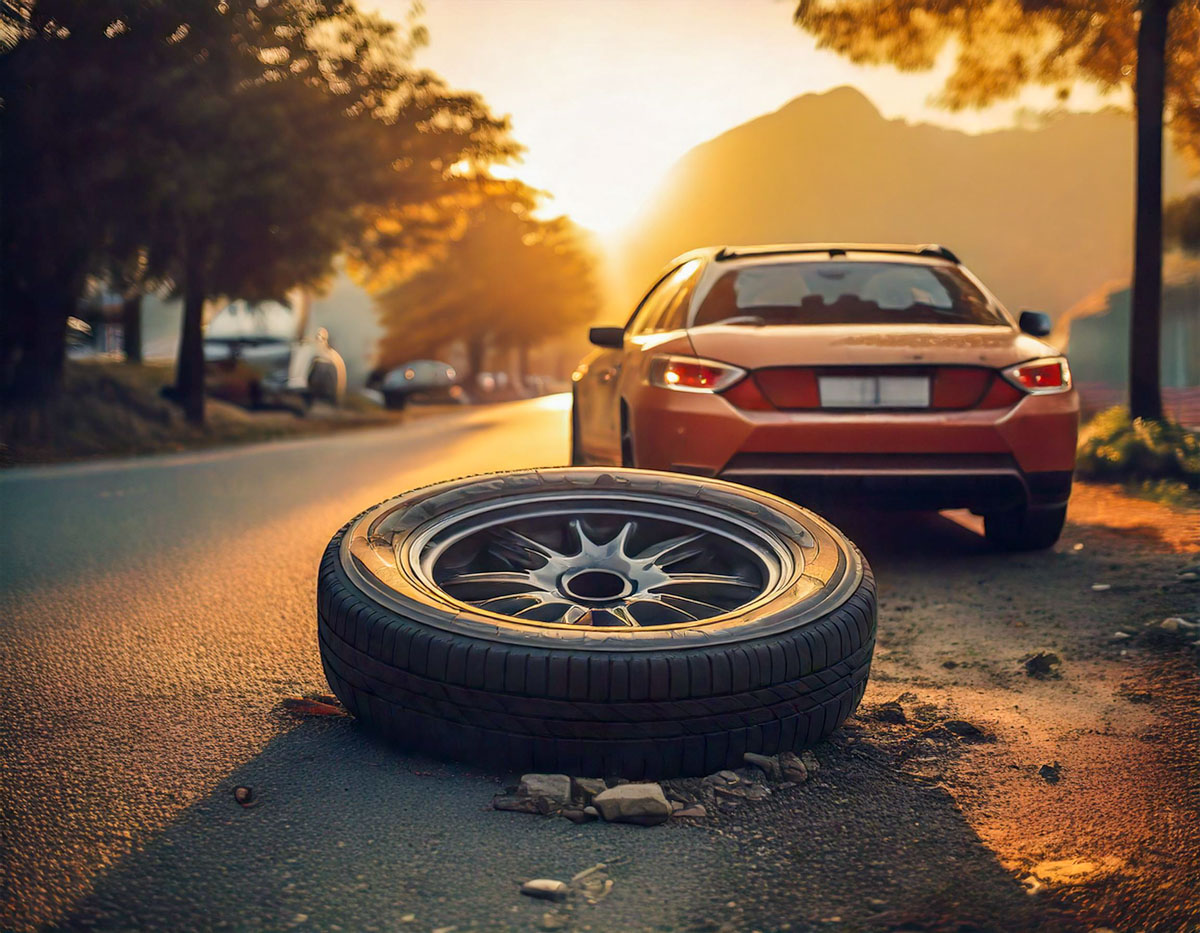
Taking a road trip without a spare tire is my new standard, now that I’ve bought my Honda CR-V Hybrid. As I mentioned last time, many new vehicles no longer come with a spare. (They’ve been replaced with tire repair kits.) But driving about without a net doesn’t mean you shouldn’t be prepared for the unexpected.

When I said goodbye to my old Toyota RAV4 and traded it in, of course, I first cleared out all my stuff. (Don’t forget the E-ZPass puck that’s stuck to your windshield and erase your personal information from your car’s voice prompt computer.)

I also found my ‘emergency gear’ that I had packed in the back of my RAV4 years ago and thankfully never had to use.

My first thought was to simply transfer it over to my new CR-V. But when I looked closer at some of the aging items, it was clear some of it needed replacing, often with next-generation tech.

So, I proceeded to do a bit more shopping, and here’s my list of updated emergency gear for my hybrid SUV that I hope I’ll never need.

  • LED Flares
    Long gone are the days when you need to use actual flares or clunky emergency blinking lights powered by giant type C batteries. Now, you can buy packs of compact orange LED circular pucks that blink brightly. I recommend you buy the ones that are rechargeable. Older models are powered by AAA batteries, which are more expensive to maintain and bad for the environment. (That said, you still need to test the rechargeable pucks occasionally to make sure they’re ready to go.)
  • Compact Flashlight
    It’s always important in an emergency to preserve the battery on your cell phone and not drain it on illumination needs. It’s your lifeline to the outside world. Give that job to a separate flashlight.
  • Portable Cell Phone Charger
    If your car battery dies, having some extra juice onboard for your tech is always a good idea.
  • Small Cargo Bag for Break-Glass Hammer
    I didn’t have to replace my break-glass hammer, but I wanted to place it in a small protective pouch that would be placed in the bin under my elbow when I’m driving. (I didn’t want the sharp tool to scratch the interior.)
  • Warm Blanket
    It may be cold out there, and having a warm blanket as an extra layer can make all the difference.
  • Jumper Cables
    This is standard protocol, though my Honda salesman did warn me not to use jumper cables on my CR-V hybrid’s battery.
  • First Aid Kit
    Hopefully, you’ll never have to break the seal.
  • Duct Tape
    Yes, there was that time when a wild turkey flew into my car and obliterated my side mirror.
    Enough said.

Don’t Pack It
Sometimes less is more.

I threw out my old collapsible traffic safety cone, because the base was leaking sand. Even collapsed, it still took up a lot of room in the back of my old RAV4, and I figured my blinking orange LED pucks would now be sufficient for my CR-V. So, I didn’t replace the orange cone.

Decades ago, my father told me to stash a big bag of sand in the back. (That’s still a best practice on certain auto emergency kit lists.) I did that for my very first car (Honda Accord), but that was it. I know sand can get you out of a slick spot, but I’ve got an AWD SUV. Hopefully, that will be enough.

The back of my old RAV4 eventually looked like a messy corner in my attic. So, I’m trying something a bit different this time. Yes, I think it has to do with not cluttering up a new vehicle. But throwing the kitchen sink in the back “just in case” is no longer my standard practice.

Pack what you really need and then hope you’ll never have to touch it ever again… until you move it to your next car.

Safe travels!
Does Your Car Really Need a Spare Tire?

Some new cars don’t come with spare tires anymore. Doesn’t that seem like a shocking omission? And I had to face that change when shopping for a new SUV. What’s behind this disruptive removal?

Does the car you drive have a spare tire? Chances are it does. That’s standard equipment all cars used to come with, right? But my new Honda CR-V Hybrid SUV doesn’t. You may imagine how I initially reacted to this missing feature.

My new Honda CR-V was the first SUV I test drove during my research phase, and though I loved every part of the vehicle, I didn’t like the fact that there wasn’t a spare. In fact, I was shocked.

Blame the Battery?
My hybrid’s battery apparently takes up too much space in the rear that’s normally reserved for a spare or donut. (There are other factors at play, which I’ll get into.)

I thought the minus-one-wheel factor would be a deal breaker. But by the end of my car-buying journey, I discovered other competing car manufacturers had gone the same route.

Increased Profit Margins
Why? Well, it would seem it’s about saving money and increasing profit margins.

One car salesman I spoke with told me the reason for this trend was to save on weight when new cars are transported on cargo ships to their destinations. That means the auto manufactures don’t spend as much shipping each vehicle overseas (less per-pound delivery cost).

And of course, an absent spare tire saves the manufacturer the cost of the tire.

On the upside, a car that weighs less also helps with its fuel efficiency. So, those savings go to you.

Use the Tire Repair Kit
Instead, these ‘spare-less’ cars are outfitted with tire repair kits. You can ‘easily’ inject a gooey tire sealant into a flat tire to plug up the hole from the inside. (This assumes the hole is a textbook tear in the tread.)

And that’s the tire-repair strategy for my Honda CR-V Hybrid.
Take it or leave it.

Every part of my fight/flight id rebelled against this seemingly irresponsible choice. But my calmer ego saw this challenge differently.

AAA Vs. Self-Reliance
Once upon a time, driving a car was a disconnected experience. It was you against the road. There were no cell phones. You couldn’t call AAA. If you needed to change your tire, you had to do it yourself.

Now, driving is an entirely ‘connected’ experience. There are any number of ways to reach out for help should you need it.

Well, I certainly don’t want to tempt fate, but fortunately, I’ve never had to change out a flat. And to tell you the truth, at this point, even with a jack and a spare tire, I’d probably still call AAA.

And granted, without a spare tire, you may not be on your way again, even with AAA. A tow to a gas station late at night will only get you so far.

Self-reliance is certainly the best option. That’s what my father taught me. (And when I was learning to drive, he also insisted I stick my hand out the window whenever I made a turn.)

Times change.

Still, a spare tire supports the equation of self-reliance. You can’t deny that.

Driving with No Net?
I know I can probably get by without a spare tire. Honda certainly thinks so. (Or it’s counting on there being enough people like me, who accept this ‘downgrade.’)

So, I bought my Honda CR-V Hybrid. Yes, I’m now driving with no net. But at least I’m not driving alone, even if I’m driving all by myself.

That’s the trade-off.

Say Goodbye to Five Tires
Yes, I’m rationalizing my choice to drive without five tires. I’m still a bit unsettled. But I’m okay.

Nobody likes change. Yet change is inevitable. Sometimes that comes from innovation. In other situations, it’s more about dollars and cents. Often, it can be about both.

All you can do is pay attention and make the best decisions you can for yourself.

Life doesn’t come with a spare tire. Now, some cars don’t either.

5 Ways to Ease the Pain of Returning to the Office 5 Days a Week

I just worked a full week in the office for the first time in two years. It was something of a shock to the system, but also like riding a bike. If you’re planning to take the same plunge, here are my reminders on how to minimize the stress.

I love my hybrid work schedule. It’s the best of both worlds. You still get to see and interact with your colleagues in a real 3D space. But you don’t experience all the wear and tear from a daily commute.

For many years, I took the train from Connecticut to Grand Central Terminal five days a week and then finished my commute deeper into Manhattan. Sometimes I used the subway. Other jobs allowed me the flexibility to hoof it.

That’s just what you did. No questions asked. I optimized my process, cherished my ‘me’ time on the train and enjoyed walking on the streets of New York. But it all took some effort and organization.

I was recently reminded of what that five-day-dance feels like.

Back to the Future

Returning to my daily date with Metro North after my hybrid schedule for the past two years was absolutely a shock to my system. I did it for just one week.
(I know… cue the tiny violins.)

Of course, hybrid work can occasionally mean more days in the office. So, what’s the big deal? The problem is refreshing a skill set that you may have forgotten. Yes, a successful commute is a skill.

But I’m not talking about just showing up. (That’s a given.) It’s how much effort and stress it creates for you… every day.

I’ve done this for enough years to call myself a ‘professional’ commuter. And this professional says that the best commute is the commute you don’t have to think about, because you’re so good at it.

Time Shift
I think we’d all agree that the biggest challenge with returning to your daily commute is all those lost hours the traveling gobbles up. Now, I know that’s an obvious point, but if you don’t plan for that shift, the rest of your life can start to feel out of control.

So, you have to time-shift all those activities you had baked back into your home life.

Minimize Morning Decisions

The other critical factor is you must minimize any time related to your commute that’s actually not part of your commute. All of that should be pre-determined, scheduled and relentlessly followed like you’re training for a marathon. Because it is a marathon.

If you take a commuter train, you clearly need to show up every day at the station before the train does. That takes some precision, which requires leaving your home at the exact same time each day.

Here are five rules I follow to accomplish that.

  • Wake up and have your breakfast at the exact same time every morning.
  • Choose your work clothes the night before. That eliminates precious minutes that may get wasted deciding on a shirt color or finding a matching pair of socks (guilty).
  • Ensure your work bag is packed exactly the same way every day. Your work badge needs to be in the same inside pocket. (I guarantee that will eliminate 99% of misplaced badge moments.)
  • Pack a portable power bank (and cables) to charge up your tech later in the day. No matter how planful I am with charging up my iPhone, Apple Watch and AirPods, occasionally one of them needs a jolt of energy. (I can’t tell you how good it feels when a piece of tech starts screaming for power, and you’ve got the juice ready to go.)
  • Grooming tip: If you’re planning a morning shave, and that’s not been a part of your regular WFH routine, bake in more time. It’s not going to go as fast as you’d think. (You can get away with a quick shave only if you’re doing it every day.)

Speed It Up to Slow Down

Showing up on time at the office is important, but reducing your stress throughout that process is the real key. The less you have to think about your commute, the better you’ll feel.

And that takes automating your ‘pre-flight planning’ as much as possible.

Being ruthlessly efficient will save time and free up brain space to help you regain your focus on the rest of your life.

Whether this is just for one week or every week, it’s my recipe for a healthier commute.