
The Carnival
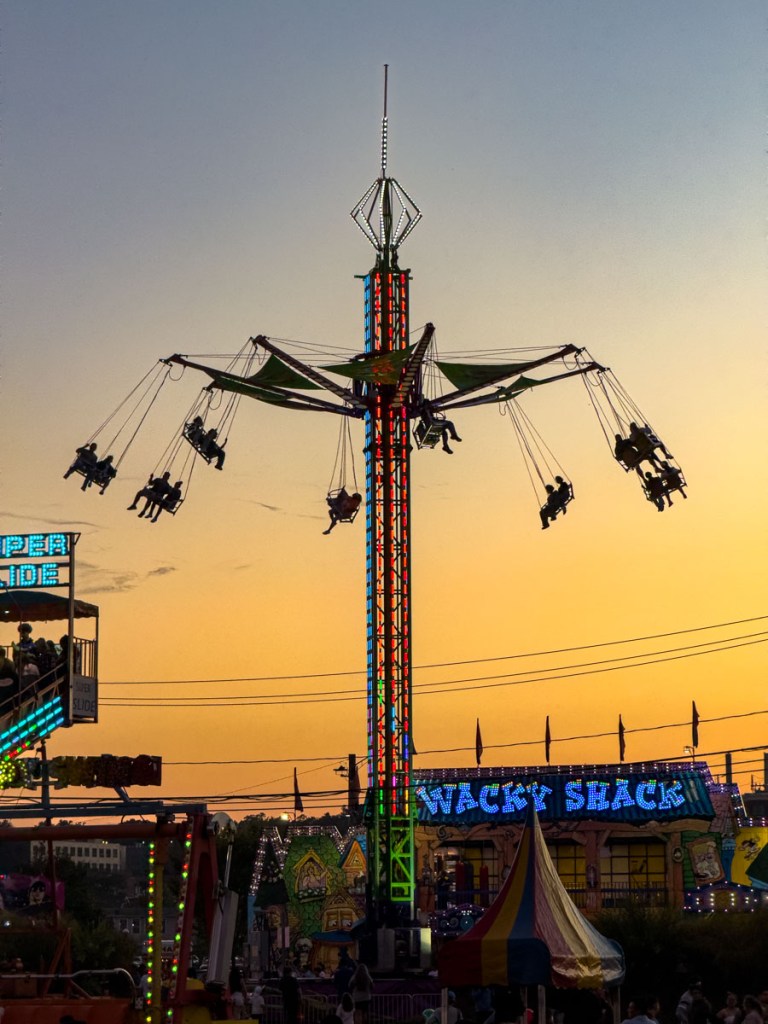
I have a complicated relationship with carnivals. When I was in college, I worked on a short video called “Carnival Closed.” It was about the cruel irony behind the facade of fun. We shot our faux-documentary at the sight of a packed-up carnival. The rides weren’t exactly abandoned, but they could have been. Our narrative for this little piece admittedly was over the top and intentionally absurd. But our little doc had its point. And it’s stayed with me all these years.
Fast forward to the early days of my career in Massachusetts. I again found myself attached to a video production surrounding the life of a traveling carnival. It wasn’t my project, but I went on a couple of video shoots for this documentary. It was more grounded in reality. Or it tried to be.
How real is any carnival? Projecting the pretense of fun, it’s designed to deceive, shake you till you throw up, sell you food that should kill anyone in sufficient quantities and take as much of your money as possible. And in the rare instance, you could have the misfortune of getting injured or worse.
What a deal.
But in today’s 21st century world of slick tech and shrinking social, in-person interaction, the creaky, in-person world of carnivals, is seemingly going strong.
The siren song of the carnival still pulls in its crowds. Why is that?
Norwalk Oyster Festival
I think a big piece is the social aspect. It’s still a fun, analog way to spend an afternoon with family and friends in your own town.

After a number of years away, I recently attended the Norwalk Oyster Festival with my wife and teenage son. And against the long odds I’ve attached to this experience, I surprisingly had a fabulous time.
So, what happened? Well, I think the question is what happened to me.
How Much Does It Really Cost?
After we walked through the gates and paid the $15 per person admission fee, I was confronted with arithmetic confusion. We tried to figure out how many tickets we needed to buy for the rides we wanted to go on. It was a baffling process, as none of the rides posted how many tickets were required. Our son helpfully suggested that we could probably use any unused tickets at next year’s festival.
I shot back that I highly doubted that. He asked why.
I said, “It doesn’t fit the Pirate Code.”
Pirate for a Day
So yes, I have bias here. And while my thoughts are not especially supportive of the carnival business model, I also feel they’re a back-handed compliment.
Because deep down, don’t we all want to be a pirate, if only for a few hours?
That sense of freedom without following any rules. The hope that with a little luck, you can win your big treasure… and beat the system. Yes, that’s part of what any carnival sells.
And its arguably more attractive today than ever.
Who cares if you have few extra tickets left over? What’s more important is the fun.
The Weather Clears
I used to scoff at the required spend for a few hours at a carnival. But now, with more perspective, I see that it’s actually not such a bad deal compared with the cost of spectator events like baseball or a concert.
And as always, this is mostly about mindset. That’s what really frames anyone’s experience.
We decided to attend the last few hours on the final day of the Norwalk Oyster Festival. It had been raining for the past 24 hours, and the skies were finally clearing. That’s when we headed out.As we arrived, the sun started to break through as if to welcome us.
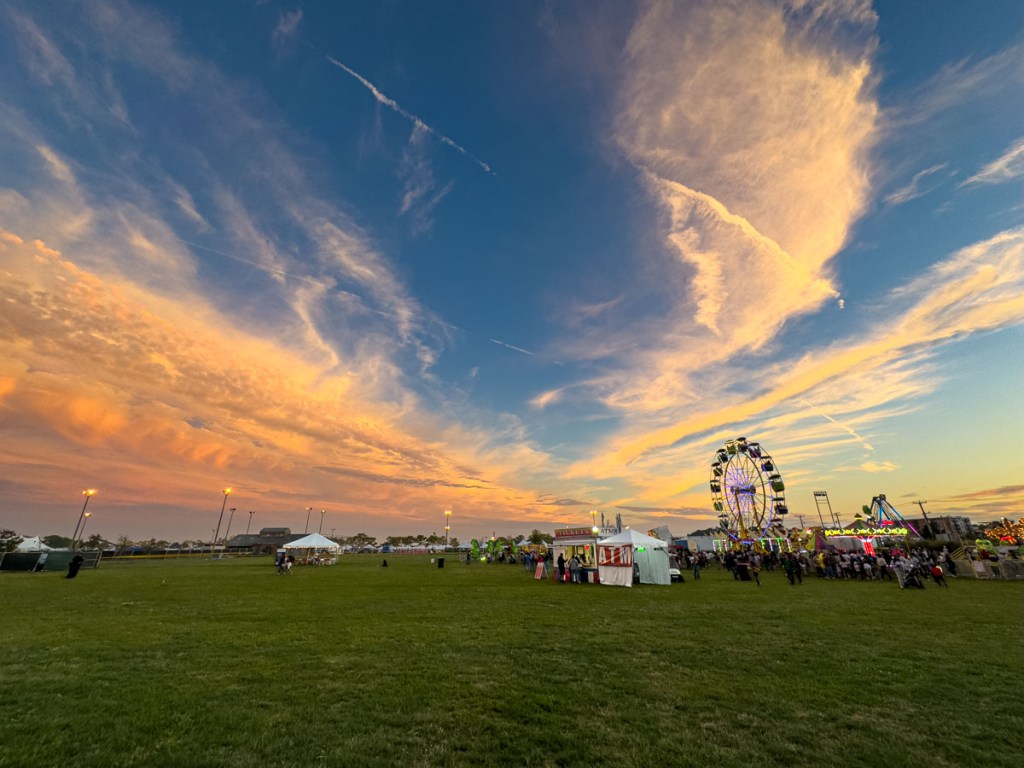
Later, we watched a brilliant sunset as the storm front continued to depart. The colors of the clouds were spectacular, and the cool edge of a September evening felt wonderful.
Communal Joy
We went on a few rides, and my wife and I rode the Ferris wheel, which was surprisingly romantic.
Yes, we ended up with a couple extra tickets, and we happily handed them over to a mother and daughter who were short a few. Then, we walked over to the line of food vendors and had a yummy dinner. We enjoyed the fresh air, and we listened to a bit of music from the live band under a tent.
Not bad for a late Sunday afternoon.Microsoft Copilot tells me that “the carnival remains an enduring symbol of communal joy, creative expression, and the age-old human desire to celebrate life’s abundance before the solemnity of fasting and reflection.”

Yep.
We’re All Children at Heart
So, I no longer view the carnival with the same lens of caution as my younger self used.
Sure, my original concerns are relevant. But my fresh Norwalk Oyster Festival experience reminds me how much fun it is to join a pirate crowd on a late Sunday afternoon.
Said another way, visiting a carnival can always be a good way to feed your inner kid, no matter your age.
As I consider my own evolution and change of heart, I’m happy to report that I would title my next documentary on this topic, “Carnival Open.”




 At Home with Tech