At Home with Tech

Unlock the power of all your technology and learn how to master your photography, computers and smartphone.

Tag: aerial videography

How to Create Awesome Drone Footage with Amateur Flying Skills
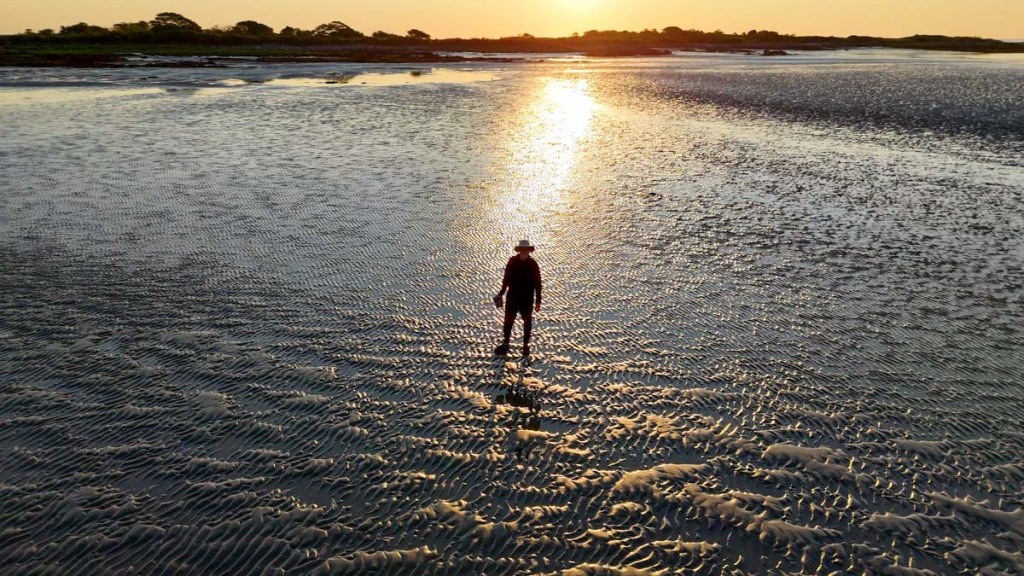
I finally bought a camera drone to start this new hobby I’ve long wanted to try. Then, I got to work studying how to fly it. I trusted my DJI Flip’s intelligent flying modes to protect my investment against disaster, because I didn’t have enough faith in my novice piloting skills. I was worried about crashing my little drone.

And then I did.

But my Flip survived its impact with that tree. So, I wiped the egg off my face and was determined to learn how to properly fly my little drone.

I continued slowly, and my patience finally paid off when I discovered a key aerial storytelling trick.

Fly Slow and Smooth
Generating cinematic videos with a drone is all about flying it ‘slow’ and ‘smooth.’ All those establishing shots you can think of from movies… yes, slow and smooth.

And that translates to easier and safer flying.
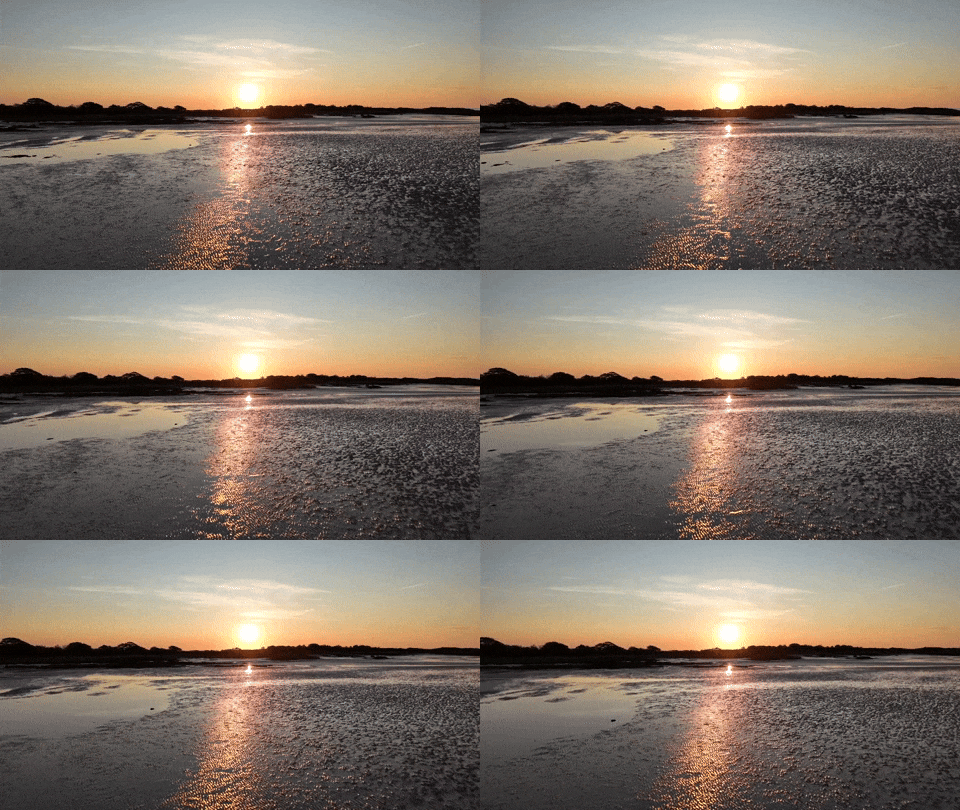
And if you’re looking to create more motion in your drone footage, that doesn’t necessarily mean you have to fly faster. Instead, just fly your drone lower. Moving over a landscape close to the ground produces more movement than from higher up. 

Happily, these flying strategies are relatively easy to accomplish. And just as importantly, they don’t put your drone at significant risk.
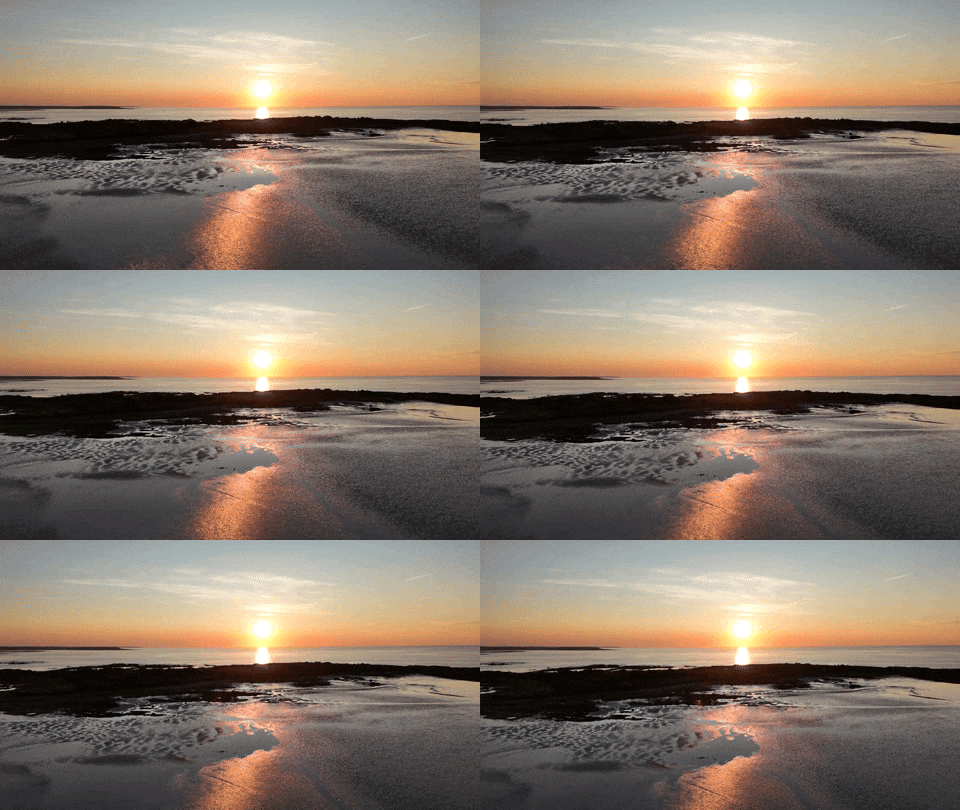
So, as I explored flying my drone manually, I intentionally followed the slow/smooth rule and practiced simplistic flying routines. 

Up. Down. Forward. Back. Sideways. 

The most aggressive maneuver I attempted was elevating my drone as it simultaneously moved forward.

Embrace your Inner Rookie
How fast can my drone go? I have no idea. I haven’t tried to find out. Could I always see my drone as I flew it? 100%.

Slow is smooth. Smooth is fast.

And as I flew in the dullest of ways, that’s when my adrenaline levels finally began to stabilize, and the tension melted away.

And guess what? I decided I’m just not going to fly my drone over water. I’m not going to fly it over a mountain ridge. I’m not going to fly between two objects and try to thread a needle. I’m never going to worry if my drone has enough battery power to make it back.

I’m just not going to push it. This isn’t a sport for me. It’s a new hobby with an expensive piece of gear I’d like to keep in one piece.

Barrett’s Drone Footage from the Mud Flats of Cape Porpoise, Maine
Even with my self-imposed training wheels in place, my conservative flying style still enabled my DJI Flip to capture the incredible beauty of our world with motion. Often, just getting your drone in the air to is enough to recording stunning clips.

And that’s exactly what I did… I think I captured some nifty footage during my training flights on the mud flats of Cape Porpoise, Maine. 

Here’s a video compilation of my manual maneuvering along with a few auto QuickShots (courtesy of the drone’s built-in code).

(Yes, my flying style was boring, but my shots were not.)

How to Quickly Edit your Drone Clips
I put this edit together using a couple tools:

  • The DJI Fly mobile app for basic video editing and music
  • Final Cut Pro for precision edits and speed ramping

I should mention that you can quickly perform a punchy edit just using the DJI Fly app on your phone. There’s even a 1-click editing solution. It’s not perfect, but you can generate and share a dynamic video with your phone in just a couple minutes. Impressive. Most impressive.

When Less is More
A little drone can go a long way. I mean that both literally and figuratively. 

You don’t have to fly your camera drone like it’s capturing a stunt shot for “Mission Impossible.” I say… keep it all entirely ‘possible.’

And while many pros out there may yawn at my stubbornness to avoid all risk, I’m entirely pleased with my creative results to date. 

Others may like showing off their camera drone crashes to the world, I hope to never do that again.

Start slow. Keep it slow. Make it smooth.

Less is more.
Drones for Dummies: I Bought this DJI Model with Zero Flying Experience

I’ve always been fascinated with drone videography. Over the years, I’ve watched the technology mature away from the professional video market and extend into prosumer and then squarely into the consumer market. And all along, I’ve wanted to buy a video drone for my personal projects. But I’m not a drone pilot. I knew the flying part would be a challenge.

I felt that way, because years back, I tried flying a couple toy drones around the house, with disastrous results. I couldn’t imagine buying a more expensive camera drone to crash in the great outdoors.

Still, I wanted one.

The ability to generate cinematic shots from the sky is a compelling proposition for anyone who has a passion for photography and videography. 

Your Drone Can Fly Itself
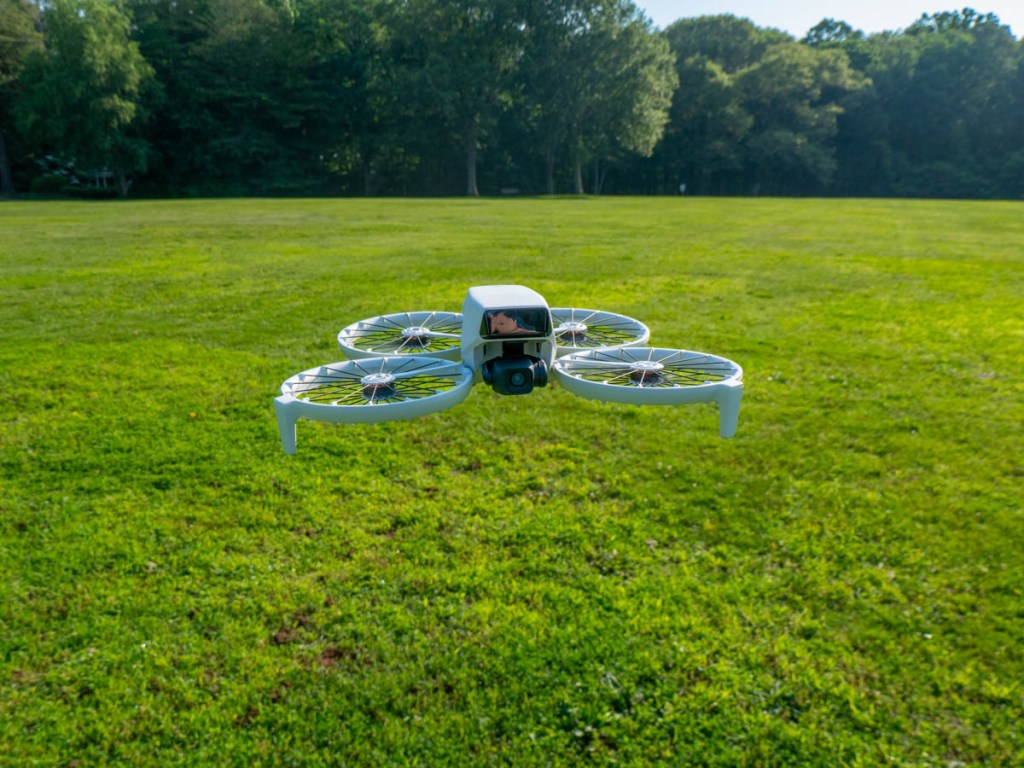
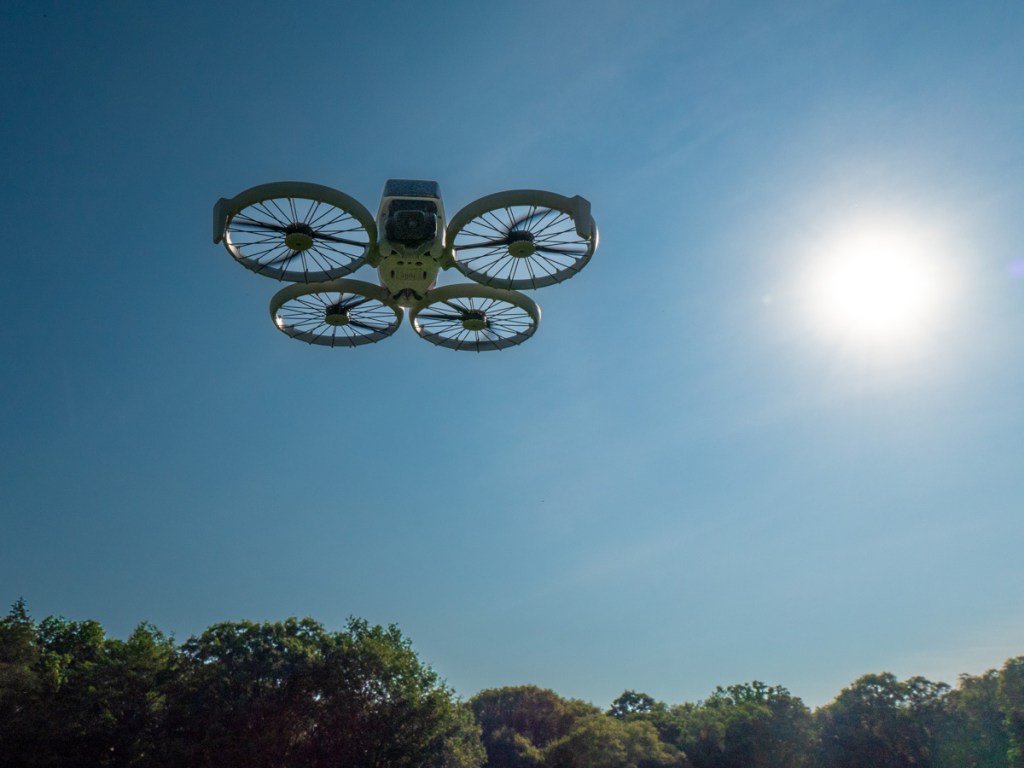
Then DJI began building “subject tracking” autonomous flying skills into entry-level drones. First with the DJI Neo (135 grams) and then with the DJI Flip (under 249 grams). With this auto-pilot superpower (called QuickShots), these drones can visually lock onto you and record a variety of programmed flying maneuvers around your body. No human flying skills required. 

So, you can leave the flying part entirely to the drone? Interesting.

Granted, these intelligent shooting modes are limited ways to fly any drone, but it’s certainly a start. Sure, you’ve got to know your preflight steps and provide your drone enough empty space to maneuver in without obstacles. Otherwise, crashes are still possible (more on this later). 

Of course you can still fly these ‘smart’ drones manually, but the QuickShots feature offers an enticing onramp for any drone novice.

Look Ma, No Hands!
Is this cheating? Not actually flying a drone, but giving up the stick to code?

Well, my primary goal is to get the shot I envision. The flying part is more of a means to an end. I see a drone as a gimbal-stabilized camera that flies…not a flying drone with a camera. But of course, I know the two are entirely connected.If DJI can give me training wheels to help get me started, I say that’s a great idea.

So, I took the leap and bought myself a DJI Flip. I chose the upgraded ‘Fly More Combo’ package with 2 extra batteries and the nicer remote controller (RC 2) with its own built-in screen. 

Sub $1,000 Price Point
You can spend as “little” as $439 plus tax on the DJI Flip when paired with the more basic RC-N3 remote controller that uses your smartphone as your flight screen. The Fly More Combo package cost $779. But when you add in a micro-SD card and the 2-year protection plan, plus tax… it creeps closer to $1,000.

Still, that’s not a bad price point considering what drones cost a few years ago.

The DJI Neo is even less expensive… It starts at $199 plus tax.

But the Flip is more advanced with longer fly times and a better camera sensor. It can record 4K/60fps video and slow motion at 4K/100fps.

It’s also got foldable full-coverage propeller guards for added flying protection.

The Flip can snap photos too, but for me it’s all about the video.

Flip Flying 101 = QuickShots
After my DJI Flip arrived, my first step was to learn the preprogrammed flying maneuvers using the DJI Fly app, which I downloaded to my iPhone. You can also activate these short QuickShots directly on the drone by simply togging through button settings. (no phone required).

Another superpower is the Flip can take off and land on your outstretched hand. (Yes, your hand is the take-off pad!)

It’s a nifty trick and greatly simplifies the complexities of take-off and landing.

Shouldn’t Everyone Have a Drone?
I imagine the population of drone owners is relatively steady these days. (If you had a specific need for a drone, you’ve likely bought one by now.) The barrier to entry for new customers like me has been the inability to fly. (Plus, it’s an expensive investment, especially if you think you’re going to crash it.) So, it’s a smart business decision to build auto-piloting skills into entry-level drones to attract video enthusiasts.

Yes, I think this is a whole new market for DJI, and I’m pleased to be a part of it.

Examples of QuickShots
Sure, I’ll invest the time to learn to manually fly my DJI Flip using the RC 2 remote controller. 

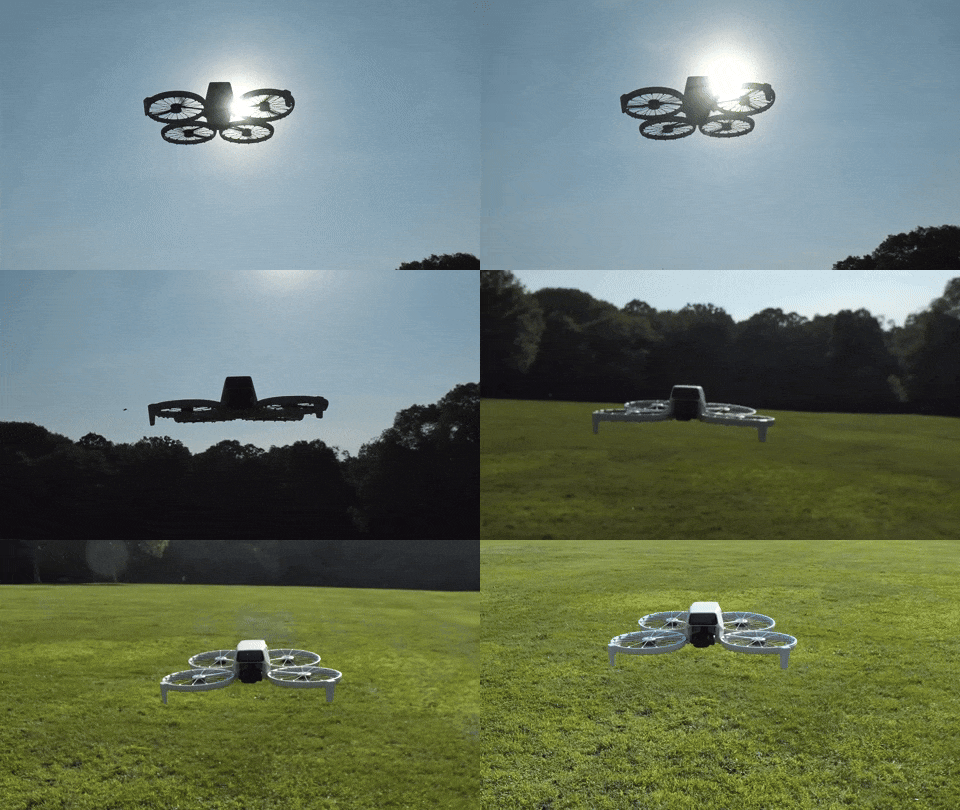
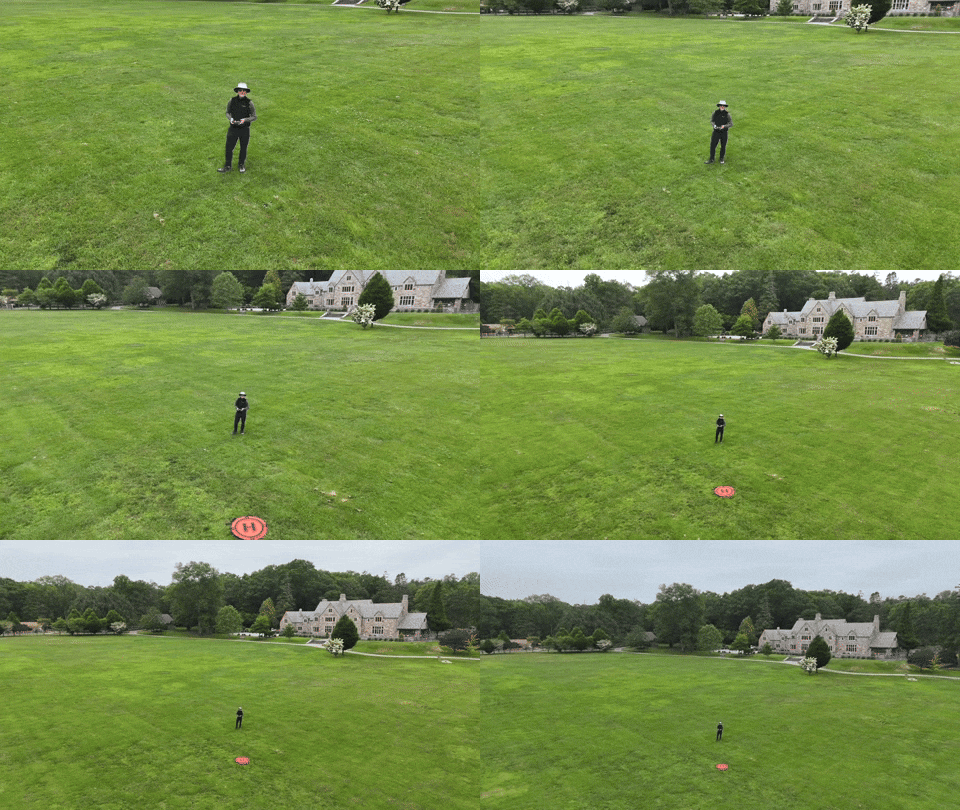
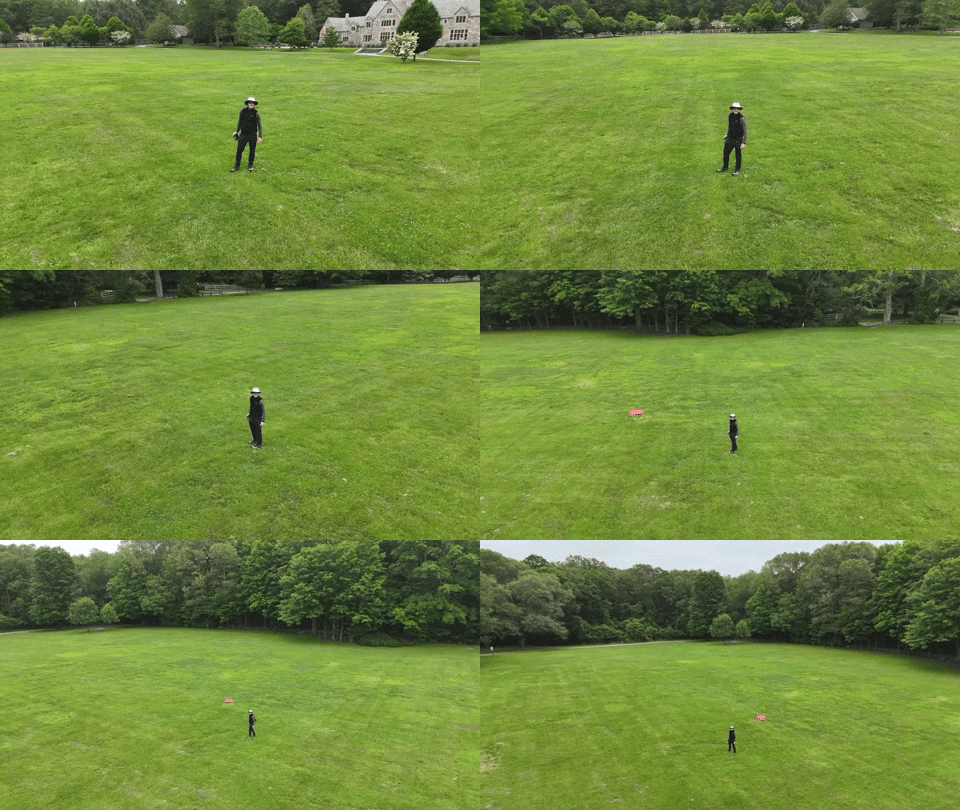
In fact, I’ve quickly figured out how to access the QuickShots’ menu on the RC 2. And I generated these nifty shots in the park on an early test flight.

This ‘dronie’ video is a great closer for any number of video ideas.

I just need a mountain background to fully realize this “Sound of Music” moment.

Auto Braking System
Happily, my Flip has a front and bottom-facing infrared sensing system, which enables the drone to auto land and prevents it from flying directly into obstacles. But it’s not a 360-degree obstacle avoidance system like other DJI drones have. 

So, crashes are completely possible. (Of course, I’ve purchased the 2-year protection plan.)

Practice Makes Progress
I know that mastering any new hobby or passion takes time. So, I’ll try not to rush it (or crash it).

Just being able to generate some nifty (though preprogrammed) cinematic shots with the DJI Fly app on my iPhone and the remote controller has been enough to instantly make this novice a functioning camera drone operator.

I couldn’t be more pleased.