At Home with Tech

Unlock the power of all your technology and learn how to master your photography, computers and smartphone.

Tag: apple

8 Ways to Quickly Get your New iPhone Up to Speed
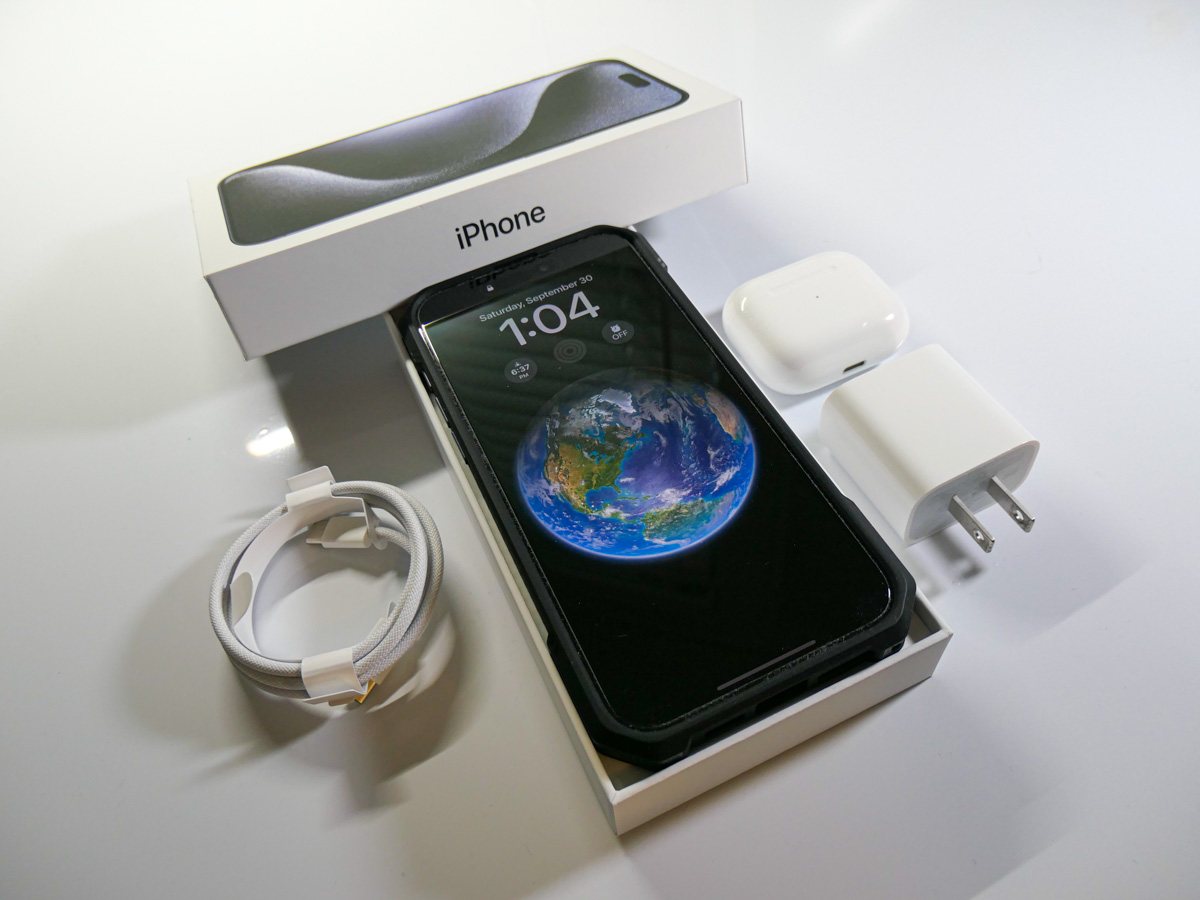
I’m the proud owner of my new iPhone 15 Pro Max. Beyond the basic set up, here are the next steps I took and extra purchases I made to quickly unlock my iPhone’s full potential.

Buying a new iPhone and setting it up is easy. But integrating it into the daily routines of your old device is not as simple as you might expect. Sure, migrating apps and data over is straight forward, but’s that’s not everything you need to think about. There are other steps to take and more decisions to make surrounding your core purchase.

It’s been five years since I bought my recently departed, beloved iPhone XS Max, and I found myself a bit rusty on remembering everything I needed to take care of surrounding my iPhone 15 Pro Max purchase.

Here’s my guide with eight tips to help speed the entire process and get you quickly up and running with your next iPhone.

#1
Be Sure to Join the Virtual Line Early on Launch Day
If it’s time to upgrade to your next iPhone, then it makes sense to buy one the day it’s released to maximize its twelve months of being the ‘latest and greatest.’ I bought my iPhone 15 Pro Max online at 8:20am the day of its launch. It arrived a week later, and I picked it up at the Apple Store. Sweet.

But that happy story first required 25 minutes of frustration, persistence and I think a dash of luck.

I sat down at 7:55am EDT in front of my Mac Studio on launch day and promptly waited for the Apple Store to open for business. (Yes, it’s usually down during the hours ahead of a new iPhone going on sale.) The Apple Store didn’t open (for me) until 8:05am. And then it took another fifteen minutes of multiple failed purchasing attempts (as I fought others around the world to be among the first new iPhone owners) before the transaction finally went through. (I’ve had the same challenge over the years when buying an iPhone on day 1.)

Apparently, I just squeaked through before the delivery times began to slip into October and November.

So, it clearly pays to be prompt and close to the front of your virtual line.

#2
Buy More Storage than You Think You’ll Need
Five years ago, I wrote my blog post, “Why Do You Need an iPhone with 512GB of Storage?” And while I recommended the idea of having what was at the time a ridiculous amount of storage, I ended up sticking to 256GB. This time, 512GB was a no brainer for the extra $200.

The choice was whether to spend another $200 on top of that for 1TB.

While I’m enamored with the idea of recording Pro Res video clips, I no longer feel the need to permanently house every piece of media I generate locally on my iPhone. With that strategy, even 1TB storage would eventually not be enough.

The truth is you can’t carry around every digital media file you’ve ever created. And I would also argue why would you? That would be a crippling number of videos and photos to manage.

Sure, I’m always impressed when a parent can pull out their iPhone and quickly flip through tens of thousands of photos to find that one cute photo of their kid from a decade ago. That’s a superpower I don’t have. And I’m willing to bet that no one will be able to retain that capability forever. You can only flip though so many files before your finger falls off.

#3
Buy the 20W USB-C Power Adapter
Apple’s 20W USB-C power adapter is the new norm. Goodbye tiny 5W adapter (though it will still work slowly in a pinch). Unfortunately, you don’t get a 20W adapter in your iPhone’s box (just a USB-C cable). So, you’ll need to buy one separately if you don’t already have one.

#4
Replace your Lighting Cables
I’m sure you know by now that the Lightning connector is out, and USB-C is in for the iPhone 15 line. Yes, you do get one USB-C cable in your iPhone’s box, but that’s not going to be enough, right?

You’ll have to replace your existing arsenal of Lightning cables to maintain your new iPhone’s power/charging stations.

And if you intend to continue using your old USB-A chargers, you’ll need to buy some USB-A to USB-C cables.

#5
Buy a Case with a Camera Cover
Choosing a protective case for a new iPhone can easily become a complex decision. Unless you take the path of least resistance and go with an Apple case, it could be weeks of research before you come to a decision (guilty).

I wanted a case ready to go for my iPhone 15 Pro Max (essentially as a temporary solution, if need be). So, I took a chance and ordered one on Amazon before my iPhone arrived. That’s way early, because case manufactures are still guessing a new iPhone’s physical specs at that point. But I did okay.

The case fits really nicely, and its distinguishing feature is its little folding door cover for my iPhone’s three camera lenses.
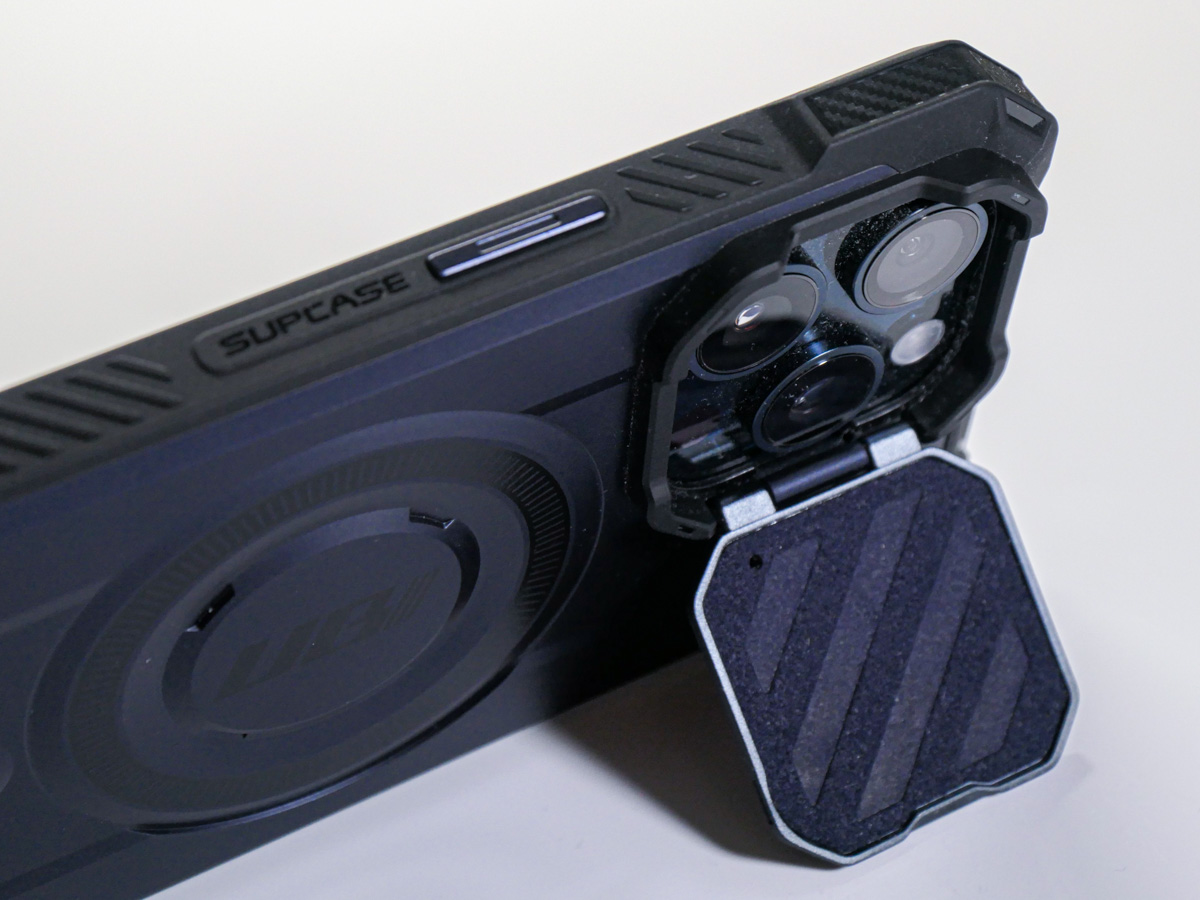
Protecting those little lenses was on my mind, and this quickly took care of that concern!

#6
Unpair and Pair your Apple Watch
Your Apple Watch is an intensely faithful device. It sticks to only one iPhone at a time. If you think that by simply cloning your old iPhone’s identify into your new iPhone, your Apple Watch will gleefully follow along, you’d be wrong.

Your Apple Watch needs to literally break up with your old iPhone and then marry your new iPhone. So that means first unpairing it. And then pairing it again.

It’s not an especially quick process. So, set aside a half hour or so for this.

#7
Sign Back into your non-Apple Apps
Yes, your iCloud apps will be ready to go. But for everything else… nope.

You’ll need a chunk of time to sign back into the rest of your apps.

#8
Add a MagSafe-Compatible Charger for your Car
And then there’s your iPhone’s car interface. No matter how you connect your iPhone in, you’ll want to consider how it’s positioned in your car (perhaps mounted to your dash). A MagSafe-compatible solution is a good idea for both positioning and charging.

I picked up Belkin’s Magnetic Wireless Car Charger that’s MagSafe-compatible and mounted it to one of the air vents on my dash.
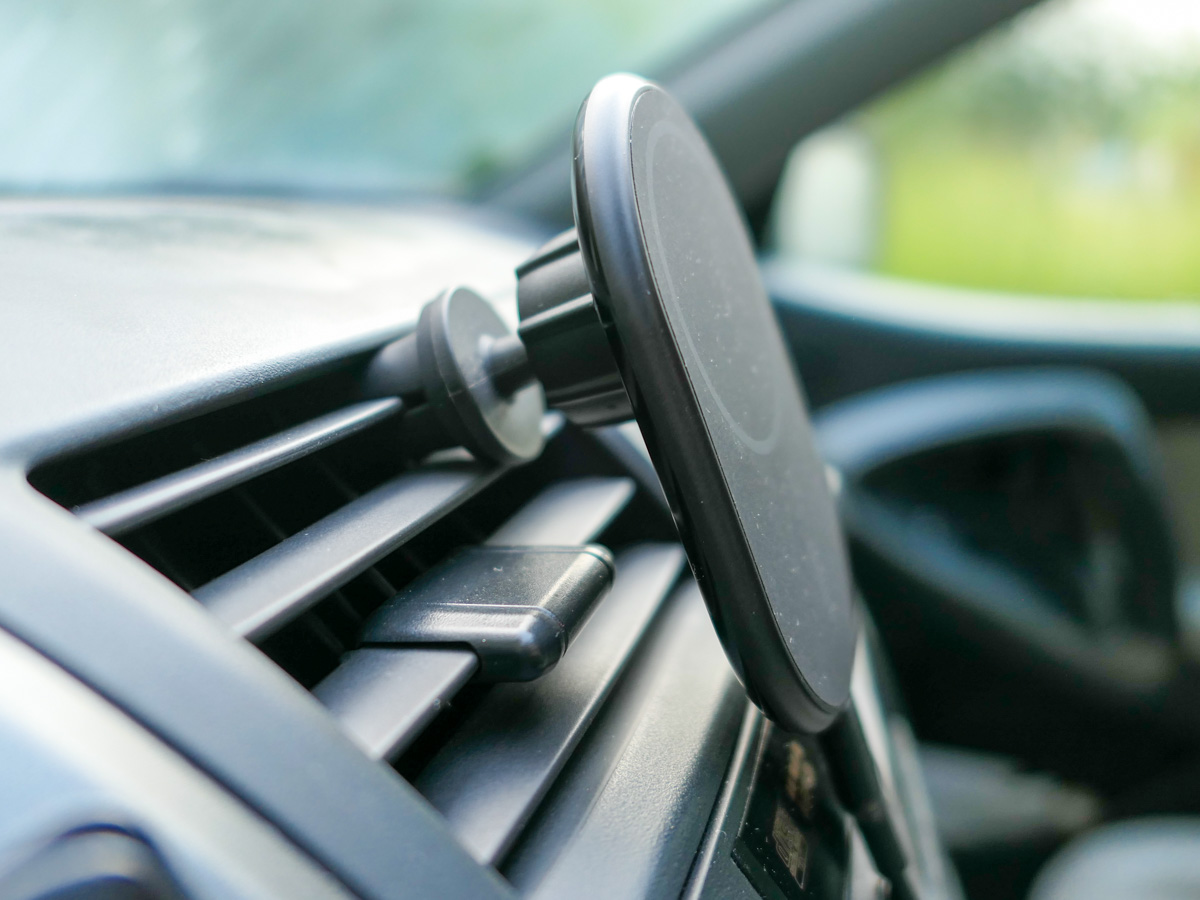
The magnetic grip is plenty strong. The vent mount slides in fine, though it does feel a bit ‘MacGyvery,’ (which in fact it is).

Technically, it’s not an official MagSafe mount and thus doesn’t charge as fast. (Belkin’s upgraded MagSafe model is the real deal, but it’s quite pricy at a hundred bucks!)

This one works just fine.
Click.

For the record, I also saved some money on my Belkin charging mount by buying a used one. I clicked on Amazon’s “Saved with Used – Like New” icon for $41 bucks (same model). It really was like new, and I saved almost twenty bucks. So, if you see that purchasing option, I think it’s a good idea for this type of support tech.

One other note… Some magnetic mounts are just that… magnetic. They don’t offer charging. So, check the fine print when reviewing your choices.

Doing the Work Pays Off
Getting your new iPhone back into the groove of your old device takes some planning and additional spend. Sure, you may have the latest and greatest in your pocket, but no smartphone is an island. It will also need its own accessories to be able to keep up in your orbit.

You’ve taken years to curate the experience you want from your iPhones. Only when everything is literally back in place and properly supported will your next iPhone really feel like… yours.

I recommend making this a weekend project. That’s what I did.

It’s time well spent, and let me tell you, there’s no better feeling than starting a Monday morning with your gleaming piece of new Apple tech operating at its full potential.
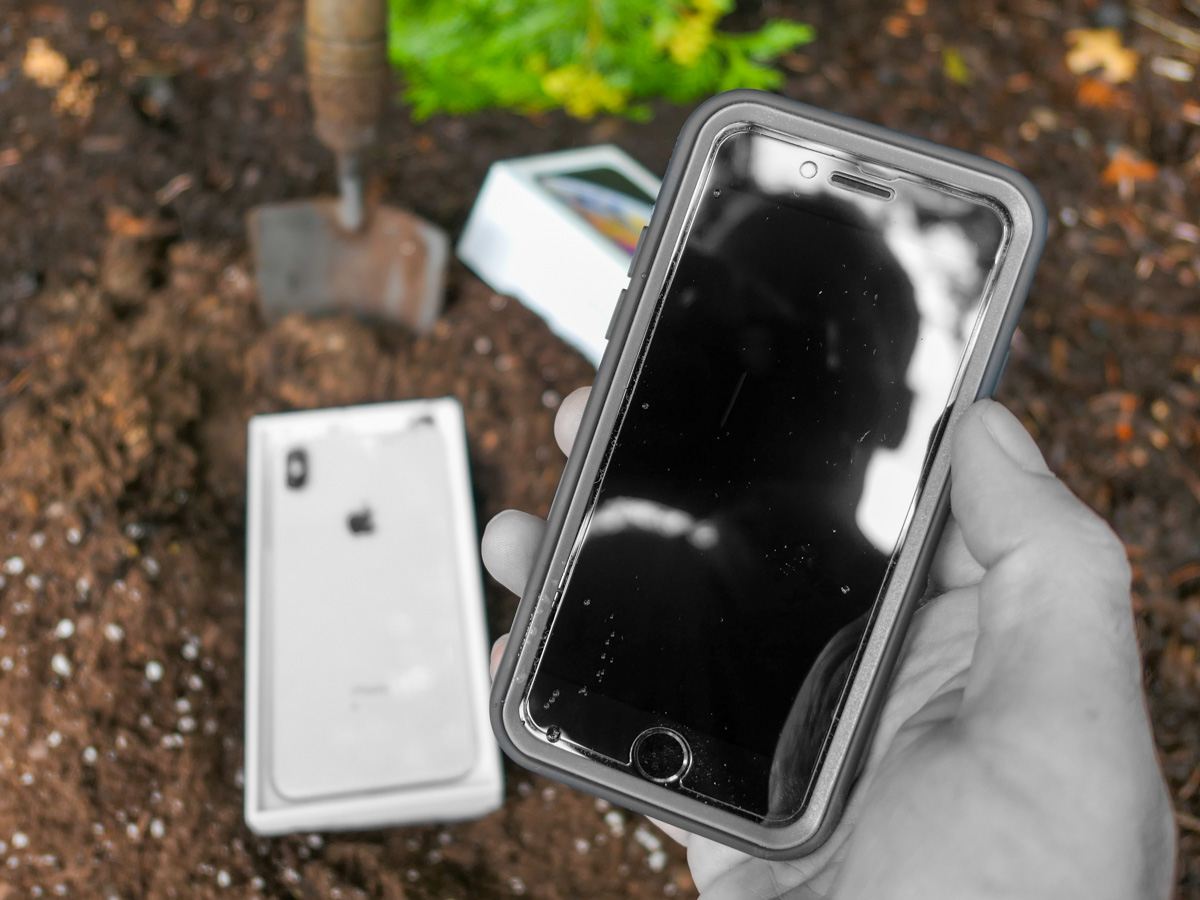
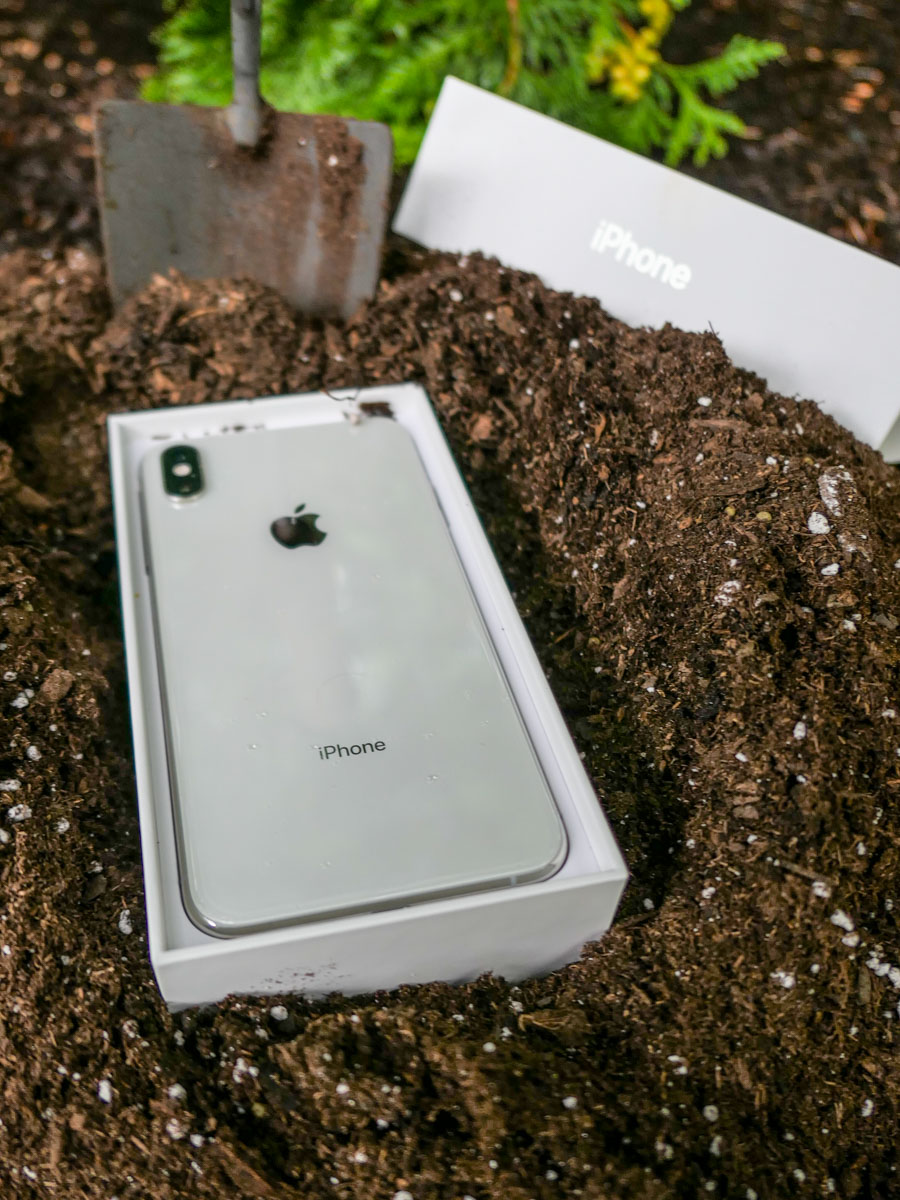
You Can’t Save your iPhone’s Soul if You don’t Activate this Setting

If you ever need to clone your iPhone should your device meet an untimely end, a simple setting buried in your old device is the key to success.

You may not realize it, but across the years, you’ve been building and nurturing a look and feel for your iPhone. It comes in the form of all the apps you’ve downloaded and how they’re organized on your screen. It creates an experience that’s unique to you and feels perfect, because it is. You’ve made it that way.

When you want to upgrade to a new iPhone or need to because of less-than-optimal circumstances, Apple has a process to perfectly restore all your settings and apps in your new device (passwords too). That is if you follow all of the iCloud rules.

But if you miss a step and disaster strikes, you can never transfer your iPhone’s unique personality that you’ve lovingly crafted into a new phone model. You’ll effectively lose its ‘soul.’ Sure, you can manually put all the pieces back together into a new iPhone, but the clone will never be exactly the same.

That’s what happened to me.

R.I.P. My Dear iPhone
Last time, I shared how I effectively killed my iPhone after a little kayaking mishap that submerged it in ocean water.

Thankfully, I had backed up all my Apple apps in iCloud, and when I activated my replacement iPhone at The Apple Store, those apps were already in place, loading in my important data.

But when I searched for all my other apps, they were nowhere to be found.

I was still grieving the loss of my former iPhone. (It had been less than an hour.)

Now, the pain started to pile on.

iCloud 101
Yes, I’d previously been following good iCloud back-up protocols and had properly saved everything of importance to iCloud:

  • Photos
  • iCloud Mail
  • Notes
  • Messages
  • Contacts
  • Calendars
  • Music

It was all safely stored for me.

So, restoring all of that in my new iPhone was easy. (Plus, I pay for 2 TB of Apple cloud storage to cover all my family’s devices and related files.)

I thought I had it all covered. But I didn’t.

My non-Apple apps had vanished. Here’s why…

We Can (Mostly) Rebuild It
Apparently, my old iPhone didn’t have the little iCloud backup switch in ‘Settings’ activated to its green state. I had somehow missed that.

And without that critical piece of back up flicked on, I had forever lost the snapshot of my old iPhone’s set up. All the settings, the home screen layout and all my non-Apple apps.

Now, I needed to download all my non-native Apple apps again (they were readily available in my ‘Purchased’ section in the App Store app), reorganize them and then (the worst part) re-sign into every one of them again.

That was a big project and a massive pain.

It took me the better part of a week to get my apps back in order and running properly. (You don’t realize how heavily you’ve become reliant on your phone for your day-to-day needs until you don’t have access.)

And then when I was done, I still didn’t have my old iPhone’s exact layout back. It was inevitably a bit different. (You’d otherwise need a photographic memory to restructure it perfectly.)

How to Turn On iCloud Backup to Save your iPhone’s Settings
So, if you want to avoid my Humpty-Dumpty fate, be sure to have the specific iCloud Backup switch turned on in ‘Settings.’ It’s embarrassingly simple. Go to:

  • Settings
  • Your Name (on the very top)
  • Your Name’s iPhone (in the third section from the top)
  • iCloud Backup
  • Flick the virtual switch to green
  • That’s it

Silver Lining?
The only upside to my rookie iPhone mistake is I had the chance to slim down the apps on my new phone to the apps that I actually use today. (I didn’t download the ones that I haven’t opened in years.) So, I was able to create a better-organized layout for myself.

No, it’s not my old iPhone. That’s gone. I’ve permanently lost that comfy layout.

However familiar, that’s not necessarily the best layout for me today. It was created organically across many years and through previous iPhone models.

Creating a fresh app structure from the ground up has its advantages. It certainly better represents my current needs. It’s more efficient. It makes sense.

Now I just need to train myself to remember where everything is!

Everyone Risks a Kayaking Kerplunk
Sure, we can all regularly update and reorganize the app structure on our phones. But who really takes the time to do that?

I should be thankful that I was given the opportunity to properly refresh and optimize my own iPhone experience. Right?

On the other hand, just flicking the green iCloud switch is a whole lot easier.

And better yet, think twice about bringing your iPhone on your next kayaking trip without a waterproof bag.

But as careful as you may be with your tech, there’s always some kind of kayaking kerplunk just around the corner for everyone.

So, plan ahead and make sure that the iCloud Backup switch is on!

R.I.P. My Dear iPhone

There are any number of ways that an iPhone can die. It’s particularly painful when it’s due to human error. Here’s how I killed mine.

The opening scene fades up on a beautiful shot of my wife and me enjoying an afternoon kayaking excursion while our son is away at sleepaway camp.

It was a sunny, summer Saturday, and we were soaking in our experience. Our kayaking route took us a mile and a half out to a little island near Norwalk, CT.

It was all perfect. But there was turbulence for me ahead.

A Three-Hour Tour
I had taken precautions to protect my iPhone and wallet by stashing them in a water-resistant belly bag.

When we approached the shoreline of the island, we had to, of course, pop out of our kayaks and take a few steps through a foot of water to complete the first half of our journey.

Those fateful steps turned out to be a doozy for me…

The Sinking of the Barrett
I immediately began to lose my footing as I struggled to stand upright. And with each step, I moved into deeper water, continuing to slip on the slick stones beneath. There was also a bit of current that further pulled me off my balance.

I know I can continue to make excuses, but as I’m sure you’ve surmised by now, I simply fell in.

And yes, my belly bag fully submerged in the salty water.

I pulled myself out of the drink as fast as possible, unzipped the bag and peered inside. Both my wallet and iPhone were drenched, although they were not resting in a pool of water. My belly bag had at least prevented that.

I emptied my precious contents and placed them on a flat piece of wood in the sun that was conveniently positioned on the sand in front of me.

My iPhone was blinking the Apple logo, trying to reboot itself.

Uh oh. That wasn’t good.

So, I powered it down, hoping that my iPhone would dry out over the next 24 hours and return to its normal state.

But it didn’t. The next day when I turned it on, my iPhone struggled to boot up and then promptly crashed, regressing back to the Apple logo.

My next step was a desperate visit to Apple’s Genius Bar.

My Experience at Apple’s ER
It felt like I was in an emergency room watching a failed attempt to preserve life. My iPhone lay on a table, plugged in to a diagnostic monitor. Its life was draining away.

The Genius Bar technician grimly evaluated the diagnostic scan. The store manager and a sales specialist watched with me. I signed a waiver allowing my phone to be wiped in a last-ditch effort to bring it back to life.

And then it was over. My iPhone had flatlined.

There was no hope. The Apple Genius called it at 12:33pm.

DOA. Repair not possible.

How to Move On
At 12:34pm on an August Sunday, I had officially lost my beloved iPhone Xs Max, my constant companion for the past five years.

Yes. If you were wondering, I had not just drowned a newer iPhone model. Still, I had paid a whopping $1,249 for it. But time marches on, and my phone was clearly past due for replacement by the ‘Lester Operating Standards.’ And I was looking forward to upgrading to an iPhone 15 model this fall.

Soon. But not soon enough. That window wouldn’t open for another six weeks or so.

Of course, I immediately needed another phone.

But I didn’t want to pull the trigger on an iPhone 14, because that will shortly be last year’s model.

Then, the solution hit me.

I wasn’t the only Lester who required an iPhone. There was another.

The Lester Family Plan
My thirteen-year-old son needed an iPhone, and I was planning on getting him an iPhone SE during my planned Apple Store visit for my iPhone 15. It was to be a father/son trip. We’d get our iPhones together.

But that well-planned moment evaporated the moment my old iPhone died.

Of course, I’d need to buy the iPhone SE now and use it as a bridge for the next two months before handing it over to the next generation.

Yes, that meant a variety of compromises, but I knew I could handle going old school for the next two months.

Everyone at The Apple Store following my predicament approved of my strategic choice and within minutes, I had a new iPhone in my hand.

Error in the Cloning Process
The iPhone SE began sucking in my iCloud data. But I quickly realized something was wrong as it tried to fully replicate its former self.

I had missed a simple step in my iCloud back-up planning. And now, that would cost me.

Next time, I’ll explain what I did wrong, and how you can avoid my fate…