At Home with Tech

Unlock the power of all your technology and learn how to master your photography, computers and smartphone.

Tag: DJI Flip

How to Create Awesome Drone Footage with Amateur Flying Skills
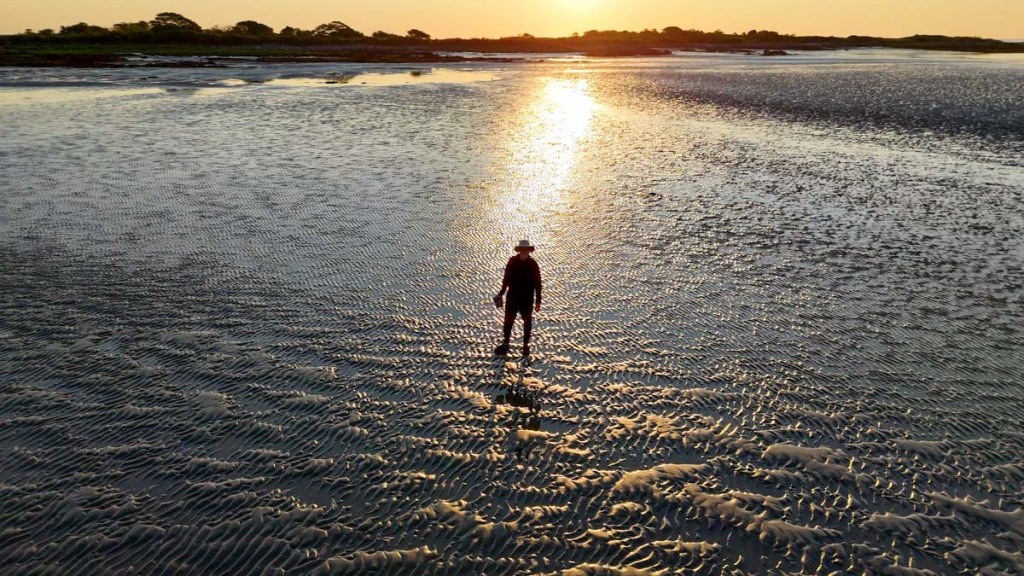
I finally bought a camera drone to start this new hobby I’ve long wanted to try. Then, I got to work studying how to fly it. I trusted my DJI Flip’s intelligent flying modes to protect my investment against disaster, because I didn’t have enough faith in my novice piloting skills. I was worried about crashing my little drone.

And then I did.

But my Flip survived its impact with that tree. So, I wiped the egg off my face and was determined to learn how to properly fly my little drone.

I continued slowly, and my patience finally paid off when I discovered a key aerial storytelling trick.

Fly Slow and Smooth
Generating cinematic videos with a drone is all about flying it ‘slow’ and ‘smooth.’ All those establishing shots you can think of from movies… yes, slow and smooth.

And that translates to easier and safer flying.
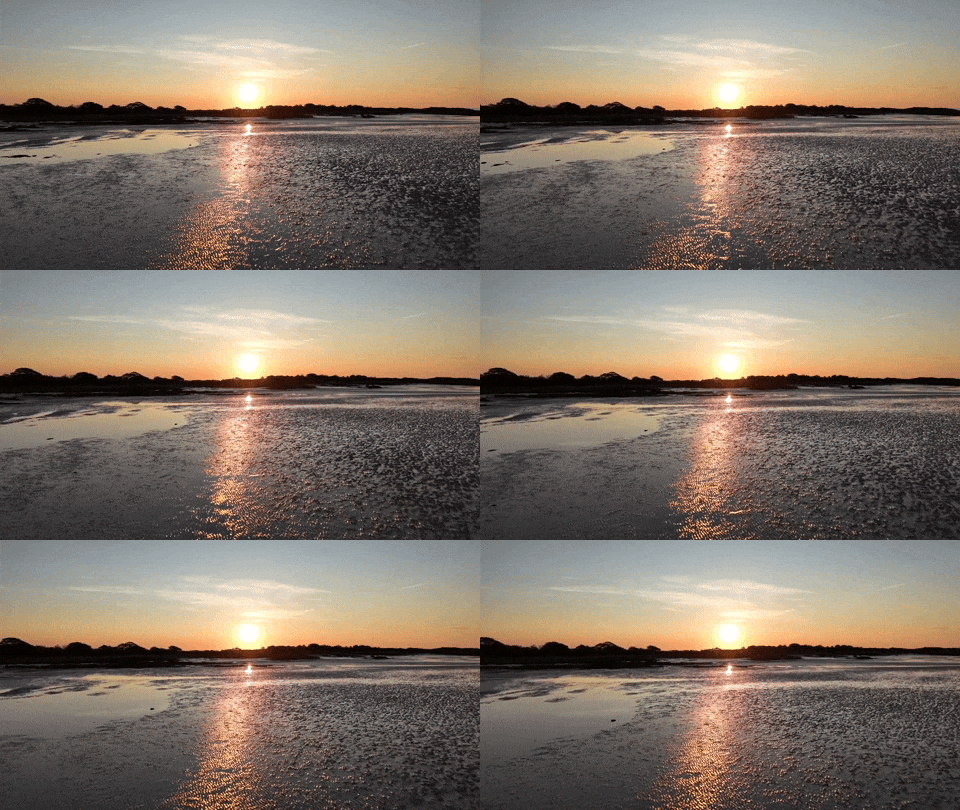
And if you’re looking to create more motion in your drone footage, that doesn’t necessarily mean you have to fly faster. Instead, just fly your drone lower. Moving over a landscape close to the ground produces more movement than from higher up. 

Happily, these flying strategies are relatively easy to accomplish. And just as importantly, they don’t put your drone at significant risk.
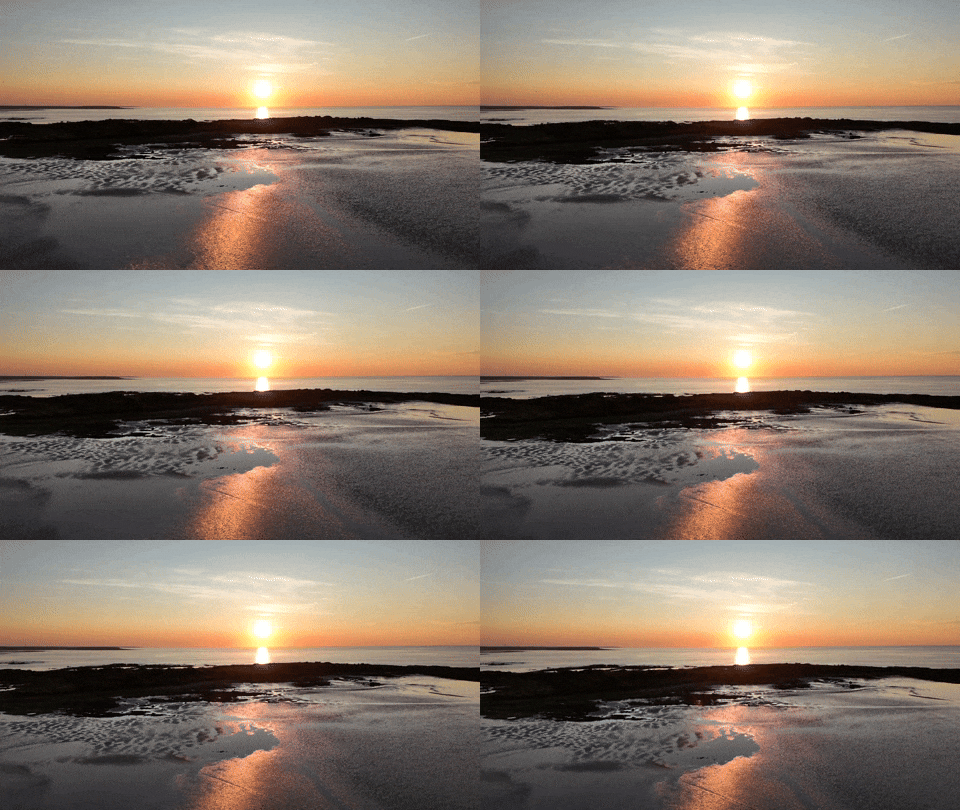
So, as I explored flying my drone manually, I intentionally followed the slow/smooth rule and practiced simplistic flying routines. 

Up. Down. Forward. Back. Sideways. 

The most aggressive maneuver I attempted was elevating my drone as it simultaneously moved forward.

Embrace your Inner Rookie
How fast can my drone go? I have no idea. I haven’t tried to find out. Could I always see my drone as I flew it? 100%.

Slow is smooth. Smooth is fast.

And as I flew in the dullest of ways, that’s when my adrenaline levels finally began to stabilize, and the tension melted away.

And guess what? I decided I’m just not going to fly my drone over water. I’m not going to fly it over a mountain ridge. I’m not going to fly between two objects and try to thread a needle. I’m never going to worry if my drone has enough battery power to make it back.

I’m just not going to push it. This isn’t a sport for me. It’s a new hobby with an expensive piece of gear I’d like to keep in one piece.

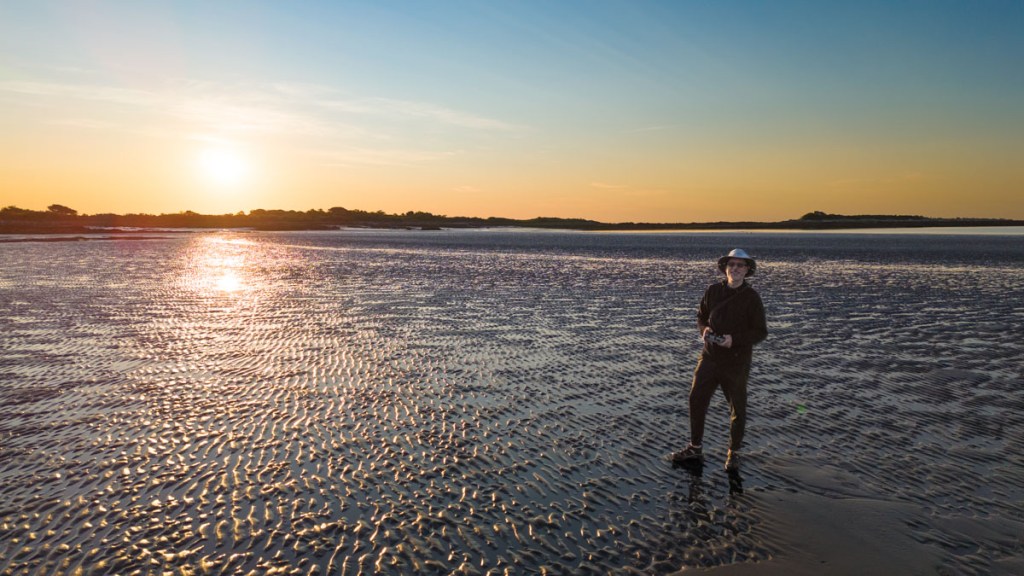
Barrett’s Drone Footage from the Mud Flats of Cape Porpoise, Maine
Even with my self-imposed training wheels in place, my conservative flying style still enabled my DJI Flip to capture the incredible beauty of our world with motion. Often, just getting your drone in the air to is enough to recording stunning clips.

And that’s exactly what I did… I think I captured some nifty footage during my training flights on the mud flats of Cape Porpoise, Maine. 

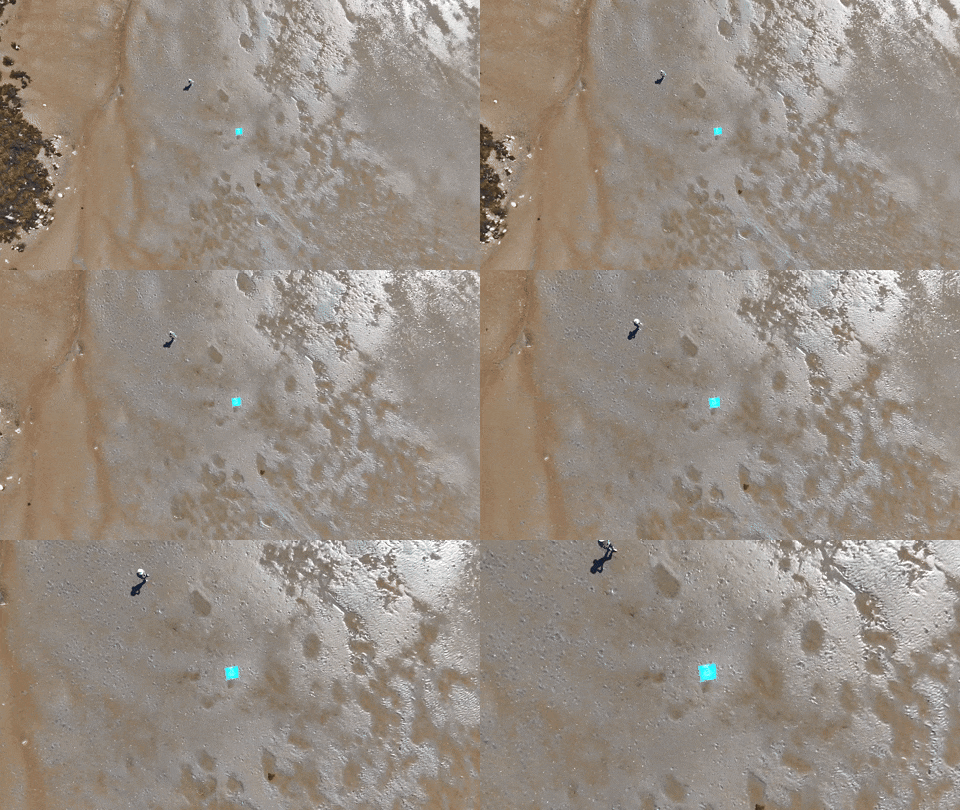
Here’s a video compilation of my manual maneuvering along with a few auto QuickShots (courtesy of the drone’s built-in code).

(Yes, my flying style was boring, but my shots were not.)

How to Quickly Edit your Drone Clips
I put this edit together using a couple tools:

  • The DJI Fly mobile app for basic video editing and music
  • Final Cut Pro for precision edits and speed ramping

I should mention that you can quickly perform a punchy edit just using the DJI Fly app on your phone. There’s even a 1-click editing solution. It’s not perfect, but you can generate and share a dynamic video with your phone in just a couple minutes. Impressive. Most impressive.

When Less is More
A little drone can go a long way. I mean that both literally and figuratively. 

You don’t have to fly your camera drone like it’s capturing a stunt shot for “Mission Impossible.” I say… keep it all entirely ‘possible.’

And while many pros out there may yawn at my stubbornness to avoid all risk, I’m entirely pleased with my creative results to date. 

Others may like showing off their camera drone crashes to the world, I hope to never do that again.

Start slow. Keep it slow. Make it smooth.

Less is more.
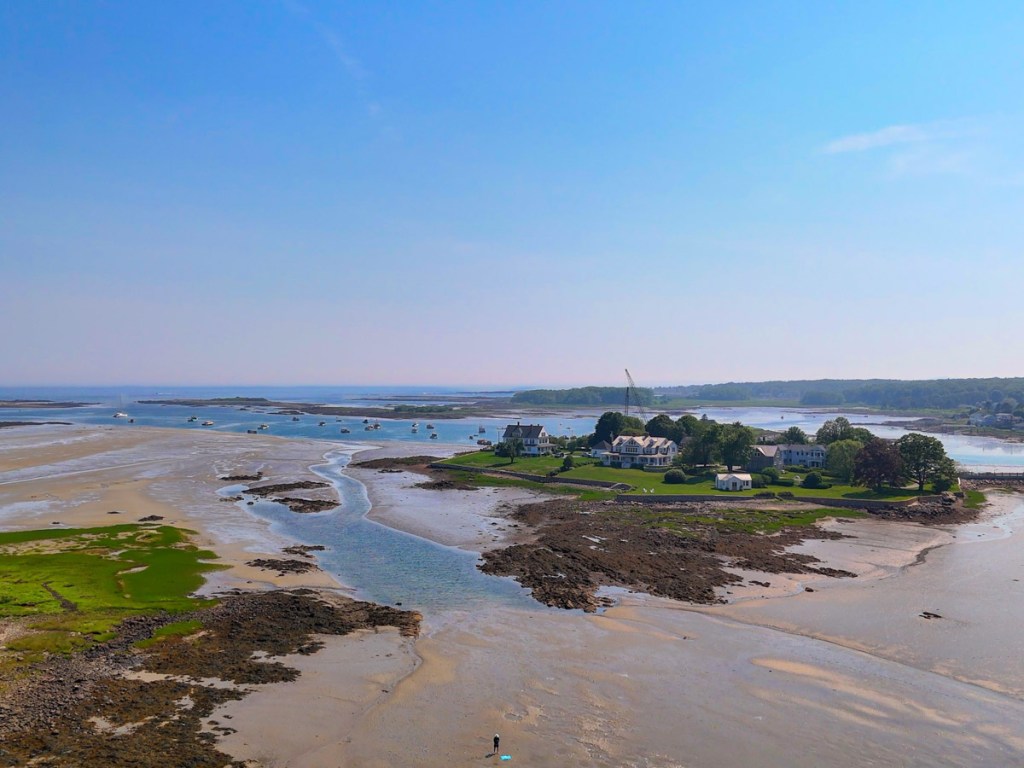
My Camera Drone Misadventures: A Cautionary Tale for Beginners

You can only watch so many drone tutorials on YouTube before you simply go for it and put your new camera drone in the air. And let me tell you, it’s completely nerve wracking. It’s not a video game to simply reset when you crash. You’re flying with no net.

There are any number of worse case scenarios to guard against. After you fly a drone for the first time, you immediately understand why the promise of flying cars never materialized.

QuickShots are a Joy
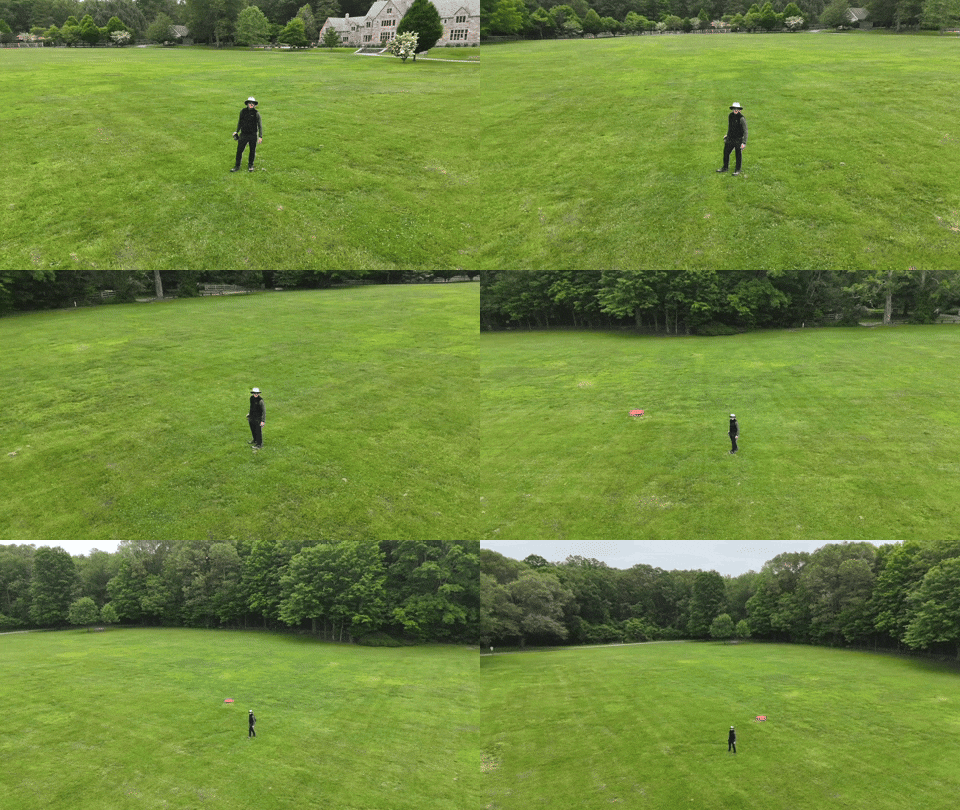
For my DJI Flip’s first test flights, I stuck to the simpler automated QuickShot maneuvers. These are the auto settings where the drone records preset flying sequences using ‘subject tracking.’I took my Flip to a nearby park with plenty of open space, crossed my fingers and hit the fly button. Happily, these tests were a success, and I brought home some impressive footage.

DJI’s QuickShots’ mode was indeed simple to use, as advertised. But I really wasn’t controlling the drone yet. My DJI Flip was effectively flying itself.

The next step was to attempt manual control.

Then, I Crashed my Drone into a Tree
So, I packed my little Flip for our vacation to the coast of Maine in Cape Porpoise. My plan was to use the nearby, vast mud flats as my new training ground. 

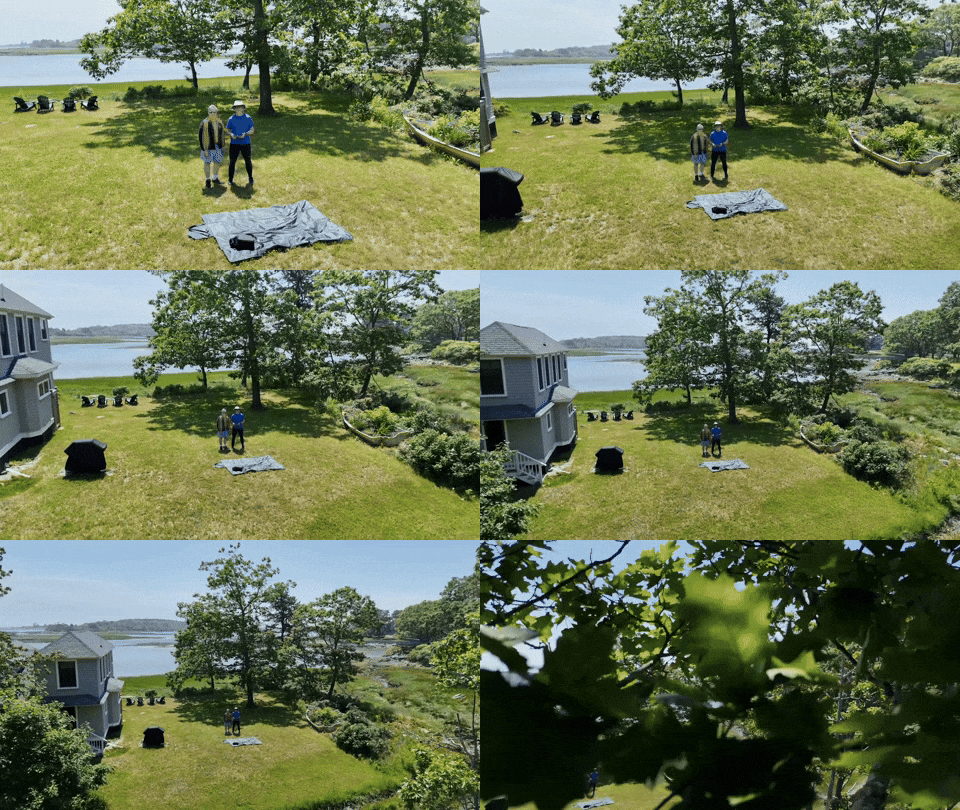
But before trudging onto the mud flats, I wanted to practice a few more QuickShots in the yard next to where we were staying. And that was a mistake. That’s because the distance limits I had set for my previous park flying tests were still in place, and I had forgotten to reset them.Then, when I executed an automated ‘Dronie’ QuickShot with my friend standing next to me, my Flip shot up and quickly began backing up in the air as it auto-tracked us… and it kept backing up… until it rammed into a tree.

The battery catapulted off the drone’s body, and both pieces collapsed to the ground.

No, the DJI Flip doesn’t have rear-sensing capability. No, I didn’t have enough sense to cancel the auto maneuver before it was too late. It all happened so fast.

The crushing sounds of the tree crash and then ground impact were horrifying.

I stood there, frozen. Staring ahead. 

The whole incident took mere seconds, and my flying career was over before it really started. Or so I thought.

My Drone has Nine Lives?
I hurried over to the wreckage. There was the battery, and then a few feet away…the drone. Both appeared to still be intact. Huh.

I picked them up and inspected each for damage, but I couldn’t find any.

So, I snapped the battery back in and returned to the launch zone. I looked at my friend. Would this thing still fly? I pressed the button.

My DJI Flip effortlessly lifted into the air as if the past few minutes had been magically erased.

Huh.

The best I can figure, the battery’s ejection had lightened the drone’s weight, thus reducing the effect of ground impact. And the drone’s four propellor guards had protected it from the tree.

I turned to my friend, and I said, “Well that’s nine lives right there.”

A Drone’s Weakest Element is the Human Factor
It was painfully clear that even in auto pilot mode, my drone required correct human inputs. I thought the tree was far enough away. I was wrong.

Sure, I’m new to drone flying. And the DJI Flip’s intelligent flying modes are designed to help with this limitation, but it’s not fool proof.

And as I later attempted other vacation flight trials, I was painfully aware how often I felt outside my comfort zone.

I Accidentally Sent my Drone into ‘Orbit’ 
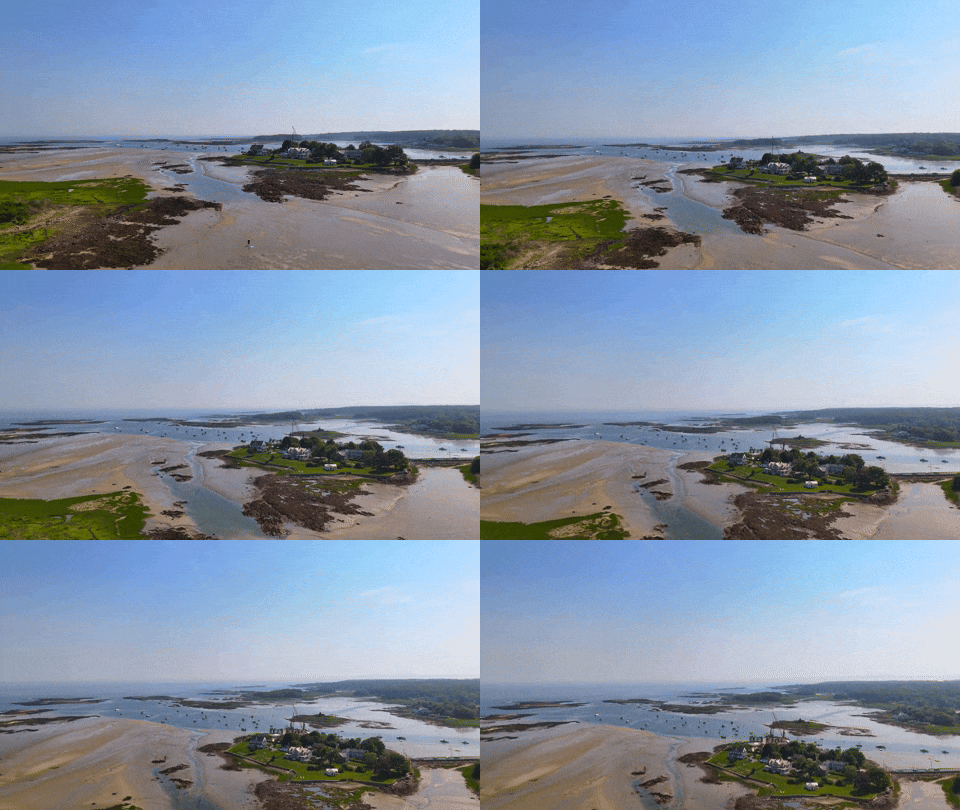
I shouldn’t take credit for this amazing shot above the mud flats, because it was a complete fluke.

I was simply testing the auto ‘Return-to-Home’ function after I manually flew my drone (very cautiously) a couple hundred feet away down the beach line at a twenty-foot altitude. 

Return-to-Home or ‘RTF’ is where the drone automatically flies back to its takeoff point. It’s a handy feature. But I forgot to check the height settings for the return flight. This is an important detail to ensure your drone doesn’t hit any trees on the way back. 

Happily, there are no trees to avoid on mud flats. Unfortunately, I had accidentally left the ‘RTH’ height setting unnecessarily high. 

My Flip suddenly shot up into the sky to reach the preset altitude for its return across the beach. Then, I quickly lost track of it. 

I couldn’t see my Flip anymore. I scanned the sky. My little drone was gone. I began to panic.

But I could still hear its distant whine. I looked down at the screen of my RC 2 remote controller. I was stunned and terrified by what I saw. My drone appeared to be in orbit, and it was beaming back this spectacular view of the coastline. 

In hindsight, I recognize this is what the Flip is designed to do. But this wasn’t my plan. It was a bit windy out, and my intention was to keep my drone relatively close.

Searching the Heavens for my Intrepid Companion
And then, as if on cue, the wind began to pick up. I could hear my Flip’s overhead whine fluctuate as it struggled to maintain its flight control. A gust hit. Then another. 

My adrenaline really began to flow. (I swear I could hear Hans Zimmer music playing in the distance.) What should I do?

I felt the urge to grab back control and to gently lower the drone and fly it back manually. But I wasn’t ready. I didn’t have the skills yet. This was supposed to be just an easy test flight!

I would have to trust the code to bring my drone safely home. And that it did.

I stared at the controller’s screen for what seemed like hours, but the return trip lasted barely two minutes. And the wind was less of a concern than I had feared.Soon, I could see my little flying machine descending from the heavens over me.

Phew.

Everything was just fine. But for those few minutes, I felt totally out of control, though the Flip was in complete control (silly human).

We Still Have a Role in a Camera Drone’s Cockpit
The good news is I performed my unintended orbit test at a time when nobody else was out on the mud flats. I wanted to plan for the unexpected. And that’s exactly what I got. 

The RTH trip was in fact, not that high in the sky. (The DJI Flip is designed to reach a much higher altitude.) I just wasn’t prepared for this moment. And when I couldn’t see the drone, I freaked out.

It’s worth noting that both of my above mistakes (the tree crash and the orbit maneuver) involved incorrectly setting the boundaries of the auto flight modes.

I thought flying my drone manually would be the toughest part of my Jedi flight training. As it turned out, giving up control to the DJI Force too quickly carried its own risks.

I just didn’t know what I didn’t know. Maybe was time to watch a few more YouTube drone flying tutorials.

I was determined to be better prepared for my next all-manual flight tests on the empty mud flats…

From Static to Cinematic: How I Added More Motion to my Sunrise Videos

A sunrise timelapse video can be amazing. But unless you’re running your timelapse for a couple hours, the sun doesn’t move enough to make a big impact in your shot. (Plus, after 30 minutes, it’s not really a sunrise anymore.) So, our star is only half of the equation to generate a beautiful timelapse. 

Clouds are the other half. They’re often moving a bit faster, and when sped up by a timelapse, their motion is far more dramatic. Plus, clouds can help provide the deep, reflective coloring distinctive of any great sunrise.

Sure, clouds are technically the supporting players for this opening act, but they can steal the show when they’re in sync with their star.  

Conversely, without properly positioned clouds in your shot, a sunrise timelapse can look… boring.

In Search of the Perfect Timelapse of a Summer Sunrise
For the past few years, I’ve been vacationing in southern Maine by the stunning mud flats in Cape Porpoise. And I’ve woken up at the crack of dawn each morning with the hope of capturing a ‘perfect’ sunrise timelapse. 

I use my little DJI Osmo Pocket 3 gimbal camera, which is a great tool for timelapses. You just set it up on a tripod, program the timelapse sequence, and then it does all the work. It can even add a little panning motion. 

But the odds of success each morning have not been in my favor. 

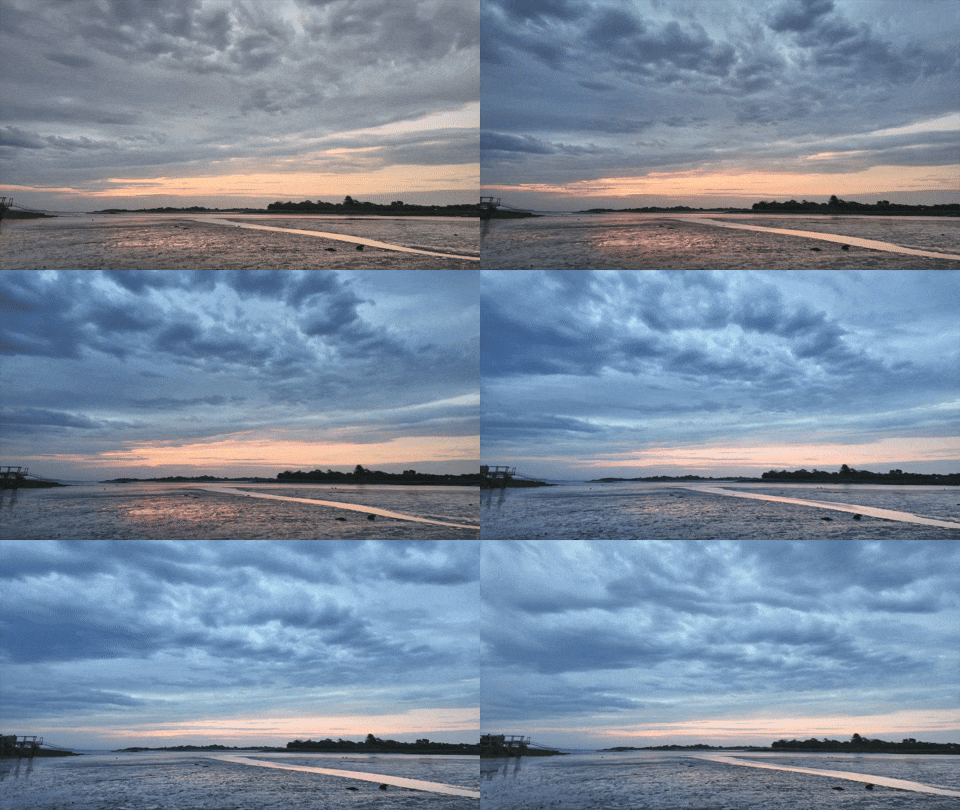
Stormy Sky
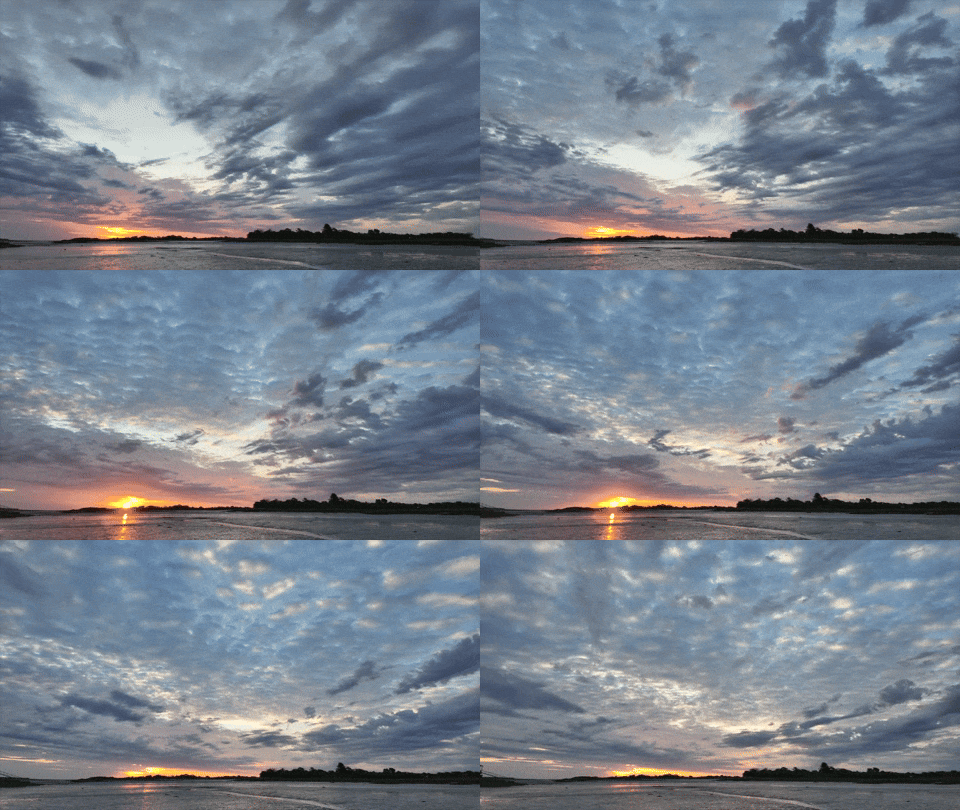
Surprisingly, a stormy cloud mass can make for an interesting sunrise timelapse. But then it’s more about the cloud dance. The sunrise becomes a background player, if you can still see it. This happened during my Sunday timelapse this year.

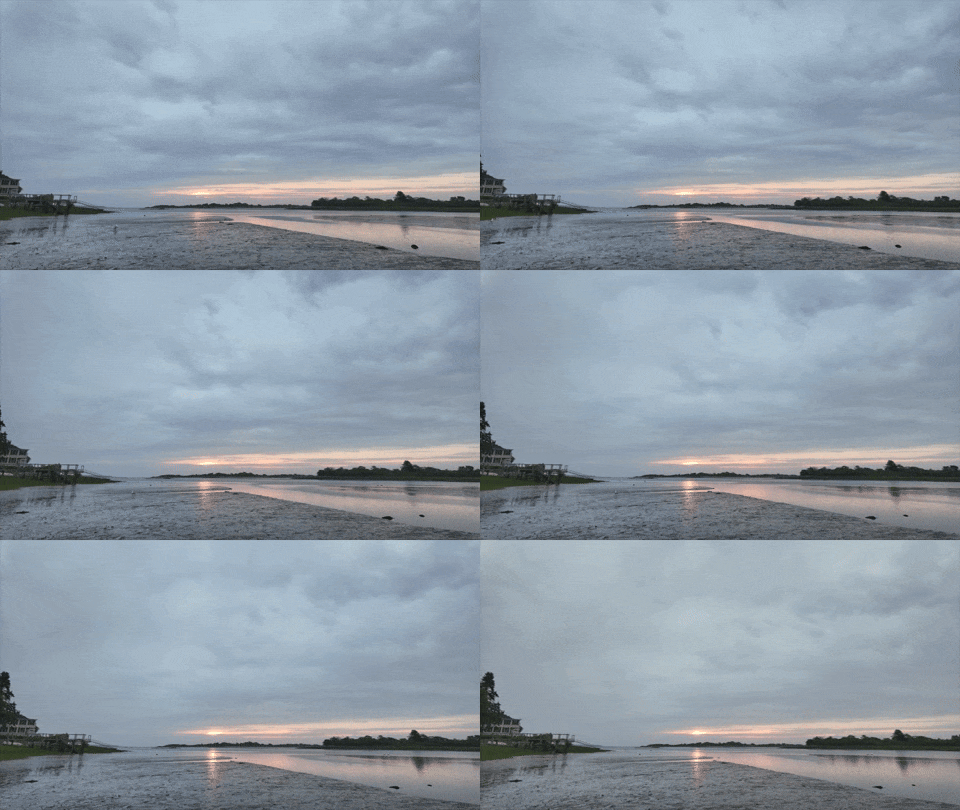
Blobby Sky
Conversely, too many clouds obscuring Sunday’s sunrise eventually created this milky sky blob.

Barren Sky
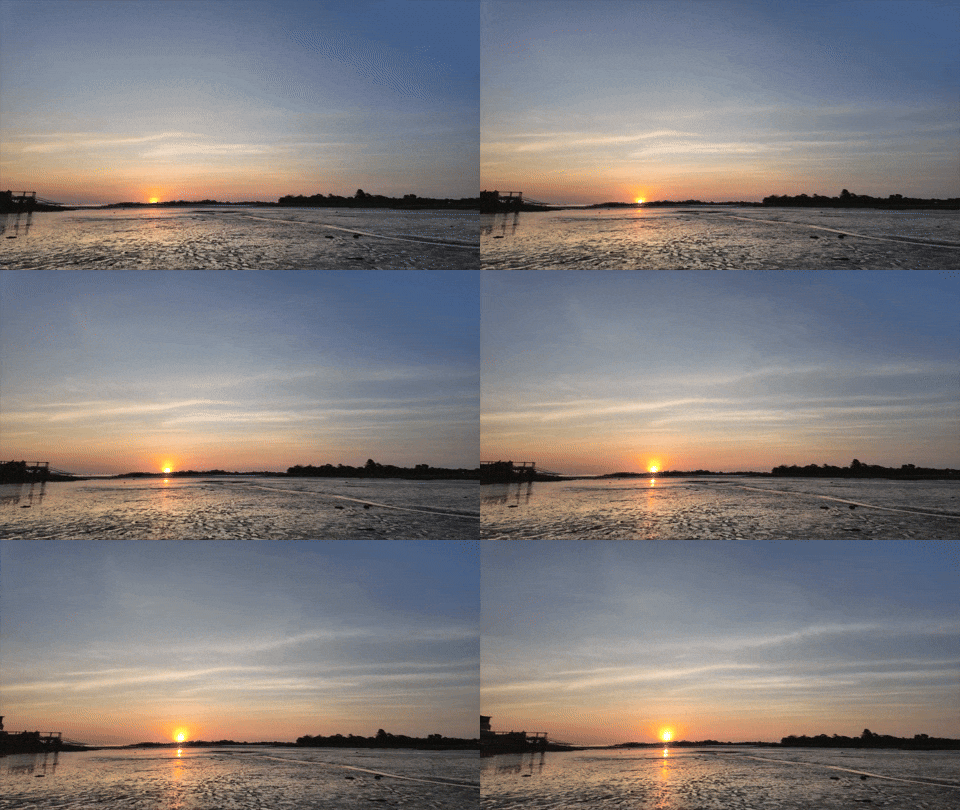
My Monday timelapse captured a mostly barren sky and a tiny ball of fire. I felt the few wispy clouds just weren’t enough to fill my digital canvas.

Perfect Sky
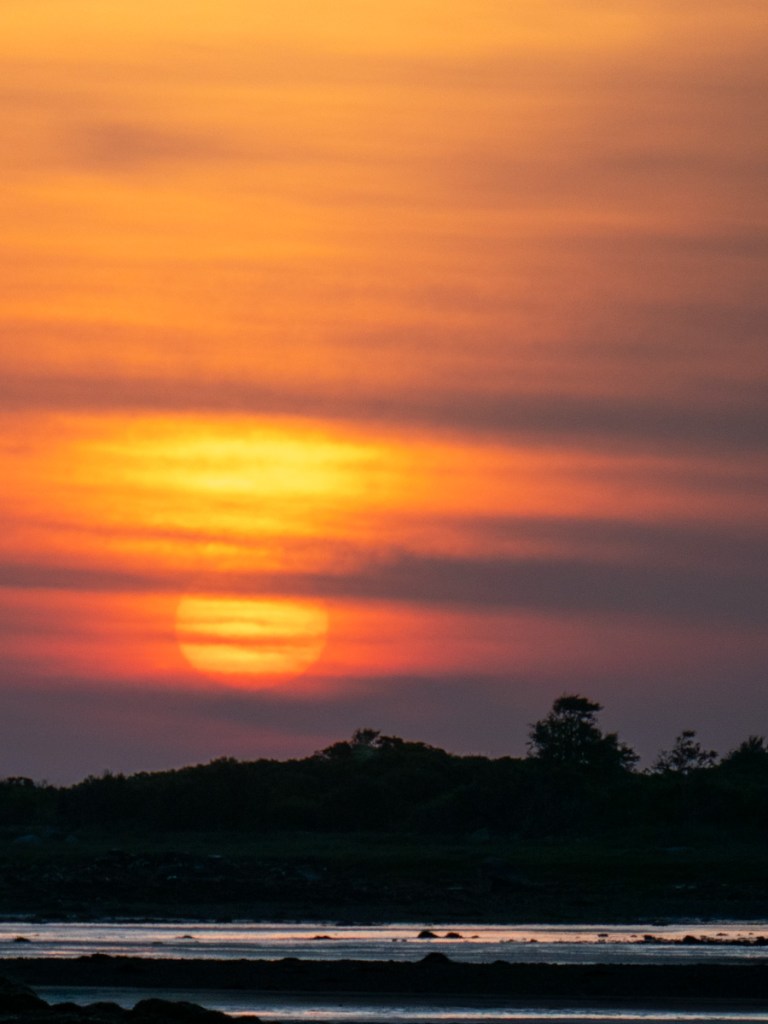
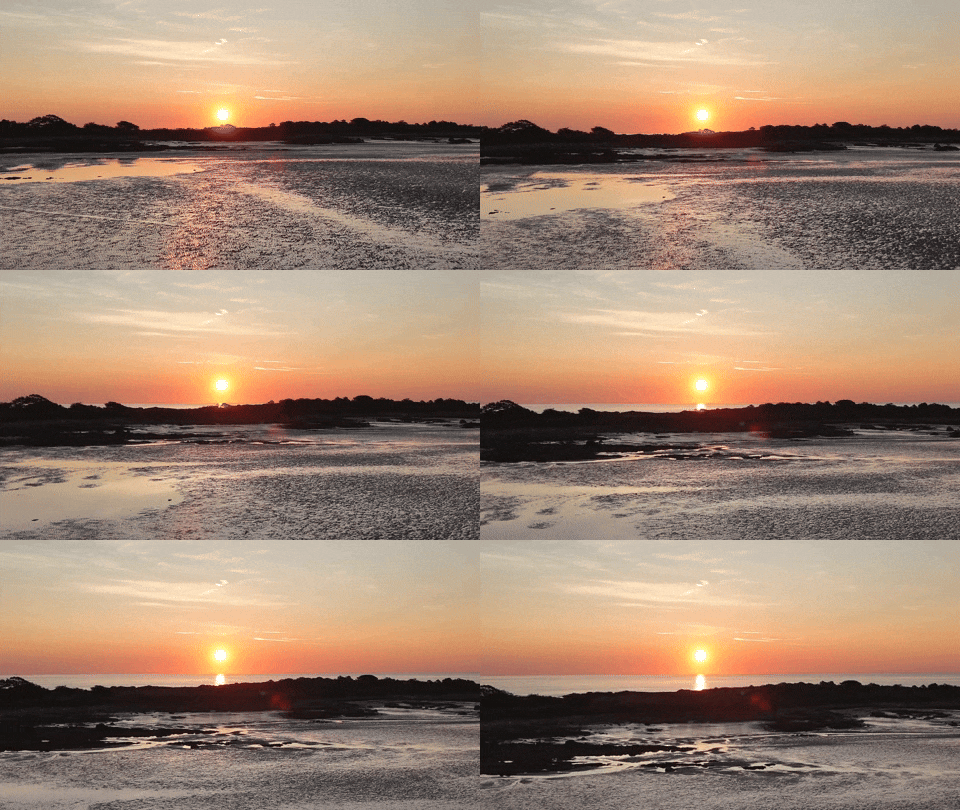
As I’ve described, the perfect recipe for a spectacular sunrise timelapse is a good balance of clouds moving about (but not in front of) the rising sun. That finally happened on Thursday.

Anyone will always be at the mercy of the weather. So, if I’m able to capture one great cloud-fused sunrise during a vacation, I feel lucky.

Camera Drone in the Sky
Timelapses add motion through time acceleration. But as I’ve mentioned you need a few clouds to accelerate. If you could add motion to your shot without having to rely on clouds, that could be a better way to get the job done.

Last time, I wrote about my new camera drone, the DJI Flip. And yes, I took with me this year on our vacation to test out.

I discovered that a drone beach shot rushing towards the sunrise can be a game changer. It’s not a timelapse, but the drone’s motion through the landscape instantly creates a cinematic video.

No, the clouds don’t move (if there are any), but it doesn’t matter. The dynamic motion zipping across the mud flats blows away any cloud. My camera drone has instantly taken my multi-year sunrise video project to a whole new level. Look at the visual energy it created for my Friday sunrise.

I’m just a novice camera drone operator, but I couldn’t be happier with this clip.

Next time, I’ll share my journey to this successful shot. And believe me, it wasn’t all sunshine.

A Week of Beautiful Sunrises
You may say that every sunrise is perfect. And you’d be right. 

The fact that I got to witness multiple beautiful sunrises on vacation should be my headline. 

But I’ve also chosen to spend that time practicing my creative. 

I know you can never truly capture nature’s perfection. But a sunrise certainly gives you something amazing to point your camera at.