At Home with Tech

Unlock the power of all your technology and learn how to master your photography, computers and smartphone.

Tag: family vacation

Best Travel Compact Camera with a Big Zoom
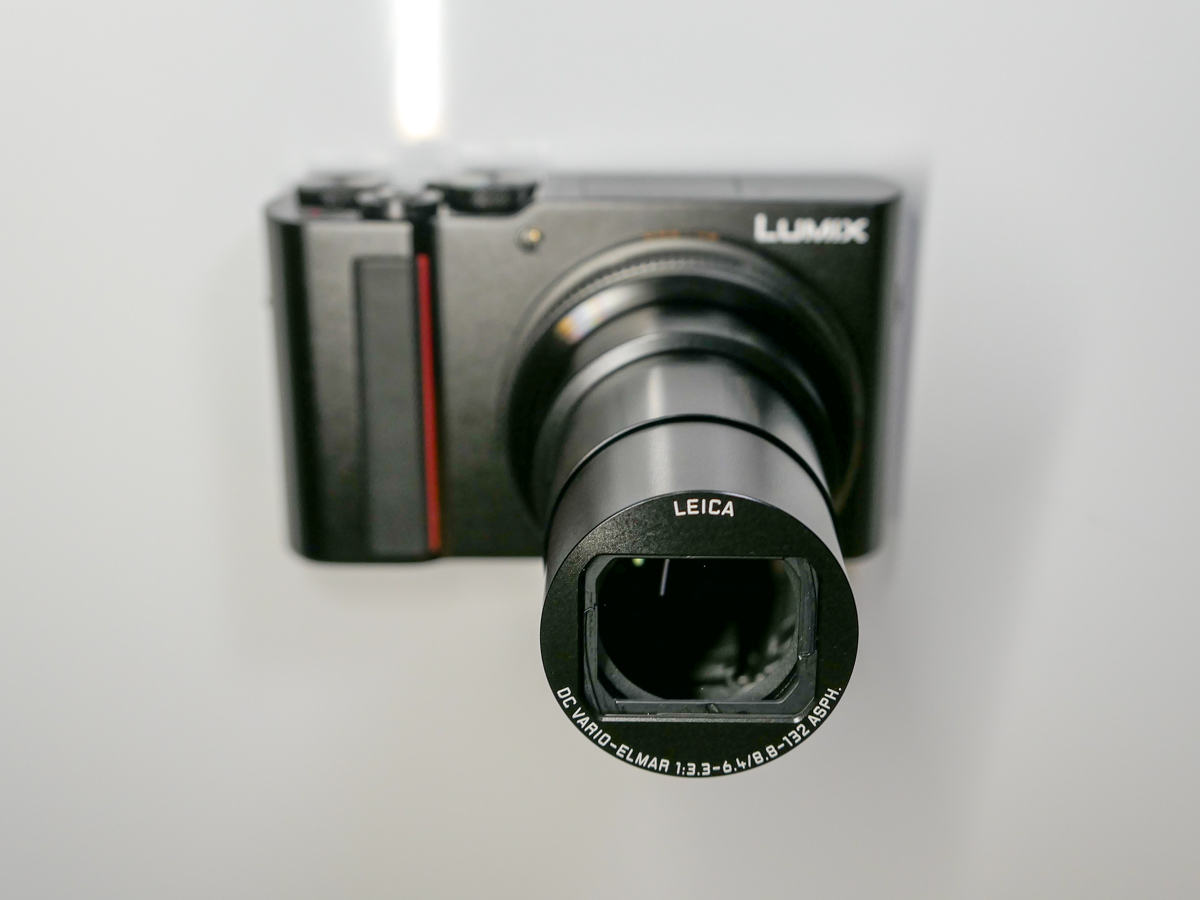
If you want to buy a premium compact camera with a longer zoom for your next trip, there aren’t many choices. Here’s my recommendation.

I’m planning for a vacation where my family and I will be spending most of our time in the great outdoors (rain or shine). We’ll be biking, hiking and kayaking! Based on our active itinerary, I know that besides my GoPro, I’ll only be able to pack a compact camera that’s easy to carry and won’t weigh me down.

A larger-form camera with separate lenses just wouldn’t cut it on this kind of trip. So, I’ll have to leave my Panasonic Lumix GH5 II mirrorless camera at home. (An all-in-one ‘bridge camera’ would also be too large.)

And for this trip, I’ll need a small camera with a bigger zoom than I currently own. (I don’t require a crazy reach to capture the beak of a bird, but I do want to be able to get more than wide vista shots. My old Panasonic Lumix LX10 (which is still on the market) only provides a 3x optical zoom. I want to at least double that…

That kind of camera shouldn’t be so hard to find, right?

Nobody Really Buys that Camera Anymore
Well, the bad news, if you hadn’t heard, is smartphones killed off compact cameras years ago. People simply stopped buying them.

Sure, I get it that today’s smartphones take great pictures. But they don’t yet have powerful zoom capabilities.

That’s where small premium compact cameras with 1” sensors and longer zooms should have thrived. But they didn’t. And camera manufactures stopped updating them four to five years back.

But that doesn’t mean they’re not still being sold. They certainly are.

What’s Old is New Again
But all these cameras represent older technology had the models continued to get upgraded into newer versions (which they weren’t).

So, my first hurdle when researching my options was feeling comfortable buying a new piece of gear that’s a few years old. (Was I a tech neophyte that would make this kind of rookie mistake?)

But when I realized there isn’t a newer compact camera with a longer zoom out there, I found some peace with my situation and stopped feeling like I was living in the wrong universe that had killed off this obviously necessary camera format.

To find my new compact camera with a long optical zoom, I would simply have to go back to the future.

Sony RX100 VII
Sony’s DSC-RX100 VII is the still undisputed king in this now-dead compact camera category. (The entire RX100 line has always ruled.) Every reviewer put the RX100 VII on the top of their list. And for my needs, it has an 8x zoom lens (24-200mm F2.8-4.5). That’s enough oomph.

It’s perfect. And Sony knows it.
So, it still costs $1,300 for this 2019 camera.

1,300 bucks?! Whoa.
I just couldn’t pull the trigger.

Risk/Reward Analysis
I’ll be taking a new camera into something of an adventure vacation that involves tons of outdoor time, rain or shine. I expect it to be a bit messy, and there might be some bumps and bruises along the way.

Sure, I don’t want to ruin any new (old) camera that I bring along. But the idea of accidentally dropping this gem off a cliff or running over it with my bike (I am a bit of a klutz) would worry me throughout our entire trip.

If I’m going to destroy my camera, I want it to cost less. (I accept there are flaws in that thinking.) Plus, I’d prefer to better invest $1,300 on a new lens for my Lumix GH5 II.

Panasonic Lumix DC-ZS200D
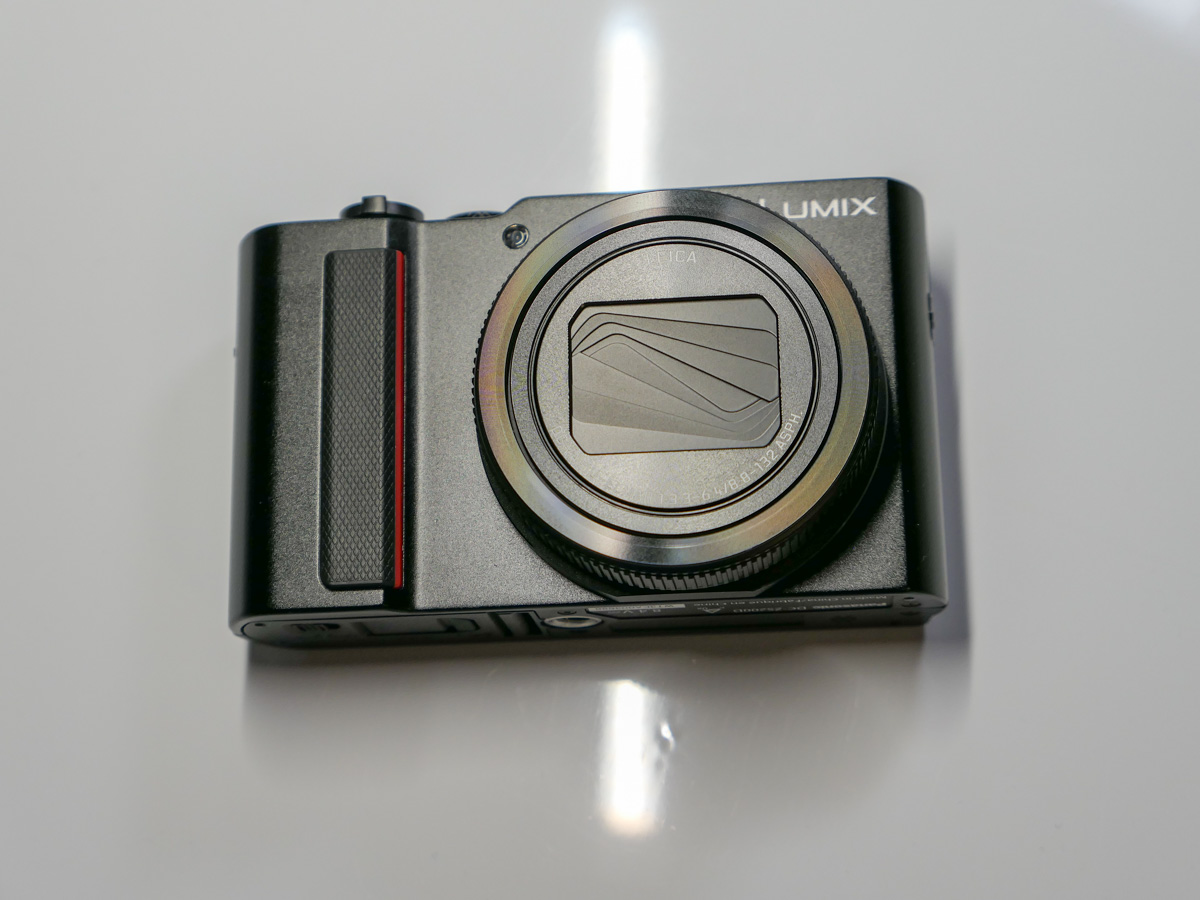
So, I regrouped and then gravitated to Panasonic for other options. I’m partial to the Lumix line as I already own an LX10 and my GH5 II. But even without that preexisting positive bias, I quickly realized that the Lumix DC-ZS200D (also known as the TZ200 outside of North America) could be the camera for me.

-It has a nice 1-inch image sensor like the Sony.

-It’s got a 15x optical zoom lens (24-260mm, F2.2-6.4)
That’s almost double the Sony’s reach even though the Lumix’s lens isn’t as fast. That said, I plan on taking most of my photos during the daylight hours. So, I don’t expect to need quite as bright a lens.

-It only $698, which I know is still a pretty penny. But it’s almost half the cost of the Sony, and its price has come down a hundred bucks since it was originally released. (That feels a little more respectful, acknowledging that this is older tech. Thank you, Panasonic.)

No, it doesn’t have a flip screen. (So, my iPhone or GoPro will have to do for selfies.)
No, it’s not weather sealed. (Neither is the Sony.) So, it won’t be taking photos in the rain. (My GoPro will handle that trick.)
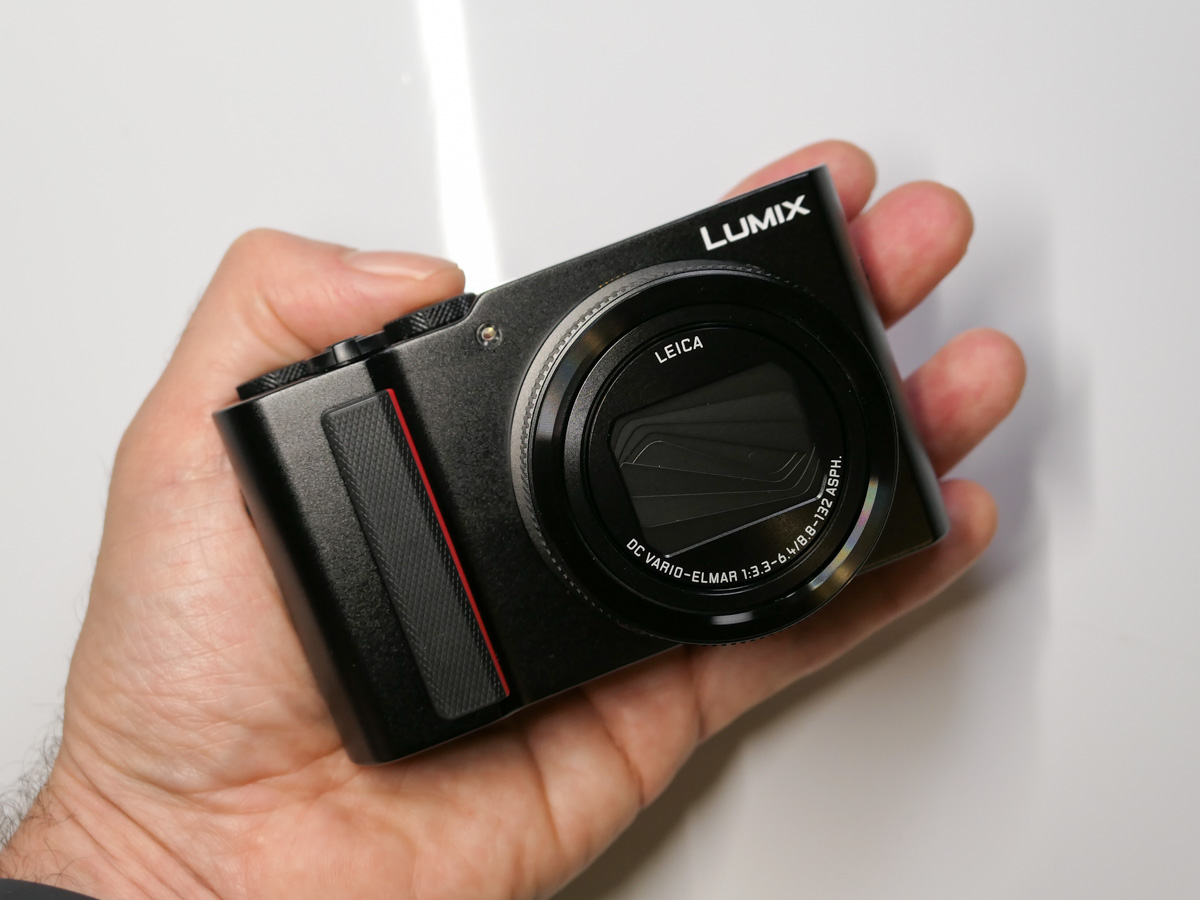
But it has what I need…. the zoom.

The zoom. The zoom. The zoom.
It’s all about the zoom.

I made my decision.
Click.
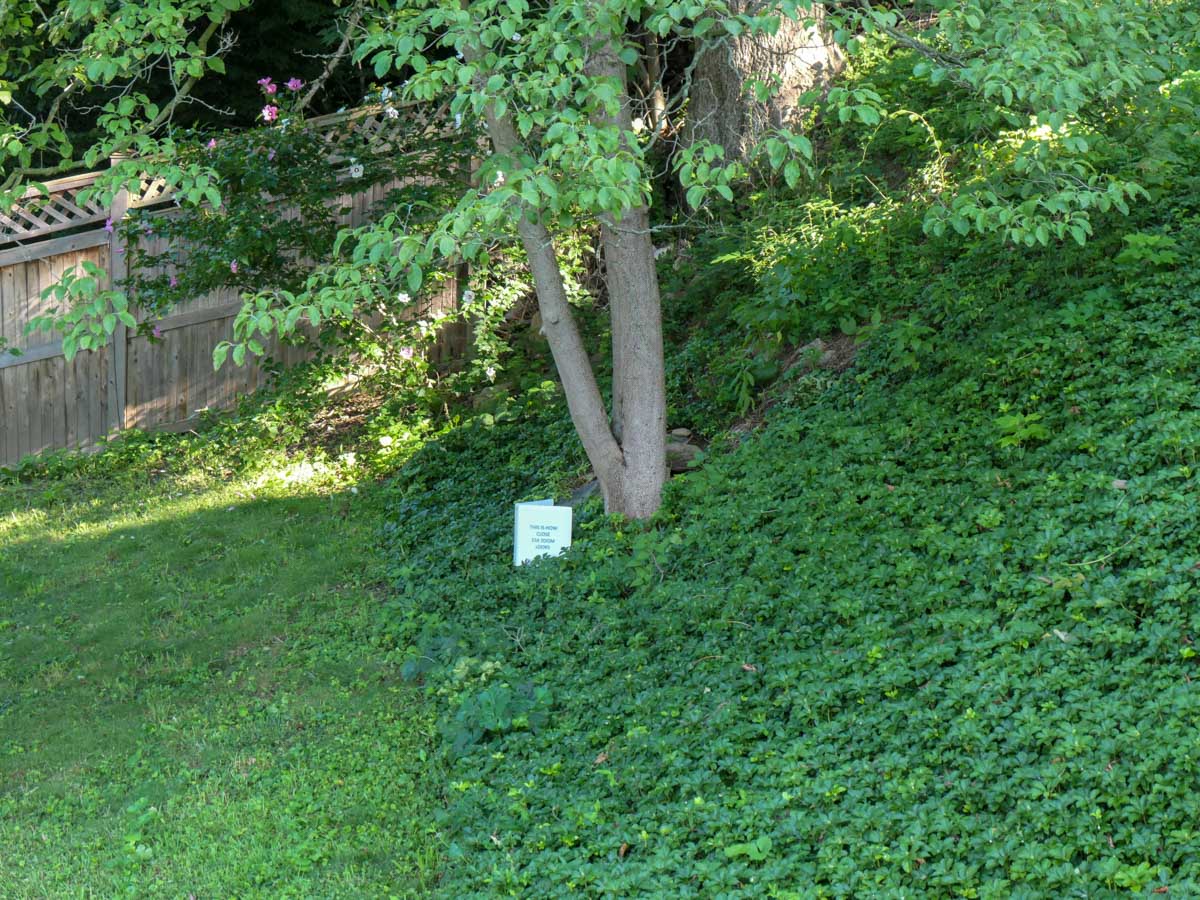
Here’s a 3X zoom shot from my new Lumix ZS200D (72mm), which many mobile phones can also get you.
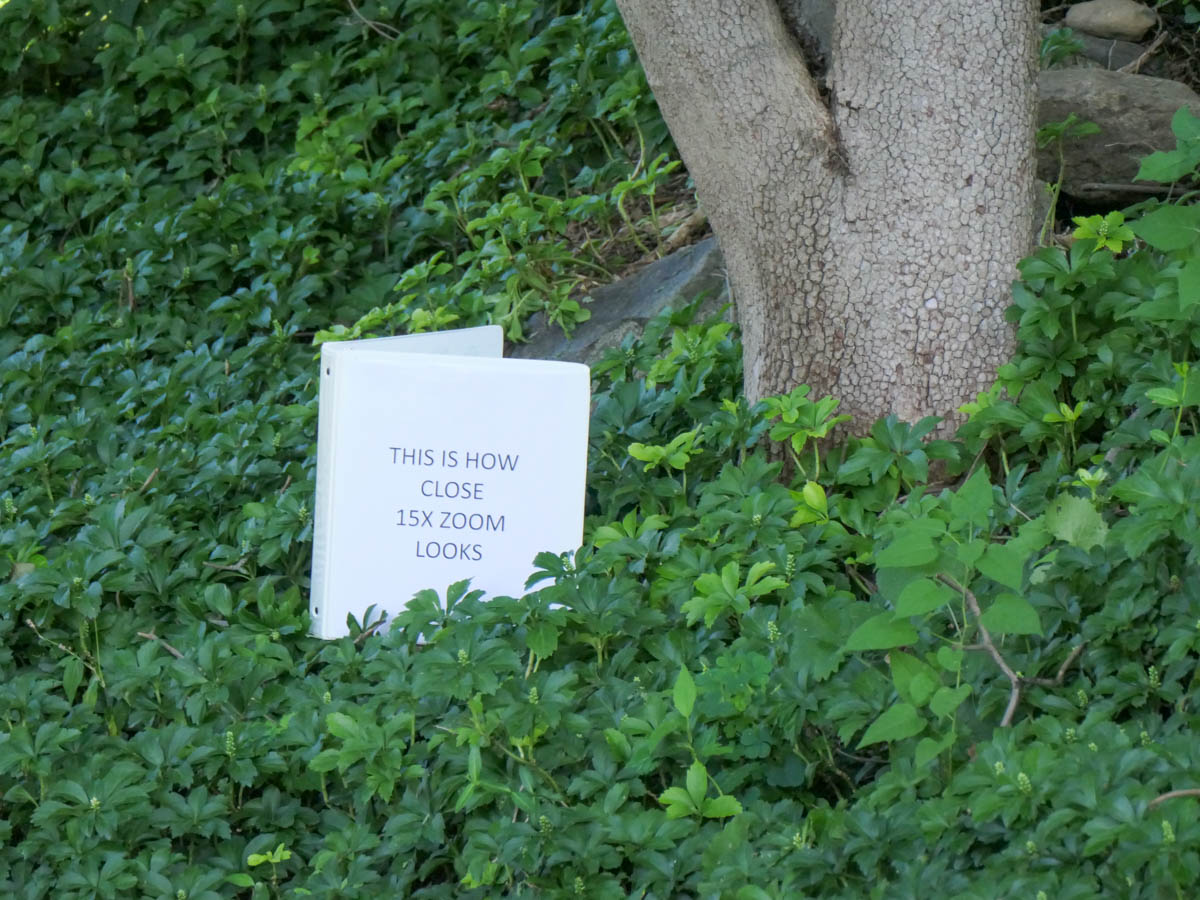
And here’s the 15x zoom from my Lumix ZS200D (360mm).
Same spot and distance. Big difference, right?

Other Nice Features
Yes, the ZS200D has 4K video at 30fps. Yes, it offers image stabilization. And yes, it has a flash (that could be useful for fill).

And it has the zoom I want.

The reviewers all said it’s a good camera. (No camera is perfect.)
And I think it’s still a good camera, even though it is a few years old.

Amazon sells it for $697.99.

A Few Not-So-Optional Accessories
I also picked up a case to help protect my new camera from the elements. I’ve been happy with my MegaGear case for my Lumix LX-10. So, I bought the version that fits the ZS200D for $39.99.

Of course, the camera doesn’t come with a memory card. I purchased a SanDisk 128GB Extreme PRO UHS-I SDXC Memory Card for $22.99.

Ready for Action
If you want the perfect travel camera with a bigger zoom that’s still really compact, and price is no object… the Sony DSC-RX100 VII is the camera to buy.

But if you’re going to the wilderness and uncharted waters and don’t want to bring such an expensive item along, I believe the Panasonic Lumix DC-ZS200D is the better all-around choice, especially for daytime photos.

It’s still a solid camera, and its extra zoom reach compared to the Sony is a nice plus.

Now, I’ve got my Lumix ZS200, and I’m ready to pack it along with my GoPro HERO11 Black.
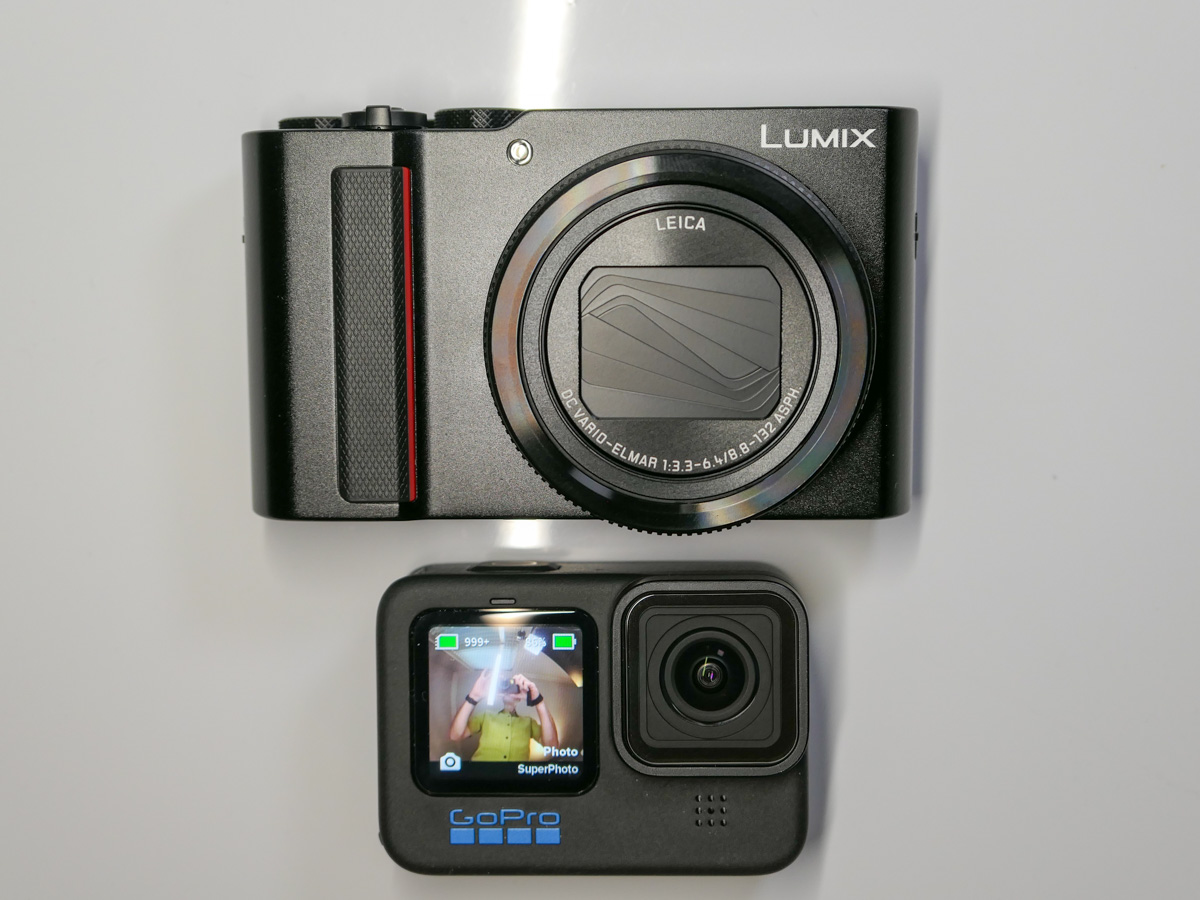
I’m ready for our trip… to Alaska!

A Cloudy Morning Doesn’t have to Ruin your Sunrise Photography

If you’re looking to photograph the sunrise, but it’s a cloudy day, consider a time lapse instead. Here’s what you might discover…

It’s not really the sunrise. It’s everything else that surrounds the rising, warm circle. That’s what matters when you’re trying to capture this magical moment. It’s the state of the rest of the sky that makes our sun the star.

Placed properly (as if the photographer has the power), clouds can make a sunrise truly spectacular. All of those wonderful colors in the early morning sky are immediately enhanced by clouds.

Clouds are your friend. Clouds are your special ingredient. Until they take over and ruin your shot.

But even after they creep in and mask the glow, don’t call it a day. It’s not over.

Speed up the Clouds with a Time Lapse
If you choose to look at clouds differently and start to observe their motion and trajectory, you can begin to unlock their beautiful intensity with your camera. Often, you can accomplish this with a time lapse.

Even the grayest and foggiest morning may contain its own cloud dance that can be revealed through a time lapse. You just need to speed up time to really see what’s going on…

Stormy Predictions?
Last year, I captured some amazing sunrise time lapses overlooking the mud flats in Cape Porpoise, Maine. And yes, the best ones had lots of clouds circling the sun, and they all gave it enough space to visibly rise.

This summer, my family and I returned to this incredible part of Maine, but my photography encountered more challenging weather conditions. In fact, the forecast was for rain each day of the week. It was as if a storm cloud would be parked overhead for the entirety of our vacation.

But as my wife likes to say, coastal weather conditions can be unpredictable. And that’s where the opportunity lies.

So instead of sleeping in, I still woke up early every day to evaluate the cloud cover.

Vacation Report
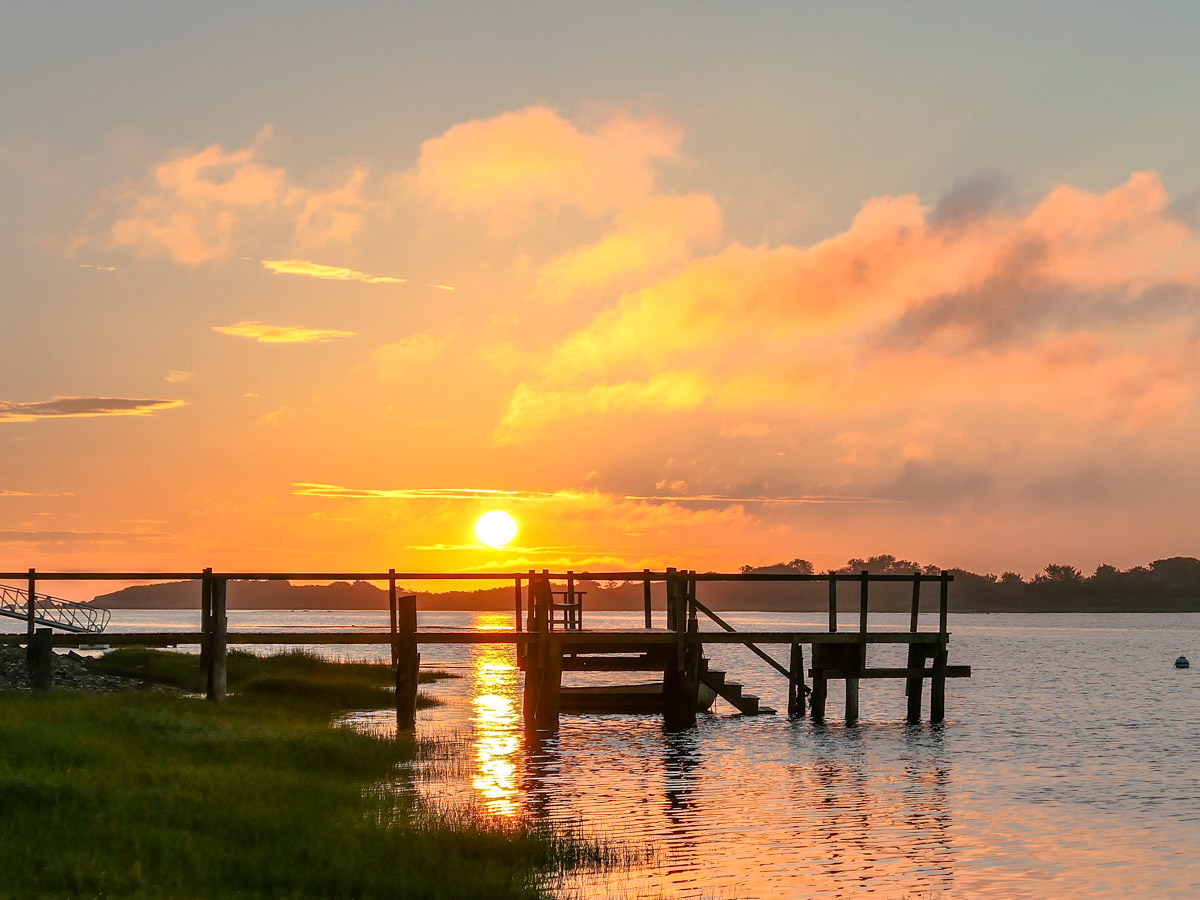
The first morning totally fooled the weather forecast, and I was there to witness the sun making its glorious appearance.
This was my gift for the week. The remaining days, I would have to work harder to find my shots…

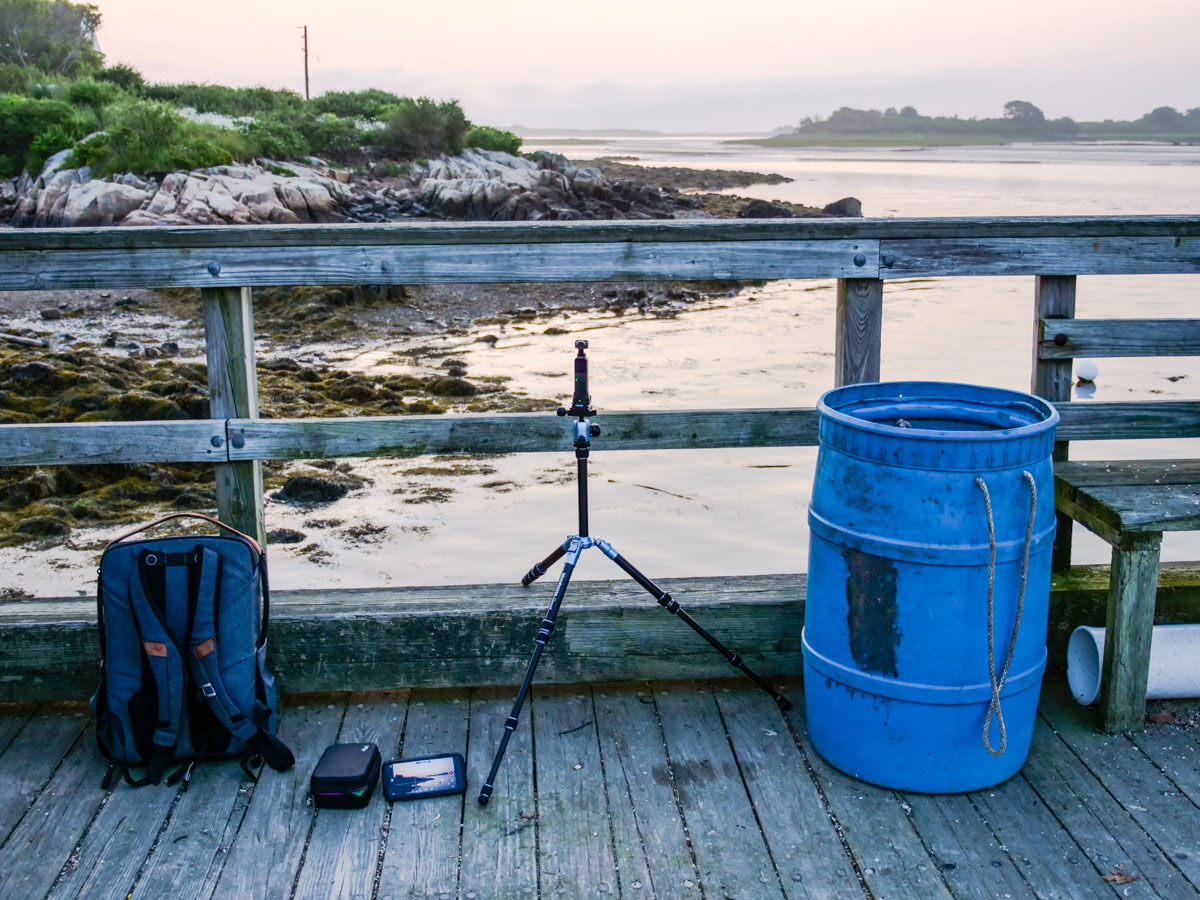
On the next morning, the clouds rolled in during my time lapse recording to obscure any hope of seeing the sun. As I stood there at 5am, I wondered what the point was to keep going. But I continued my 30-minute time lapse recording by my little DJI Osmo Pocket.
When I reviewed my Osmo Pocket’s video clip, the sped-up motion revealed a morning rush hour of Maine cloud traffic.

It was dark. It was moody. It had great flow. I loved it.

The Dark and the Light
Yes, I was drawn to the power of the dark side. And I had plenty opportunity to experience it on this vacation. It’s pretty cool. I get it now.

I’m pleased that I found both the dark and the light during this trip to Maine.

Like a great restaurant, nature just serves it up. And you enjoy it.

I learned that it’s not about finding the shot you want, it’s about experiencing the uniqueness of each new day.

And if your camera can capture just a little of that, you’ve accomplished your job as a photographer.

Here are my morning time lapses.

Here’s my Experience Living in this Lighthouse

If the idea of vacationing in a lighthouse appeals to you, let me tell you a story about what to expect…

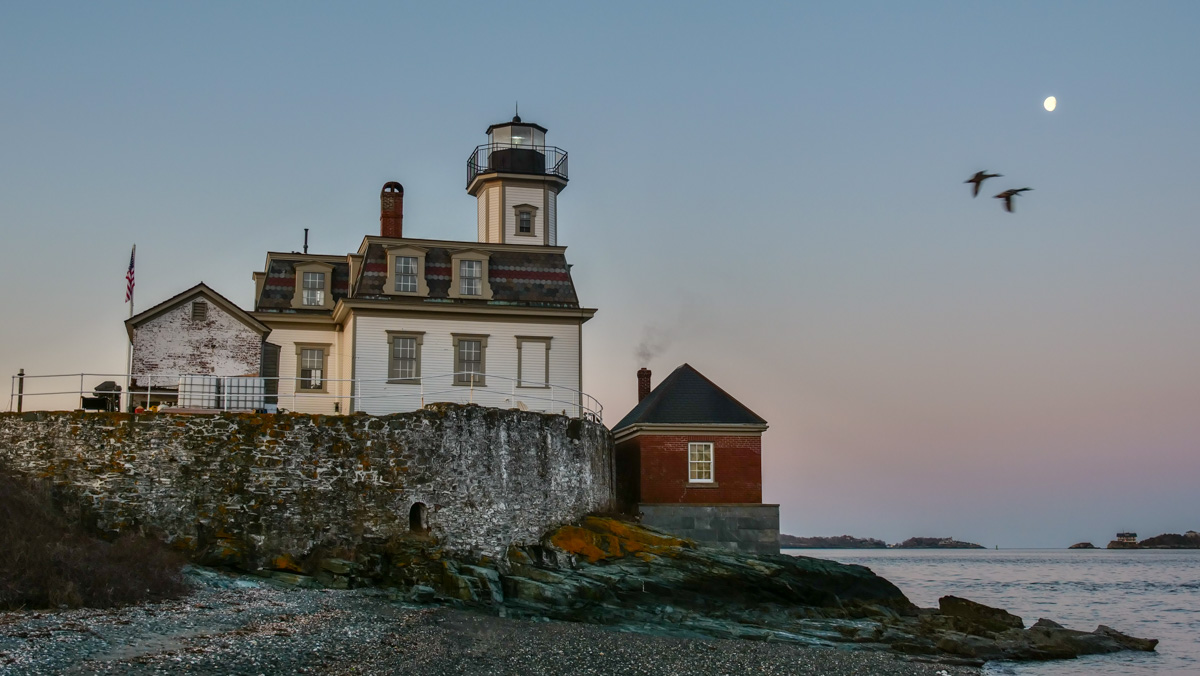
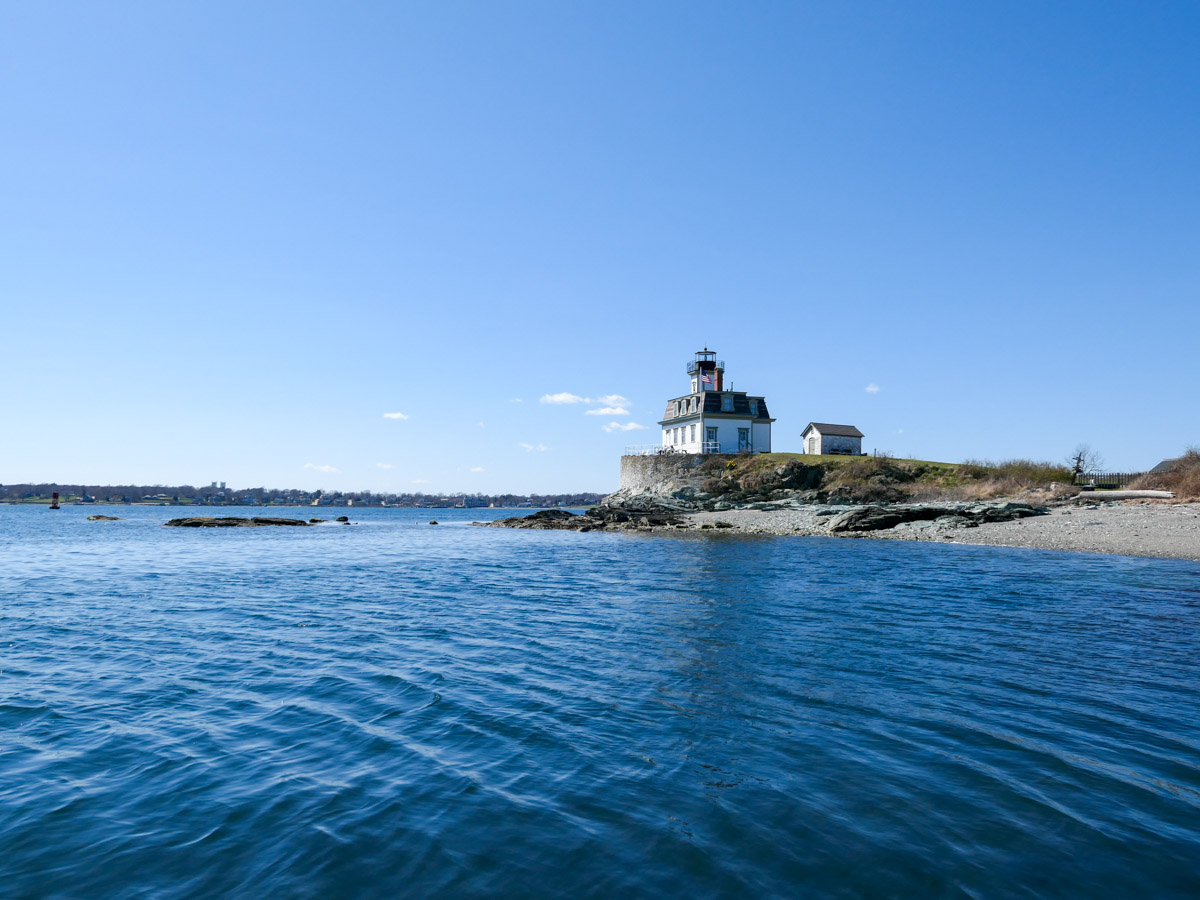
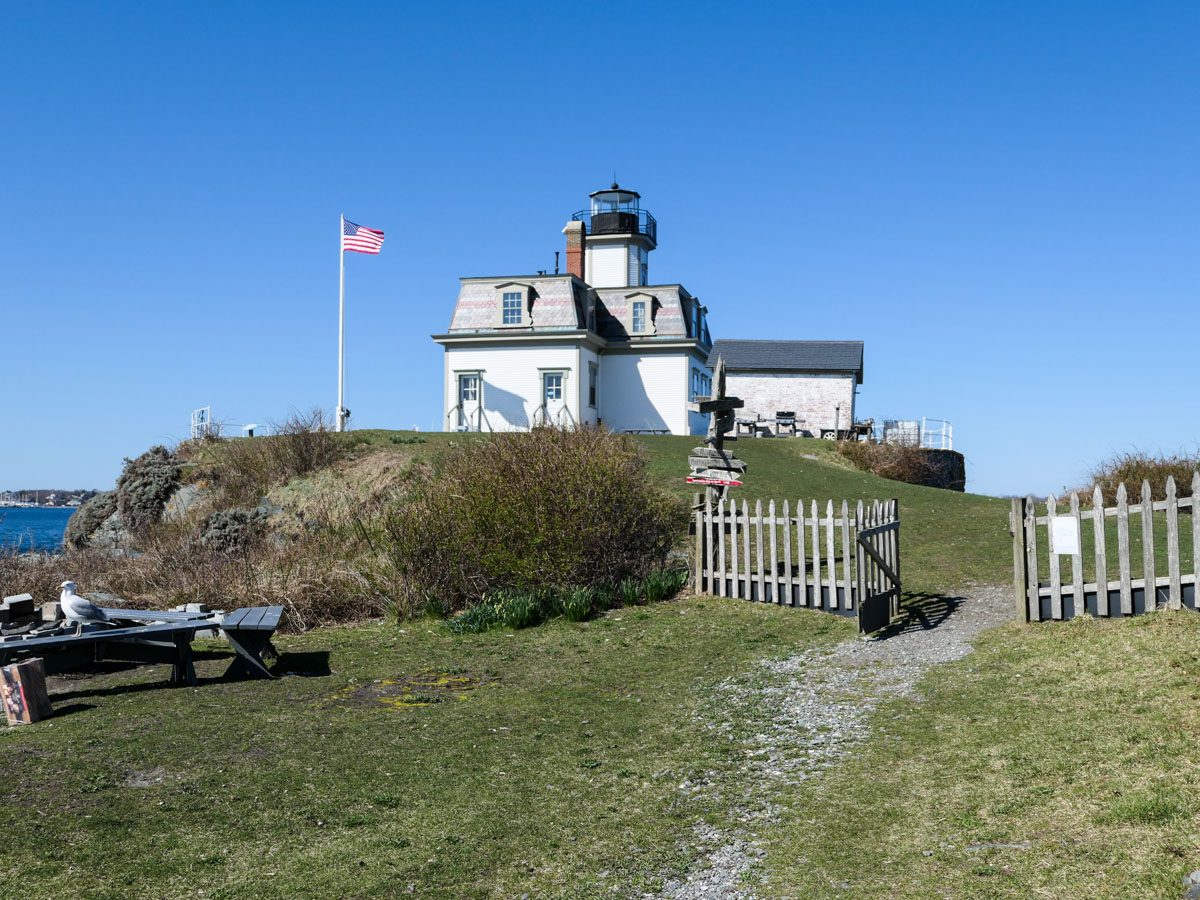
Is living in a lighthouse on your bucket list? I had it on mine, and I was finally able to cross it off after my family and I spent a couple of April nights at the Rose Island Lighthouse. It’s located in the Narragansett Bay next to Newport, Rhode Island.

The Adventure Begins
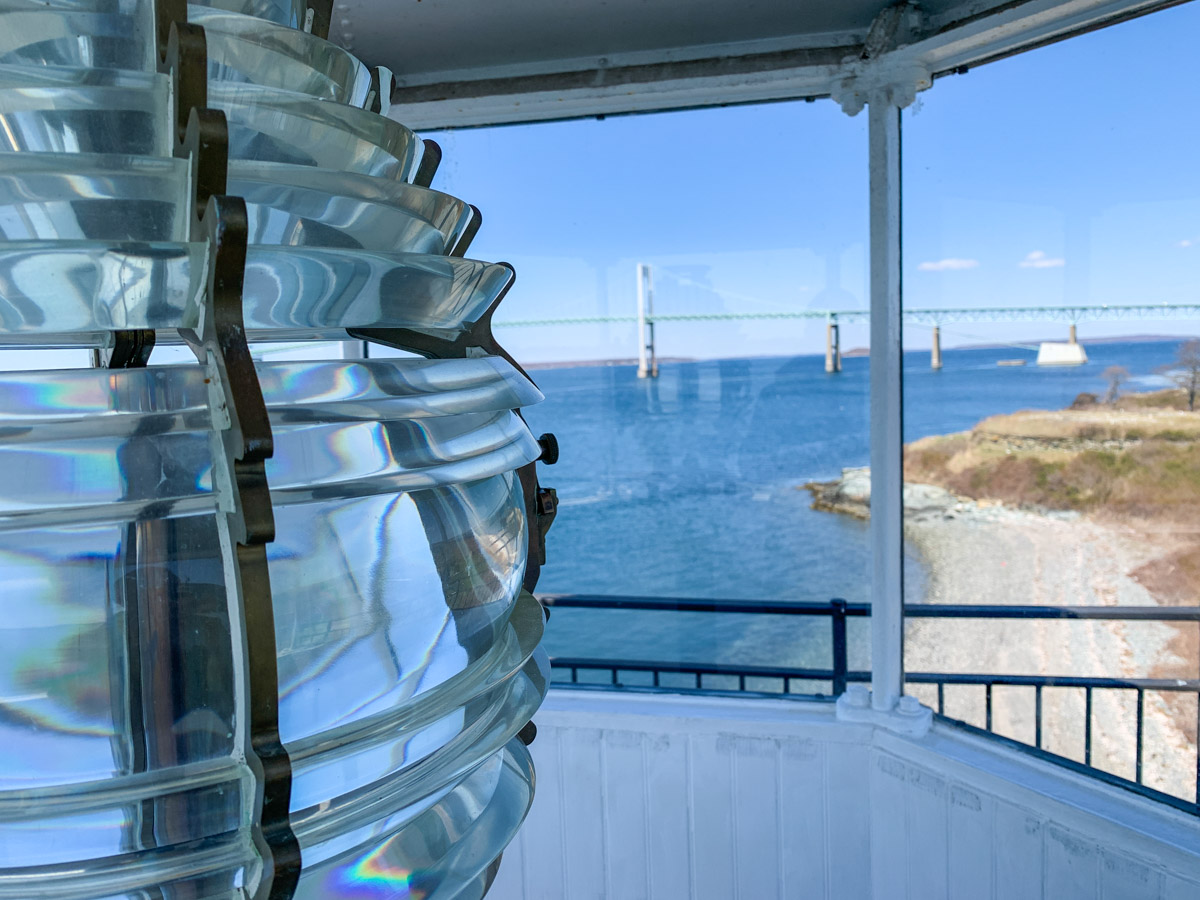
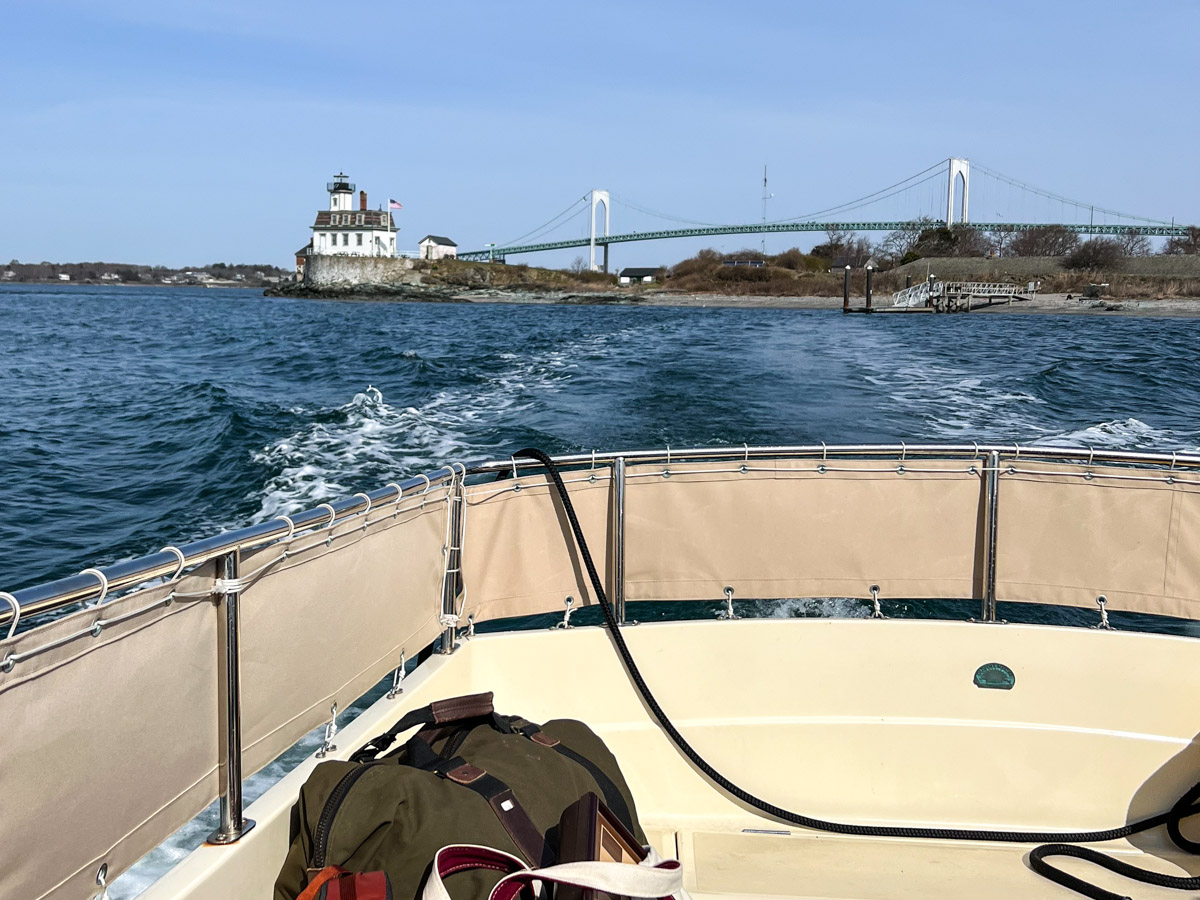
We boarded a little boat out of Fort Adams and were shuttled by Captain Cal to Rose Island, in the direction of the Newport Bridge.
After the 15-minute boat ride, we carried our luggage off the dock and wheeled away our cooler that contained all of our vacation’s food.
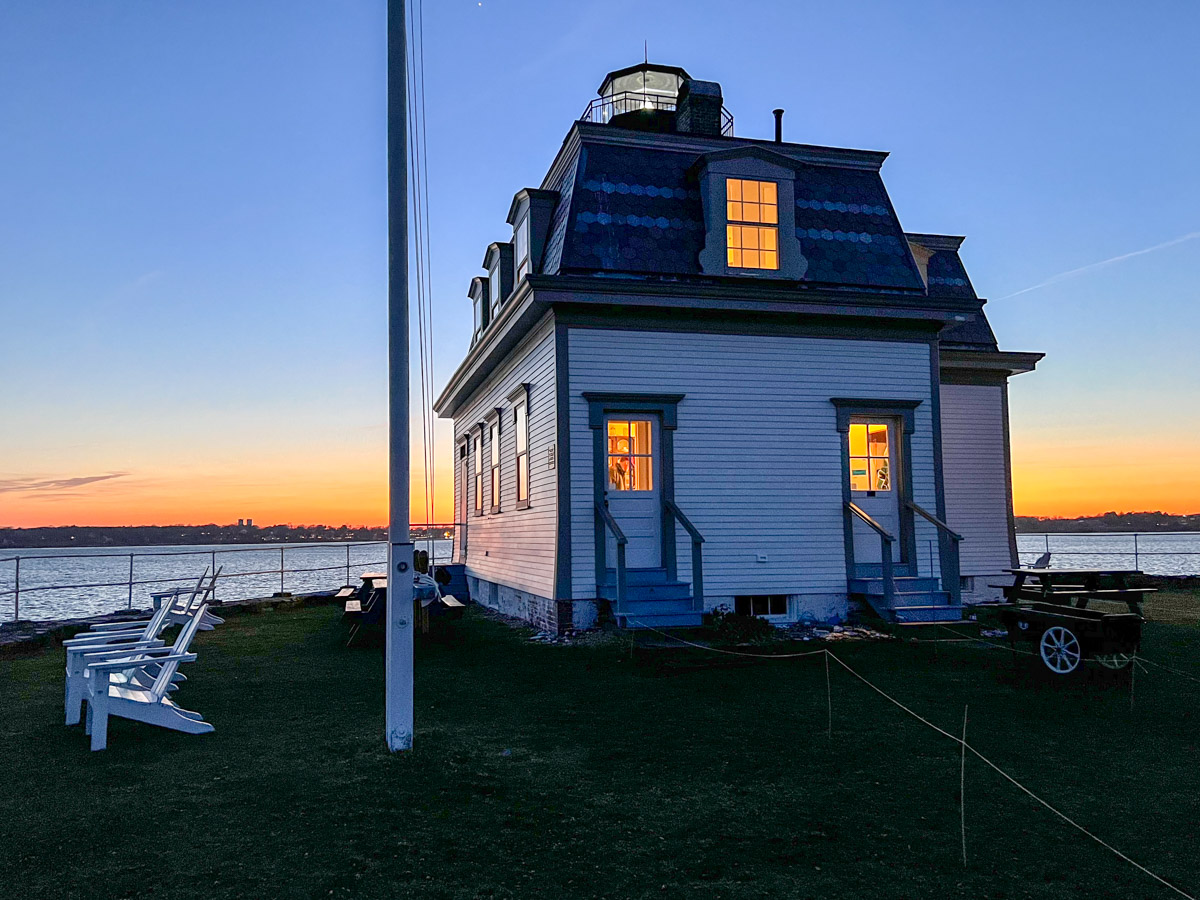
Then we headed up the hill to our temporary home in the lighthouse.

We moved into the first floor ‘museum’ section, which also doubled as a two bedroom apartment, complete with living room and study. Well, it wasn’t exactly complete as the kitchen didn’t offer drinkable water or modern plumbing. (Instead, 5-gallon Poland Spring jugs were provided.)
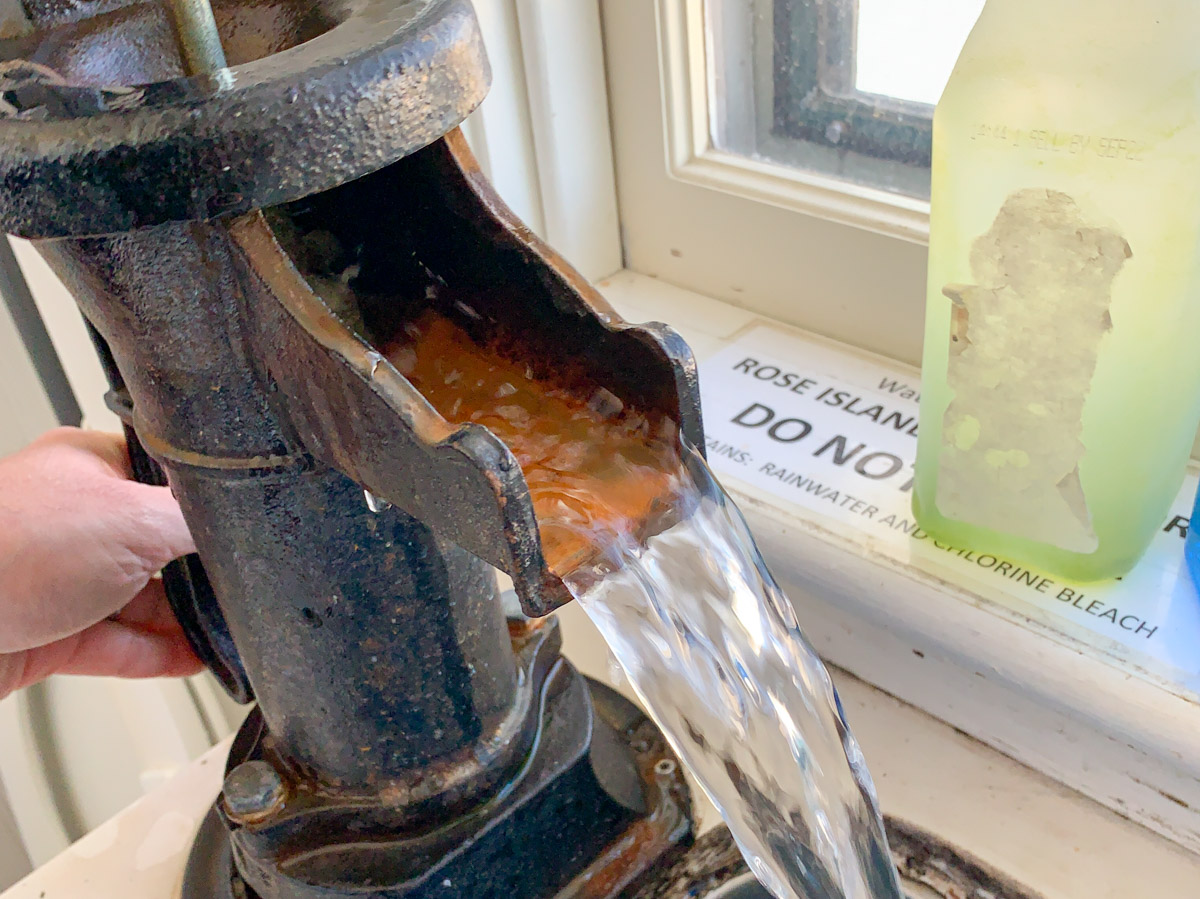
At the kitchen sink, we had to literally pump in rain water that was stored in a huge cistern nearby. (The same 19th-century system was used for the toilet.)

The Geography
Rose Island is 18 acres, but because of the time of year, much of that is off limits to protect the many nesting birds. So, we really only had access to the shore lines on both sides of the lighthouse.
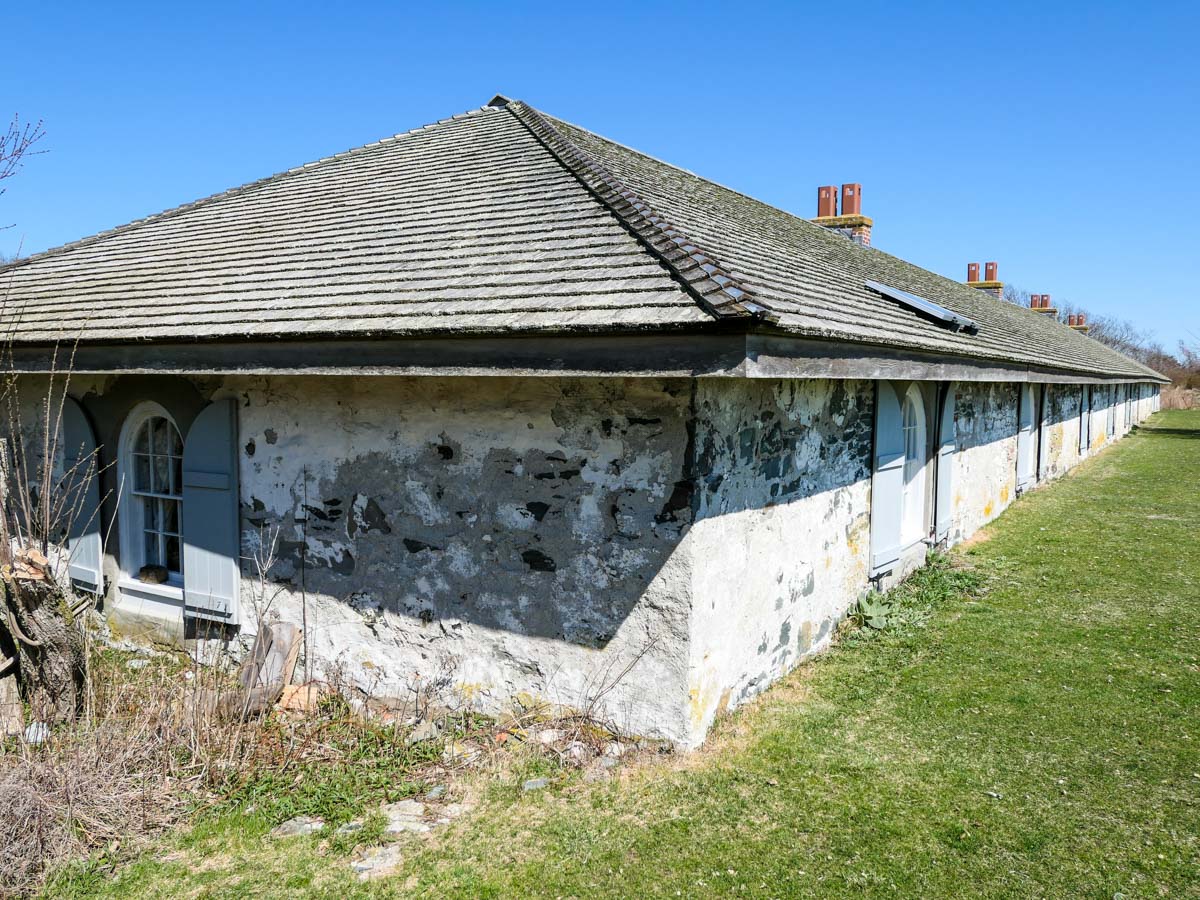
We could also walk around the land surrounding the nearby Fort Hamilton Barracks, which originally housed the workers who built torpedoes during both world wars.

Nesting Birds and Territorial Geese
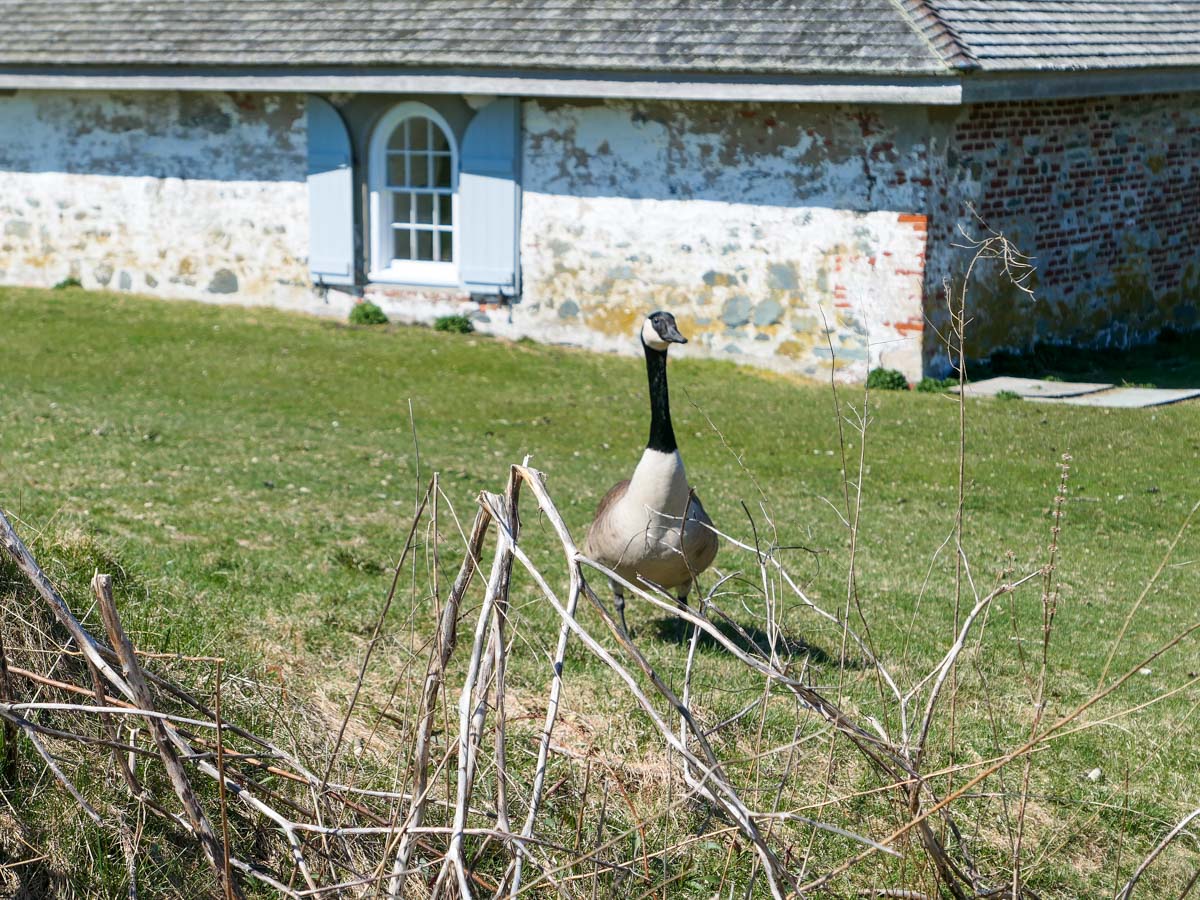
Though there was still plenty of space to walk about and enjoy all of the birds, we did encounter a couple territorial geese. They had other ideas about humans visiting their island.
That said, their aggressive posturing was just that. Our 12-year-old son tested their resolve on a few occasions with a running start, and happily, he walked away unscathed.

Self-Reliance
Of course, we found plenty to do on our little island.
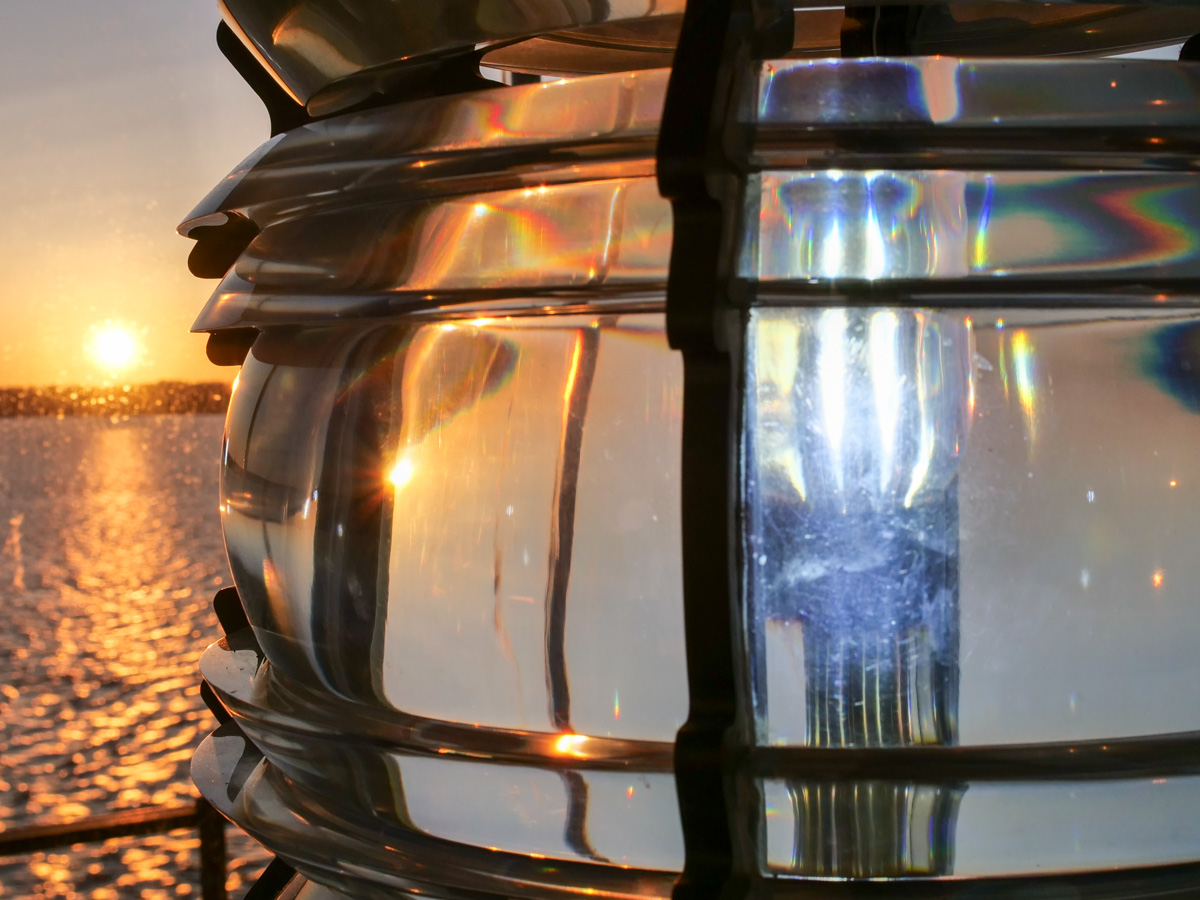
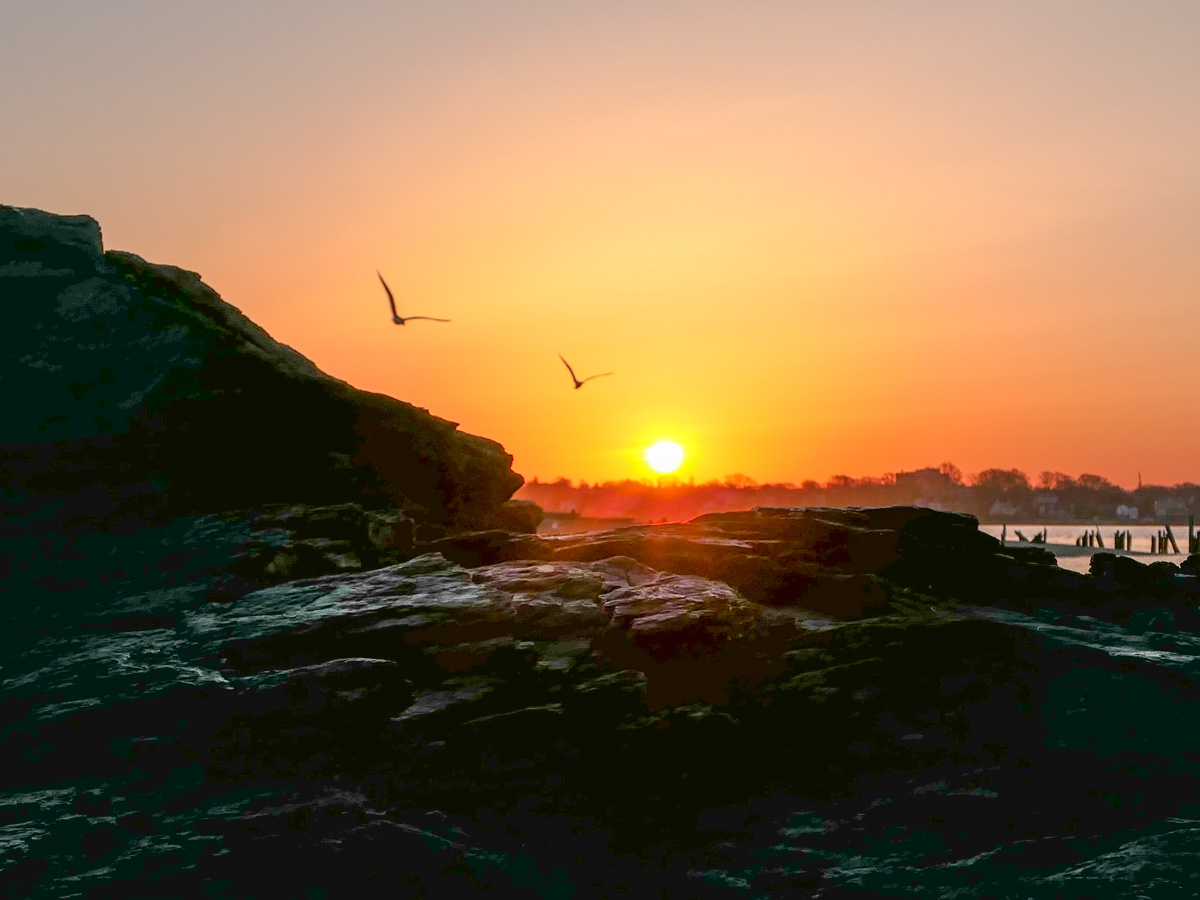
That included visiting the top of our lighthouse on multiple occasions. Sunsets were particularly spectacular.

We also roasted marshmallows at night by the fire pit. While making s’mores, we shared our day’s stories with a couple who were staying in the keeper’s apartment above ours.

I cooked our dinners outside on a gas grill, as there wasn’t a stove in our kitchen. We weren’t exactly roughing it, but you did get a sense of what it was like to live in a secluded place a century ago. That was definitely a part of our little adventure.

Yes, we still enjoyed some modern amenities, like our solar-generated electricity and heated quarters. (And cell coverage does reach the island.) But when the sun went down, I fully absorbed the reality that we were pretty much on our own.
During those overnight hours, it felt comforting to have that beacon at the top of the house shining bright.

Be Prepared for What You Might See
As you may expect, I brought along my camera gear.
I happily spent time capturing the beautiful imagery that surrounded me.

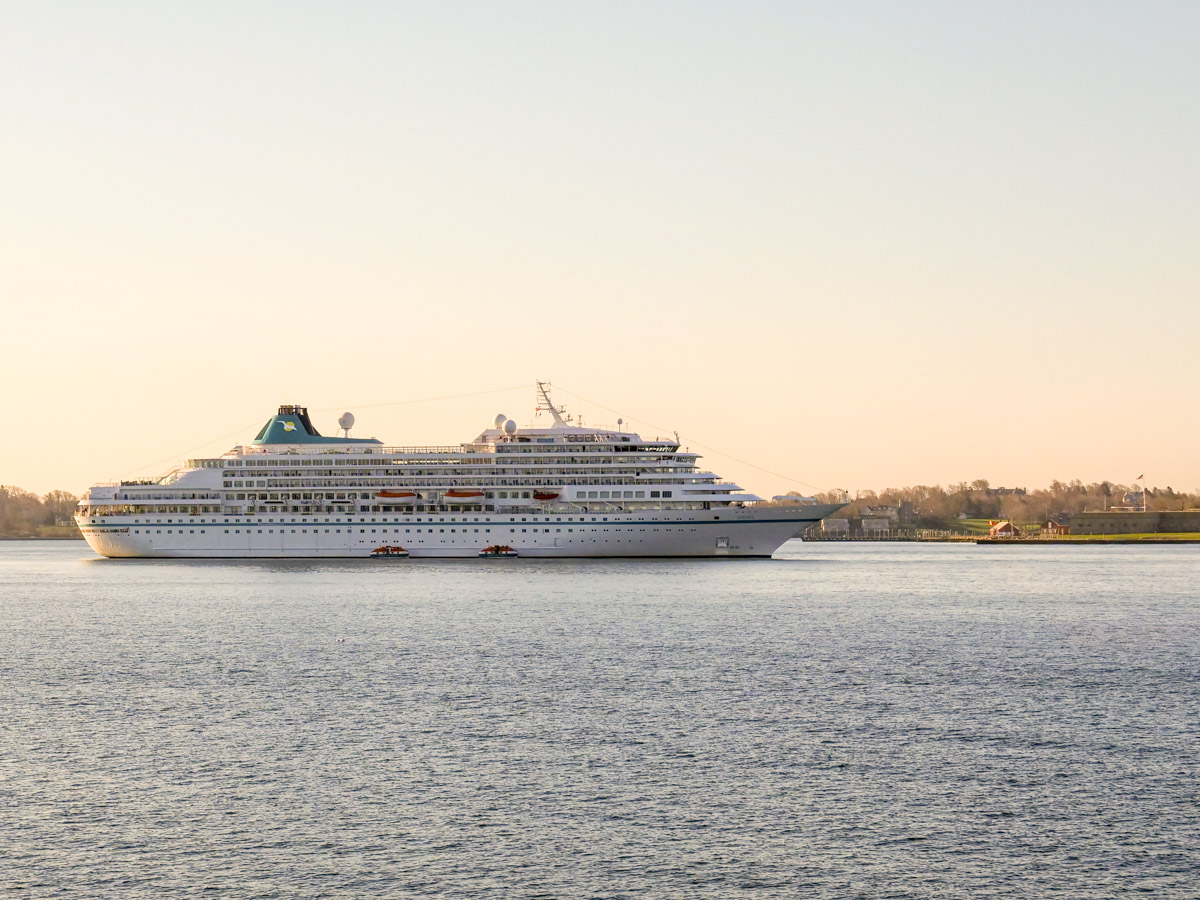
On our first morning, I was surprised to see a cruise ship enter the harbor. (It was early in the season for this.) I grabbed my binoculars. It was the MS Amera, a Phoenix Reisen ship.
So I ran to get my camera and snapped away. I watched as little ferry boats shuttled passengers to Newport for the day.

Lighthouse Timelapses
But of course, the main attraction was our 1870 lighthouse, which was renovated in the mid 1980s and reopened in 1993. And I focused most of my timelapses on the building itself.

Please click my Vimeo video to watch my timelapse sequence…


Not your Typical Vacation

I’m not exactly sure why I’ve wanted to stay in a lighthouse with my family. I think the idea felt a little adventurous and romantic. (Maybe something out of a movie.) It was like camping, but much more comfortable. Certainly, it was different. We all really enjoyed it.

I’d definitely do it again.