
I used the early mornings from my summer vacation to capture timelapses of the sun rising over the mud flats in Cape Porpoise, Maine. Here’s how I set up my photo gear.
Creating a timelapse video of the sunrise is like looking at a snowflake. One is never exactly the same as the next. The sun may arrive on schedule, but the surrounding weather is always the wild card.
Specifically, it’s all about the clouds. They will make or break your sunrise timelapse photography every time. Yes, you don’t want a cloud to be blocking the sun as it makes its grand entrance on the horizon, but that’s only one piece.
Wonderful Clouds
Properly positioned in your shot, clouds are the secret ingredient that can create a spectacular sunrise in a timelapse. They’re always on the move, and a timelapse will speed up their motion. Plus, clouds augment the visual drama by reflecting the orange hues on the horizon and adding stunning contrasts to what can otherwise be a boring blue sky.
But it all must organically come together for your camera at the right time. Every morning doesn’t offer the perfect sunrise. So, repetition is key.
The Magical Mud Flats
Over the past three summers, my family and I have been driving up the Maine coast to the same beach house for a little R&R.
The house overlooks the mud flats of Cape Porpoise near Kennebunkport. And if you walk for 15 seconds to the edge of the ‘flats’ at the crack of dawn, you’re offered a magnificent environmental canvas for the sunrise. (Whether the flats are dry or filled with tidal ocean water, it’s always a stunning view.)
We’ve been sharing this Maine vacation experience with two other families, and each morning while everyone was still asleep, I got up at 4:35am to get my gear in place ahead of the sunrise. (And if you’re concerned that I haven’t been giving myself the opportunity to sleep in and rest up, don’t worry. I caught up on my Z’s during luxurious afternoon vacation naps.)
DJI Osmo Pocket 3
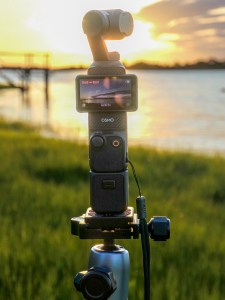
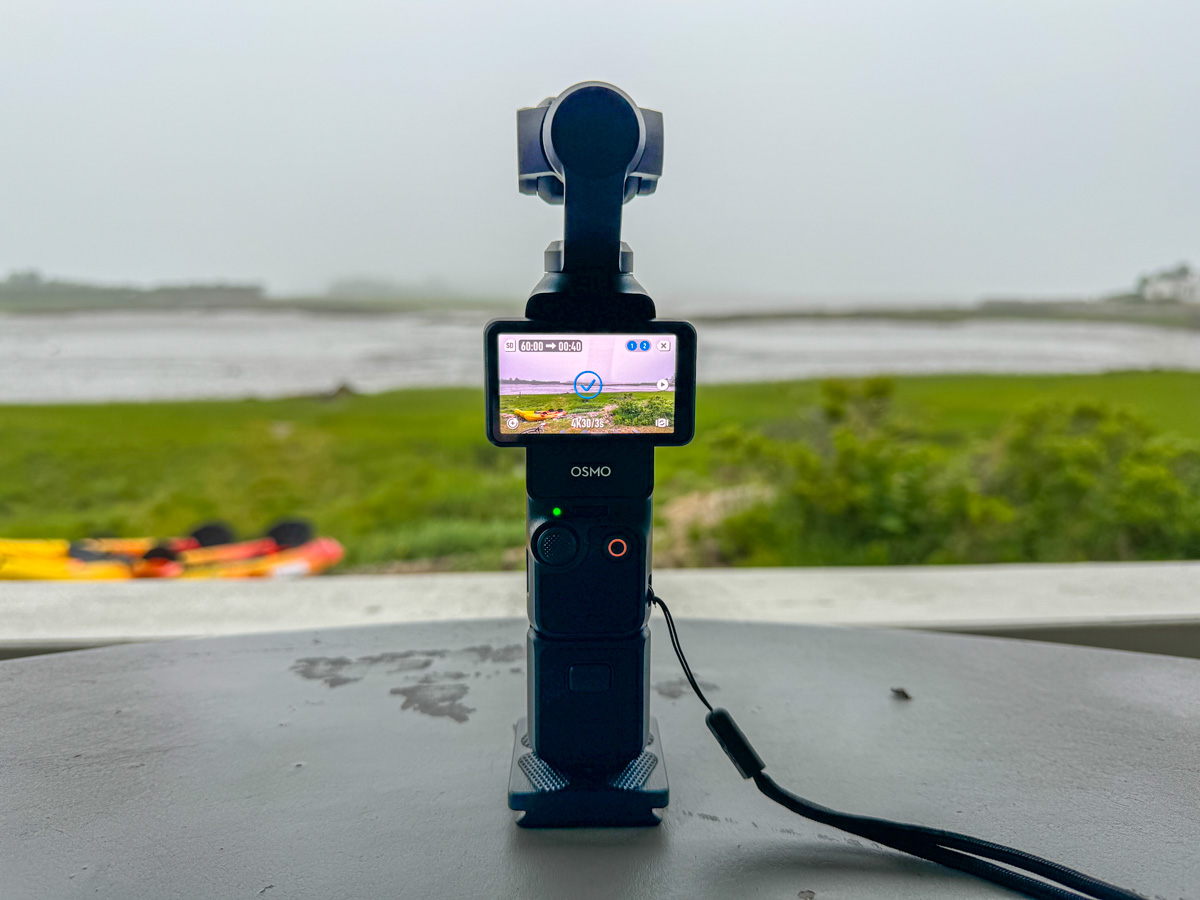
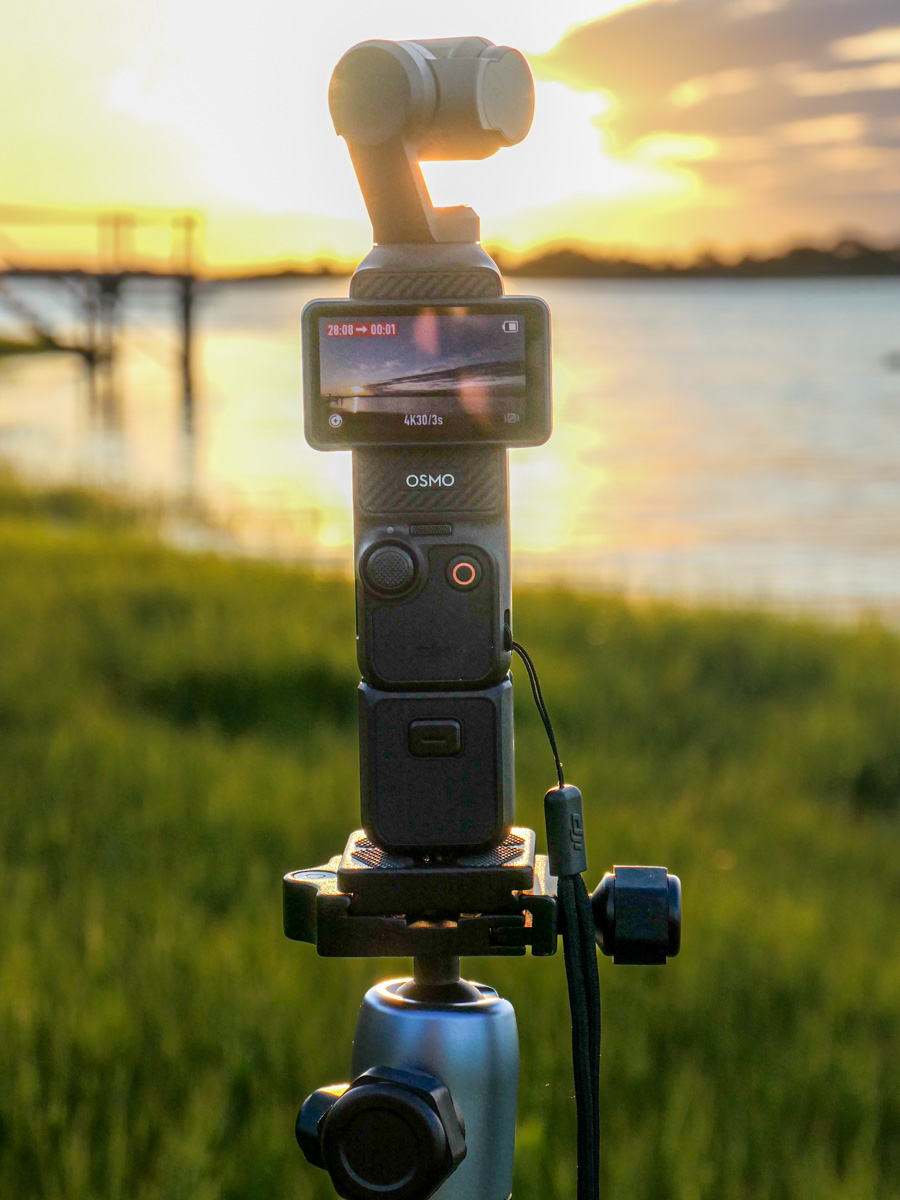
My camera of choice for my ongoing sunrise timelapse project is currently the DJI Osmo Pocket 3. Its superpower is its tiny gimbal design. The lens can be programmed to pan left or right throughout the timelapse sequence. (DJI calls that a ‘motionlapse.’)
I bought the original Osmo Pocket back in 2019, and I’ve just upgraded to the third-generation model (Pocket 3), which among other improvements boasts a larger 1” sensor size for better image quality.
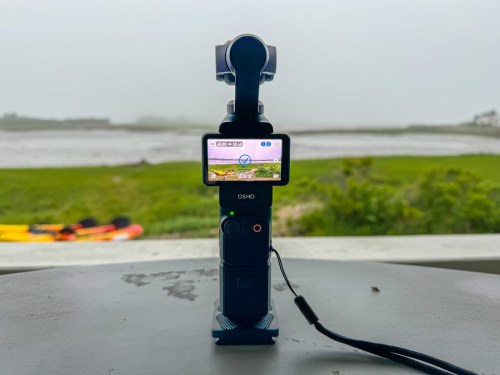 I usually set my timelapses to run for 30 minutes, with each frame set at 3-second intervals. That creates a 20 second timelapse. (Sometimes I double it and go a full hour for a 40-second timelapse.)
I try to start at least 10-15 minutes before the first edge of the sun peeks out, and then I let my Osmo Pocket track the sun during those wonderful early minutes before it becomes too intense for the camera. (I also use a DJI ND16 magnetic filter which acts like sunglasses for the lens.)
Holiday Parade
This year, the best sunrise presented itself to my Osmo Pocket 3 on July 4th.
When I stumbled out of bed with my Pocket 3 and tripod, I spotted a few clouds already in good position. I set up my gear at the edge of the flats for the full hour, crossed my fingers and walked away to get a cup of Joe. When I returned, I was so pleased with what I got. The clouds offered up a perfect parade.
 My Magic Hour
Waking up early to document sunrises may seem like a counterintuitive vacation activity. But when the opportunity is literally right in front of you, it’s hard to pass up.
Plus, I usually rise on the early side throughout the year for what I call my ‘magic hour’ from 5:30-6:30am. I use this time for my blog writing and photography editing. My mind is fresh, and I find that the creativity flows.
So, waking up 40 minutes earlier for my vacation sunrise timelapse project isn’t such a big change from my usual routine.
Another benefit of greeting the sunrise is the massive sense of accomplishment you get before most people are even awake. I’m a huge believer of ‘doing’ in the morning hours. The rest of the day then feels much fuller.
Tend to your Flame
There’s nothing wrong with waking up late when you’re taking some time off.
But for me, I find happiness practicing my personal photography. Capturing a glorious sunrise always juices my joy factor.
Even capturing the energy of a blustery, cloudy morning brings me great satisfaction.
 This cloudy morning on day 2 of our Maine vacation obscured the sunrise, but my resulting timelapse still did not disappoint.
It’s about exploring the art of the unexpected. Results will inevitably vary.
Practicing your craft, whatever that may be, will always revitalize your spark.










 At Home with Tech