At Home with Tech

Unlock the power of all your technology and learn how to master your photography, computers and smartphone.

Category: Tech Trends

Is Your Garden Water Hose Toxic?

I’m pretty sure I watered my vegetable garden last year using a garden hose and attachments that leeched lead and various chemicals of concern. If you’re like me, you need a different solution right now!

I’m pretty sure I watered my vegetable garden last year using a garden hose and attachments that leeched lead and various chemicals of concern. If you’re like me, you need a different solution right now!

Last year, we grew a small vegetable garden on the side of our front lawn. It housed a variety of tomatoes, which my five-year-old son especially enjoyed. And it was so cool watching him walk by it and pop a few cherry tomatoes as he moved through his day.

Such a natural moment for him and a clue to Mr. At Home with Tech how life must have been like in a more agrarian-based society.

For years, I’ve been using common garden hoses from Home Depot to water my lawn. I replaced them as needed as they got old and overly kinky. I never thought much about it.

As I set up the infrastructure to support our vegetable garden this year, I realized I needed a new garden hose splitter for my outside water tap. I needed one water line to feed the hoses for my lawn sprinklers and a separate hose to water the garden.

Before I jumped in my car, I decided I should also probably replace my garden hose sprayer, because it was leaking pretty badly.
(My shirt was getting wetter than the plants!)

There’s Lead in the Brass
My local hardware store salesman proudly showed me the ‘Mercedes Benz’ of sprayers (as he called it) made by Dramm. I then picked up a brass water splitter from Gilmour and was quickly on my way.

Easy.

Fast-forward a few minutes… I was about to screw in the Dramm to my old hose, and I noticed a sticker on the Dramm’s underbelly…

Dramm Revolver has a Problem


It said, “California Proposition 65: WARNING- The brass in this product contains lead, a chemical known to the state of California to cause cancer and birth defects or other reproductive harm. Wash hands after handling.”

Huh?

I immediately took a look at the Gilmour packaging, and I spotted the same message.

Gilmour Warning Message


What?!

I can’t use either of these to water my garden!!
(No, I don’t live in California, but I think everyone should heed the warning of the referenced California Safe Drinking Water and Toxic Enforcement Act of 1986.)

So I promptly returned both sub-par items and pointed out the problem to the salesman, who appeared to be as surprised as I was.
(I’m giving him the benefit of the doubt.)

Now what…?

Contaminated Gardening Water
I went home and booted up my iMac to do a little research. What I found was more than a little disturbing…

A few years back, the Ecology Center issued a study on hazardous chemicals found in a lot of gardening products including garden hoses. Whether it was too much lead in the brass fittings or Phthalates and the toxic chemical BPA leeching from the inside of the hose, the resulting garden water was contaminated.

Believe it or not, brass fittings on garden hoses are not regulated. They don’t have to comply with the Safe Drinking Water Act. So the bottom line is you should never drink from a common garden hose.

Huh.

Okay… I’m not drinking from our garden hose.
(And I’m pretty sure the rest of my family isn’t either.)

But we’re watering our vegetable garden with the same water.

OMG.
(Yes, I freaked out a little.)

Replacements that are Safe for Your Family
After I began breathing normally again, I immediately decommissioned my old hoses and embarked on a little more research.

Old Garden Hoses


I came to the following solutions:

1. Use Drinking-Water-Safe Hoses

Yes, there are a few manufacturers out there that make drinking-water-safe garden hoses.

I zeroed in on a company called Water Right. Their non-toxic-core hoses are made out of polyurethane, and the nickel and chrome fittings don’t leach lead.

Sweet.

The only downside…
These drinking-water-safe hoses are expensive.

A similarly sized garden hose at your local hardware store that’s not drinking-water-safe is a third of the cost.
(But money should be no object when it comes to the health of your family, right?)

Another choice to consider is a potable water hose that folks typically use when camping or for RV use.

The upside is the Flexron is a lot less expensive. The big downside is it’s white, which wouldn’t quite work living on my lawn all summer long.

So I stuck with Water Right, which also was called out by several reviewers, including Gardenista.
(Going with the crowd…)

Click. Click.

2. Find Drinking-Water-Safe Sprayers and Water Splitters
that Don’t Contain Lead

This challenge was more difficult…
Here are the two solutions I went with:

Safe Water Sprayer
$13.31 for Scotts 9-Function Turret Nozzle
(Lead free, Zinc free and drinking water safe)
This screws on the Water Right Coil hose to water the garden.

Water Right Coiled Hose and Scotts Sprayer


An alternate choice is $24.95 for ‘World’s Best Brass Hose Nozzle.’
(99.9% lead-free)

Safe Garden Hose Water Splitter
$14.95 for G&S 2wayz Garden Hose Water Splitter
The splitter allows you to water your lawn and hydrate your growing vegetables at the same time.
(G&S states that the metal in this water splitter is lead-free, but they stopped just short of saying it’s drinking-water-safe. I found a few questions on Amazon directly addressing this, and the well-crafted responses clearly demonstrated some legal dancing.)

2Wayz Water Splitter


But I couldn’t find a better product…

I figured I had nailed the other two choices… this was the only weak link.
(Hopefully, not too weak)

Click.

(Any better ideas out there for a drinking-water-safe garden hose splitter?)

Always Read the Fine Print
Who knew that watering your vegetable garden could be so dangerous?

You’d think this kind of problem would have been handled decades ago.
I suppose it was… you’ve just got to read the fine print…
(And you’ve got to wonder about the quality of the water that is used for the vegetables you normally buy in the supermarket.)

That said, I hope I’ve significantly improved the quality of water that’s feeding our homegrown vegetables.
(And no matter what drinking-water-safe solution you put in place, it’s always best to flush out the old water that’s in the hose before you use it. Contaminants can grow in the warm, standing water.)

Have I done enough?
Well, it’s the best that Farmer Barrett could figure out for this growing season…

Another cautionary tale of trying to live a little greener in the 21st century…

Searching for a Basic Color Printer

Doesn’t anyone make a small color printer anymore? I’m not talking about a multifunction unit. Just something to spit out a few pages at home. My old HP has moved on to the great printer’s gallery in the sky. So the quest begins…

Doesn’t anyone make a small color printer anymore? I’m not talking about a multifunction unit. Just something to spit out a few pages at home. My old HP has moved on to the great printer’s gallery in the sky. So the quest begins…

My old HP Deskjet 6540 printer from 2004 finally jammed itself beyond repair. It somehow ate six sheets of paper, tearing tiny fragments into its innards.
(Actually, I did the tearing myself, trying to remove the bloody jam.)

I stepped back, looked at the mess, glanced at my watch, and then called it…
“End of Life!”
(Remarkable it lasted this long.)

Secretly, I’ve been waiting for five years to replace the darn thing!!
So I was happy to embark on a little shopping expedition for a new printer.

(Spoiler alert: It’s another rabbit hole.)

At Home with Two Printers?
You may recall I also own an Epson Artisan 837 printer to handle my photo-printing needs.
(The Artisan line has since been mostly replaced by Epson’s Expression series.)

So you may be asking, “Why would anyone want a second printer?”
(Heck, many of you are probably wondering why you need a printer at all.)

Well, somehow, this particular family just can’t get it done living in this supposedly paperless world of ours.
(Check back with me in another decade or so…)

Have a Back-Up Plan
Look, it’s not that crazy. My HP simply served as a down-and-dirty printer… just to spit out some hard copies. Mostly for throwaway use.

Also, my five year old often asks me to print out photos of different animals he’s learning about.
(Last week, I printed out four different flying geckos for him.)

These animal photos hang around for a few days, until the new ‘pic du jour’ gets created. So these images don’t need to be stellar representations. The old HP was just fine for this job using everyday paper…

I didn’t want to task the Epson with regularly churning out the animal kingdom, because the process would unnecessary drain down the six (expensive) ink cartridges.

And even though my Epson is considered an ‘all-in-one’ printer, I usually reserve it for higher-end photo printing on photo paper.

The old Deskjet became the workhorse for temporary pages or the backup printer if the Epson had problems.
(Not that it really has… although its predecessor was felled by a carefully inserted penny by my curious boy.)

And of course, in those irritating moments of technology failure, I think you should have a back up plan.

A Small Footprint
So all I wanted, and all I needed… was a simple printer.

  • Not a scanner
  • Not a fax
  • Not a photo creator
  • Not a machine to create hundreds of pages a month

I didn’t need another all-in-one printer.
(I’ve already got one.)

And its footprint should be small.
My old HP Deskjet was 17.75” wide by 14” deep.
(17.5” deep with tray extended)

Well, guess what?
They don’t really make that kind of machine anymore.

Really.

Nobody Makes Just a Printer Anymore!
Most of the choices are either photo creators, or big all-in-one, multifunction printers with a scanner bed on top.

I’ve got to admit there are some multifunction beauties out there if I wanted to move in that direction.
Epson’s got the Workforce Pro WF-4630, which is on sale for $199.99 direct from Epson.

It gets stellar reviews, and I fantasized about starting all over again, and building my office around this gentle giant.

Epson WorkForce Pro WF-4630


Maybe the alternate universe Barrett just pulled the trigger, but not this one.

Plus, my Epson Artisan is just fine… for now.

Laser Printers
One option is to buy a laser printer. I discovered several relatively compact models, and found that the Wirecutter highly recommends the Brother HL-L2340DW.

But the problem with home laser printer models is they print only in black and white.
(I thought we’ve permanently moved beyond black and white decades ago.)

Plus, I expect my son would prefer his animals in full Technicolor… so I continued shopping…

Portable Printers
I then found a small selection of portable printers for people who want to travel with a printing solution and not a broken back.

Here are three portables, all of which are nice and small!

  • Epson WorkForce WF-100
    Epson WorkForce WF-100


  • Canon Pixma iP110
    Canon PIXMA iP110


  • HP Officejet 100
    HP Officejet 100


The problem with this family of printers is they’re relatively expensive.

You’re paying a premium for the portability factor:

Plus, they’re not Wi-Fi enabled.
(Although I could use the USB connection to my Airport Extreme, which is how my old HP was linked to my home Wi-Fi network.)

And their daily printing costs are high.

The HP ends up with the lowest operating costs of the bunch, but this model was released back in 2011.
(I have a hard time buying into new tech that’s already four years old.)

But its footprint is so small… very appealing.
(Think…think…think…)

As much as I like the ‘less is more strategy’, it just didn’t seem like the perfect fit for my needs. I don’t need a portable printer to travel with.

So I moved on…

HP Deskjet 1010
And guess what I finally found…?
Yes, HP does make a basic printer:

…But it’s still bigger than my old HP.
(I thought newer tech is supposed to get smaller.)

HP Deskjet 1010


Pass.

PIXMA iP2820
Canon offers the PIXMA iP2820 at its own ridiculously low price point.
B&H Photo has it for $37.56.

Canon PIXMA iP2820


The iP2820 isn’t Wi-Fi enabled. So you need to cross your fingers and play the “Wireless Printing over USB” dance with your wireless router.

Nor does it have an internal paper tray.
(You place the sheets on its top feeder.)

This PIXMA seems to have mostly gone unnoticed with the ‘experts,” although the Phoblographer gave it a decent review, considering the inexpensive price.

The iP2820’s footprint is 16.8” wide x 9.3” deep x 5.3 high,” which is actually smaller than my deceased HP printer.

And it’s designed with the basic two-ink cartridge structure.
(black and color)

The iP2820 is entirely average, which is what I wanted, right?
(And it’s almost free.)

I guess it fits the bill.
Click.
(You’ve got to provide your own USB cable.)

Good Enough?
If you can’t tell, I’m not too excited with this purchase. And while I’m pleased to have not spent a ton of money, I’m also wary about the long-term health of any inexpensive machine.
(But, heck, there’s really not much of a selection for printer-only models.)

Does anyone have any better ideas?
(With less than $40 invested, I can always pivot to another choice without much guilt.)

Is There Anybody Out There?
I feel like the last nerd on Earth.

Maybe it’s because half of the planet wouldn’t buy a back-up printer to begin with. And the other half doesn’t own a printer at all.

But deep down, I don’t think I’m alone on this.

But the way it’s going, the next time I need a printer-only model, I might have to find it at the bottom of a Cracker Jack box…

In Search of Power

When going away on a camping trip, don’t forget to pack some portable power. Otherwise, your tech will quickly go dark…

When going away on a camping trip, don’t forget to pack some portable power. Otherwise, your tech will quickly go dark…

If you haven’t figured it out yet, I crave power. Pure power. And sustainable power.
Okay… not absolute power…
I’m just talking about the energy needed to power my lowly, but hungry tech.
(What did you think I meant?)

A big part of my story to date has been figuring out how to keep my iPhone going after it runs through a full charge.

And to be fair, my iPhone 6 Plus can get through a busy day on one charge. But I’m the kind of nervous tech guy who starts to worry once my smartphone dips below 20%.

So I typically want some extra juice nearby…
…just in case.
(My son used to prefer a juice box or two.)

Power Sticks
A couple of years back, I picked up an Innergie PocketCell, which is essentially a power stick the size of a pack of gum. It has 3,000mAh of power, which isn’t bad, because an iPhone 6 Plus requires 2915mAh for a full charge.
Today, I’m partial to Anker, which makes the PowerCore 10,000, packing a really big punch.
($24.99 on Amazon Prime)

Swag Power
And if you’re not into dropping any money on a power stick right now, you might be able to find one for free. They’re popular these days as giveaways… Though usually with less power.
(I came across one recently with 2600mAh.)

iPhone Case with Built-in Battery
Another good idea is to pick up a Mophie Juice Pack Plus, which is a smartphone case with a battery baked into it.
The 2,600 mAh model that wraps around the current iPhone 6 Plus costs $99.95.
(I had a Mophie for my old iPhone 4S, but I’ve held out so far with my 6 Plus due to size concerns.)

Preparing for the Family Camping Trip
All these cool power solutions go a long way towards feeding your smartphone the necessary extra energy it might need.

But then I had a new challenge.
Go where no Barrett has gone before…

  • Two nights of family camping.
    (Which meant three days away with my iPhone, camera, and my wife’s iPhone…and no power)

I needed to bring a more powerful and flexible solution to ensure I would stay on the grid….

Goal Zero Sherpa 50
Goal Zero makes a variety of portable, solar and battery-driven power solutions.
I came across the Sherpa 50 Power Pack at REI, a rare moment of brick and mortar shopping for me.

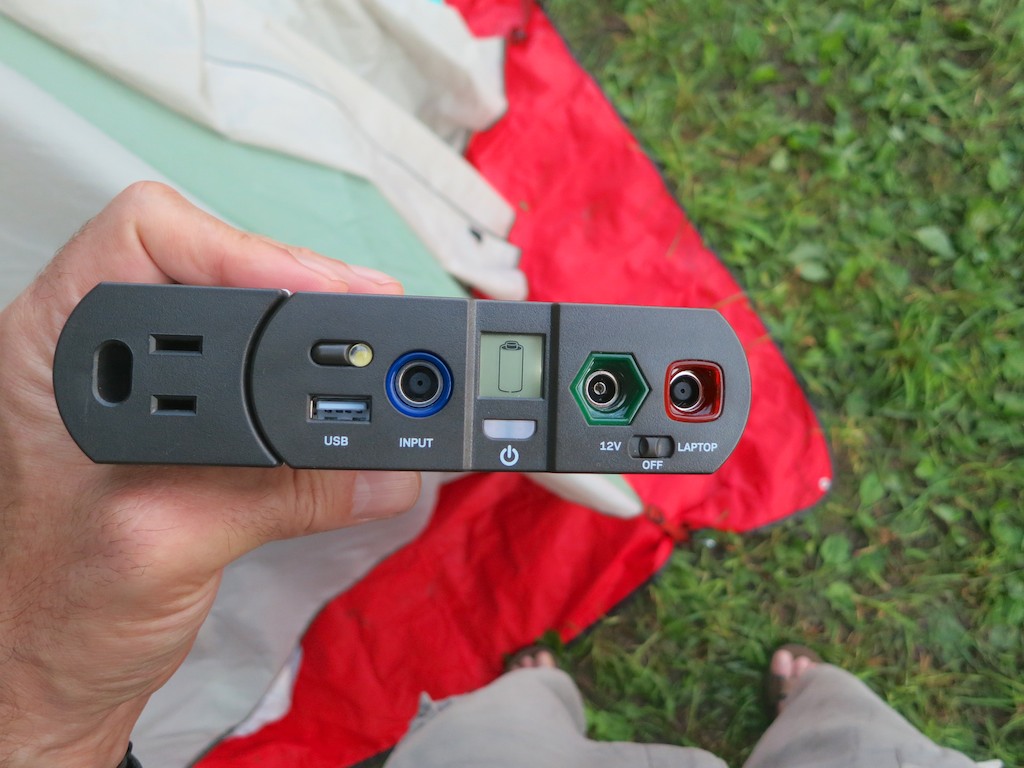
The Sherpa 50 carries 5200mAh of power, which isn’t quite as beefy as the newer Innergie. But the Sherpa is more flexible. And even though it’s not as slim as a stick of gum, it’s only 1.2 lbs and is smaller than your typical paperback book.

  • It’s got a USB port to plug in your iPhone
  • An onboard flashlight
  • A separate output to power laptops… its big selling point
    (Though not for Macs)
  • A 12v cable that powers a tent light… the ‘Light-A-Life 350’
    (Which came bundled in the REI box)
  • And a 100W AC inverter to charge up any other gear you may have
    (Also bundled in the REI box)

It goes for $179.95 on Amazon Prime.

Field Test
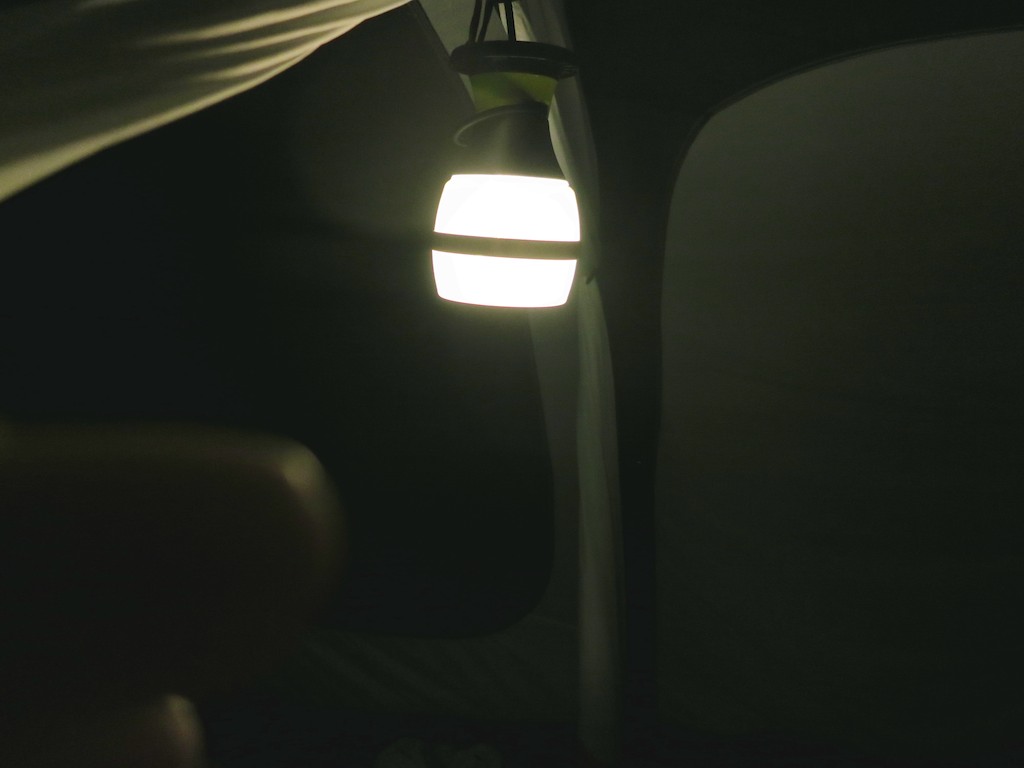
On our camping trip’s second night, I proudly broke out my new Sherpa 50. After sunset, I easily illuminated our tent with the Goal Zero light.

Goal Zero Light-A-Life 350 in Action


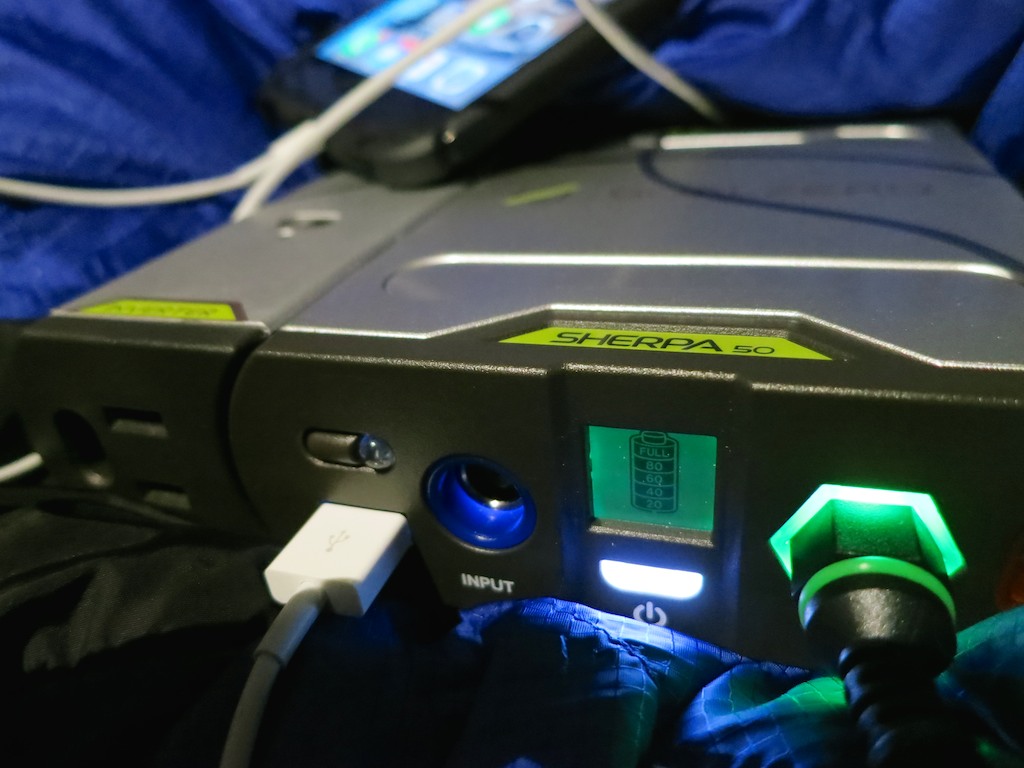
And as my family turned in for the night, I plugged in my iPhone to the Sherpa 50 and began charging it up from 36%.

Sherpa 50 in action


I turned off the light and felt ‘Tech Zen’ surge throughout my body.
And then I drifted off to sleep…

The next morning, I awoke and immediately turned to my iPhone.

47%.

What?!

I picked up my Sherpa 50.
(Yes, it had been fully charged.)
Perhaps it had somehow prematurely turned off.

Nope.
It was totally dead.
Well, not entirely. The universal empty-battery signal still blinked momentarily when I pushed the power button.

Dead Sherpa 50 battery


After a couple hours of light and an 11% boost to my iPhone, my new Sherpa 50 had promptly failed me.
(It’s rated to charge a smartphone seven times!)

Innergie to the Rescue
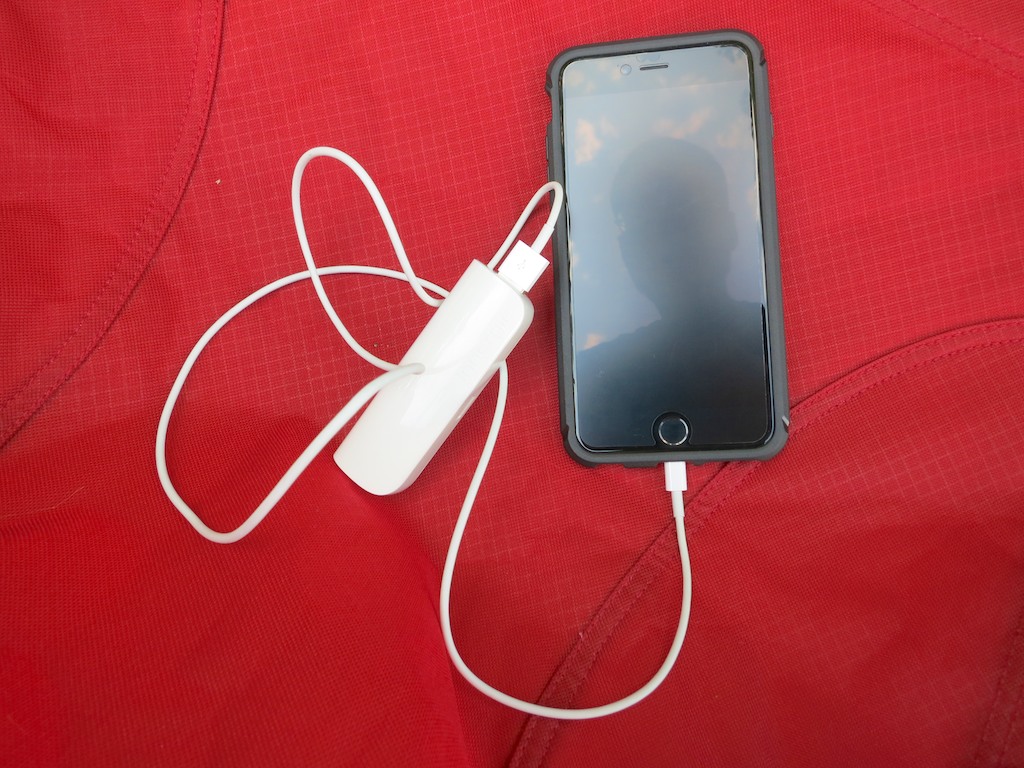
As I realized my ‘dire’ predicament, I took three deep breaths and turned to my back up plan… My old Innergie PowerCell.

Innergie to the rescue


I attached it to my iPhone, and a little over an hour later; I was back to full charge.
(The Innergie was exhausted, but it had done its job.)

Then, I assigned my ‘swag’ power stick to rescue my wife’s limping iPhone battery.

By the time breakfast at the tent was finished, we were prepared to face the day with our tech.
(Good thing I had an extra camera battery… )

REI is Your Friend
REI is well known for standing by its products. That’s important, because I’ll be certainly returning my faulty Sherpa 50.

The good news is my family camping trip was a big success…. Even if I didn’t have all the power I thought I’d need.

Perhaps that’s just Mother Nature reminding me that technology can’t always tame the wild. And also that 47% should be plenty enough to get through your day in the great outdoors…

Message received.