At Home with Tech

Unlock the power of all your technology and learn how to master your photography, computers and smartphone.

I Walked Out of my Childhood Home for the Last Time
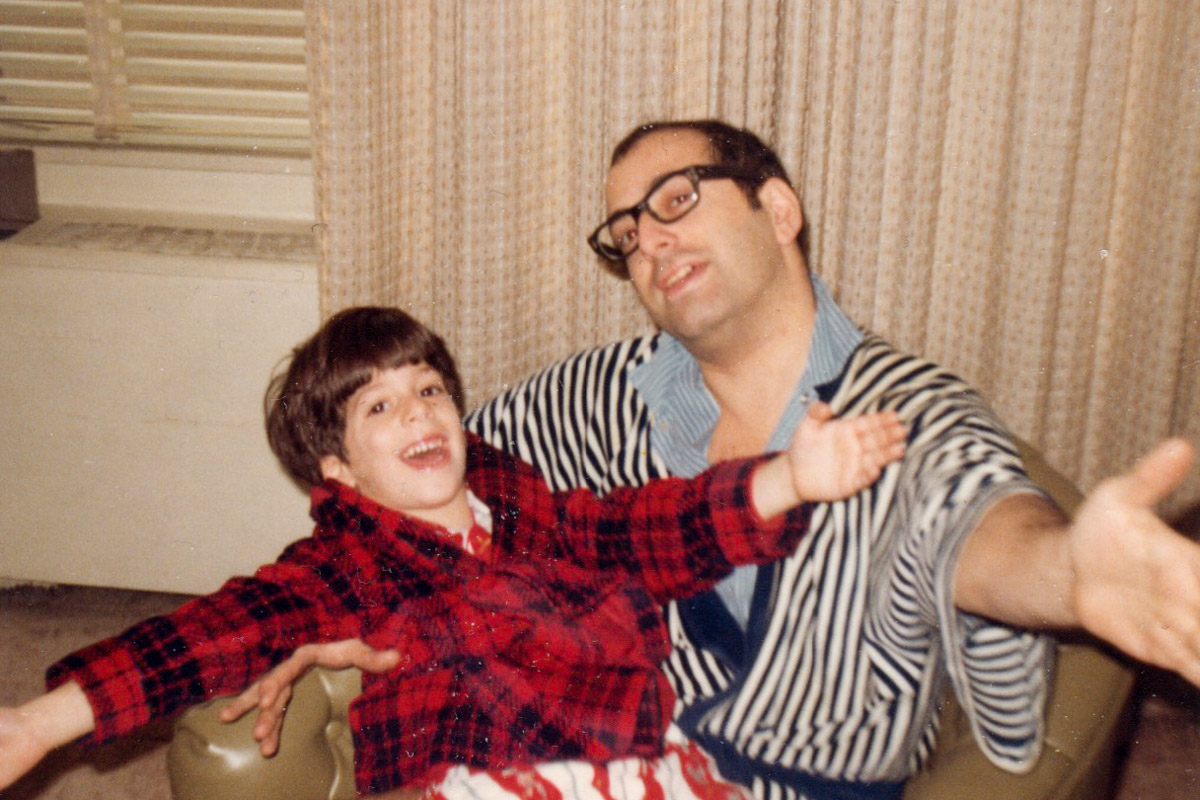
I grew up in an apartment on the Upper East Side of New York City. It’s where my father and I posed for this fun picture that my mother took decades ago. This place held so many memories…

This past week, I closed down my father’s apartment, the same place where I grew up. When I shut his front door for very last time, the lock clicked with a painful finality. I will never walk in again.

He’s been gone for almost two months now, and I’ve been spending all of my spare time going through his belongings and clearing out his apartment.

I powered down his Verizon Internet modem and cancelled his phone number that was in place for almost six decades. It originally began with an ‘R’ and an ‘E’ (reflecting the word, ‘Regency’) instead of the corresponding numbers ‘7’ and ‘3.’ I can still remember how he used to proudly repeat the classic version of the numerical sequence, “My number is Regency 7…”

Last week, the movers came, and his furniture vanished. And then I finally walked into the moment I had been dreading for weeks. His place was entirely empty.

And then I had to shut the door.

Yes, it’s been a punishing few weeks.

Saving Memories
My father’s apartment was his castle. He filled it with objects and things that he loved. It was his own little museum.
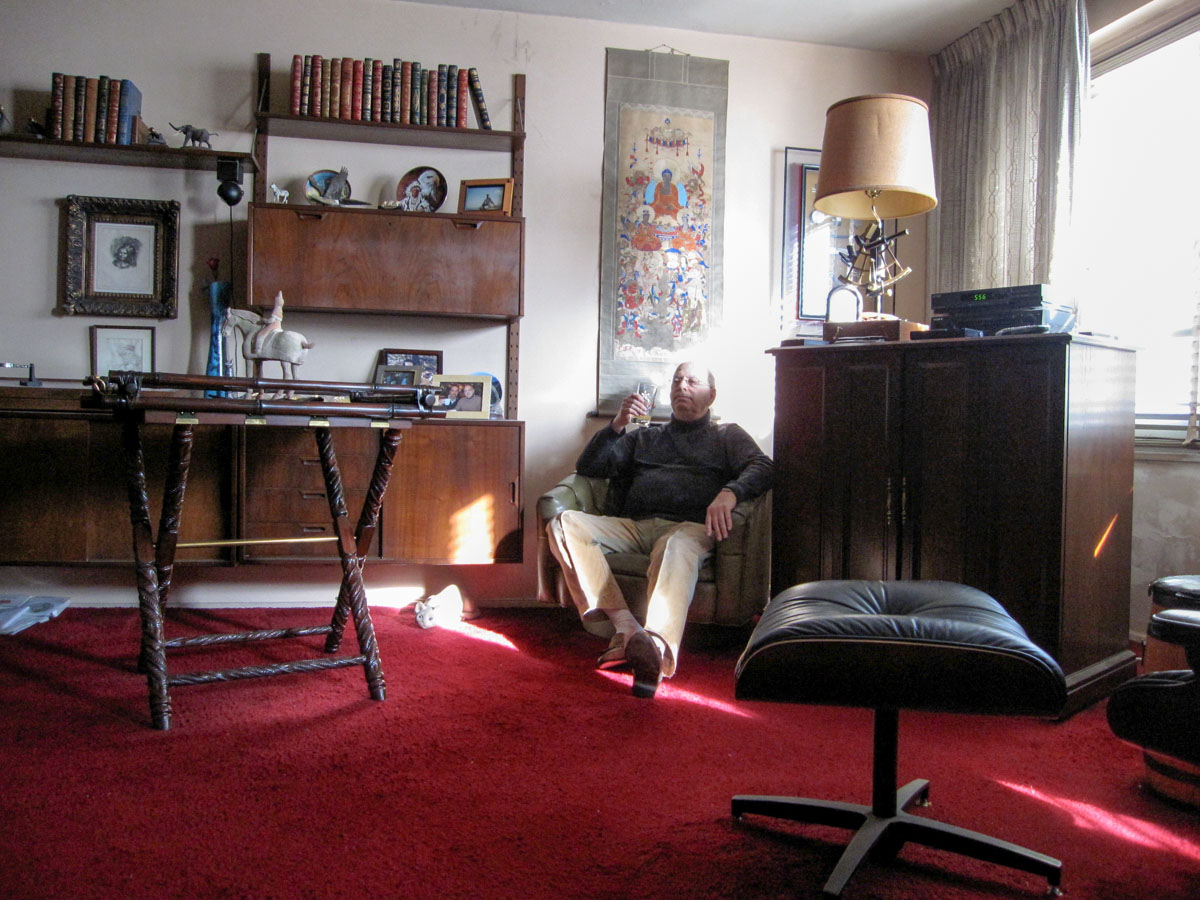
My father seemingly drew energy from his home. I was influenced by that growing up. How could I not be?

In some ways, I approached clearing out his apartment like a type of evacuation. I searched urgently to uncover the most meaningful objects and photos to save.

But I think I wasn’t rescuing his belongings as much as trying to save my own memories.

It feels complicated.

A Child of the Building
Plus, I can’t help but accept the reality that I’ve also been struggling with the emotional loss of this Upper East Side Manhattan apartment that I grew up in and returned to across my entire life.

The 21-story apartment building and I were effectively born at the same time. My parents and baby Barrett were among the first to move in. And my dad was the last original resident.

I feel a type of cosmic connection to this place. I’m not talking only about the 15th floor apartment. I mean the entire building.

We grew up together. As a child on Halloween, I roamed its hallways each year with a small band of kids. I was there when the building was dark for 25 hours during the New York City blackout of 1977.

I have walked through its lobby with my father across the decades and two redesigns.

I am a forever child of the building.

And now, I am cast out.

I’m just beginning to deal with the loss of my father. Saying goodbye to his apartment is another blow.

I moved out decades ago, but I never really left.

My Mom’s Kitchen Pot
During the apartment clean out, I also ran across a number of my mother’s belongings, not to mention everything of hers still in the kitchen, which was her domain for over 40 years.

She’s been gone since 2006, and much of the kitchen froze in time from that point forward.

Recently, back home in Norwalk, my wife was cooking chickpeas and accidentally burned them, and the pot was ruined.

The next day, I found myself standing in my mom’s kitchen, and the perfect replacement pot appeared right in front of me.

It looked almost new, and it was, of course, spotless. Even with a light coating of dust, my mother’s pot still sparkled. And it called it me. So I stashed it away in the black transport bag I had.

After all of these years, my mom was seemingly still looking out for me. Still anticipating my every need. (Yes, she was always an over-protective Jewish mother.)

But I really appreciated this imagined effort…that somehow she was able to reach out across space and time with this loving gesture.

And as today is my birthday, I think I’ll extend out my psychological projection a little further.

Thank you, Mom for your birthday present. It’s perfect.

Goodbye
Yes, both my parents are now gone. And I’ve walked out of their apartment and the original center of my universe for the last time.

I’ve saved some meaningful items, a few pieces of furniture that my family and I will repurpose and lots of photos that need to be digitized.

If there’s any kind of silver lining to this grueling experience, it’s this: Perhaps I don’t have to entirely say goodbye to my childhood home. The memories of my life there continue to live inside of me.
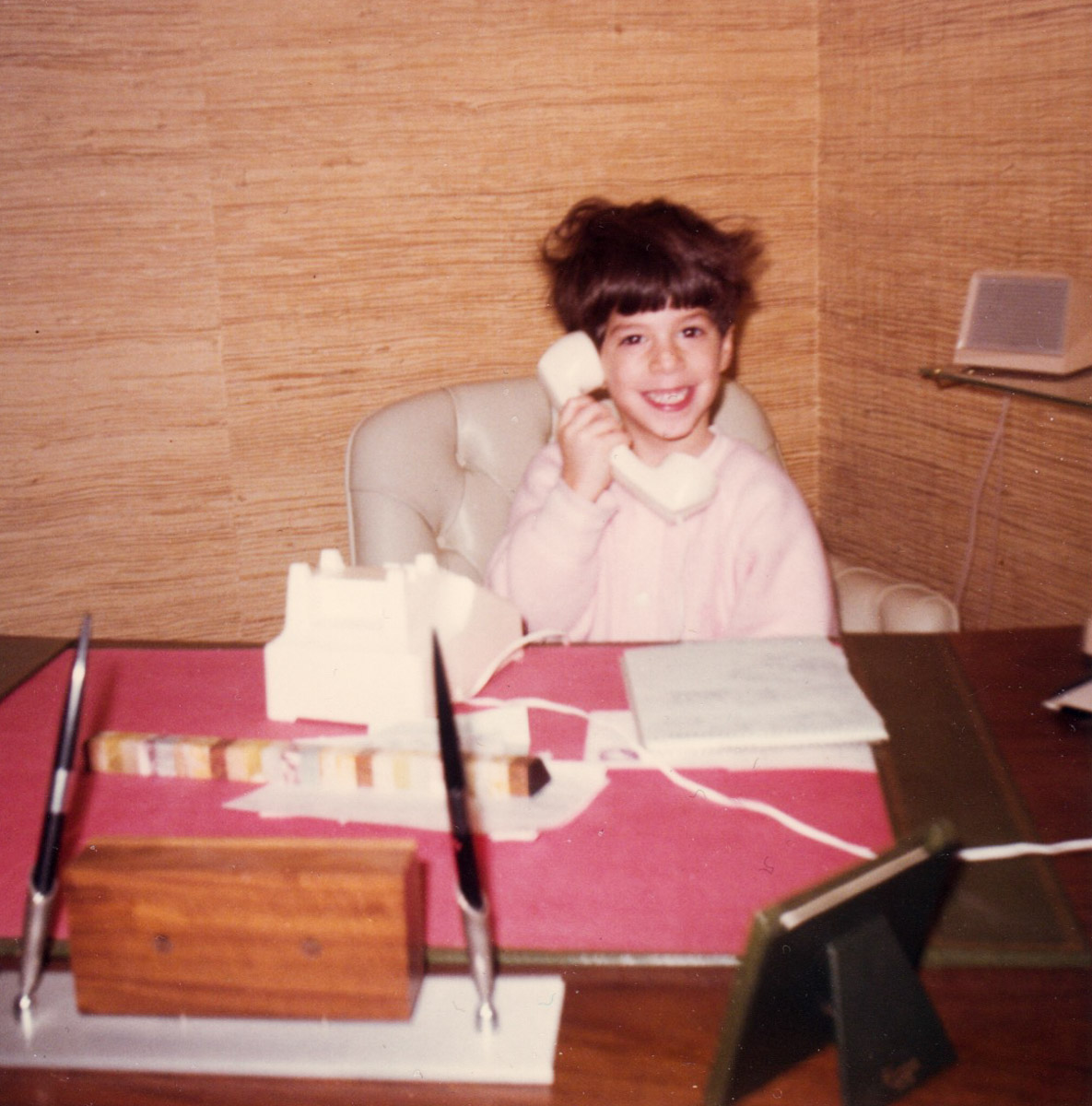
And the photos I’ve retrieved will hopefully help to maintain the memories for generations to come.

Time to Move Forward
So now what? I’ve done a lot of doing. My back is sore, and I’m tired.

All of the physical work is finally done. I’ve returned home. I am present again.

It’s time to start some emotional healing.

I think that’s the best birthday gift I can give myself.
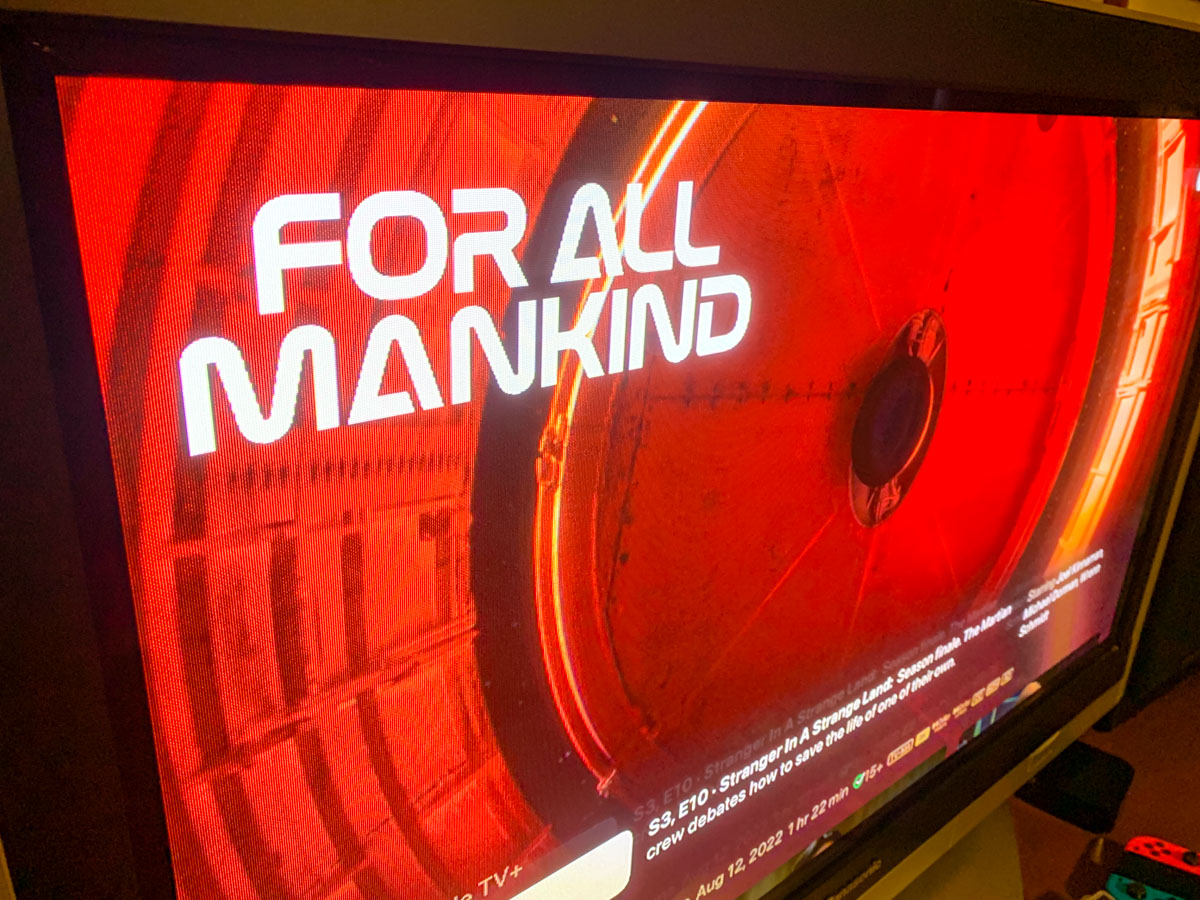
“For All Mankind” Needs these Course Corrections

Here is my review for the first 3 seasons of this alternate reality TV series that chronicles the space race from the 1960s to the 1990s.

I originally checked out “For All Mankind” when it premiered on Apple TV+ back in 2019. And while I understood the premise that this was an alternate reality where the Russians landed on the Moon first, I expected some type of explanation as to how this reality evolved or was created. That never comes. (Yes, I admit I’m heavily influenced by the whole MCU multiverse.)

And while it’s interesting to watch how this timeline continues to branch out, it’s really just background.

And as I watched the first episode, I couldn’t help but feel how slowly it moved. The plot kept focusing on the family lives of the characters instead of the space program.

And then it finally hit me. Oh, that’s what this show is really about. It’s a character-driven drama about the astronauts and ground support engineers who work for NASA… in an alternate timeline.

It’s fiction. But not really science fiction as we might traditionally expect.

This Alternate Timeline Moves Slowly
“For All Mankind” is created by Ronald D. Moore, who is royalty in science fiction television. He executive produced the reimagined “Battlestar Galactica” and was a writer and significant influence on “Star Trek: The Next Generation” and “Star Trek: Deep Space Nine.”

The premise of an ongoing space race opens up so much possibility. It’s a great idea. But it’s not the engine that fuels much of the drama in this series.

The show takes its time, and you’ve got to be willing to go along for the ride with a whole host of characters, some more interesting than others.

The payoff wasn’t there for me. So, I quickly gave up on “For All Mankind” after the first couple of episodes.

A Second Chance
Fast forward a few years (as the show likes to do between its seasons). Some friends told me how much they enjoy “For All Mankind.” When I told them how I couldn’t reach orbit with the show, they told me that it gets better after season 1, and that season 3 was really good.

So I tried again.

Yes, season 1 was a slog with so much emotion to get through, but the series does get better. So I decided to strap myself in and get through all three seasons that have been released to date. And I’m happy to report that I’ve accomplished my mission.

And I’ve got a few thoughts to share (with some minor spoilers)…

A Rerun of our Past
“For All Mankind” is really ambitious, especially as it jumps from decade to decade. And in doing so, it leaves inevitable holes in its storytelling.

It tackles many of the major societal social struggles of the past half century. You’ve got to give it credit for its reach. But at the same time, this narratively forces the show to focus backwards on our actual past instead of forwards towards an alternate future from our past. (Got that?)

Science fiction stories often bake big social themes of the day into the storytelling. It’s simply more front and center here. But while the series does rewrite some pieces of history and has fun with an alternate set of presidents, the world is still fundamentally the same. This reality hasn’t branched out that much.

At its core, “For All Mankind” is simply a drama. Or maybe a historical narrative from an alternate timeline. Again, it’s not science fiction as you might expect.

That said, I do appreciate it when the writers throw a few bones to sci-fi fans with references to “Star Trek” and “Space: 1999.”

Lots of Secrets
The storytelling structure is unusual in that there really aren’t any ‘bad guys’… just a lot of grays in many of the characters. Yes, there are a few episodes on the moon when the Russians aren’t at their finest, but they have reason to be upset at the Americans.

It’s often difficult to create narrative tension where you don’t have a villain. And the writers do a pretty good job working around that by making sure just about all of the characters we care about have a secret that has the potential to destroy their lives.

Houston, We Have a Problem
While the heart of “For All Mankind” is focused on relationships at home on planet Earth, the best parts are indeed off planet and where the show comes closest to an action/adventure series. In many ways, the series finds a better balance as it sets its sights on the mission to Mars in season 3.

But as much as the show finally finds its groove in the 1990s, the writers continue to inject instability by (spoiler alert) killing off major characters across the seasons.

Is that supposed to make me feel that anything is possible in this show? I suppose. But I don’t feel all warm and fuzzy about a series that keeps killing my favorite characters.

And some of the ways our astronauts act are a little far-fetched. (Do they really disobey orders as a norm in this reality?) Then, I have to remind myself that this is not real… it’s still fiction. But does that make it okay?

And (spoiler alert) after the explosive ending to season 3, what’s really left that I might want to care about? A problem for the writers… to be sure.

Don’t Exhaust the Viewers
So yes, I’ve now watched all three seasons. And clearly I’ve got some issues with “For All Mankind.” Is there a reason to keep watching into season 4 when it comes out?

Well, that final reveal into 2003 at the end of the last episode that previews season 4 is certainly enough to peak anyone’s interest.

Here’s one suggestion for the writers…

Reality is tough. I know every story doesn’t get a happy ending. And this alternate reality seems intent on maintaining a healthy dose of this cruel truth. But that can feel exhausting.

I think it’s time for a little more healing, thank you very much.

Find the Right Balance in this Timeline
“For All Mankind” is bold. There’s nothing else like it as it jumps from decade to decade with many of the same characters. And each season improves on the last. But it takes a commitment get through.

The show has teased going to Jupiter after Mars. I’d like to still be there if that happens. But I’d appreciate a few more thrills and a few less tears along the way.

Mr. Moore, I’d prefer this journey across space and time to just be a little more fun.

Make it so?

Are You Also an Adult Child of Paper Hoarders?

Saving your life’s paper trail may feel useful, but it actually promotes a life-long descent into disorganization. Here’s how to avoid that fate.

As I work to close down my father’s apartment now that he’s gone, I’ve had to go through literally decades of paperwork before disposing most of it. I’ve realized how critical it is to review everything, because every so often, I’ve found priceless paper artifacts hidden away in the mess. (My most recent find was a small portrait photo of my grandmother Rae from 1922 when she was young.)

Paper Trails Everywhere
Both my father and mother seemingly saved most every piece of paper that came into their apartment other than marketing mail and catalogues, though I uncovered some of those too. It was all loosely organized into many folders and stored away in different parts of their apartment. I think that simply reflected multiple decades of organization. Instead of consolidating and throwing away across time, a new file cabinet for storage was eventually curated until it became too large to handle. Rinse and repeat for the next decade.

Why all of this excess? I’m not quite sure, but I think it has something to do with having proof of transaction.

And I am an adult child of this paper-hoarding mentality. (Believe me, I’ve had my own struggles with this.) Not that my parents taught me specifically to save everything, but I know I’ve clearly picked up some of this irrational organization (though I must admit that laziness and other priorities are also part of the equation).

To be fair, though I save paperwork longer than I should, I do have a process to throw away the old, clearing up space for more incoming paper.

The Online Solution
Still, I have an unstoppable cycle of incoming paper. Who needs the mess in a digital world where most everything can be done online, such as online bill pay?

That solution is real progress for humanity right? And it works just fine.

Until it doesn’t.

Incorrect Bill-Reminder Email
I received an email this week from my wireless provider that informed me that I hadn’t paid my bill yet. What?!

This was a bill that I had set up for auto pay. (Yes, how digital of me.)

I looked at the email and wondered what could be wrong. Did my credit card expire? So, I logged in to my account and looked for my balance that was due.

It was zero (phew), and my credit card was just fine. There was also a little note documenting the recent auto pay.

All was normal, except for that email I received. (I reviewed the email address again to confirm it wasn’t spam. It wasn’t.)

Just a little glitch in the Matrix?

So now I’m left with a little less confidence in the system.

Trust your Bank Teller’s Math?
I suppose this little aberration is a good reminder that even though you shouldn’t save a physical copy of every transaction, you can’t give up total control either. There’s a balance to maintain.

Yes, you should to be able to trust our digital ecosystem.

Trust but verify.

I remember years ago when my bank stopped requiring its customers to submit deposit slips with their own math. That change was difficult for me, because I would have to trust that someone else’s math was correct. (Not that I still couldn’t do the math ahead of time and then compare it with the bank teller’s.)

That mistrust is another example of my parents’ view seeping out.

I eventually made my peace with this change. Plus I know there are other checks and balances in the banking process.

The Power of Paper
Sure, today’s digital world eliminates the need for most paper. But clearly, it’s not seamless. No, it’s not.

Still, I feel guilty admitting that I still like to receive certain bills in paper form, simply because I can leave them on my desk as a clear reminder to pay them.

Of course, there are any number of digital reminders that I could set up. But nothing beats the impact of a physical bill staring at me when I sit down at my home-office desk first thing in the morning with my cup of Joe.

Organize your Legacy
Yes, I am an adult child of paper hoarders. And if you were to take a look at a couple of my bins in our basement, you might wonder how much progress I’ve made.

But this experience has really opened my eyes. Having gone through my parents’ belonging, it’s been shocking to bear witness to such a paper trail. Literally.

I know that’s not the kind of legacy I want to leave behind.

I talk a lot about the importance of telling your own story. I haven’t really reflected on that in relationship to the concept of legacy.

I hope I have many years ahead to curate and slim down all of my stuff that may travel forward beyond me. But I clearly see this really needs to be a life-long endeavor.

It’s a lesson… I suppose the last lesson… that my parents have taught me.

It’s time to get organized.