At Home with Tech

Unlock the power of all your technology and learn how to master your photography, computers and smartphone.

Tag: home video conferencing

Cancel your Deal with Zoom’s Virtual Background Devil

Fabricating the illusion of a faux background for your Zoom calls may seem like a good idea, until you realize what you’re giving up. Here’s why it may be a bad deal.

I once believed the goal for Zoom backgrounds was to try to mimic a uniform environment, like walking into an average conference room. Or even better… attempt to mimic that clean, all-white background that Apple is famous for.

That would be so much better than revealing the cluttered background of my home office.

The Lure of Using Fake Zoom Backgrounds
So, I bought white and green pop-up screens and tried squeezing them into the space behind my desk.

But most of us don’t live in an empty 30’x30’ TV studio where this type of staging is easier to pull off.

I eventually succumbed to the reality that using a big enough green screen to pull off a full-shot chroma key during my iMac’s Zooms rendered my home office unusable. There just wasn’t enough space!

The only reasonable choice was to use the standard Zoom keying option that doesn’t take advantage of a green-screen background. And though it’s pretty amazing that Zoom can pull a key at all without using a green screen, the trick just doesn’t work as well.

As a result, you can almost always tell when someone is using a virtual background on Zoom. You can see that eerie black glow around someone’s head. And there’s that sudden, momentary disappearance of a hand. You’re not really fooling anyone when using a digital background. By now, I think we’ve all gotten used to that fake Zoom look.

Some of us even flaunt it when they place nature shots or outer space behind them. Yes, it’s a neat trick… once or twice, but eventually you need to come back to earth. I think you should have an image behind you that doesn’t make you look like you’re in a video game.

In Search of the Almost Real
I experimented with using photos of other rooms in my house as my Zoom background in the attempt to maintain some sense of visual authenticity that’s true to my real environment. I eventually landed on a reasonable shot of my living room.

Yes, you could still tell I was using a virtual background, but at least I wasn’t hanging out in someone else’s home!

Offer More of Your True World
While using a photo of my living room did meet my bar for authenticity, I still felt restricted Zooming in a virtual space. Ultimately, I just wasn’t comfortable. The tradeoff wasn’t worth it.

So I cleaned up the clutter of my home office the best I could and turned off my virtual background.

Yes, I went cold turkey on virtual backgrounds. And you know what? It’s felt so much better. The shot represents more of my true life, warts and all.

So here’s a radical suggestion:

  • Even if you believe your space is a disaster and unfit for your video conference viewers, if you do some preproduction staging, I think you can create a look that you’ll be comfortable with.

Unless you’re stuck Zooming in your bathroom, there’s probably a corner in your home that you can make work. Yes, any number of disturbances from your life may be only a few feet away. And we all want to minimize visual and audio interference that may prevent us from communicating clearly.

That’s different than trying to hide from your own environment.

By now, everyone expects visual imperfections on Zooms. The opportunity is to turn your world’s imperfections into an authentic experience. And that can ultimately be such a refreshing change up for your viewers.

Maximize your Reality Instead of Fabricating an Illusion
Showing it like it is means you’re sharing a more personal experience. And I think your Zoom viewers will really appreciate that.

Unclick the virtual box and stop the illusion. You don’t have to hide anymore.

It feels wonderful.

Six Ways to Improve your Recorded Zoom Videos

If you’re preparing to use Zoom to record a conversation or a group video message, welcome to the world of video directing. Here are a few tips on how to get the most from your recording session.

So you’ve decided to use Zoom or another video conferencing platform to handle your next video shoot due to social distancing. The quality won’t be as good as having an actual video crew on location, but it’s something, right?

And it’s remarkably simple. You just press the record button during your Zoom meeting to capture the content. Depending on your plan, your video files will get uploaded to the cloud or downloaded to your computer as soon as your meeting ends.

Welcome to the Director’s Chair
But what isn’t necessarily as intuitive is how to use Zoom as a live video production switcher if you’re handling multiple ‘live feeds.’ 

One example would be creating a virtual ‘talk show’ with an interviewer chatting with two guests.

Another is “The Brady Bunch” multi-box effect using Gallery View. It’s a great way to visualize that we’re all in this together during these difficult times.

If you’ve decided to go down this road, and you’ll be using Zoom as your virtual TV studio to switch between multiple video sources in a live environment, congratulations. Now, you’re a video director. 

Here are six tips to help ensure your success.

#1
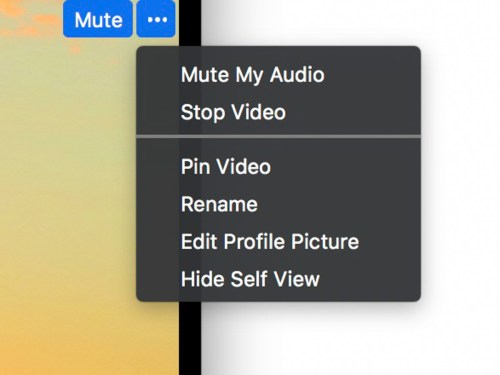
Hide Self View

If you want to show multiple people in Gallery View but you don’t want your own shot to be included, then you need to activate ‘Hide Self View.’

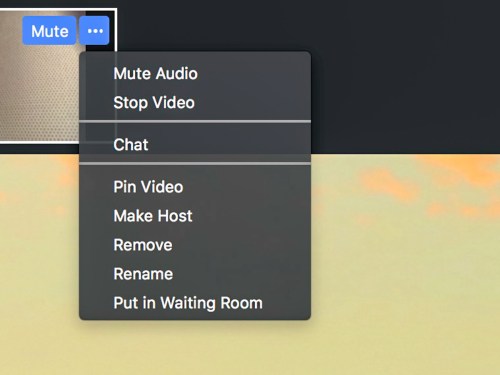
You’ll find this option in the drop down menu after you hover over your video box and then click on the three-little-periods icon in the upper right corner.

Hiding your shot will not mute your audio. So you can still talk with everyone to give them instructions as the director. You also might want to mute your audio while the others are being recorded.

#2
Use the Waiting Room

If you’re working with a large group of participants, and not all of them will be part of the same conversation, use the Waiting Room feature. It essentially puts them on hold. 

When you’re ready for them to contribute again, you simply bring them back in to the conversation.

#3
Pin Video

If you want to record a conversation in full screen as opposed to using Gallery View, Zoom’s Active Speaker View will choose the shots for you. But it’s not always perfect. So, if you want to control your shots manually, then you can ‘pin’ each shot you want as you go.
(Again, this only affects what you see and record.)

You’ll find Pin Video in the same three-period drop down in the upper right corner of the person’s box.

You’re not really working in HD
Let’s face it, even though you’re recording your Zoom clips in 720P HD video, a lot of the little boxes that pop up will look and sound like they’re from 1972.

Webcam frame rates are going to vary, and the audio quality may sound like it’s coming out of a tin can. You’re simply at the mercy of the ‘Gods of Bandwidth’ and the Internet in general.

You’ve just got to go with it.

#4
Get Multiple Takes to Capture Clean Audio

It’s ironic that the mediocre image quality will likely not be a problem for your viewers. They’ve come to expect glitchy-looking video as part of this webcam communications medium. 

Instead, it’s actually glitchy audio that will stand out like a sore thumb. If you can’t understand what someone just said, that’s a real problem. 

So, if you can, record the same lines a couple times. Then, you’ll have a higher likelihood of capturing ‘clear audio’ moments. Later, you can extract the cleanest-sounding audio fragments and then ‘Frankenstein’ it all together through audio dubbing during your editing process.

#5
Webcam Video Can Be Your Friend

Speaking of editing, bad-looking webcam video does have one upside. It’s much easier to edit together. You can easily combine two sections of someone talking without running afoul of the ‘jump-cut’ rule. 

Since webcam shots with low frame rates already look jittery, an actual jump cut will likely evaporate into the larger webcam ‘experience.’  

#6
Don’t Worry About…

The yellow outline that pops onto the person’s frame who’s speaking…

  • It’s not in the final recording.

People’s names in the boxes…

  • The words don’t show up in the actual video file either.

How I Learned to Love Terrible Webcam Video
Sure, there are multiple flaws inherent in this suddenly wildly popular communications tool. But using an app as a live TV studio with access to anyone around the world (with connectivity) is still a rather remarkable concept (even if the technical capability isn’t entirely new).

And the resulting raw moments you’ll get can be compelling, because they are truly genuine.

Imperfection is irrelevant as long as you’ve got your own video basics covered.

So just be sure that when you wear your Zoom director’s hat to bring it all together, you’re familiar with using the app as a multicamera switcher and recorder. 

You still need to be at your best.

How to Fix Four Home Video Conferencing Problems

If ever there was a time to make sure what you CAN control is under control… it’s now. Here are four ways to better handle your family’s growing live video streaming needs.

We’re clearly in the middle of a radical evolution when it comes to using video communication tools at home.

Sure, Skype, FaceTime and other personal video communication platforms have been around for years. Yet, most people haven’t been practicing video chatting and video conferencing as a daily activity.

That’s changed… and quite suddenly.

As we’re now sheltering at home, live video streaming has become a tool of necessity across any number of situations, including work, school and family communication.

So, if you’re the designated tech support rep for your family, you’d better make sure you’re addressing your family’s video streaming needs.

Here are four challenges I’ve already had to confront and the best ways to handle them.

#1
There’s not Enough Video Streaming Bandwidth
For your Entire Family

I thought we had plenty of bandwidth at home for all three of us to be on separate live video streams simultaneously. I found out last week that wasn’t necessarily the case. It was painful to experience our internet service sputtering throughout one afternoon.

Assuming you pay for an internet plan that ‘normally’ provides enough bandwidth, consider this when things still glitch out and turn your day into an episode of “The Twilight Zone.”

  • Move your video calls to cellular connectivity via your phone
    If your cellular plan can handle the data load, you can easily do video conference chats on your smartphone. I’ve done it on my iPhone using Zoom, Skype, Google Duo and, of course, FaceTime.
  • Activate the mobile hotspot plan for your phone
    Once you’ve got that in place, your phone can also rescue your stranded computer that needs an alternate tether to the world.

#2
You Don’t Own Enough Gear
To Handle Your Family’s Video Communication Needs

This issue can crop up with younger family members who don’t yet have their own dedicated computer or smartphone.

The good news is you probably have some retired gear lying around that you can put back into service. That’s exactly what I did.

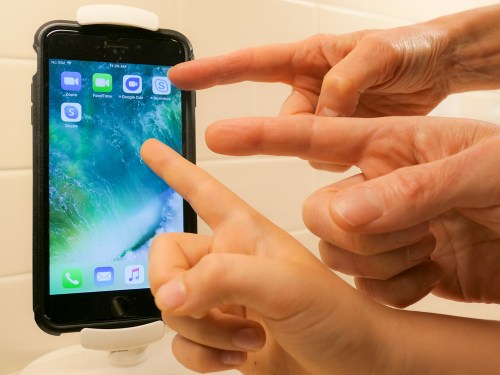
I repurposed the camera in my old iPhone 6 Plus for my fourth grader to use. He had a virtual playdate over the weekend where he was challenged to play old-school ‘Battleship’ with a friend over FaceTime.

My old iPhone no longer works as a ‘cell phone.’ It had passed that baton to my newer iPhone years ago, but it’s still fully functional with FaceTime video over my home Wi-Fi.

Their virtual-Battleship execution using FaceTime on my old iPhone 6 Plus and two separate game boards worked perfectly!

#3
There are Wi-Fi Gaps in your Home

Since your entire family may be home now, they’ve probably had to spread out to create some privacy and not interfere with each other’s video calls. As a result, those Wi-Fi ‘dead zones’ may have become more of a problem.

If so, then it’s time to extend your home Wi-Fi signal with a “Mesh” system where you can use multiple nodes to create whole-home Wi-Fi coverage.

That’s what I did with Netgear’s Orbi system I bought on Amazon.

#4
Your Zoom Video Shot Looks Terrible

From what I’ve seen, Zoom is now the de facto tool for family and friends to maintain their connections. A phone call isn’t enough. People need to see each other. So, whether you like it or not, it’s time for your close up. And so you probably should pay attention to how you look.

If you’re not happy with your Zoom shot, there are two likely culprits:

  • Your webcam is peering up at your face
    Reposition it to be more level with your eyes. That will create a more flattering shot. If you’re using a laptop, that may mean placing it on a stack of hard-cover books to create the right angle.
  • Your face is too dark in the shot
    You need more light in front of you and less light behind you. A bright window that’s lurking in your background is a common framing error.

On the other hand, if you’re facing a window, the outdoor light can provide the illumination you need, assuming the sun is not hitting you directly.

Alternately, you may want to consider buying a soft light made for webcasting.
That’s the solution I recently went with.

At Home with Your Tech 24/7
If you’re like me, your role as the ‘Family IT Guy’ has just been thrust into the spotlight. Whether that’s a legacy title or you’re new to the position, you really need to keep your tech working right now.

You can do it. Just prepare for the unexpected and then work your streaming problems as they arise.

Good luck and stay safe.