At Home with Tech

Unlock the power of all your technology and learn how to master your photography, computers and smartphone.

Tag: science fiction fan

Why Would Anyone Make the Next “Tron” Movie without Tron?

“Tron” is the odd science fiction movie franchise that spans 43 years with decades between installments. That’s certainly a hard way to build momentum. The third film, “Tron: Ares” comes out in theaters on October 10th.

The first two, “Tron” (1982) and “Tron: Legacy” (2010) weren’t especially successful, though they offered cutting-edge visual effects for their time. The original “Tron” hasn’t aged well at all, but the analog execution of a digital civilization inside a computer video game was still remarkable. “Tron: Legacy” stretched the technology limits from those days to “de-age” Jeff Bridges in parts of the movie.

“Tron: Legacy” was the Sequel We Wanted
I really enjoyed “Tron: Legacy.” Though it didn’t quite stick the landing, it got most everything else right. This wicked-cool sequel successfully continued its own core storyline almost three decades later and brought in new, engaging characters. The movie was fun, and the visual effects, other than the de-aging tech, were slick.

But it didn’t make enough money at the box office. So though “Tron: Legacy” ended with something of a cliffhanger, Disney never made the next film. I was disappointed.

I thought that was it for “Tron.” But never say never.

“Tron: Ares” is Not the Sequel I was Hoping For
And then seemingly under the radar and without much fanfare other than the normal prerelease marketing hype, this third “Tron” movie got made. Fifteen years later, we have another “Tron” ready for release. 

It’s apparently a soft reboot for this franchise. And that makes sense at one level. Who else other than a science fiction geek like me will remember its predecessor that’s as old as my teenage son?

In the trailers for this new film, the premise is flipped. Instead of going into the “Grid” of the computer universe, the digital characters and machines are released into our world. And they’re not friendly. Mayhem ensues.

Okay…

Truthfully, I’m not feeling that excited.

How Can You Have “Tron” without Tron?
Where’s Tron, the character played by Bruce Boxleitner in the first two movies?

Where’s Jeff Bridges’ Kevin Flynn? He does show up (surprisingly) in the trailer. So, there’s a connective thread. But it looks pretty thin. Sadly, the other characters from “Tron: Legacy” are all absent.

The trailers tell us that “Tron: Ares” centers around Ares, an AI program in humanoid form played by Jared Leto. And he has questions. 

He says, “I’m looking for something. Something I do not understand.” That’s pretty vague. 

Will he destroy the world? Will he save it? The trailer suggests he’s the good guy. Maybe he’s the new Tron?  (I don’t think so.)

The plot seemingly leans into the topic of AI. But weren’t all “Tron” characters (‘Programs’) always AI-enabled?

Good Characters Matter More than Special Effects
I don’t know if “Tron: Ares” is a good film. I do know the trailers are not compelling. And that’s usually not a positive sign for a movie (but not always).

Strong science fiction flicks are always character driven. Sure, the special effects are important, but they’re never enough to carry a film. And besides, the special effects displayed in the “Tron: Ares” trailers only feel like incremental updates to “Tron: Legacy.”

Maybe the producers feel nobody will remember. So why not rinse and repeat?

That’s fine, as long as there’s a stated story that will draw the audience. And interesting characters. Unfortunately, the trailers just focus on the special effects and pounding music.

Is Being Tron-Adjacent Enough?
Yes, I’m disappointed that this “Tron” will be mostly ‘Tron-less.’ At best, it will be ‘Tron-adjacent.’ 

Sure, one could praise this effort to narratively break from the mothership and forge ahead in a different direction, but still in the same universe. But I can’t help feel a sense of loss that so much has been jettisoned from the core of this franchise.

No, I shouldn’t prejudge “Tron: Ares.” I should watch it first and then offer an informed opinion. And I intend to (even if the reviews are scathing).

And of course, this type of movie is best seen on the big screen (IMAX). There are so few films being released in theaters these days. So, why not?

But as we approach the release of this new “Tron” flick, this ‘User’ wants to feel more excited. 

Game over? Well see…
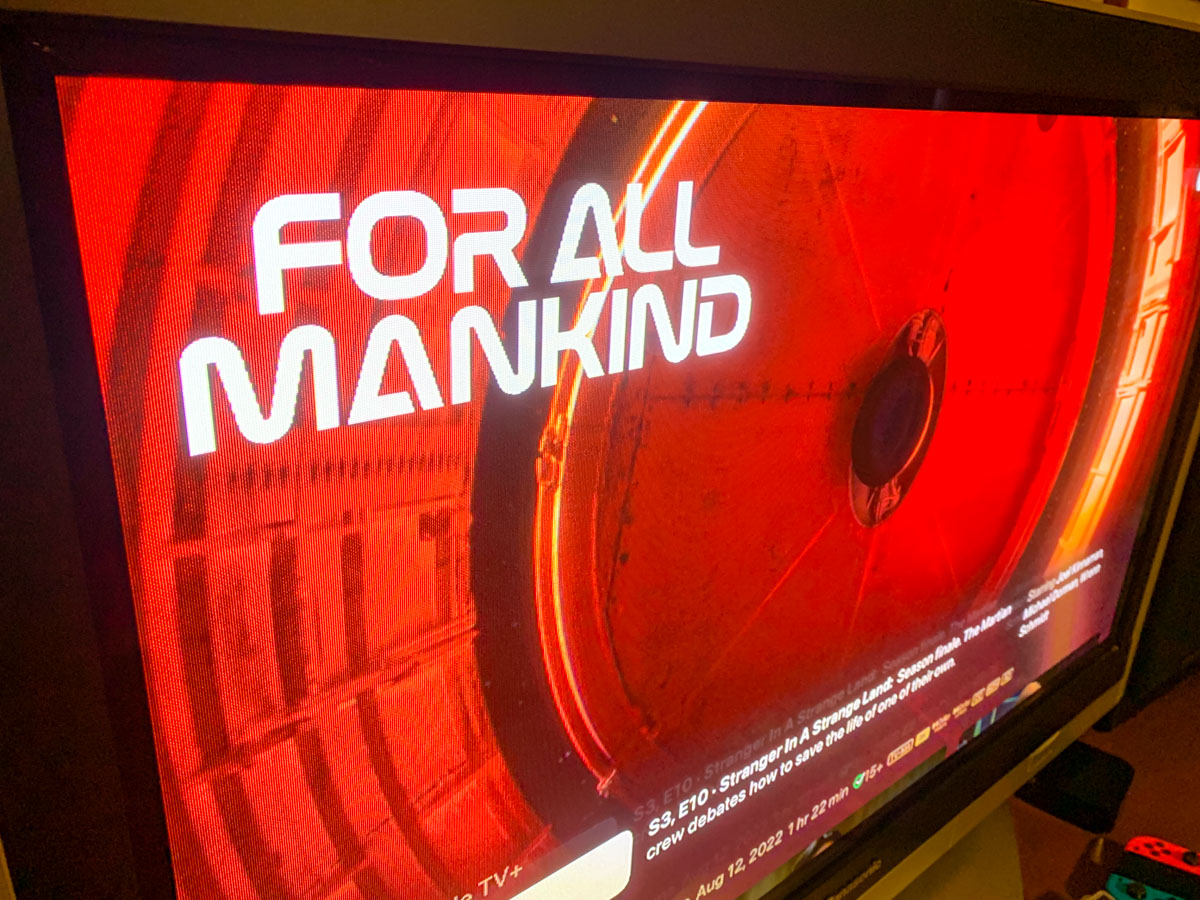
“For All Mankind” Needs these Course Corrections

Here is my review for the first 3 seasons of this alternate reality TV series that chronicles the space race from the 1960s to the 1990s.

I originally checked out “For All Mankind” when it premiered on Apple TV+ back in 2019. And while I understood the premise that this was an alternate reality where the Russians landed on the Moon first, I expected some type of explanation as to how this reality evolved or was created. That never comes. (Yes, I admit I’m heavily influenced by the whole MCU multiverse.)

And while it’s interesting to watch how this timeline continues to branch out, it’s really just background.

And as I watched the first episode, I couldn’t help but feel how slowly it moved. The plot kept focusing on the family lives of the characters instead of the space program.

And then it finally hit me. Oh, that’s what this show is really about. It’s a character-driven drama about the astronauts and ground support engineers who work for NASA… in an alternate timeline.

It’s fiction. But not really science fiction as we might traditionally expect.

This Alternate Timeline Moves Slowly
“For All Mankind” is created by Ronald D. Moore, who is royalty in science fiction television. He executive produced the reimagined “Battlestar Galactica” and was a writer and significant influence on “Star Trek: The Next Generation” and “Star Trek: Deep Space Nine.”

The premise of an ongoing space race opens up so much possibility. It’s a great idea. But it’s not the engine that fuels much of the drama in this series.

The show takes its time, and you’ve got to be willing to go along for the ride with a whole host of characters, some more interesting than others.

The payoff wasn’t there for me. So, I quickly gave up on “For All Mankind” after the first couple of episodes.

A Second Chance
Fast forward a few years (as the show likes to do between its seasons). Some friends told me how much they enjoy “For All Mankind.” When I told them how I couldn’t reach orbit with the show, they told me that it gets better after season 1, and that season 3 was really good.

So I tried again.

Yes, season 1 was a slog with so much emotion to get through, but the series does get better. So I decided to strap myself in and get through all three seasons that have been released to date. And I’m happy to report that I’ve accomplished my mission.

And I’ve got a few thoughts to share (with some minor spoilers)…

A Rerun of our Past
“For All Mankind” is really ambitious, especially as it jumps from decade to decade. And in doing so, it leaves inevitable holes in its storytelling.

It tackles many of the major societal social struggles of the past half century. You’ve got to give it credit for its reach. But at the same time, this narratively forces the show to focus backwards on our actual past instead of forwards towards an alternate future from our past. (Got that?)

Science fiction stories often bake big social themes of the day into the storytelling. It’s simply more front and center here. But while the series does rewrite some pieces of history and has fun with an alternate set of presidents, the world is still fundamentally the same. This reality hasn’t branched out that much.

At its core, “For All Mankind” is simply a drama. Or maybe a historical narrative from an alternate timeline. Again, it’s not science fiction as you might expect.

That said, I do appreciate it when the writers throw a few bones to sci-fi fans with references to “Star Trek” and “Space: 1999.”

Lots of Secrets
The storytelling structure is unusual in that there really aren’t any ‘bad guys’… just a lot of grays in many of the characters. Yes, there are a few episodes on the moon when the Russians aren’t at their finest, but they have reason to be upset at the Americans.

It’s often difficult to create narrative tension where you don’t have a villain. And the writers do a pretty good job working around that by making sure just about all of the characters we care about have a secret that has the potential to destroy their lives.

Houston, We Have a Problem
While the heart of “For All Mankind” is focused on relationships at home on planet Earth, the best parts are indeed off planet and where the show comes closest to an action/adventure series. In many ways, the series finds a better balance as it sets its sights on the mission to Mars in season 3.

But as much as the show finally finds its groove in the 1990s, the writers continue to inject instability by (spoiler alert) killing off major characters across the seasons.

Is that supposed to make me feel that anything is possible in this show? I suppose. But I don’t feel all warm and fuzzy about a series that keeps killing my favorite characters.

And some of the ways our astronauts act are a little far-fetched. (Do they really disobey orders as a norm in this reality?) Then, I have to remind myself that this is not real… it’s still fiction. But does that make it okay?

And (spoiler alert) after the explosive ending to season 3, what’s really left that I might want to care about? A problem for the writers… to be sure.

Don’t Exhaust the Viewers
So yes, I’ve now watched all three seasons. And clearly I’ve got some issues with “For All Mankind.” Is there a reason to keep watching into season 4 when it comes out?

Well, that final reveal into 2003 at the end of the last episode that previews season 4 is certainly enough to peak anyone’s interest.

Here’s one suggestion for the writers…

Reality is tough. I know every story doesn’t get a happy ending. And this alternate reality seems intent on maintaining a healthy dose of this cruel truth. But that can feel exhausting.

I think it’s time for a little more healing, thank you very much.

Find the Right Balance in this Timeline
“For All Mankind” is bold. There’s nothing else like it as it jumps from decade to decade with many of the same characters. And each season improves on the last. But it takes a commitment get through.

The show has teased going to Jupiter after Mars. I’d like to still be there if that happens. But I’d appreciate a few more thrills and a few less tears along the way.

Mr. Moore, I’d prefer this journey across space and time to just be a little more fun.

Make it so?

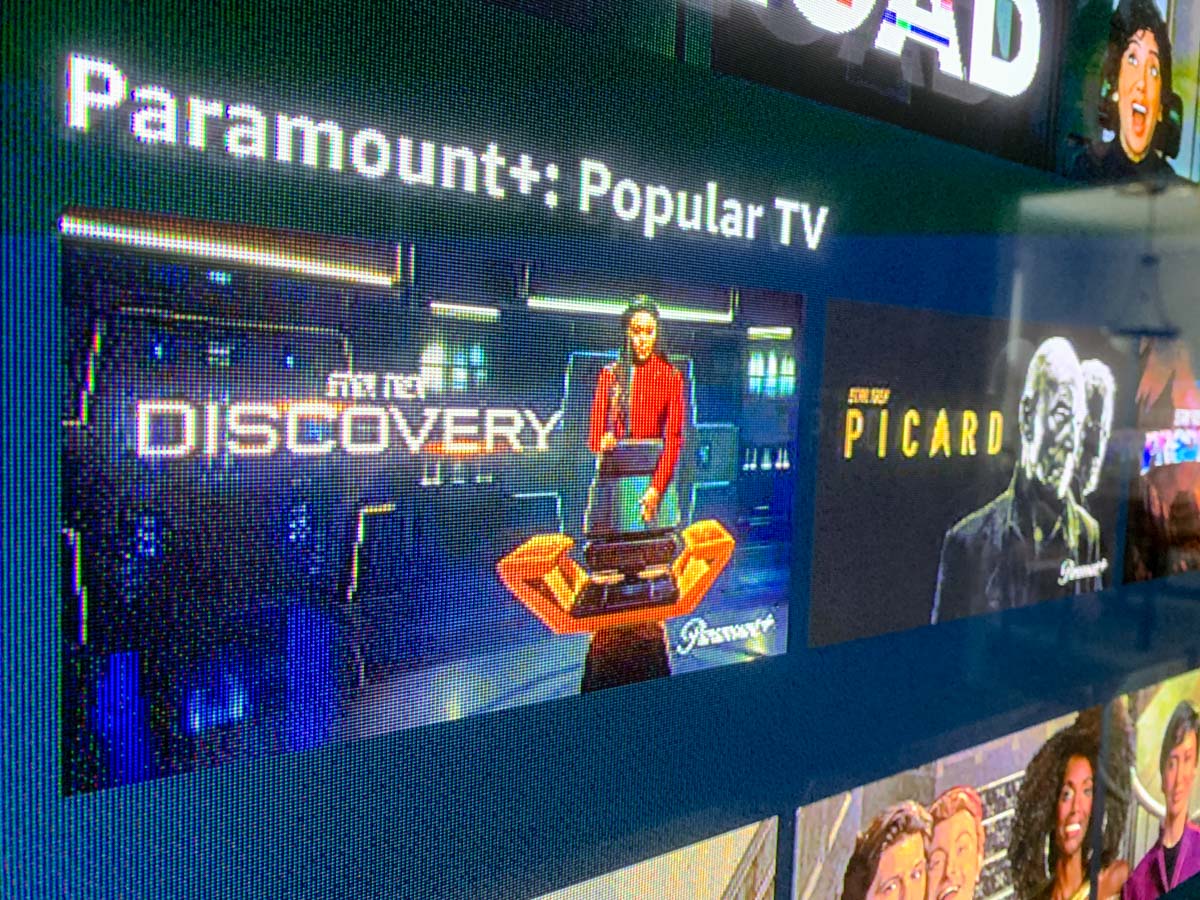
Why Star Trek: Discovery and Picard are Worth Watching Now

If you haven’t been following these series on Paramount+, now’s a great time to finally check them out. Here’s my review.

When I was a kid, I watched the first reruns of the original “Star Trek” and was completely engaged by the adventure and adrenaline-fueled fun. I connected with this family of characters and it locked me in to follow an ever expanding universe of Star Trek stories and characters for the next several decades.

I’ve continued to watch Star Trek throughout my life. All of the series, movies, different timelines and the recent iterations on Paramount+.

And Star Trek has been evolving along the way.

Finding Balance in “Discovery”
“Star Trek: Discovery” currently represents the new norm, and the writers have clearly worked hard to boldly go where no Trek has gone before. They even introduced four-letter words into the scripts. I’m still stinging from the first time they dropped the F-bomb (although I’m finally getting used to the occasional salty language).

“Discovery” has paid significant attention to presenting us with a truly diverse set of characters. DE&I themes run deep throughout. Bravo.

“Discovery” also focuses on feelings. A lot.

Kirk never needed to talk through how he felt. But these Star Trek characters do. Yes, it’s more realistic, but it sometimes slows the pace of the show. You’ve just got to get used to it.

Speaking of feelings, “Discovery’s” scripts often point out how much the crew love each other. There’s lots of hugging and crying.

When this started, I wanted the stories to first spend more time with the secondary characters. I didn’t really know them. So I didn’t really buy all of the intimacy that writers were suddenly pushing into the scripts.

In this fourth season, that dynamic has finally been properly balanced, and the love/respect/admiration factor is more believable.

Fully Embracing the Cliffhanger
I’m also pleased with another important factor that “Discovery” is finally getting right.
It’s the classic Trek cliffhanger moment that gets you so excited for the next scene or episode.

A great example is the pre opening-credits scene that sets up the entire episode. The original series did it so well, and I’m really happy that the writers have paid more attention to that device.

I always love it when the image suddenly cuts to black, I hear the opening notes of the Star Trek theme, and then I get that tingle of adrenaline. Or maybe you catch your mouth curling up into a little smile. That’s when you want to say, “Thank you.”

“Star Trek: Discovery” has finally landed in the back half of its fourth season.

“Picard’s” Reunion
The second season of “Star Trek: Picard” is also a blast to watch. As I write this, “Picard” is only two episodes in, but this series clearly holds all of the cards. It packs together the best of the more evolved style of Star Trek storytelling with classic Next Generation Trek. It feels so good to be going back to this future.

More Jean-Luc, played by Patrick Stewart, and Seven, played by Jeri Ryan. More Borg queen, this time played by Annie Wersching. More Q (John de Lancie) and Guinan (Whoopi Goldberg).

More classic starship designs, with a crazy new Stargazer. More classic uniforms and less developed transporters. The sounds and special effects are all so familiar. And they tap into little pleasure nodes throughout my brain that haven’t been activated for so many years.

This entire series has a huge impact. How can it not? I know this family. This Star Trek. These characters. And the new characters are well defined. You don’t have to wait four seasons to really get to know them.

If you’re a Star Trek fan, resistance to “Picard” is futile.

Star Trek Happiness
I’ve stuck with Star Trek across the decades like a dedicated football fan. Some years are better than others, but you don’t give up, because you just know the next year is going to be a winning season.

We’ve got two winning Star Trek seasons going on right now, simultaneously.

Fans aren’t always looking for something entirely different. Sometimes what’s old can be new again. And when the new finally aligns with what we already love, then you’re going to have happy Trekkies.

Yes, they’ve finally made it so.