At Home with Tech

Unlock the power of all your technology and learn how to master your photography, computers and smartphone.

Category: Science Fiction

Geeky Parent Review: Netflix’s “Lost in Space” Season 2 has Changed Course
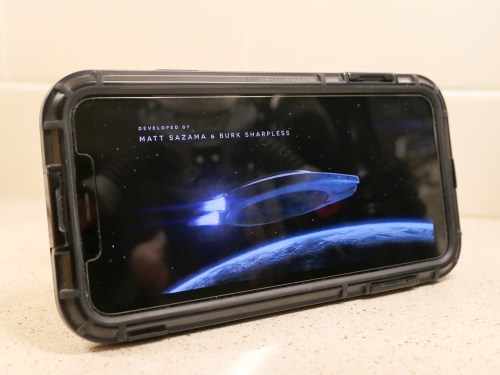
“Lost in Space” is on a journey to becoming more family friendly. The question is whether this hurts the epic Netflix sci-fi series.

Season 2 of Netflix’s “Lost in Space” is better than the first. No question.

Not that season 1 was bad. In fact, I really liked 2018’s 10-episode adventure, which reimagined the classic 1960’s series with a more action-packed, gritty storytelling style.

And in many ways, I felt that season 1 was a solid family-friendly science fiction series to watch with my (then) seven-year-old son.

Season 1’s Challenges
But the first season was filled with any number of ‘challenging’ moments better designed for adults than kids. It was hard to figure out some of the complex characters, and it took time to determine whether they were ‘good’ or ‘bad.’ (And some were left in the gray zone.)

Even though the series is rated PG-TV, a few of the alien encounters in season 1 might be a little too scary for younger kids. Though there wasn’t any serious violence, there were plenty of intense moments involving life and death.

And then, there were a few examples of salty language thrown in that you might not want to expose your kids to. (Episode 9 at 14 minutes was the worst offender.)

All of these factors point to the reality that you’ve really got to watch season 1 of “Lost in Space” with your kids. You’ll also probably want to deconstruct some of the plot elements with them as teachable moments.

Season 2’s Improvements
“Lost in Space” season 2 successfully addresses all of these ‘weaknesses’ as a family-friendly vehicle.

Most of the problems with the Robinsons as a family unit have been worked through, and we’re left with an overachieving A-team that’s more unified in confronting every life-threatening challenge that’s thrown its way. The result is more adrenaline-fueled adventure for the viewer.

Simply put, season 2 has more thrills.

And the cinematic-level special effects continue to dazzle, especially for a TV series.

But this series is not only about the action. The great cast also continues to be a major asset. The actors are consistently solid, embodying both strong male and female characters.

In fact, if you had to pick the dominant character, (which is difficult) it’s Molly Parker’s Maureen Robinson. And Parker Posey’s Dr. Smith continues to mystify and satisfy.

Positive Course Correction
Season 2’s storytelling has also moved towards a simpler structure, which kids will be able to digest more easily. That may not be a positive change for some adult viewers who enjoyed the “Battlestar Galactica” type complexities in season 1. But the enduring ‘heart’ from this “Lost in Space” has always set this sci-fi series on a different, more optimistic course.

As for the salty language issue, the writers have cleaned up their act. There’s nothing of concern to parents in any of these ten new scripts.

While season 2 has simplified its structure, it’s also benefited from any number of continuing story elements, most importantly the idea of growth and evolution that comes from experience.
(Minor spoiler: the Robot changes.)

Figuring Out the Details
The only small beef I have with season 2 is there are certain quick plot twists than are slightly confusing. I think some pivotal moments literally happen too quickly, requiring a 30-second rewind. Others appear part of the ongoing mystery behind the connection between the aliens and the humans.

And there are a few expected payoffs that you don’t get by the end of season 2. I’m sure that’s because some of the cards are being held for season 3, which is clearly set up at the end of the episode 10.

That said, enough gets wrapped up in season 2 that I am satisfied with the overall experience of “Lost in Space” (as opposed to being entirely drained by the end of each of the “Stranger Things” season cliffhangers).

Danger… Friend
“Lost in Space” season 2 is a whole lot of fun to watch for the entire family. As a geeky father, I don’t feel that it’s lost anything by becoming more family friendly. In fact, I believe it has clearly locked its identity in this season.

While “The Mandalorian” on Disney+ has sucked all of air out of sci-fi water-cooler conversations, you may have missed the arrival of this next Robinson family chapter.

Now’s the time to follow its orbit.

Buckle up!

One Father’s Journey to Introduce “Star Wars” to his Son

If you’re a parent trying to figure out when’s the right time to expose your kids to the Dark Side of the Force, here’s my story as a parent and a “Star Wars” fan…

I’ve been waiting for this moment since the day my son was born. And please grant me this nerdy pleasure… My boy and I watched “Star Wars” together this past weekend in our family room.

He’s nine years old, and I know that many younger kids have watched all of the movies already, including the newer ones. And it’s not like I haven’t tried a couple of times before. In fact, I did technically screen some of “A New Hope” with him two years back. But he didn’t really like it.

Thank you, Harry Potter
He simply wasn’t ready. I think it’s because of the plot’s suspense and the Dolby-infused mayhem of blasters and light sabers. But mostly, it was the suspense. At the time, he was still enjoying Lego movies and “Ice Age” flicks.

But then, he caught the Harry Potter reading bug, and he tore through all of the books. And when he found out there were movies, of course he wanted to watch them. To date, we’ve gotten through the first five. And as much as there was plenty of intensity and suspense in those flicks, he already knew the stories. So, I think it was a wonderful way to comfortably ease him into consuming more serious storytelling. And I hoped it would be a bridge…

If at First You Don’t Succeed…
We sometimes have ‘family movie night’ at home, and I’ve recently begun suggesting “Star Wars” again, but he still wasn’t interested.

Then, last Saturday, it was my turn to choose a movie. (We rotate between the three of us.) Without any big set up, my son and I sat down on the couch. Usually, he wants to know what we’re going to watch, but not this time…

I powered up our Apple TV and scrolled down to the “Star Wars” thumbnail grouping.
(I’ve previously purchase the first six movies.)

He saw what I was doing, and he didn’t object. I kept going…

I hovered over “The Empire Strikes Back,” since we technically had already seen “A New Hope.” But my boy helpfully suggested that we play “A New Hope” since he barely remembered it.
(Whoa! Was this actually happening?)

What’s the Right Order?
Before I could tap ‘play,’ he noticed “A New Hope” wasn’t listed first, and then we got into the discussion of order…

I explained the whole two/one/three trilogy thing, and I could tell he was trying to understand why anyone would make a series of movies out of order. After thinking about it a bit more, he asked if we could simply start at the beginning with Episode 1.

I looked at him, and knew I that needed to make the call. I explained that I wanted him to watch the movies in the order that I had watched them as I was growing up. He took another beat and happily said, “Okay.”

We were on!
Cue the John Williams soundtrack…

The Question of Luke’s Father
What can I say… It was glorious. The two of us were finally watching and enjoying “Star Wars” together.
(My wife took a rain check on this particular screening.)

He really liked “A New Hope.” When it was over, he proclaimed that R2-D2 was his favorite character, because he was such a “cool robot.” (He had laughed at all of the little droid’s antics.) Then he quickly chose Obi-Wan Kenobi as his second favorite character. (It’s hard to ignore the amazing Alec Guinness.)

Then my boy said, “I bet Luke’s father is in the first three movies.”
He waited for my response.

Wow. I and many others had a lukewarm response to Episodes 1-3. But this pop-up focus group of one fourth grader immediately identified the strong desire to know the back story.

I smiled at my son.
“Is Luke’s father in the first three movies?
Yes, I think it’s a good bet that he is…”
(Cue the famous breathing sound effect.)

Parenting 101
It’s a long journey to “The Rise of Skywalker,” and as much as I’d like to take my boy to watch it on the big screen, he likely won’t be through the other movies yet. Plus, there’s a reason why this new trilogy is rated PG-13. The films are intense.

My wife has sometimes had to remind me that as a parent, I should observe the cues from our son to better understand when he’s ready to experience something new.

What’s the right age to start watching “Star Wars?”
Of course there’s no one-size-fits-all answer. As a parent, you’re supposed to make that call.

Should I have been pushing “Star Wars” for the past two years? Probably not. As a father, I’m admittedly sometimes still just a Padawan.
(At some level, aren’t we all students in the art of parenting?)

But now that he’s ready for a galaxy far, far away… I can’t hide my own
child-like glee.

The Force is with him.

Why Star Trek: Discovery is Finally Worth the Price of Admission

If you’ve previously ignored “Star Trek: Discovery,” it’s time to go back to the future. There’s been an unexpected course correction in this series’ sophomore season…

As a ‘Trekkie’ for most of my life, I’ve lived through “Star Trek’s” ongoing life cycle of failure, cult phenomenon, success, expansion, contraction and rebirth. What’s been especially frustrating of late has been watching some of its enduring core elements warped in “Star Trek: Discovery.”

In its freshman season…. hope, morality, humor and the generally positive outlook of the larger “Star Trek” universe were mostly sidelined for more flash, intensity, discomfort and darker episodes to meet the expectations of today’s HBO-trained audience.

It’s not that I didn’t enjoy the opportunity to watch the first “Star Trek” series since 2005. But this one was so different, perhaps necessarily so, because traditional “Star Trek” had become too tame and predictable for modern tastes.

Season 1 Was Not Family Friendly
“Star Trek: Discovery” was supposed to be “Star Trek”… reinvented. You can say a lot about how “Discovery” lost its way in Season 1, but you can’t say it was tame.

It was intentionally designed for an adult crowd, complete with a “TV-14” rating that included R-level violence and a few four-letter words.
(Really)

I found Season 1 a bit exhausting.

Oh yeah, and you had to pay for it (streaming on CBS All Access for $5.99/month or $9.99/month without commercials).

I think along its journey of necessary reinvention, the writers simply left out too many familiar “Star Trek” ingredients.

In the sophomore season, we’re told we’re getting a ‘course correction.’ And after watching the first two episodes, I am happy to report that it’s true!

New Captain on the Bridge!
The biggest change is our new captain… Christopher Pike. Yep… the Enterprise captain who came before the more famous Captain Kirk.

Played by Anson Mount, Pike beams onto the Discovery from his mysteriously ‘short-circuited’ Starship Enterprise which has to then be towed away… literally.

Pike immediately takes command to lead this new season-long mission.

Captain Pike’s character was first introduced in the original (and failed) “Star Trek” pilot, “The Cage,” back in 1965. Played by Jeffrey Hunter, Pike was serious and a little stiff, but certainly a model of Starfleet values and morality. The writers loosed things up a bit when they created Captain Kirk.

We saw Pike again in J.J. Abrams’ 2009 Kelvin-timeline movie reboot and 2013’s “Into Darkness” sequel. This time played by Bruce Greenwood, Pike was again the moral compass and a father figure to the young and inexperienced Jim Kirk.

“Discovery’s” Captain Pike gives us a similar leader with strong ethics, but still able to recognize inconsistencies that challenge his own beliefs. He is on his own journey of ‘discovery.’ And this mission with his new crew is clearly going to challenge his personal and professional rule book.

But compared to all of the questionable choices made by characters in Season 1, Pike has immediately become “Discovery’s” moral center. (Doug Jones’ Kelpien Saru held this responsibility in Season 1 and was briefly joined by Michelle Yeoh’s Captain Georgiou.)

Pike’s entrance is such a relief.

It may have taken decades of “Star Trek” storytelling for this to become entirely clear, but Pike… not Kirk… best reflects the essence of Gene Roddenberry’s foundational theme surrounding our destiny. In Roddenberry’s future, humanity has matured enough to avoid extinction, get it together and reach for the stars.

Pike has always been the grown up.

He’s serious and dependable, but the writers of “Discovery” have shaved the stuffy edges off of his character and given him a little dose of welcome humor. And Mount fits the role perfectly.

Be Bold. Be Brave. Be Courageous.
When Pike proclaims ahead of his first Spore-Drive jump, “Be Bold. Be Brave. Be Courageous,” First Officer Burnham cracks a small but proud smile.

I smiled.
And I think thousands of “Star Trek” fans smiled too.

That line touched a feeling in me that harkens back to when I was a kid and first heard the line “Space, the final frontier…”

Hope. Wonder. Adventure.
A little more humanity.

Yes, please.

The First Two Episodes Are On Course
At the end of Episode 1 (“Brother”), Pike turns to Burnham and says,
“Wherever our mission takes us, we’ll try to have a little fun along the way too…”

I think that’s a line clearly directed at fans to proclaim the show’s adjusted tone.

And if it’s not clear enough that “Discovery” is finally embracing its own roots, Jonathan Frakes (“Star Trek: The Next Generation”) was tapped to direct the second episode, “New Eden.”

As soon as I saw Frakes’ name pop up in the credits, I knew the space/time continuum was well on its way to resetting itself with old Commander Riker at the helm.

“New Eden” felt like the best of classic “Trek,” complete with visiting a strange, new world and questioning the Prime Directive. But it also focused on characters getting to know each other better. And of course, then we get to know them better.

Could this crew actually be developing into something of a “Star Trek” family?
Developing character connections and strong storytelling have always been the core of “Star Trek.”

“Discovery” has even demonstrated “Star Trek’s” traditional willingness to tackle big questions that really work your brain…

When Pike talked about Arthur C. Clarke’s Third Law reflecting an updated view that “any sufficiently advanced extraterrestrial intelligence is indistinguishable from God,” we know we’re solidly in the “Star Trek” universe we know and love.

The Shakedown Cruise Continues
This is all not say that “Star Trek: Discovery” is totally fixed.

The introduction of the young Spock character is a bold and yet unproven move that currently feels like a plot device taken from “The Search for Spock” movie.

And what’s up with Cadet Tilly? Played by Mary Wiseman, we really need to see her character grow this season into something beyond awkward and flustered. It’s time to show her evolution…

And as the star of the show, Sonequa Martin-Green’s Burnham still has some work to do to win over our hearts.

Discovery is No Longer Lost in Space
The good news is “Star Trek: Discovery” has passed its core Kobayashi Maru test.

Yes, Season 2 still has a long way to go, but “Discovery” has now discovered the right formula to reinvent “Star Trek” in a way that’s fresh and challenging, yet also doesn’t repel its fan base.

Strong, uplifting storytelling with heart has always been at the center of great “Star Trek.”

Keep making these types of episodes, and the audience will show up
…and pay for it.