At Home with Tech

Unlock the power of all your technology and learn how to master your photography, computers and smartphone.

Is It Time to Stockpile Light Bulbs?
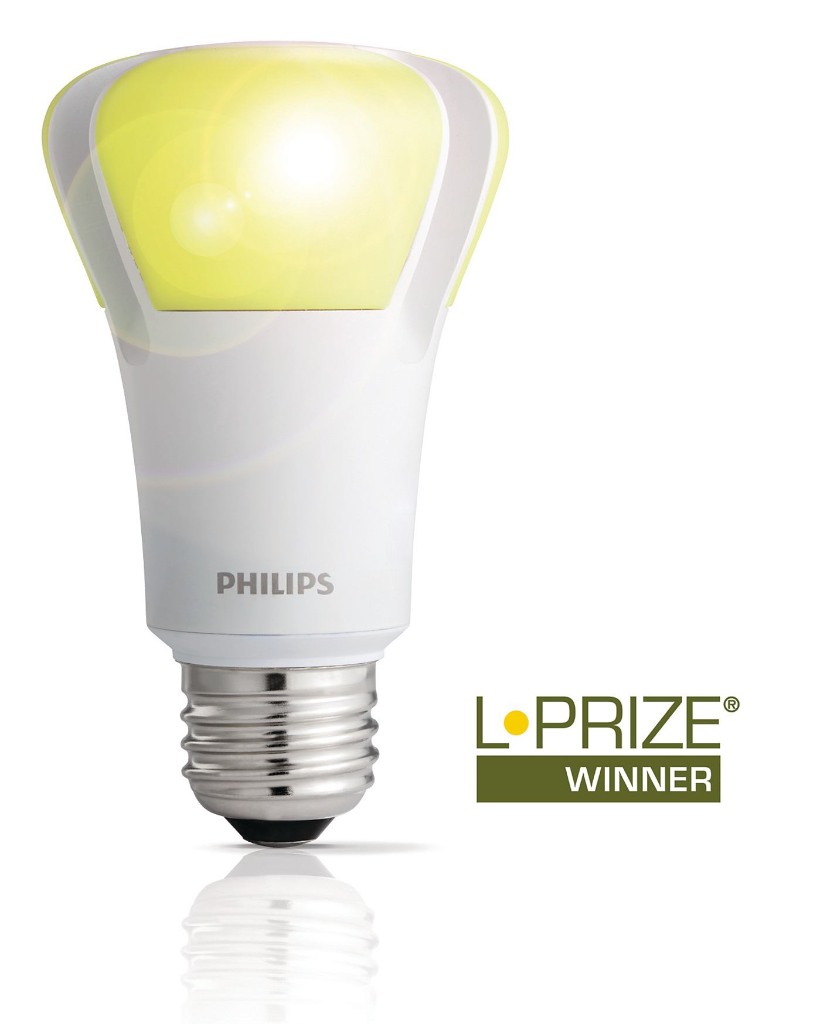
Behold! The new award-winning LED bulb from Philips. This 21st century tech may save the world. But there’s a catch.

How many Americans does it take to screw in a light bulb?

The 133 year-old answer used to be – 1.
And that was Thomas Edison.

Not any more.
Now, the number seems to be more like 4,815,162,342.

Edison was Wrong
Thanks to The Energy Independence and Security Act of 2007 signed by President Bush, incandescent bulbs aren’t cutting it anymore and need to get 25% more efficient or else. As we approach Earth Day you might say that’s a good thing.

The problem is the law creates a mandatory phase out of many incandescent bulbs, beginning with the 100-watt bulb this October. The kill dates for other bulbs all the way down to 40 watts continues through 2014.

Now, the targeted bulbs can get a reprieve if manufacturers can improve their efficiency numbers, so maybe there’s no cause for alarm.

Maybe.

As far as I’m concerned, this is all pretty complicated, and I’m feeling a bit in the dark on what’s really going on. I just want the lights to work.

I’m not yet ready to hoard light bulbs in preparation for the new green Dark Age to come, but I’m not glowing either.

The $10 million Light Bulb
One bright spot in this dim tale is the news that our government also wants light bulb manufacturers to innovate. Just fixing the old filament model isn’t enough.

Also in 2007, the DOE announced their $10 million Bright Tomorrow Lighting Prize (L Prize) competition to spur the development of a 60 watt equivalent LED bulb with strict standards to replace incandescents.
Philips Lighting North America was the only entrant, and after much nail biting, (drum roll please) Philips took the prize last August with their new
L Prize LED bulb.

And this weekend, the wait for consumers to illuminate their bright and efficient future is over.  The L Bulb goes on sale this Sunday at retailers like Home Depot.
You might want to be the first in line, because I bet there’s going to be a stampede to snap up this new bulb of the future.

It will sip only 10 watts, last for 20 years and offer a natural, dimmable light.
Plus, there’s no mercury in it like those icky compact fluorescent bulbs.

Don’t get me started on the promise of expensive CFLs and how burned I felt after I bought into all of that hype a decade ago. (Anyone else?)

And the price tag for the new darling L Bulb?
$50

Cancel the trip to Home Depot.

I don’t care how efficient or how long lasting the bulb is.
How can $50 compete with your warm and cozy $1 incandescent?

Philips says discounts will bring prices down through sales via utility companies.

I’ll be patiently waiting.

Look, I totally understand that as a country we have to become more energy efficient.

Our old light bulb tech is bleeding energy. I get it.
So our government takes a tough stand for the greater good and eliminates a lot of standard light bulbs, as we know it.
You now need new tech to light your home or you’ll be breaking out that box of candles from your closet.
Then the government hosts a little $10 million contest. And only one player enters. And then the one winning entry costs $50.
Do you see a little problem here?

I’m just a little unsettled about how I’m going to be turning on the lights next year.

Waiting for the Light Bulb to Go Off in the DOE’s Head
The whole thing seems half-baked.
(Not that LED bulb tech isn’t cool. Wired Magazine did a great cover story on it last September.)
The timing of this tech sea change is simply too quick. Get us a bulb that can serve as an energy efficient replacement bulb that people will actually buy.

If Uncle Sam could put a man on the moon in the ‘60s, I think he can do a little more on Earth today to help keep the lights on at an affordable cost.

New tech is supposed to make your life easier. Not force you to go broke, because an update to a hundred year old technology isn’t ready for prime time.

Plus, there’s no argument here that says you can just “do without.”
This is not a nice-to-have item at home.

We’re talking about light so you can see at night.
Remember, that cool nineteenth century invention?

Aren’t you a little bit worried?

Please Rate this Product…or Else

This seller’s fate lies in your hands, and your finger is feeling a bit twitchy.

It feels like someone is always asking you to rate every consumer interaction in your life.

-Every customer service phone call
Usually before you’ve had the actual experience.
A recording confidently asks you to press 1 if you’re willing to stay on the line after the human interaction…

-Every app on Apple’s App store
With over half a million available apps, each one lives or dies by how popular it is.

-Every purchase on Amazon
Amazon asks you to rate everything you buy from them.
They send you an email, which contains an easy ‘excellent’ button to press.
(I’m not so sure that’s a totally objective way to gather feedback.)

I’m not a regular reviewer on Amazon, at least not yet.
Recently I rated a light bulb I bought on Amazon, just to see how it felt. It was an illuminating experience. (You had to see that coming.)

But seriously, it just felt good. There’s a certain power to it.
As suggested with the title of my previous blog post, (which references dialogue from the ending of the movie, Spider Man) you’ve got to exercise some level of responsibility when you influence/affect others.

Or do you?

The Pros
I think the social/moral mandate is clear when it comes to well-regarded ‘influencers.’ In the tech review world, there are a few sources I regularly check out.

CNET
They cover a good selection of tech gadgets with a reliable team of reviewers.

David Pogue
He writes for The New York Times and is also on CBS News Sunday Morning.
He’s approachable and witty.

Engadget
Their selection of reviews is smaller, but it’s still worth checking out.

Digital Photography Review
This is the place for geeks to research any and all specs on new cameras.
Not for the casual reader.

The Crowd
But if you’re one of a million everymen and women with posted opinions, I think you’re not considering your journalistic integrity.
You’re just letting it rip. Damn the torpedoes, full steam ahead!

You’re an often-anonymous entity who could be a genius or a luddite crackpot. Without credentials, you can pretty say what you want with impunity. That’s the beauty of it all.

So everyone’s got an opinion, and with the democratization of public communication via the web, everyone wants to share. And isn’t there some value to each and every one of them?

The Problem
The fact is, I simply won’t buy any home tech without first reading what others say about it.

Beyond the pros, I spend plenty of time researching what ‘the tech commoners’ are saying. I find reviewers in all sorts of places like YouTube. Those raw reviews often show me the product up close and personal in ways that go beyond the typical professional review.

Mid 20th century psychologists would call my information gathering process- informational conformity. Listening to the opinions of others leads you to your own conclusion. Often, it’s just a popular conclusion, which may or not be entirely accurate. But short of spending your entire waking day looking at every product out there, it’s all you’ve got.

Tech Group Think
I call this conformity phenomenon as it relates to home tech –
Tech Group Think.
Yes, I’ve made up another little term, but I think it’s accurate.

The irony of Tech Group Think is it’s actually hard to find consensus on how good any tech really is. It’s kind of complex, and you’re often left with lingering doubt after some heavy-duty research.

It’s easy to simply freeze up with too many differing opinions and just do nothing for fear of making a mistake. At the very least, you’re feeling unsettled with whatever choice you do end up making.

So what do you do?
It’s like Vegas. Play the odds, be confident, and do your best.

Barrett’s Rules of Tech Group Think
-There is no Perfect Score
You’re never going to find a unanimous rating on anything. Somebody always hates something. But if there are lots of one stars popping up, start worrying and move on.

-Damn the Psycho Babble
Look, you’re not a lemming. You’ve got to trust someone.
So go with the crowd.

-Believe in the Force
I say the good news here is much of Tech Group Think usually gets it right.
It’s just a strong hunch, and I’m going with it!

Mass Success = Happiness
There’s no one path to successfully using Tech Group Think. You just need to personalize it in a way that works for you. And a lot of people do it every day!

My wife is a perfect example.
While I often struggle with the simplest tech purchasing decisions, she is out there gathering all the data on the web she needs to help her make some decisions of her own.

She won’t go to a new restaurant before checking it out on Yelp.

Before putting a vacation together, it’s Trip Advisor or bust.

New recipe? Epicurious.

I should qualify that my wife isn’t spending time researching technology.
That’s my job.

Actually, her Tech Group Think is really just plain Group Think via tech.
(You’ve got your chocolate in my peanut butter!)

But it works out pretty well for her. And just about everyone else, it seems.
Who’s really worrying about informational conformity, anyway?!

Maybe they’re all onto something!
…and it’s finally time for me to take the blue pill.

For now, I think I’ll put my red pill aside and share the power of my painfully researched Tech with her effortlessly successful Group Think.

I make lots of grunts hunting the right tech to bring home.
She efficiently gathers knowledge via her tech links to the world.

I call that the typical life of a 21st century family.
Surely a topic for another day…


PTC7WETMFBY4

With Great Power Comes Great Responsibility

Can nothing save this photo? Don’t be so sure. It’s got core digital integrity!

I have a little secret.
Please don’t judge me.

I’m changing reality.  Every single day.
(No, I’m not crazy.)
Technology has given me this power.

I know of no rulebook on how to practice this freakish act.
So I currently self-regulate the best I can.
Others must be doing it.  But no one’s talking about it.

And what is this dastardly voodoo I perform?

I’m touching up my digital photos.

Altering the Image
Since the dawn of photography in advertising, there’s been some controversy regarding the practice of touching up photos of actors and models.  Making them look better….younger….thinner. You’ve heard it all before…

Recently, I remember a recent story about a cover page photo of Demi Moore for W Magazine. There was some conjecture about the impossibly small size of her left hip, and that digital shrinkage made it that way.

Sure, it seems wrong to tinker too much. But how much is too much? Clearly, it’s regularly done in the advertising industry. It only becomes a problem when some digital artist does a hack job, and the boundaries of visual reality are crossed.
So it’s okay if nobody notices?

On the home front, I feel this issue is cloaked.
Besides, who really cares what you’re doing to your own photos?

You snap a photo and upload it to your computer. It seemed like a good picture when you took it, but now the background is too bright, and the shadows are a little too muddy. The colors are off and could use a little boost as well.
Actually, now that you’re looking closer, the whole thing is a little blurry.
(You really need to hold that camera steady!)

Maybe it’s not such a good picture after all. Time to throw it in the trash.
Oh well…
Wait a minute! You remember all of this can be fixed with the power of one finger.

You can perform instant magic in Apple’s Photos program. You press the auto enhance button, and voila, your photo looks instantly better!

And while you’re at it, you can easily level the shot’s tilted angle away from its titanic slope. Then, you might as well crop it closer, because you forgot to use the camera’s zoom. And that dreaded red-eye? Gone!

Isn’t technology wonderful?
Now this whole operation doesn’t match the mind-bending moment in Harrison Ford’s “zoom in and enhance” photo reconstruction scene from his 1982 movie Blade Runner, but it’s startlingly close.

You’ve taken a pretty bad photo and reorganized a whole bunch of its pixels, making it fit for framing for all to see.
Do you see any problems here?
Not yet.

As you look closer at the other control buttons in your photo management software, you notice there are additional enhancement options. And then you start realize there are little things you can do to the people in your pictures to make them look just a bit better.

The lure is just too strong. And so you begin down your slippery slope…

Boo-Boo’s
Take my two-year old son. He’s an adventurer and loves to climb anything and everything. More than occasionally, there is the inevitable boo-boo on his nose or cheek.

I’m a proud dada, and I’ve taken lots of pictures of my son. (lots)

And yes, I’ve seen some little red boo-boos in the shots and then looked at the retouch button. Two clicks later, the boo-boo is gone. Other times, the boo-boo stays in. Why? Sometimes the boo-boo is absolutely a part of the picture’s story. It needs to be there. Other times, not so much.

Shaving Nicks
Speaking of boo-boos, I’ve taken some great shots of my father, but…

He always shaves with a straight razor, and occasionally I see some of the classic nicks that come from this life-long practice.

So does my camera. But with two more mouse clicks, the nicks are nicked.

You’re welcome, Dad.

Skin Smoothing
This is where the power of altering reality really kicks in. And please call it what it is.

Wrinkle Remover!

I don’t have to review with you the aging process on the human face, but this little trick quickly reduces the prominence of certain unnecessary extra lines.  It also reduces overly exposed reflections on your skin that make you look like you forgot to take a shower.

So here’s the question? Am I vain enough to perform a little virtual surgery on a select number of my photos here and there?
(You’ll notice I’m not denying it.)

And how do I justify all this?

Bad lighting.

Actually, lighting is a significant factor in how good anybody looks in a picture. A picture taken with good natural light is always going to look better than that nasty flash.  And a little side and back lighting at the same time. Nice!

Since most of us don’t travel with our own personal lighting team, I think it’s fair to replicate the effects of good lighting with a few extra clicks of the mouse.

To be honest, I’m still feeling some guilt. Is this really so wrong?
I’m not working in a professional photo management program like Photoshop and making ‘major’ changes like readjusting entire body parts. I’m just using consumer-sanctioned software that’s readily available to the masses. I’m only enhancing or minimizing what’s already there.

Everyone is doing it. Right?

My Digital Moral Code
Plus, I follow Barrett’s Rule of Core Digital Integrity.
(My CDI)

And what is this digital moral code, you ask?
“Don’t mess with the core integrity of someone’s ongoing image.”

Ongoing image? What does the heck does that mean?
It’s how a person generally photographs across an average time span of a month or so. If ‘anomalies’ crop up that change that, I say it’s okay to help that photo look more ‘accurate.’

Let’s review:

-Boo-boo will be gone next week anyway – Remove it.
-Shaving nick will heal soon enough – Zap away.
-Sleep deprived darkness under your eyes is not permanent –
Use the brighten section tool.
-Flash induced glow on your forehead looks terrible –
Smooth it out and reduce.
-Little mole on your face is here to stay – Leave it alone.
-Adjust your eye color – Easy, but why would you want to do that?
-Blur anything in the photo that irritates you – It’s time to reread my CDI.

Am I out of control?

Cosmetics Industry to the Rescue
Wait a minute! Maybe I’m making a big fuss over nothing.

I’ve just realized I’m not really alone. The beauty industry has got my back.
And for those who may disagree, please excuse this possibly controversial thought as merely an academic exploration. Even men use facial products! Aramis’ Lab Series, for one, is in that growing business.

Don’t cosmetics handle the exact same issues I’m describing?
They’re just trying to make people look their best.
A bit of concealing here.  A little highlighting there.
I’m not seeing this multi billion-dollar juggernaut struggle with my ethical dilemma.

We all want to look our best, don’t we?
That’s all I’m talking about!

Everyone’s doing it!
I suddenly feel so much better.

Are you worried? Don’t be.

Feel free to use my CDI, and just don’t get caught!