At Home with Tech

Unlock the power of all your technology and learn how to master your photography, computers and smartphone.

Tag: Star Trek

Locutus, Is that You?

“Star Trek: Picard” is going back to the future by drawing heavily on its past. But not how you’d think.

Nobody escapes the ravages of time without stacking up some serious scars along the way. It doesn’t matter which future ‘enlightened’ century you’re from.

That’s the major premise of “Star Trek: Picard.” And after watching seven episodes of the first season, it’s entirely clear what’s going on here. And I’ve increasingly enjoyed what the writers are doing.

Core Damage
Forget the story… Good Romulans. Bad Romulans. Data’s daughters. Abandoned Borg. Federation conspiracy. That’s not really what’s important.

This new “Star Trek” series is essentially about broken people, just trying to hold it together. Trying to figure out how to play the cards they’ve been dealt. Trying to make the right choices.

And as for Picard, we don’t get the great captain we once knew. Oh no… Since the last time we saw him, he’s made a few bad decisions (for the right reasons).

So, now the great Jean-Luc is having a tough time getting out of bed in the morning, and I’ve got to admit, I was interested in what the heck had happened!

I think it’s a great premise for this new series on CBS All Access, as opposed to more standard-fare plots that focus on new alien species each week.

Reunion
Yes, something is definitely rotten in the state of Denmark. But, all is not bad. We are still in the same hopeful galaxy that all Trekies have grown up in.

“Star Trek: Picard” also gives us a chance to reconnect with some of our favorite “Star Trek” characters… Seven of Nine as well as Riker and Troi.

Everyone here has their own demons to deal with. And as we already care deeply about these characters, how they’re coping is especially interesting. But even when our heroes from back in the day are down, they’re not out. Come on… this is still “Star Trek,” right?

Unfortunately, the reunions are short-lived as the larger plot focuses on the newer characters. Nevertheless, as a viewer, it still feels like enjoying a cup of hot cocoa on a cold day.

“Shields Up!”
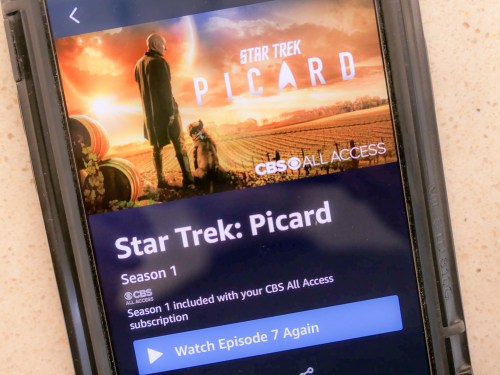
“Nepenthe” (episode 7) with Riker and Troi was an especially healing experience to watch.

No, the band’s not getting back together, but seeing that they actually could after all of these years is an affirmation to Trekies, who have remained committed to the core of “Star Trek” (just substitute the dinner table for the old Enterprise ready room).

Honk if You Like the Borg
This enduring emotional connection is a solid reminder why “Star Trek” is not “Star Wars.” It’s the journey that matters, not the next light-saber sequence. That’s what “Picard” really focuses on. Traveling through life can often be the most challenging journey of all.

(Minor spoiler alert)
In one moment mid-season, a former Borg spots Picard rushing through a hallway and calls out hopefully, “Locutus, Is that you?!”

You can detect a hint of desperation in his voice.

Yes, even the Borg (some of them) are having a rough go of it here. They’re not the bad guys anymore.

I smiled. Not because it was funny, but because it was so unexpected. Yet so perfect.

It’s an insignificant moment in the larger story, but it’s a gem, because it successfully taps into the deep culture of Star Trek, built across decades.

The series may have started off a little slowly, but it’s this attention to the many details from past “Star Trek” series that’s making “Picard” particularly delightful.

Family
If you’re a Trekie, and you haven’t tried “Star Trek: Picard,” you really should. In so many ways, it’s successfully returned to the core of what makes “Star Trek” great.

It’s always been about family.

Is Star Trek: Picard Any Good?

If you were hoping that “Star Trek: The Next Generation” would get the band back together one day, you’ll be disappointed with what “Picard” has to offer. Instead, this series takes Picard in a new direction. Here are my thoughts on this new course.

“Star Trek: Picard” has arrived, and as a life-long “Star Trek” fan, I should be ecstatic with not one but two new “Star Trek” series to watch on CBS All Access.

Well, not exactly. But I do keep paying money to stream them. So, that says something right there.

I’m also not so annoyed that the producers keep messing with the original formula for “Star Trek.” I respect the need for “Star Trek” to evolve.

That said, since “Star Trek: Discovery” premiered, I think it’s also become clear to the producers when they have strayed too far from the source material. I feel the second “Star Trek: Discovery” season was more enjoyable than the first due to the ongoing presence of Captain Pike, played so well by Anson Mount. It was the perfect way to connect that series back to familiar territory.

The Picard Maneuver
The producers have clearly used the same tactic in creating their newest “Star Trek” series. What better way to anchor this one than center it around Jean-Luc Picard, played by the great Patrick Stewart?

The story follows Captain Picard fourteen years later, after his retirement from Starfleet under complicated circumstances. He’s down… but not out.

Of course, there’s an important reason why he feels compelled to leave his family’s vineyard and come out of retirement, and the Romulans seem to be at the center of the problem. There’s also a Borg cube. (Enough said.)

For me, the fact that the writers have picked up from the plots of 2002’s “Star Trek: Nemesis” and J.J. Abrams’ 2009 “Star Trek” is compelling, but I’m not sure if other more casual “Trek” viewers will find that same narrative pull.

Not “The Next Generation”
If there’s any doubt, you should know that “Picard” is absolutely not Season 8 of “Star Trek: The Next Generation.” There’s an entirely different cast of characters in this series, although some legacy characters do show up from time to time.
(Data is in the first episode. Don’t worry about how. It’s explained.)

My favorite new character is Laris, played by Orla Brady, a Romulan former intelligence operative and current employee at Picard’s vineyard. In these early episodes, she’s essentially serving as Picard’s Number One. (His dog holds the official name.)

Even though the writers seem hell-bent on continuing to use four-letter words in their scripts including the f-bomb, Brady is the first Star Trek actor to actually pull it off with a sense of style.

Taking Time to Get to Warp Speed
So far, the producers of “Picard” have performed a successful narrative balancing act by giving Trekies what they want with plenty of Easter eggs, while not making the whole experience feel like you’re a nerd attending a “Star Trek” convention.

After watching the first two episodes, I do need to admit that the series is taking some time to set itself up. It’s not exactly slow, but I’d prefer that the plot move more quickly beyond what I already know from watching the promos for the series.

But in case there’s any doubt, I’m in. I do plan to watch the rest of the season. In fact, I’m already more invested in “Picard” than in the upcoming “Star Trek: Discovery” season 3, which is seemingly rebooting itself… again.

An Inclusive Viewing Universe?
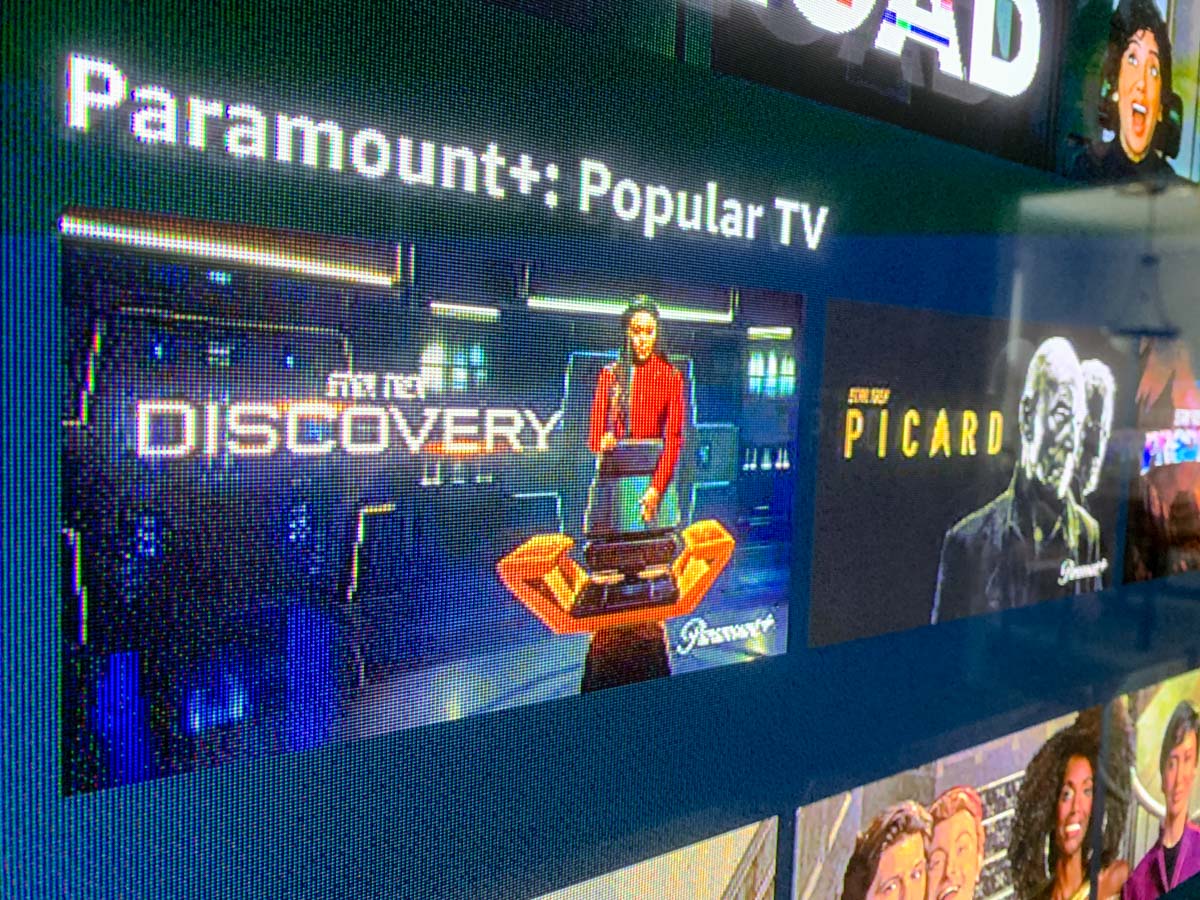
With the current movie series sputtering to a halt, the future of “Star Trek” is currently in the hands of “Picard” and “Discovery.”

I do continue to wonder about the audience that CBS is trying to attract. Sure, there are still old-time Trekies out there who will pay CBS All Access to watch, but what about the next generation of viewers?

Sure, bringing Jean-Luc Picard back is a huge hook for “Star Trek: TNG” fans, but there’s been an eighteen-year gap here. That’s an eternity to recapture a viewer’s attention.

I think it’s also fair to say that “Star Trek” hasn’t maintained the same cultural gravity as the “Star Wars” universe.

Plus, kids can’t join this party due to the bad language that’s sprinkled into the scripts.

So, that might leave a relatively narrow segment of the viewing population who will rush to sign up for “Star Trek: Picard.”

We’re Just Getting Started
Still, for those who are already predisposed, I’m here to report that “Picard” is certainly ‘engaging’ enough to spend time with. (You thought I wouldn’t get to that pun?)

With the exception of the original 1966-1969 series, new “Star Trek” shows have often had uneven early episodes, including “The Next Generation.”

And when viewing “Picard” though that lens, I’m actually quite excited to see what comes next…

Let’s make it so!

Why Star Trek: Discovery is Finally Worth the Price of Admission

If you’ve previously ignored “Star Trek: Discovery,” it’s time to go back to the future. There’s been an unexpected course correction in this series’ sophomore season…

As a ‘Trekkie’ for most of my life, I’ve lived through “Star Trek’s” ongoing life cycle of failure, cult phenomenon, success, expansion, contraction and rebirth. What’s been especially frustrating of late has been watching some of its enduring core elements warped in “Star Trek: Discovery.”

In its freshman season…. hope, morality, humor and the generally positive outlook of the larger “Star Trek” universe were mostly sidelined for more flash, intensity, discomfort and darker episodes to meet the expectations of today’s HBO-trained audience.

It’s not that I didn’t enjoy the opportunity to watch the first “Star Trek” series since 2005. But this one was so different, perhaps necessarily so, because traditional “Star Trek” had become too tame and predictable for modern tastes.

Season 1 Was Not Family Friendly
“Star Trek: Discovery” was supposed to be “Star Trek”… reinvented. You can say a lot about how “Discovery” lost its way in Season 1, but you can’t say it was tame.

It was intentionally designed for an adult crowd, complete with a “TV-14” rating that included R-level violence and a few four-letter words.
(Really)

I found Season 1 a bit exhausting.

Oh yeah, and you had to pay for it (streaming on CBS All Access for $5.99/month or $9.99/month without commercials).

I think along its journey of necessary reinvention, the writers simply left out too many familiar “Star Trek” ingredients.

In the sophomore season, we’re told we’re getting a ‘course correction.’ And after watching the first two episodes, I am happy to report that it’s true!

New Captain on the Bridge!
The biggest change is our new captain… Christopher Pike. Yep… the Enterprise captain who came before the more famous Captain Kirk.

Played by Anson Mount, Pike beams onto the Discovery from his mysteriously ‘short-circuited’ Starship Enterprise which has to then be towed away… literally.

Pike immediately takes command to lead this new season-long mission.

Captain Pike’s character was first introduced in the original (and failed) “Star Trek” pilot, “The Cage,” back in 1965. Played by Jeffrey Hunter, Pike was serious and a little stiff, but certainly a model of Starfleet values and morality. The writers loosed things up a bit when they created Captain Kirk.

We saw Pike again in J.J. Abrams’ 2009 Kelvin-timeline movie reboot and 2013’s “Into Darkness” sequel. This time played by Bruce Greenwood, Pike was again the moral compass and a father figure to the young and inexperienced Jim Kirk.

“Discovery’s” Captain Pike gives us a similar leader with strong ethics, but still able to recognize inconsistencies that challenge his own beliefs. He is on his own journey of ‘discovery.’ And this mission with his new crew is clearly going to challenge his personal and professional rule book.

But compared to all of the questionable choices made by characters in Season 1, Pike has immediately become “Discovery’s” moral center. (Doug Jones’ Kelpien Saru held this responsibility in Season 1 and was briefly joined by Michelle Yeoh’s Captain Georgiou.)

Pike’s entrance is such a relief.

It may have taken decades of “Star Trek” storytelling for this to become entirely clear, but Pike… not Kirk… best reflects the essence of Gene Roddenberry’s foundational theme surrounding our destiny. In Roddenberry’s future, humanity has matured enough to avoid extinction, get it together and reach for the stars.

Pike has always been the grown up.

He’s serious and dependable, but the writers of “Discovery” have shaved the stuffy edges off of his character and given him a little dose of welcome humor. And Mount fits the role perfectly.

Be Bold. Be Brave. Be Courageous.
When Pike proclaims ahead of his first Spore-Drive jump, “Be Bold. Be Brave. Be Courageous,” First Officer Burnham cracks a small but proud smile.

I smiled.
And I think thousands of “Star Trek” fans smiled too.

That line touched a feeling in me that harkens back to when I was a kid and first heard the line “Space, the final frontier…”

Hope. Wonder. Adventure.
A little more humanity.

Yes, please.

The First Two Episodes Are On Course
At the end of Episode 1 (“Brother”), Pike turns to Burnham and says,
“Wherever our mission takes us, we’ll try to have a little fun along the way too…”

I think that’s a line clearly directed at fans to proclaim the show’s adjusted tone.

And if it’s not clear enough that “Discovery” is finally embracing its own roots, Jonathan Frakes (“Star Trek: The Next Generation”) was tapped to direct the second episode, “New Eden.”

As soon as I saw Frakes’ name pop up in the credits, I knew the space/time continuum was well on its way to resetting itself with old Commander Riker at the helm.

“New Eden” felt like the best of classic “Trek,” complete with visiting a strange, new world and questioning the Prime Directive. But it also focused on characters getting to know each other better. And of course, then we get to know them better.

Could this crew actually be developing into something of a “Star Trek” family?
Developing character connections and strong storytelling have always been the core of “Star Trek.”

“Discovery” has even demonstrated “Star Trek’s” traditional willingness to tackle big questions that really work your brain…

When Pike talked about Arthur C. Clarke’s Third Law reflecting an updated view that “any sufficiently advanced extraterrestrial intelligence is indistinguishable from God,” we know we’re solidly in the “Star Trek” universe we know and love.

The Shakedown Cruise Continues
This is all not say that “Star Trek: Discovery” is totally fixed.

The introduction of the young Spock character is a bold and yet unproven move that currently feels like a plot device taken from “The Search for Spock” movie.

And what’s up with Cadet Tilly? Played by Mary Wiseman, we really need to see her character grow this season into something beyond awkward and flustered. It’s time to show her evolution…

And as the star of the show, Sonequa Martin-Green’s Burnham still has some work to do to win over our hearts.

Discovery is No Longer Lost in Space
The good news is “Star Trek: Discovery” has passed its core Kobayashi Maru test.

Yes, Season 2 still has a long way to go, but “Discovery” has now discovered the right formula to reinvent “Star Trek” in a way that’s fresh and challenging, yet also doesn’t repel its fan base.

Strong, uplifting storytelling with heart has always been at the center of great “Star Trek.”

Keep making these types of episodes, and the audience will show up
…and pay for it.