At Home with Tech

Unlock the power of all your technology and learn how to master your photography, computers and smartphone.

Category: Tech in the News

Why a Terrible Camera Can Be the Best Gift for Your Child

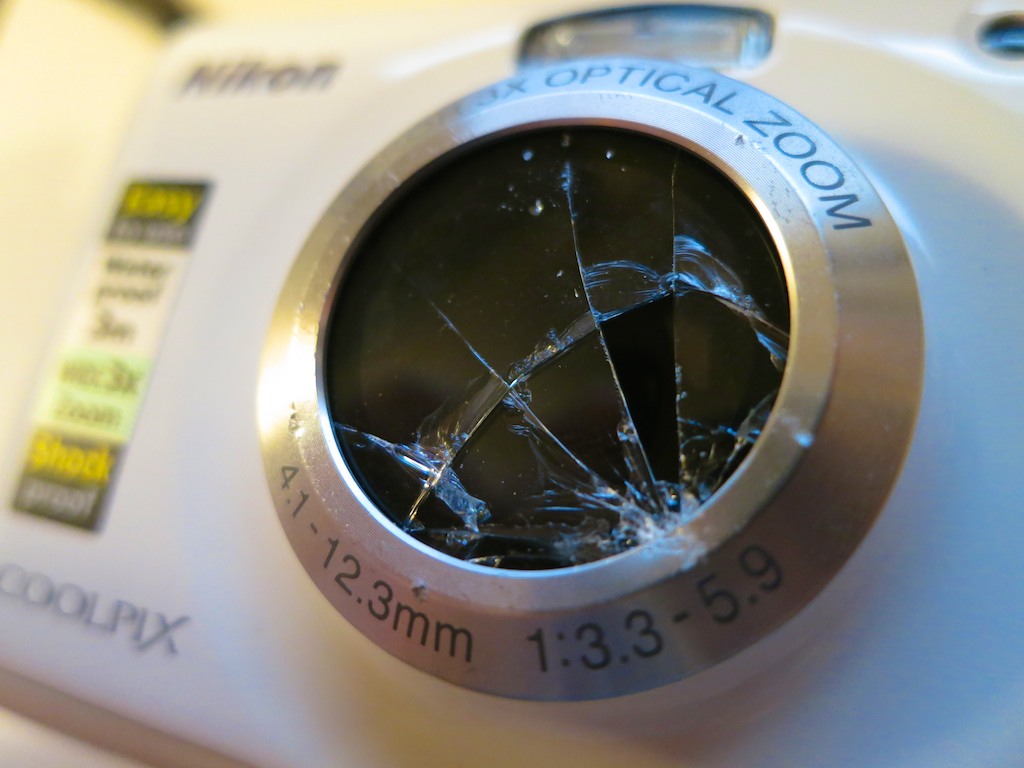
Behold the premature end to my son’s first camera. Winston Churchill once said, “Success is stumbling from failure to failure with no loss of enthusiasm.” In the spirit of the British Bulldog, I decided it was time to get my boy another camera…

Behold the premature end to my son’s first camera. Winston Churchill once said, “Success is stumbling from failure to failure with no loss of enthusiasm.” In the spirit of the British Bulldog, I decided it was time to get my boy another camera…

My four-year-old boy broke his new Nikon COOLPIX S30 family camera last month after dropping it on our driveway. He was running with great enthusiasm and holding it with one hand to take a picture of the full moon. But he stumbled and his prize possession fell…

Though this ‘tough’ camera is built to handle a reasonable fall and even survive comfortably underwater, its glass lens housing shattered on impact. Yes, the interior lens was still intact, but there were shards of glass everywhere.

As ‘Junior’ and I stood over his fallen tech, I declared it a goner.
(No, I hadn’t bought insurance on the camera, and the cost to repair it would likely be more than buying another one.)

A horrible moan befitting a small Klingon clan permeated our neighborhood, and then he shuffled upstairs.

It was a terrible loss. My son cried himself to sleep that night…

He hadn’t had his Nikon for six months but had quickly become quite a budding junior photographer with it. I bought him this particular camera for his birthday, because even though it was an older model at the time,
(The S32 was already out.)
…The S30 was priced on Amazon to move…$70!

Plus, this Nikon was the real deal.
(not some crummy toy camera)
I figured for twenty bucks more, it was worth getting him a decent piece of adult tech…

The Many Downsides to the Nikon COOLPIX S30
As good a decision as I thought I was making, I’ve got to say that the S30 is quite simply the worst camera I’ve ever purchased:

  • The pictures were barely average.
  • There was a dead pixel in the middle of the sensor.
    (So you always see a little speck in the same location of most of the pictures.)
  • The audio from its recorded videos sounds like an empty Campbell’s Soup can and string was used instead of an onboard microphone.
  • And the camera’s functionality assumed you had the smarts of a four year old.  (It was really clunky.)

But my son figured out how to use it in about 10 minutes.
And he was taking pretty cool pictures up until the unfortunate ‘moon incident.’
(He actually started taking snapshots when he was two years old using my old iPhone…)

You might be asking right about now what I was expecting out of a $70 camera when the other point and shoot cameras I own cost at least twice as much.

The irony is even though it was a terrible camera… it was perfect for my son.
He just loved it.
(And its capabilities were light years ahead of any toy camera out there.)

A Life-Changing Moment
First of all, it wasn’t an obvious decision to simply reload and hand over another adult camera for my son to use. You’ve got to wonder how long a life span any camera will have in an eager child’s little hands…

But I thought back to one of my own childhood stories, when I was a few years older than my son. I desperately wanted an audio cassette recorder, and my parents didn’t think I would remain interested in this adult tech beyond a few days. I pleaded for weeks, and eventually my mother softened.

In hindsight, it was the most important gift I ever received as a child. If, for some reason, you wanted to change the path of my entire life, all you’d have to do is jump into your time machine, go to February 1970, and make sure I never received that Sound Design cassette recorder.

My career would be very different today…
(I might be the dentist my mother always wanted.)

So I decided to get my little guy another camera for the holidays.

Where’s the Choice?
Today’s market for a cheap, durable camera is well… almost non-existent.

In the sub $100 range, I think Nikon still is it with the COOLPIX S32.
(The S30 has fallen out of the ‘new camera’ sales cycle, and the S31 is only ten bucks less on Nikon’s website.)

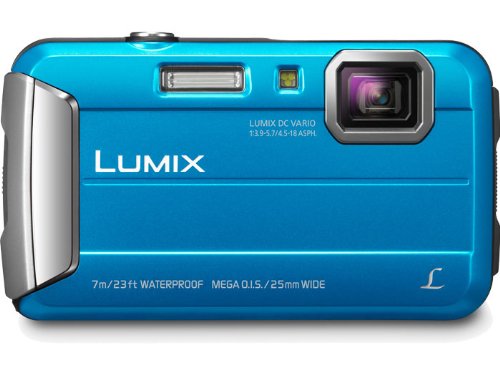
Panasonic also has its Lumix DMC TS25,
which you can get on Amazon for $125.

Panasonic Lumix DMC TS25Even though it looks to be a better camera than the S32, spec wise, it’s got really small buttons and a different interface, which might not be as child-friendly.

It wasn’t a slam-dunk as the better choice, and it also broke my $100 rule.
So ultimately, I sided with the devil I knew vs. the devil I didn’t.

And the S32 is two generations better than the S30. That should count for something.

But the bottom line is there’s really nothing else I’ve found that’s supposed to take a licking and keep on ticking that breaks the $100 price point…

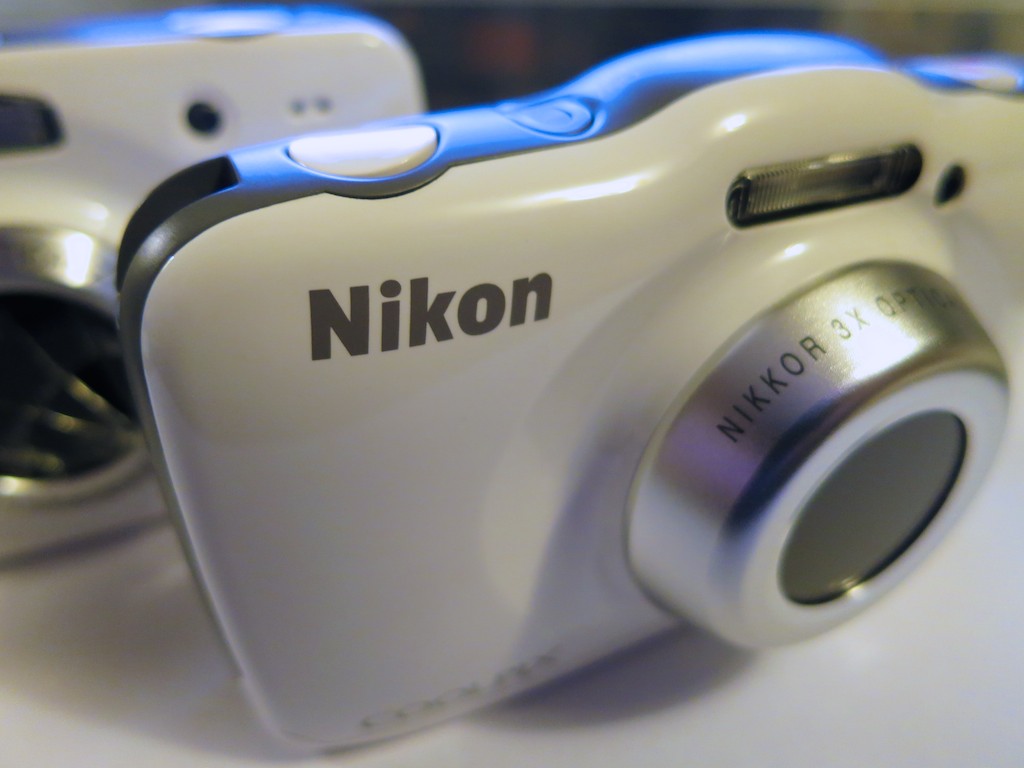
Grandson of the COOLPIX S30… the S32!
So I bought the Nikon COOLPIX S32 at Target on Black Friday for $99.99.
(on sale from $129.95)

It should work well enough; my son will know how to use the S32, and it’s even the same color as his first one.

He will be exceptionally happy.

Nikon COOLPIX S32

The S32 might even prove itself to be a big improvement over its not-so-distant ancestor. The jury is still out for me, though according to Snapsort.com, the S32 has clear improvements.

Competition for the future COOLPIX S33?
But even if the S32 performs at a higher level, there shouldn’t be only one sub-$100 camera out there in this market segment for kids and families to use…

Where are the rest of the choices?
What ever happened to good old fashioned capitalistic competition?!
(Maybe the profit margin in this camera category is too small….)

And no, I’m not going to follow the rest of the herd and buy my lad a toy camera.  I don’t think anybody who’s bought one has ever been a happy customer.
(I’ve done the research.)

So if you’re a camera manufacturer in this already over-saturated consumer market, here’s a product pitch for you in this unexplored niche:

Junior will be turning five in half a year. So will 3,999,385 other four year olds. Please come up with a decent, tough camera at the right price that they all can use.

Because I’ll probably be needing to secure another one for my son’s next birthday!
Please hurry it up…

Why iPhone Slow-Motion Videos Need the iMovie App

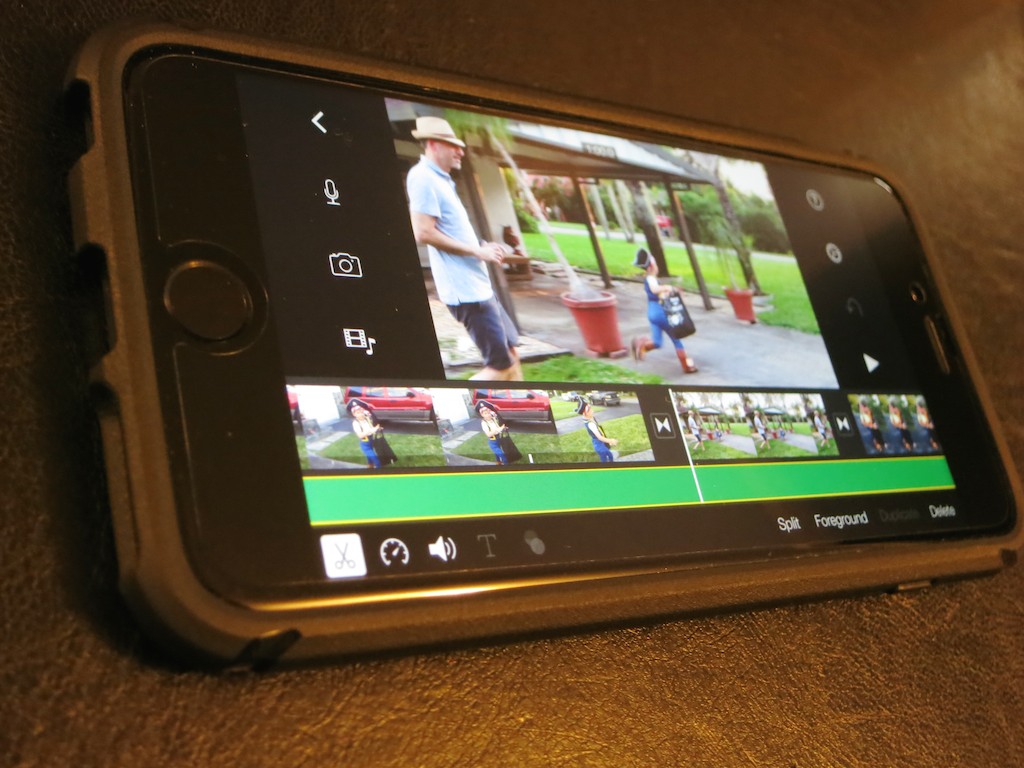
iMovie on your iPhone can lock in that selected area of slow motion you want to keep from that otherwise boring slo-mo clip you just shot.

iMovie on your iPhone can lock in that selected area of slow motion you want to keep from that otherwise boring slo-mo clip you just shot.

When iMovie came out as an app, I scoffed at what I believed was a preposterous idea that complicated video editing software could successfully be shrunk into an iPhone. I come from a world of multi-core, decked-out computer monsters that often ‘render’ their imagery overnight to crank out their completed videos on deadline.

I viewed the iMove app as little more than a toy.

Then, Apple gave it to me for free as part of my new iPhone 6 Plus purchase.

So I had it.
But I would not open it.

Then, I discovered the wonders of my iPhone’s slow motion video capture capabilities.

And I was especially taken with my iPhone’s ability to isolate a particular portion of a slo-mo clip and then only play that part back in slow motion.
(The rest runs normally.)

Some may consider this little more than a parlor trick, but I really like it…

Now, you can utilize slow motion only when a particular moment needs it.
(Because a long and boring slow motion clip is pretty painful to endure!)

How to Lock In Selected Slo-Mo
But there was a problem…
I couldn’t export the clip to my iMac and retain the selected slow motion.
Yes, my computer accepted the clip recorded at 240 frames per second.
Yes, QuickTime offered me the choice to play the clip either at normal speed or in slow motion on my Mac.
But the ‘selected slo-mo’ clip I had created in my iPhone had vanished.
That metadata didn’t make it through the transfer…

Sure, I could recreate the effect on my computer with editing software, but that’s doing the work all over again!

The question was how to lock in all that work before doing the export…

iMovie is Cooler Than You Think
So I looked again at the iMovie app on my iPhone.
(I think it winked at me…)

I opened it up…did a quick tour…and imported the clip in question.
Yep, it played back just the way I liked it…

Cool.

Then I realized I could simply export the clip out of iMovie in its native resolution to lock in the selected slow-motion moment.
You can save it right back to your Camera Roll or to iTunes. AirDrop is another option…

Using iMovie in this way is indeed an extra step…. But it’s not that arduous.
And it solved my dilemma!

Then, did I lightly touch ‘export’ and chalk up another minor victory for humans co-existing with their tech?

Not quite yet…

Taking iMovie Out for a Halloween Test Drive
I decided to continue my journey down the tech rabbit hole…

The clip in question was one of three I had recorded of my son having fun on Halloween night as a pirate. All three had been shot in slow motion…more as part of an experiment than anything else.

I performed some selected slow-motion tweaks on the other two clips, then brought them into iMovie as well. I quickly drizzled some dissolves between the clips, imported a Halloween night photo for the top of the video and blended in a Ken Burns’ zoom/pan.
Then I typed in an opening title, selected a pre-existing iMovie ditty for a background music track, and faded the ending to black.

Huh.

It was twenty minutes later.
(much of that was looking at the app for the first time)

…And I had easily created this cool little video.

The Evolution of Video Editing
So I am happy to report you can teach an old dog new tricks.

No, I’m not going to forget about using uber-powerful Mac Pros in favor of the iMovie app on your iPhone.
But indeed, I finally recognize there’s a lot you can do on the fly editing short videos on your iPhone or iPad.
(And another reason I’m happy I supersized it to the iPhone 6 Plus.)

If I’m not the last human on earth to have this epiphany… you should know you’re carrying a legitimate video editing station in your pocket right now.
(And it also makes phone calls.)

Unbelievable…

Three Tips to Better Use Your iPhone 6 as a Camcorder

On our flight south, my new iPhone is about to confront its greatest challenge yet: How to slow down the best moments from our vacation…

On our flight south, my new iPhone is about to confront its greatest challenge yet: How to slow down the best moments from our vacation…

My family and I just got back from a mini respite to Miami, and again, I forced my iPhone 6 Plus to do some of the heavy lifting… this time on the video-taking front.

It’s already passed muster snapping photos.
So how did it hold up as a pocket camcorder?

The short answer: Not too badly.

No, it doesn’t have quite as wide a focal length as your typical point and shoot lens… So you can’t see as much at close range.
(29mm Vs. 25mm on the Canon Powershot ELPH 340)

No, it doesn’t have an optical zoom…

But it does have a few tricks up its sleeve that can maximize its ability to shoot some cool HD video clips for you. And these have to do with controlling video frame rates.

Here are three tips to get the most out of your iPhone 6’s inner camcorder:

Tip #1
Shoot at 60 FPS To Capture Crisper Action
In addition to the typical 30 frames per second shooting mode, this iPhone also offers the option to shoot at 60 fps.
(which you need to enable in ‘Settings’)

Now, first off… Jamming more frames into a video doesn’t always make it better.

Some folks talk about 30 fps being too jerky when played back,
which is why 60 fps is preferable.
But for me, that’s only an issue when you’re trying to capture fast action or panning the shot around really quickly.

I wouldn’t write off 30 fps. It’s still very much today’s standard.
And for many situations, I bet you’ll be just fine sticking with 30 fps.
Always hedging by sticking with 60 fps will just suck down your iPhone’s limited memory.
(Remember, the 60 fps mode creates larger files!)

And don’t forget that filmmakers love the ‘cinematic’ look of 24 fps.
If you fashion yourself as the next indie darling…
the hyper-clear reality of 60 fps may not be for you.

Tip #2
Only Use 240 FPS Slow Motion When You Really Need It
If you like slow motion, you’re going to love that the 6 and 6 Plus can now record at an incredible 240 frames per second. This ‘slo-mo’ is twice as slow as what the iPhone 5S can generate.

240 fps?!
That’s great, right?

Yes, but the videos play back really slowly.
(That’s the point!)

But in many situations, you may feel it’s too slow. To capture a normal moment in time, I think this enhanced mode can be overkill.

On Halloween, I tried shooting a video of my little pirate ‘trick or treating’ at one house. And later, when I played back the video, it looked like the falling candy wouldn’t reach the bottom of the bag until Thanksgiving!

I would choose this super-slow motion mode only to capture a short moment of very fast action.

Otherwise, I recommend normally sticking with the ‘less advanced’ 120 fps mode to slow down your video.

Tip #3
After You Shoot, Isolate Your ‘Money Shot’ and Then Give It Slo-Mo
That said, once you’ve shot your slow motion video, you actually have the opportunity to choose which part of your clip plays back in slow motion, and which part runs at normal speed.

What?!

That’s right….
In playback mode, there are two slider controls on the top of the video that let you isolate a particular moment that looks best in slow motion. The rest of your clip plays at normal speed.

It’s a ‘professional-looking’ post-production trick that can negate the concern about 240 fps being too slow.

My New Time Machine…
The iPhone 6’s flexibility in shooting at different frame rates while recording HD video is a neat feature that many of today’s ‘more advanced’ point and shoot cameras still don’t offer.

But beware… today’s tips all focus on a central theme:
Use these new tricks sparingly.
When you do, you’ll be really psyched.

No, I don’t think my new iPhone 6 Plus is a magic bullet for all my video recording needs. But it has suddenly given me the powerful capability to slow down linear time.

And as a father of an active four-year-old boy… I’ll take it!