At Home with Tech

Unlock the power of all your technology and learn how to master your photography, computers and smartphone.

Tag: apple

Green Bubble Texting Fix if You Use the Messages App on a Mac
The color of your texting bubbles may not matter so much when using your iPhone, but it can be a big problem if you’re using the Messages app on your Mac. Here’s how to erase this pesky issue…

Lately, I’ve been trying to fix a little flaw in my ongoing role as the family photographer. It has to do with what happens after I take my photos…

I bring them back to my iMac, import them into Adobe Lightroom, choose the best ones, tweak and color balance, and then finally I share the few gems with family and friends. Of course, the big problem with my process is it takes time… sometimes lots of time to get to the finish line. It can be a week… sometimes two.

These days, everyone expects almost instantaneous sharing of pics.
Clearly, I need to keep up.

And I’m happy to report that I’m doing better, and here’s why…

Emailing Vs. Texting Photos
Now, I force myself to quickly find the best few pics in a batch and singularly focus on them to get them ready to share. And if I never get to the rest… well, maybe that’s okay, because perhaps all that really matters are those few best photos anyway.
(Are you feeling a disturbance in the Force?)

One other important detail to my evolving photo-management process is how I’m sharing my pics… Usually, I email them about. If I have more than a few to share, I create a Dropbox folder to house them. And then I forward along the Dropbox link in my email.

How easy is that?!

Well, not easy enough…
Because it still requires folks to click on the link and then download the photos.
And that’s takes time.

I’ve noticed that some of my friends prefer to text their photos, and I’ve experienced the simplicity of saving a photo that’s been texted to me directly to my iPhone.

Hmmm…

And while I didn’t want to move my photo sharing process to my iPhone (like the rest of the world), I realized I could take advantage of a texting workflow while still using my iMac…

…by using the ‘Messages’ app.

A Problem with Using the Messages App on Your Mac
You may recall, I’ve recently focused on my son’s 9th birthday and what to get him…
(My gift was a build-your-own computer kit!)

Immediately after his birthday party, I wanted to send out some party pics to our friends, and I figured this was the perfect opportunity to try out my iMac’s Messages app as my distribution method…

But I immediately ran into a roadblock with one of the phone numbers I used…
The photo just didn’t go through!

Huh.

After a moment, I realized my friend wasn’t part of the Apple ecosystem (no iPhone or Mac). So he didn’t have iMessage functionality…
(The blue bubble type)

And my Mac isn’t as clever as my iPhone which can simply convert an iMessage with a photo to a MMS text with a photo.
(The green bubble type)

So now what???

Text Message Forwarding
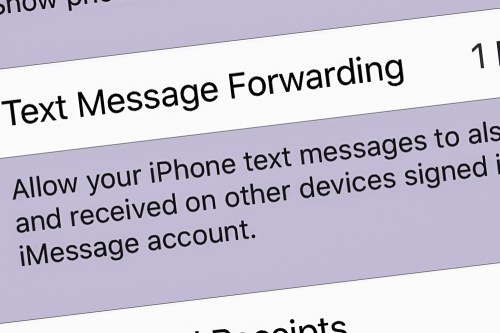
Well, the fix was to change a buried iPhone setting to better use Messages on my iMac. You simply turn on the ‘Text Message Forwarding’ feature…

Here’s how you do that on an iPhone:

  • Go to ‘Settings’
  • Tap on ‘Messages’
  • Tap on ‘Text Message Forwarding’
  • Then select the device you want to connect (iMac)

And as soon as I made this adjustment, I resent the photo, and it immediately went through.

Problem solved!

Green-Bubble Fix
With my iMac and iPhone now teamed up in this particular way, the path had been cleared for me to freely share my photos without worry using the Messages app on my iMac.

And the result…?

I received almost instant feedback that my pics had been received and were appreciated.
Now that’s satisfaction!

Text Message Forwarding is an easy fix for your green-bubble moments.

I highly recommend activating it…
Why You Need to Create Your Own Cloud Photo Archive

If you crave instant access your best family photos from yesteryear, here’s how to create your own portable archive…

My family and I attended a little party the other day… a reunion of sorts. It consisted of four families with kids of the same age who spent time together at playdates a few years back. One family then moved to New York City, and we really hadn’t seen them for a while. So, they were the special guests at the party.

Joining the Time Warp
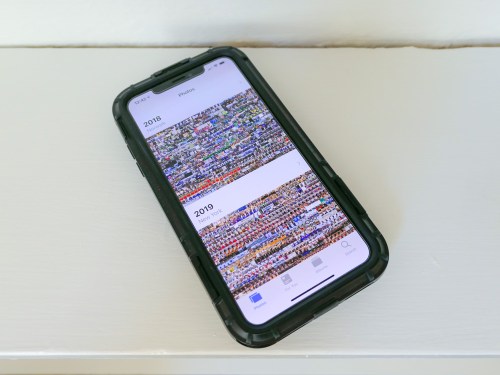
Of course, everyone commented on how big all of the third graders had become. Inevitably, one of the parents whipped out her iPhone and began searching for old playdate photos when the kids were three. I watched her two-fingered gesture slide upwards again her smartphone’s surface as she commanded her iPhone’s photo library to speed backwards in time.

And then another parent activated her iPhone and began her own photo time-warp search. And then my wife did the same…

And before I knew it, the group was excitedly sharing shots and reminiscing about the good old days.

Experiencing Photo Failure
And I just stood there, happy that these iPhones had provided instant gratification, but stunned that mine hadn’t contributed. In fact, I didn’t even try to look for any photos. I knew I didn’t have one to share… not in that moment.

Sure, I could go home and easily find whole bunches of old playdate photos in the appropriate folders organized in Adobe Lightroom on my iMac. But I had no cloud access to any of them from my iPhone. My cloud photo folders through Dropbox and Apple’s Photos all contained more recent groupings of pics. I figured when would I possibly want instant access to photos from five years back? (Cough)

My iPhone’s onboard memory didn’t house photos that old either. I thought I was doing the ‘smart’ thing by not wanting to bog down my device with really old photos.

I stared into space and pondered the absurdity of it all…

If at First You Don’t Succeed…
I’d spent years and countless hours organizing tens of thousands of family photos into folders on my iMac. My focus had been to share relevant photos with family and friends while the pictures were still “fresh.”
(Old photos are old news, right?)

But now, I had encountered a huge flaw in my plan as I watched others suddenly require instant access to photos buried deep in time. Sure, the old photos were hiding in their iPhones and entirely disorganized. But the images were still there in the order they were taken, and a few finger swipes could still access them by simply warping back to 2013.

Huh.

By doing nothing with all of the old photos on their smartphones, these parents had succeeded where I had hopelessly failed.
(So, disorganization does have its benefits.)

I thought a bit more about the irony of my experience. I finally resolved to create another layer of organization on top of my current photo management plan…

If successful, I would give myself easy, mobile access to a percentage of my archival photo content to properly handle this kind of moment next time.
(We’ll get to how much in a moment…)

Create Portable Access
I’d been focused for so long on creating physical photo books as the endgame for archiving all of my best family photos. But that strategy assumed that I’d only want to access these photos from a bookshelf in my living room. That was the problem right there.

Clearly, I also needed ongoing access to some of these photos from my iPhone’s screen.

Sure, that could be accomplished by simply leaving all of my photos on my iPhone. But this limited ‘clutter’ strategy assumes I’m not taking pictures with other devices.

In fact, I’m also shooting pics with…

So, all of my digital photos, including those from my iPhone, need to flow through Adobe Lightroom on my iMac for organization, quality improvements and file backup.

And then some of these photos flow back to my iPhone via cloud folders so I can display what’s been going on in my family’s life. And when a particular cloud photo folder of a family event gets old enough that it’s yesterday’s news, I simply delete the folder.

The only necessary upgrade to this workflow is to leave some of these pics behind in long-term cloud folders as part of a portable and permanent archive of my family’s life.

Build Your Cloud Photo Archive
But I think the trick here is not to move photos out of short-term cloud photo folders into long-term folders. That’s not so simple. It’s an extra step that first requires you to review all of the photos again before you delete the folder. That’s a lot of work right there.

The moment to feed an archival cloud photo folder comes when you’re first picking out your best pics at the beginning of your entire process… not months or years later.

When you first create a short-term cloud photo folder with the pics that you want to show off, also ask yourself if there are one or two that are so great or so relevant to your family’s history that they should always be available in an archival cloud photo folder.

If so, then simply drag and drop them into the archival folder right then and there. That will take you another fifteen seconds. Maybe less.

Done.

Don’t Cut Corners
The next big hurdle to overcome is to resist the urge to simply throw these photos into one big archival cloud folder. Even though you’re only feeding it with a couple pics at a time, it will eventually become massive and difficult to navigate.

So, you have to create a number of permanent cloud folders where you can better organize your best pics.

With all of this in place, you will created a cloud photo archive of your best pics that you can easily access from anywhere!
(Plus, you’ll have an additional layer of backup and protection for these valuable images…)

Look for Efficiencies
Chances are… you’ve already done a lot of the work, especially if your cloud folder categories also exist in the photo folders on your local hard drive.
(Like me, you’ll probably still need to create a few new folders in both locations.)

Once you’ve matched up the categories, you’re essentially mirroring your new permanent cloud photo folders against your local photo folders of the same name.

Carry the Past with You
After you activate this ‘enhanced’ photo-organization plan, you’ll essentially have access to the pictures that tell the story of your life, your family and even your ancestors.
(So… not just from yesterday or last week)

And if you need to pull any of them up on your iPhone… for any reason at all… well now, you can!
(I’m sure you’ll still get stumped now and again when the need for a particular photo pops up unexpectedly. But you’ll always be in the game!)

I’ve successfully made my cloud family photo archive upgrade, and it’s a huge step forward.

Having permanent cloud photo folders to turn to is an amazing resource that everyone should carry around in their pocket!

5 Steps to Simplify Your iPhone XS Max Purchase

If you’re feeling a bit paralyzed about your next iPhone purchase, I’ve got a few tips that might help you finally pull out your credit card…

I love my Apple tech, but I’ve got to admit that it’s getting more complicated to decide exactly which features and options to buy these days. Take my new iPhone… Yes, I’m now the proud owner of a silver iPhone XS Max.
(Applause)

But that virtual applause isn’t for my choice to get Apple’s latest and greatest device. It’s more about the fact that I finally made it through my decision tree!

If you’ve been delaying your own purchase, because there are so many pieces to the iPhone decision-making process, perhaps you’ll find the details of my recent Apple Store shopping experience helpful…

Advantages of an Unlocked iPhone
My Apple Genius at the Apple Store told me that buying my iPhone XS Max outright from Apple would enabled me to get an unlocked iPhone and avoid a $30 AT&T (upgrade?) charge.
(So, there’s some upside to an all-in purchase vs. monthly payments with 0% interest.)

But perhaps more importantly, an unlocked iPhone provides more flexibility down the line should you want to switch carriers.

Shopping note: If you go with the iPhone Upgrade Program, you’ll also get an unlocked iPhone.

Step 1:

  • I bought an unlocked iPhone.
    (My Apple Genius simply popped my AT&T SIM Card out of my old iPhone 6 Plus and inserted it into my iPhone XS Max.)

Theft and Loss Protection
I’ve always attached AppleCare+ to all of my Apple products. Why quibble over the extra cost if you’re already spending so much money? You want to protect your expensive Apple gear!

Have I ever used AppleCare+? Yep.
Enough said.

But AppleCare+ with Theft and Loss?
Another hundred bucks adds loss and theft protection to the plan.
That’s great, right?

Hang on…
If you end up walking into an Apple Store without your iPhone and a sad tale of loss, there’s a $269 replacement fee (deductible) for a new iPhone XS Max. You pay the deductible instead of the cost of a whole new iPhone.

That’s $269 plus the original $100 in the plan.

So, it’s essentially a $369 insurance plan against loss.
Is that a good deal?

Well, I guess that depends on the odds of your iPhone XS Max leaving you over the next two years.

I’m hoping not to attract any attention from the evil ‘Fates of Bad iPhone Luck’ by talking about this.

Step 2:

  • I added AppleCare+ for $199 instead of the $299 AppleCare+ with Theft and Loss option.

Let’s move on…
(Cough)

256GB of Memory
Look, I know I agonized over this a particular topic when the iPhone XS Max first came out… and I pledged that I would go all in with the 512GB model.

The most storage… the greatest ability to shoot and hold onto 4K video content. More is always better, right?

Well, yes…
…and no.

The truth is I quickly started to struggle with my choice.

And the simple reason is cost. I had difficulty justifying to myself the extra $200 to supersize to 512GB. These iPhones are just so expensive. You’ve got to draw the line somewhere.
(You’ll notice I’m not even mentioning iPhone pricing. If you’ve done any research, I’m sure you know how much they cost.)

I questioned my Apple Genius on the 256GB vs 512GB choice. He agreed that more people have gone with the smaller capacity. Then, he said, “But if you never want to worry about your storage, then go with 512GB.

Ironically, that’s what sealed it for me… but not how you’d think.

Here’s my truth… if you’re planning to capture 4K videos of your family, you’re eventually going to run out of storage, no matter the capacity. It’s just a matter of when.

And it’s actually more important to have a media management plan that forces you to offload and organize your content rather than let it sit gathering digital dust in your iPhone’s massive internal storage.

Step 3:

  • Yes, I changed my mind… and went with the 256GB model.

Screen Protection
Of course I wanted a screen protector for my new iPhone…

Sure, there are several out there you can choose between. But that will send you down another decision rabbit hole.

The Apple Store sells Belkin InvisiGlass screen protectors for $39.95. And an Apple Genius professionally will install it for you.

I’d say that’s totally worth it…
You’ve got a perfectly-positioned screen protector and no worries.

Step #4:

  • I went with Belkin InvisiGlass and professional installation.

iPhone Armor
I’m not exactly sure why I’ve covered up all of my previous iPhones with black cases that obscured all of the iPhone’s design beauty. Perhaps that wasn’t an such important factor to me, and protection was.

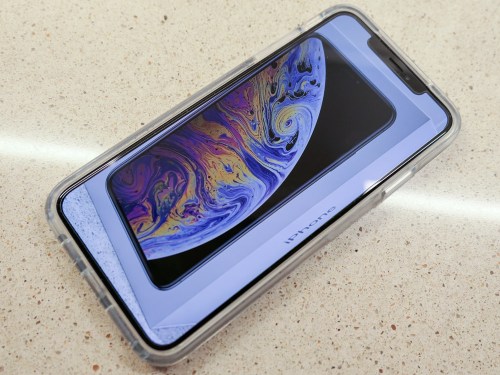
With my new silver iPhone XS Max, I suddenly wanted to retain the cool silver edging. So, after I left the Apple Store, I shopped for a clear case and landed on OtterBox’s Symmetry Clear Series Case for $49.95.
(You can find it for less online… D’oh!!)

It took a little work to pop my iPhone into the Symmetry case, but once the job was done, I felt my new companion was properly prepared to face its new life with me…

I’ve been a big fan of OtterBox over the years, and even though the Symmetry design is more minimalistic than the typical OtterBox, I feel comfortable that my new iPhone is plenty safe.

Step #5:

One usability note:
My iPhone in its Symmetry Clear Case is a little slippery on smooth surfaces when you rest it on its plastic back. But if you flip the iPhone over so the screen faces down, the Symmetry’s rubbery front edges provide much better grip.

And a note about OtterBox…
The Apple Store I visited carried a couple OtterBox models (not the Symmetry). Apple and OtterBox is an interesting business relationship that I think is great from a consumer perspective…

Why Not an iPhone XR?
I’ve read a lot of great reviews about the iPhone XR.
Why didn’t I just go that way?
(It would have surely saved me a lot of money…)

…I wanted the advanced camera capability of the XS line with the 2X optical zoom. I believe that punch-in feature without pixel loss really offers value. I also craved the more advanced portrait-mode ‘background blur’ muscle of the XS line. For example…


These features should enable my new iPhone to better handle more of my day-to-day photography opportunities when I’m not carrying another camera with me.

In my eternal quest to capture great photos of family and friends, I’ll take all of the help I can get!

Cutting Edge for Now…
So that’s my story that put a new iPhone XS Max in my pocket. I hope it helps to simplify your own decision-making process, because I expect you really don’t want to delay.

Every day that passes is a day closer to next September when your new iPhone becomes last year’s iPhone.

If you’re going to go for it, that time is now.