At Home with Tech

Unlock the power of all your technology and learn how to master your photography, computers and smartphone.

Category: Tech Trends

Essential Tech I Use and Why
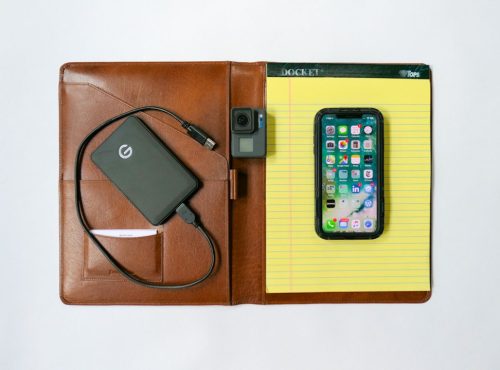
Here’s my list of ten technology purchases I’ve made that creates my foundation for living and working in today’s digital world.

I see myself as an everyman (person) who successfully uses his tech (usually) throughout most days in life. I’ve done my research and also have a decent track record on my specific gear choices. While I’m hardly an authority… I’d like to think I offer an informed point of view.

There is also an ever-increasing amount of choice out there, and figuring it all out can be a complete time suck. The ‘best choice’ is an elusive and always-changing equation. So, my strategy has always been to find what works (at a competitive price where possible) and stick to brands that hold up over time.

Most of all: Keep it simple…

If you think that reading about the essential tech I’ve chosen (or covet) for myself might be useful towards your own tech-selection process, then I’ve got a little list to share…

Ten Technology Choices to Help Get You through Your Day

1.  Smartphone

I upgraded from my old iPhone 6 Plus and finally convinced myself there was no need to supersize it to 512GB. So far so good…

2.  iPhone XS Max Case

It’s tough and looks like it comes from the alternate universe in the TV series, “Fringe.”

Plus, I like saying it’s made with Kevlar.
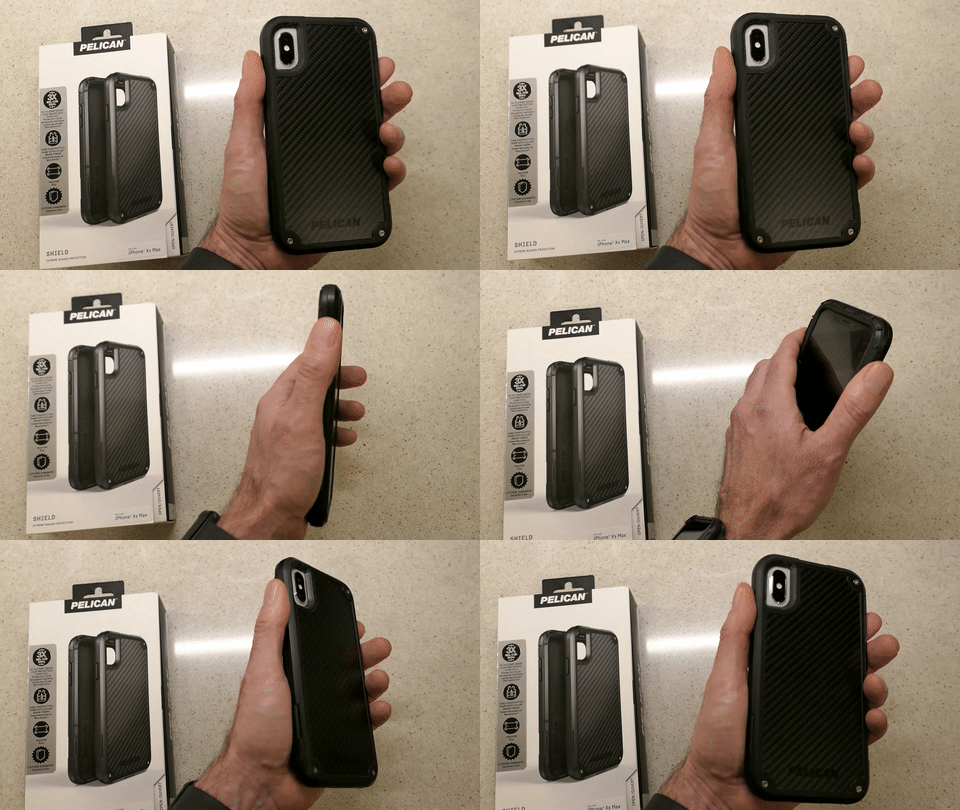
Holding My Pelican Shield Case for iPhone XS Max

Enough said.

$41.73 on Amazon Prime

3.  Watch

After three years of self-control, I couldn’t stand not trying one of these out. It was an instant success… Not only have I been loving my Apple Watch, it’s also focused me on ‘getting my steps in.’
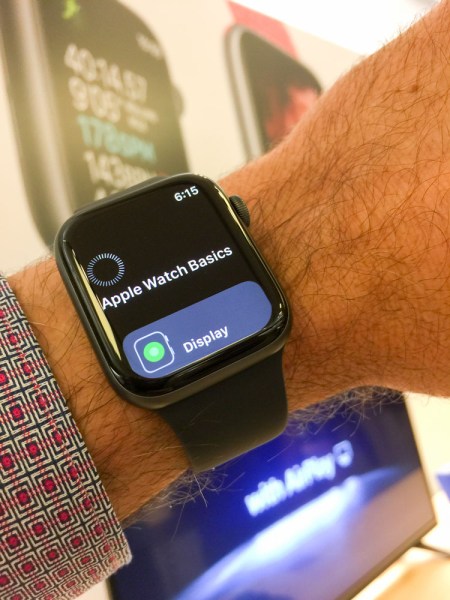


And now, I don’t have to think about what watch I’m going to wear tomorrow!

4.  Computer

I began using Macs fifteen years ago due to the advanced multimedia applications, and I never looked back.

Do I feel the need to upgrade to the 2019 model?
Nope. Not yet… I’m doing fine with what I have.

5.  Back-Up Drive for your Computer

I’m a big fan of G-Technology Drives (now owned by Western Digital).

The G-Technology 4TB G-Drive USB 3.0 goes for $129.95 on Amazon Prime.
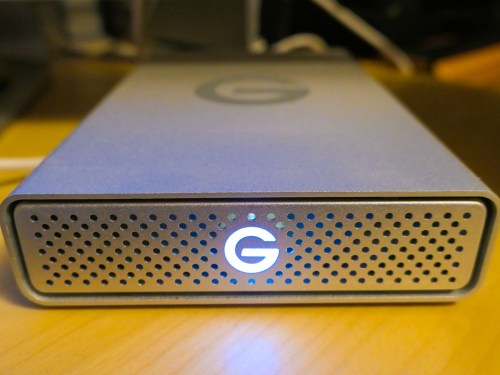
It’s what I use for my iMac’s Time Machine backups…

6.  Portable Back-Up Drives

  • G-Drive Mobile USB-C

Yes, I’m sticking with G-Technology again…
My go-to choice is the G-Drive Mobile USB-C.

I always grin and shake my head at how digital-storage pricing continues to drop…

7.  Cloud Backup

You do have a cloud backup plan in addition to your local backups, right?

I’ve been using Backblaze after CrashPlan broke up with me.

Offsite backup should always be a part of your strategy…

8.  Premium Point-and-Shoot Camera

Compact cameras that use 1-inch-type sensors can capture better photos than your smartphone…especially in low light.

Being able to freeze that July 4th fireworks moment is priceless!

Yes, these premium compact cameras are expensive, but if you’re serious about capturing great photos without blur and don’t want to carry around a big DSLR, this is the camera category for you…

I use Panasonic’s Lumix DMC-LX10. It’s a couple of years old, but still on the market and now at a discount…
$497.99 on Amazon Prime
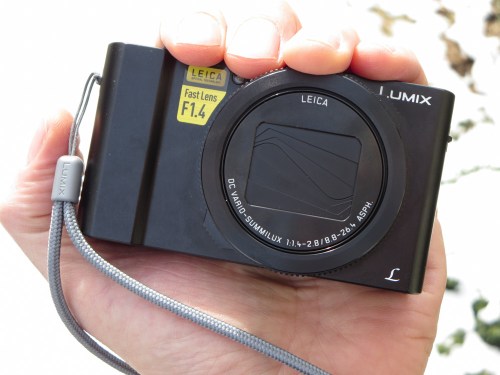
I enjoy using my LX10, but If you’d like to know the camera I really covet, and what I’d buy today…
It’s the Sony DSC-RX100 VA… $898 on Amazon Prime.
(No… not the newer VI model. That’s because even though the VA has a smaller zoom, it‘s got a faster lens that can better capture action in low light.)
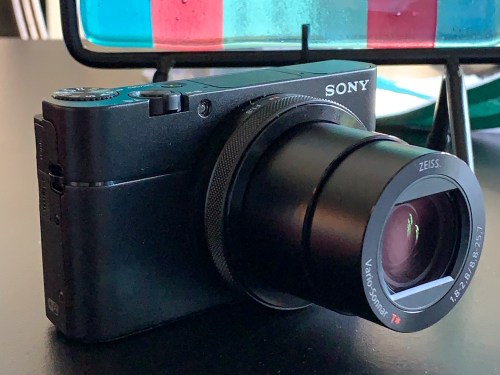
This is my friend’s new Sony DSC-RX100 VA.

The RX100 series has always seemed to set the gold standard for this category. Yes, it’s expensive, but I think it’s worth it.

9.  Action Camera

I picked up a GoPro last year as a family vacation camera, and I found that it really can enhance your vacation’s fun. A GoPro is small, durable and waterproof… so you can take it to the beach without worrying about a grain of sand crippling a retractable zoom lens. Plus you can snap great underwater shots!

It’s also incredibly fun to use during pool time!

The GoPro HERO7 Black is $343.68 on Amazon Prime.

10.  Wireless Mesh Router

When I replaced my old Apple AirPort Extreme WiFi router, I went with the two-unit mesh WiFi system made by Netgear Orbi.
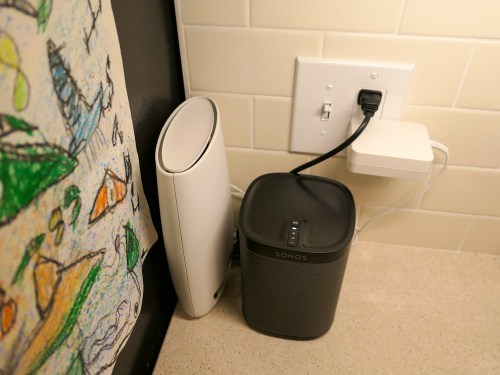
The Orbi RBK50 (next to my Sonos speaker) costs $279.79 on Amazon Prime.

Mesh WiFi is a game changer… bringing new meaning to the idea of whole-house WiFi.
(I highly recommend it.)

If It Fits Your Budget…
I imagine some of you might be questioning whether all of this gear appropriately belongs on an ‘essential’ list.

While it would certainly be difficult today to operate without a smartphone or computer… does anyone really need the always more-expensive devices made by Apple? Of course not.

But I would also add that there’s value in working within one digital ecosystem. And not that you couldn’t also do that with other brands… but, hey… Apple’s always been a good bet… Period.

And no, you don’t specifically need home WiFi or a GoPro to survive, but I think it’s fair to say they’ve contributed to maintaining a level of digital homeostasis in my life.

That’s a fragile equation and always worth acknowledging… and enjoying when you can.

4 Ways to Choose the Best Portable Power Bank for your iPhone

If you’re looking to pick up extra portable charging power for your iPhone, there are several important factors to consider. Here’s what to pay attention to…

Lately, my wife has been borrowing my little Anker Astro portable power bank for her iPhone. It’s clear her aging device now needs the ongoing battery support to get through certain hi-use days.

So, I decided to pick up another portable charger for myself. No big deal… right? Especially because I thought these batteries have become so cheap you can probably find them at the bottom of a Cracker Jack box.

Not true…
And to complicate matters, the countless choices out there are mind numbing…

Power Pricing Game
And I was shocked to find the price points from my favorite brands were $30-$50. But upon closer inspection, that’s due to the greater power capacities on the portable power bank market today.

You can easily get yourself 12,000-20,000mAh of portable power.

But do you need that much…?

Tip #1
Don’t Bring Along More Power Than You Require
My iPhone XS Max only needs 3,174mAh to totally recharge.

A little travel boost is really all I wanted. So, focusing on the smaller 6,700mAh category is more than enough to carry about for this particular purpose.

And I immediately identified a couple of good choices…

Same Price… Larger Capacity and Size
And after doing a little more research, I realized you can even up the capacity of the battery without really affecting the price…

Just be aware that these batteries are going to be bigger and heavier…

Tip #2
You’ll Likely Need to Provide Your Own Lighting Cable Solution
But then, I discovered a little secret in the portable power industry…
Most power banks don’t include the Lightning cable to actually power an iPhone. (That requires a separate purchase!)

So, you’ve got to spend more money for the cable!
Whoa!

For example, the 1-foot Anker Powerline II Lightning Cable is
$10.99 on Amazon Prime.

Too Good to Be True?
But I did locate one option from POWERADD that graciously packaged an included Lightning cable:

In fact, the clever design of this unit only requires the one cable… for both charging up and dispensing power.

Great, right?

And it’s got 12,000mAh!
(and 2 outputs)

All this for $26.99… Is this a dream?
So, where’s the catch?

Well… lots of Amazon reviewers have complained about the allegedly short life span for this model.

Hmmm…
My search continued…

Tip #3
Make Sure a Built-In Lighting Cable will Fit through your iPhone Case
Some manufacturers offer a design that includes an attached fold-out Lightning cable.
That’s thoughtful!

I found one choice from Jackery…

This external battery charger has a short built-in Lightning cable, which is simply awesome.

That is… unless you use a thick iPhone case like I do, which will likely prevent the Lightning plug from fitting.
(I’m happily using my Pelican case… so I’m going to pass on this option.)

Tip #4
Consider a Power Bank with a Built-In AC Plug
Then, I came upon a slightly different product category with a design that offers an integrated foldable power plug… so you don’t need to worry about having access to a separate wall charger.

Now, that’s certainly a nice bonus and an unexpected value-add.
(And yes, you’ve still got to buy your own Lightning cable.)

I found these two choices:

  • Anker PowerCore Fusion, Portable Charger 5000mAh with Dual USB Wall Charger, Foldable Plug
    $25.97 on Amazon Prime
  • RAVPower 6,700mAh Power Bank with Dual USB Wall Charger (Model RP-PB125)
    $23.99 on Amazon Prime
    (Each power port provides a full 2.4A.)

My Solution
So where does all of this leave us…?

I really liked the RAVPower 6,700mAh External Battery Pack with Dual USB Wall Charger plus integrated foldable A.C. plug. And the price was right…

Click.

So, that just left getting another Lightning cable…
And I finally came to the conclusion this additional purchase was inevitable.

If you also need to go that route, I suggest getting a short cable, which is simpler to use when you’re tethering the RAVPower battery to your iPhone while using it in the field.

AmazonBasics has a 4” Lightning to USB A Cable for $5.99.

Or you can go with the premium cable option for $2 more…
AmazonBasics Advanced Collection 4” Lightning to USB A Cable… $7.99.

I spent the extra couple of bucks.

Click.

Be Prepared
You should always carry around a little portable power to support your smartphone for ‘emergencies.’ If that unit can recharge itself without needing a separate power block and also easily supply some juice to your other devices, I’d say that’s a smart purchase!

RAVPower Power Bank Wall Charger + 4” Lightning to USB A Cable
= happy human.

Done.

How to Choose the Best TV for Your Aging Parent

Taking my father out to dinner on his birthday was easy. Helping him buy a new TV was considerably harder. That’s because they don’t make TVs like they used to. And that’s exactly why you’ve got to pay close attention when selecting a replacement TV for a member of the Greatest Generation. Here are my shopping tips…

My 86-year-old father needed some help replacing his old analog bedroom TV, which had finally sputtered out years past the digital revolution. So my dad picked up his iPhone and asked me for a recommendation on a replacement. If you ever find yourself in a similar situation, here are the factors to consider…

Select the Right TV Size
My dad’s old TV was this tube-based hulking box with a massive body and 27” screen in the ‘classic’ 4×3 orientation. A slender 16×9 32” LED HDTV would be the likely replacement, though that feels small by today’s standards. The 40”-43” is the next jump up in size.

While that’s considered normal for a ‘small’ TV today (seriously), you’ve got to make sure it fits in the bedroom space. Plus, you’ll likely need to buy a new TV stand.

Why…?

HDTV Legs Require More Surface Space
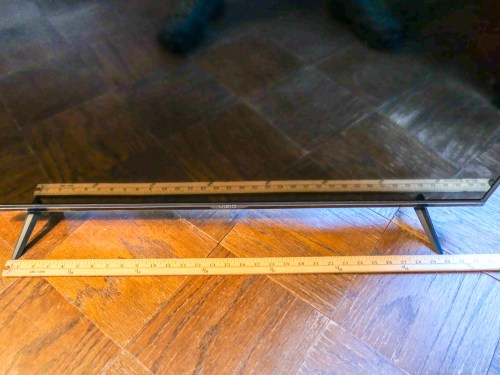
Well, somewhere over the last few years, TV manufacturers have seemingly switched from the center-stand mount design to upside-down V-shaped legs near each screen edge. This design change effectively increases the surface area required for any HDTV to sit on….

My father’s existing TV stand is only 29” wide. That would barely cut it for a 32” HDTV, let alone anything larger…

And even if you could balance your new HDTV onto an old stand, you’d have to worry about the risk of accidentally bumping the TV, causing one of its legs to slip off the stand… and then crash!

Yep, that could easily happen, now that HDTVs weigh so much less than their analog ancestors.

So, you’re probably going to have to also consider a new furniture solution…

Don’t Need to Go with 4K Picture Quality
I centered my research on a 40”-43” screen size for my dad. All I wanted was a straightforward, non-smart, non-4K, easy-to-use model that would quickly connect to my father’s cable box.

And let me simply say… you can’t buy that TV anymore.

Most TVs out there today come with a 4K resolution. But for a smaller screen size, you really don’t need all of those pixels. 1080p ‘full HD’ is just fine. That’s already a huge jump in quality compared to my dad’s analog dinosaur.

I’m sure any number of you would say you can see the 4K difference on a 43” screen.
But do you have the eyes of an 86-year-old?
(I’m just working the right solution for my particular user!)

If Possible, Avoid Smart TVs
Most TVs today are smart TVs with Wi-Fi and on-screen apps containing all of those marvelous and now-standard streaming options. But quite honestly, I didn’t really want to introduce my dad to the streaming world. He’s quite happy with how he used his old TV.

And more importantly, I don’t think he needs the added complexity, because that will just create more calls to… you guessed it… the IT Guy!

Not that I don’t enjoy talking with my dad on the phone. But there’s only so much I can remotely do to help him with his tech.

Yes, I do try to get into New York City to visit him every week. But he’s the kind of octogenarian who needs more immediate solutions to his tech challenges.
(We’ll just say he’s a little impatient.)

Would you like me to tell you about the time when my father’s iPhone’s ringer volume was turned down all of the way? …or the day my dad’s
iPhone wouldn’t charge anymore?
(Don’t get me started.)

But get this…

I actually couldn’t find a non-smart TV made by a manufacturer I trusted.
(Spoiler alert: My dad ended up getting a smart TV after all!)

Look for Absurdly Low Prices
Okay.. so I zeroed in on the market for 40”-43” Full HD (1080) televisions, which were also inevitably ‘smart.’ And I was shocked at how inexpensive TVs have become in this ‘smaller’ size category.

Sure, you can spend $650 on Samsung’s well regarded Q60 Series 43” 4K QLED TV.
($648 on Amazon Prime)

But for what we’ve been talking about, the price point is less than half of that. Here are two great choices I found…

Breaking the $200 Barrier
Vizio D-Series 40” Class Full HD Smart LED TV (D40F-G9)

Breaking the $300 Barrier
Samsung 5 Series N5300 43” Class HDR Full HD Smart LED TV

Really.

Both Samsung and Vizio have strong reputations for TVs although Samsung often sets the gold standard. Vizio is usually seen as a lower-cost alternative with good value.

But I especially liked the 40” Vizio for its smaller size. Most manufacturers are now only putting out 43” models in this range.
(Remember, I don’t want my dad’s new TV to overwhelm his bedroom.)

So I went with the Vizio.
Click.

Keep It Simple
If you’d like, here are my consolidated shopping notes:

  • 40”-43” screen size
  • Full 1080p HD, but not 4K
  • Smart functionality is unavoidable
  • $200-$300 price point
  • Vizio or Samsung are good TV brands
  • Don’t forget you’ll need a wider TV stand to fit the LED feet

Ultimately, I think less is more when buying technology for the elderly. Keep it simple… Spending twice as much doesn’t necessarily mean a better experience.

My father loves his new television… His first words were, “It’s much brighter!”
(Mission accomplished.)

No, he hasn’t figured out there’s a ‘smart’ interface with it yet. But he will…

And yes, now there will be the inevitable training and trouble-shooting calls
in my future!
(Easy problems for #AdultChildofAgingParent)